
27 Cozy Living Room Ideas for a Warm and Inviting Home
A cozy living room does not have to be filled with oversized furniture, piles of blankets, or dozens of decorative pieces. Often, the most inviting rooms come down to a thoughtful mix of warm lighting, comfortable textures, natural materials, and a layout that feels easy to live with. If your living room feels a little plain, chilly, or unfinished, a few intentional changes can make a noticeable difference.
These 27 cozy living room ideas cover everything from layered rugs and soft lighting to fireplaces, built-in shelving, earthy color palettes, and simple seasonal touches. Some ideas work beautifully in large rooms, while others are especially helpful for smaller spaces. The goal is to create a room that looks beautiful in photos but still feels comfortable enough for everyday life.
1. Layer Soft Neutral Textures
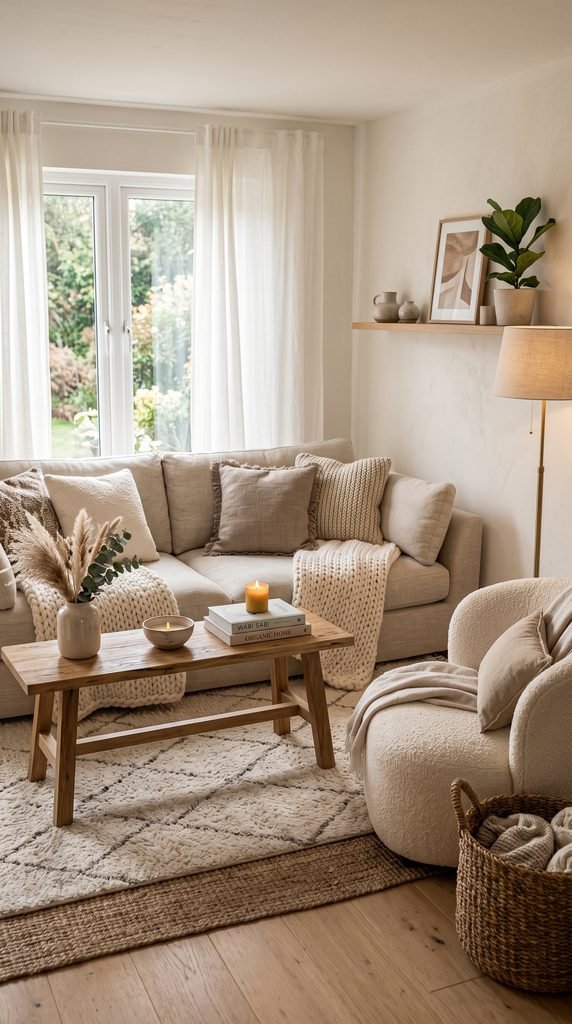
A neutral living room becomes much cozier when several textures work together. Start with a comfortable sofa in linen, cotton, boucle, or another tactile fabric, then add cushions in different weaves and finishes. A chunky throw casually folded over an armrest can make the room feel softer without making it look overly decorated. A wool or wool-look rug also helps visually anchor the seating area.
Keep the colors close in tone rather than trying to match everything perfectly. Cream, oatmeal, warm beige, taupe, and soft brown create a relaxed palette that feels timeless. Add a woven basket, ceramic vase, or pale wood coffee table for a little natural contrast.
2. Add a Large Plush Area Rug
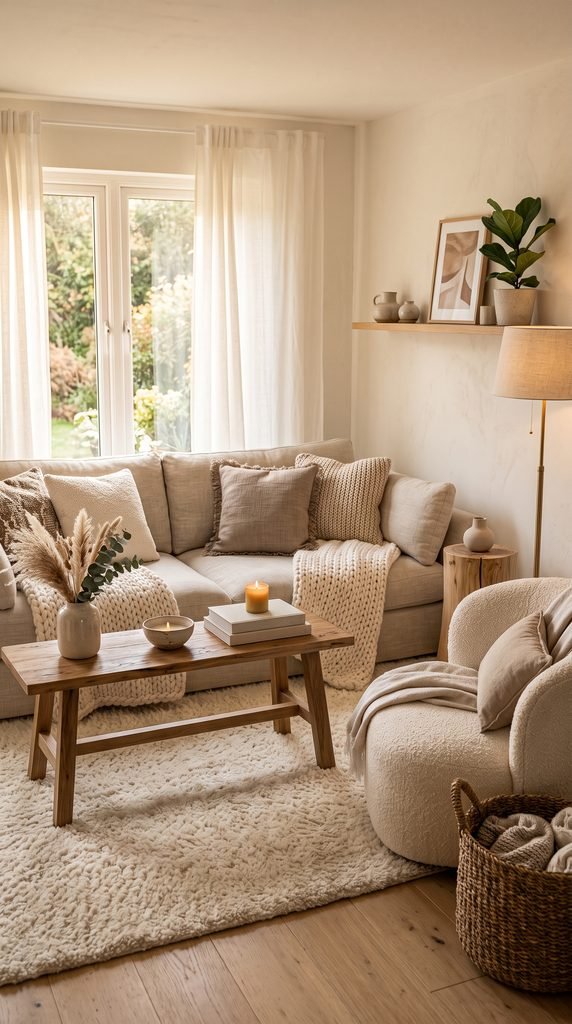
A generously sized area rug can instantly make a living room feel more settled. Instead of choosing a rug that only sits beneath the coffee table, look for one large enough to reach under at least the front legs of the sofa and chairs. This visually connects the furniture and creates a defined conversation area.
For a warm look, consider cream, oatmeal, muted beige, soft gray, or subtle earthy patterns. A plush pile feels especially comfortable underfoot, while a flatwoven or wool rug can provide a more relaxed, natural character. The key is choosing the right scale so the rug feels connected to the furniture rather than floating in the middle of the room.
3. Create a Warm Reading Corner
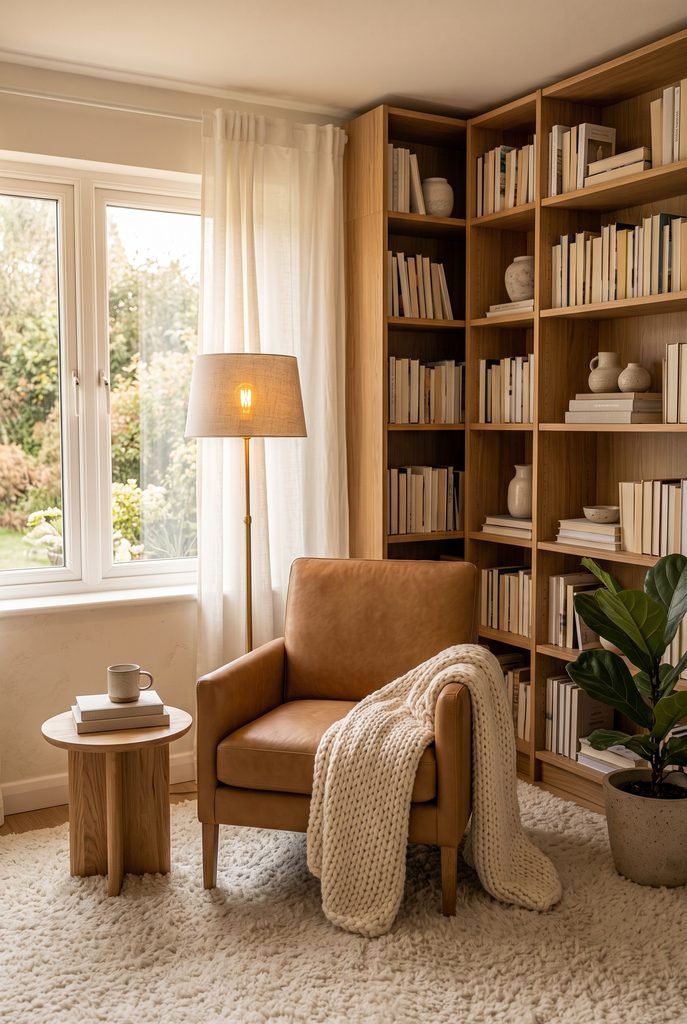
A small reading corner can give your living room another purpose without requiring much space. Place a comfortable chair near a window, fireplace, or floor lamp and pair it with a compact side table. A soft throw over the chair makes the arrangement look inviting while keeping something useful within easy reach.
Choose a lamp that provides warm, focused light instead of relying only on the room’s overhead fixture. A nearby basket can hold books or extra blankets, helping the corner stay tidy. Even if you rarely read there, the arrangement adds visual interest and creates a quiet little destination within the larger living room.
4. Use Warm Ambient Lighting
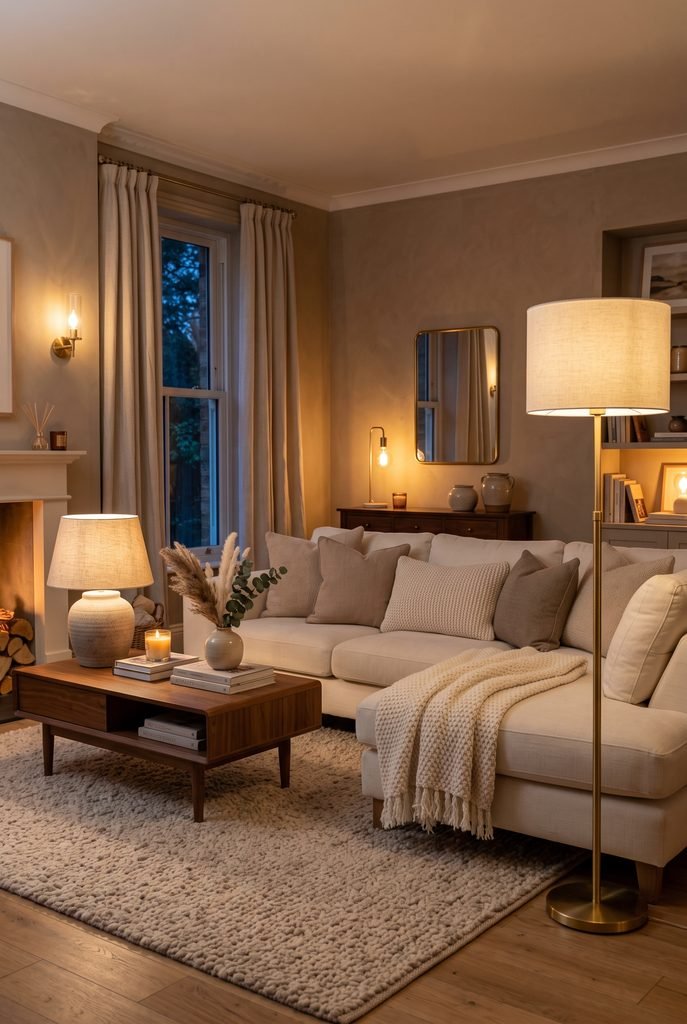
Lighting can completely change how a living room feels after sunset. Instead of depending on one ceiling fixture, combine several smaller sources around the room. A floor lamp beside the sofa, a table lamp on a side table, and a small lamp on a console can create a softer glow at different heights.
Warm bulbs generally work well with cozy interiors because they complement wood, cream fabrics, and earthy colors. Place lights where they serve a purpose, such as beside a reading chair or behind a sofa. This creates pockets of illumination and makes the entire room feel more layered and comfortable.
5. Bring in Natural Wood
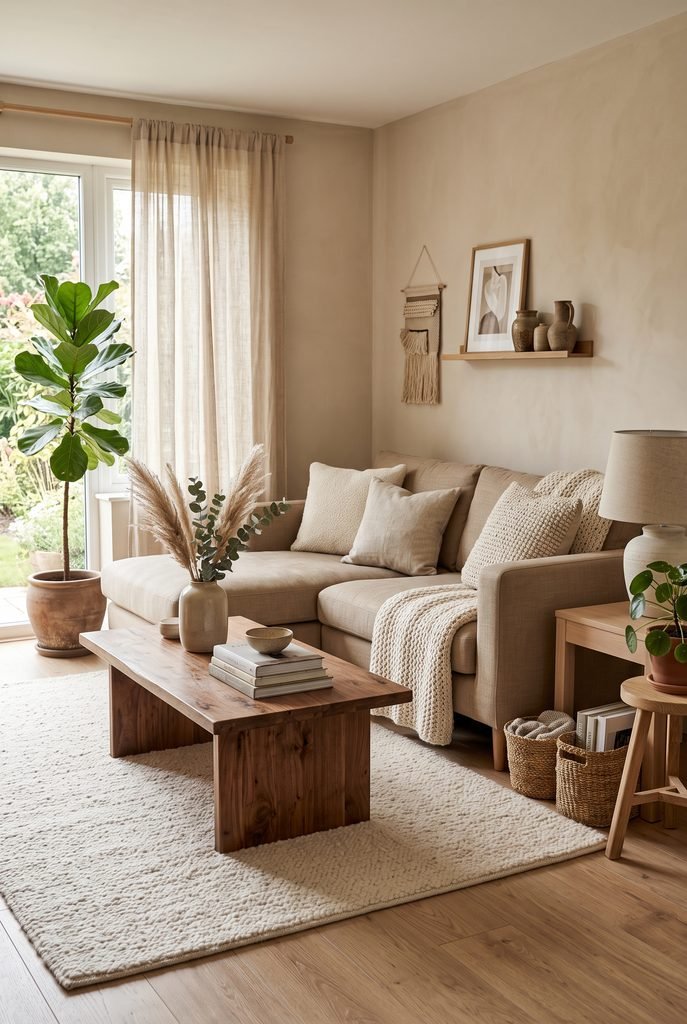
Natural wood is one of the easiest ways to introduce warmth into a living room. A wooden coffee table, side table, shelving unit, or even a simple decorative stool can bring visual richness without adding strong color. Look for finishes with visible grain because they tend to feel more organic and relaxed.
Light oak works beautifully with cream and beige rooms, while walnut can add depth to a space with lighter upholstery. You do not need every wooden piece to match. Combining two or three related wood tones can actually make the room feel more collected and natural.
6. Style a Cozy Fireplace
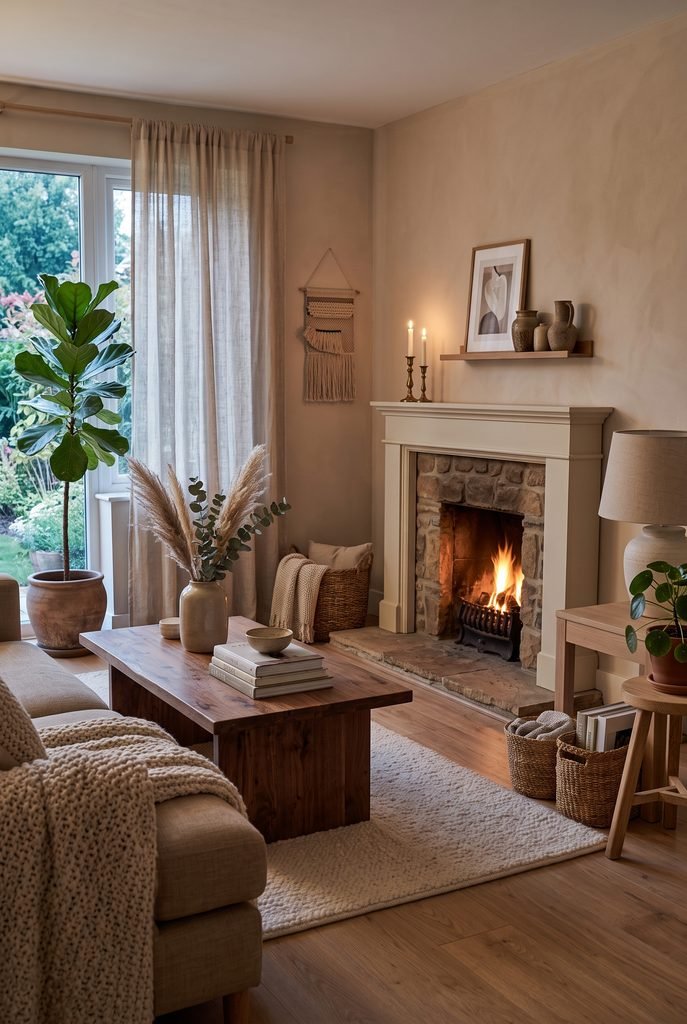
A fireplace naturally becomes the heart of a living room, especially when the surrounding decor keeps the mood relaxed. Style the mantel with a restrained arrangement of ceramics, candlesticks, framed art, or greenery rather than filling every inch. A basket of blankets beside the fireplace can make the entire setup feel more practical and inviting.
Arrange the seating so the fireplace remains visible from the main sofa or chairs. Soft neutral upholstery and natural wood help keep the focus on the warmth of the fire. If you have a non-working fireplace, candles, lanterns, or decorative logs can still create an attractive focal point.
7. Choose an Earthy Color Palette
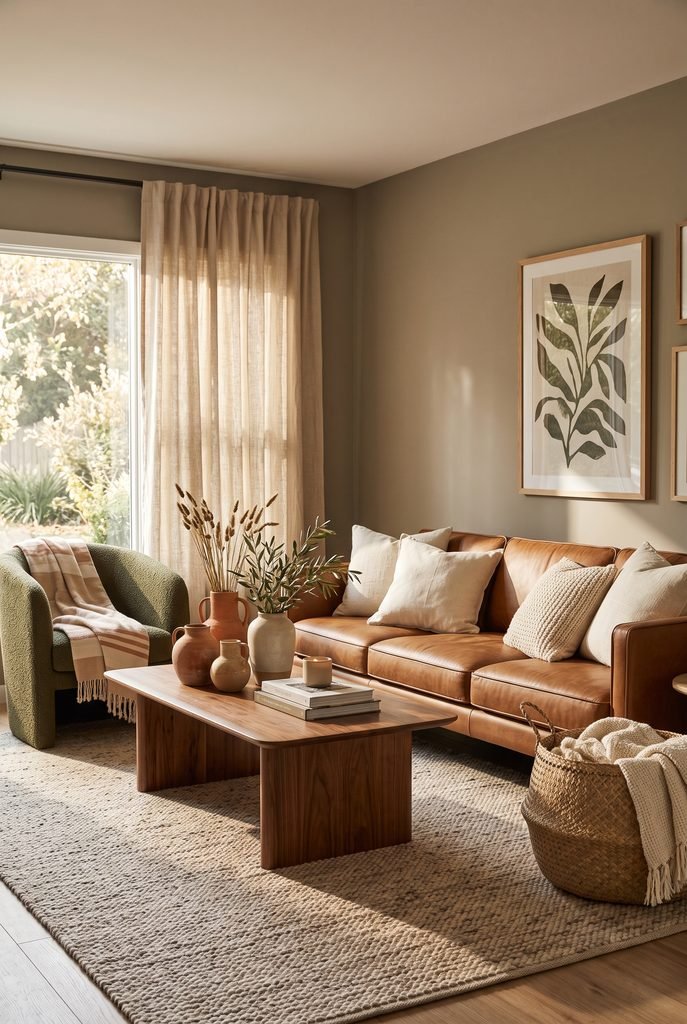
Earthy colors can make a living room feel grounded and welcoming. Try combining warm beige with shades such as terracotta, olive, caramel, clay, muted rust, or chocolate brown. You do not need to repaint the entire room to introduce these tones. Cushions, artwork, rugs, curtains, and ceramics can provide enough color to change the atmosphere.
A useful approach is to start with one dominant neutral and add two or three supporting earthy shades. Keep the strongest color in smaller doses so the room remains calm. Natural materials such as wood, linen, jute, and stone complement this palette especially well.
8. Layer the Sofa With Cozy Throws
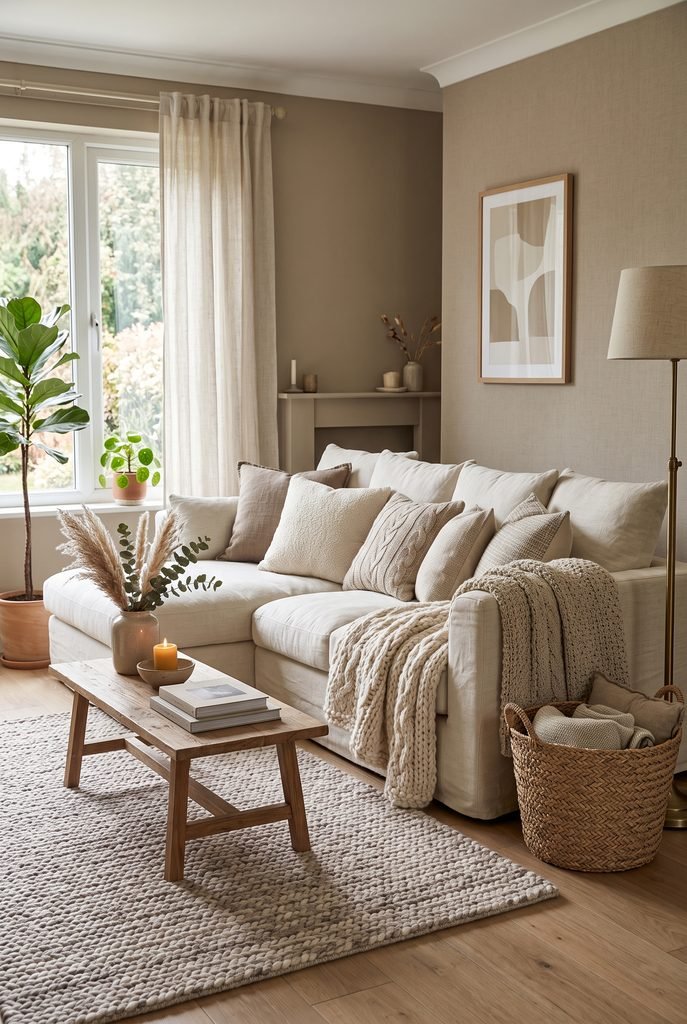
A sofa looks much more inviting when it has a few soft layers. Start with two or three cushions in different sizes and textures, then add a throw folded over the arm or casually placed across one corner. This small change can make even a simple sofa feel more comfortable and thoughtfully styled.
Avoid covering every available surface. Leaving some of the sofa visible keeps the arrangement neat and usable. Cream, oatmeal, warm gray, muted brown, and soft olive are easy colors to combine. For extra interest, mix smooth linen with chunky knits, brushed cotton, boucle, or subtle woven fabrics.
9. Add a Statement Coffee Table
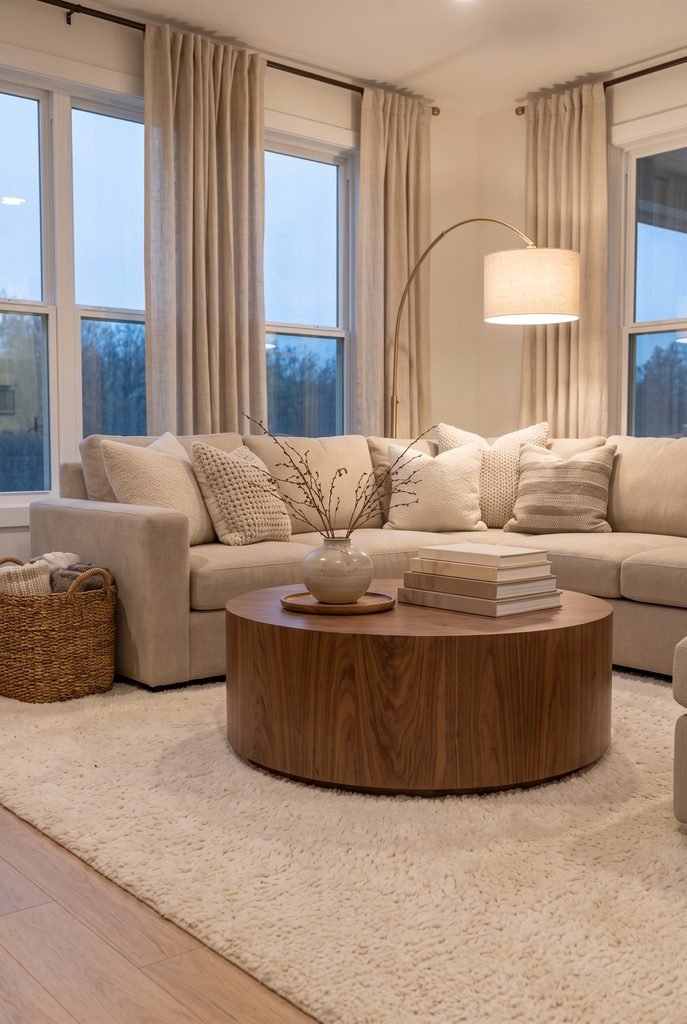
The coffee table often sits at the center of the living room, so choosing a piece with warmth and character can influence the entire space. A round wooden table softens a room filled with straight furniture lines, while a chunky rectangular table can work well in a larger seating arrangement.
Keep the styling practical. A tray can gather small decorative objects, while a ceramic vase or bowl adds height and texture. Leave enough open space for drinks, books, and everyday use. The goal is a table that looks attractive while still feeling like something the household can actually use.
10. Decorate With Oversized Cushions
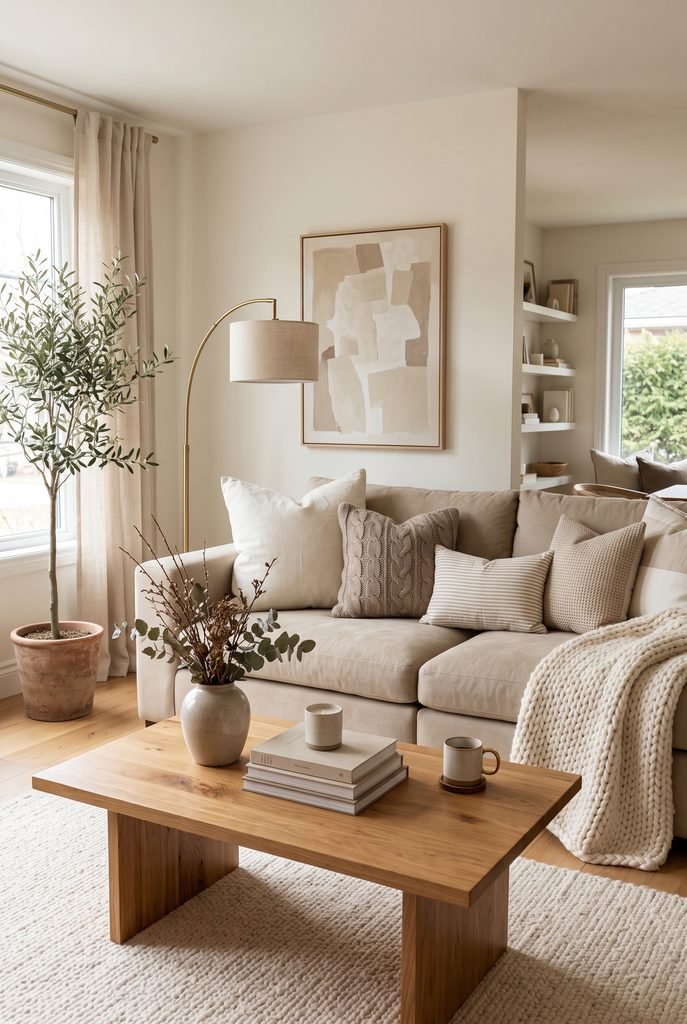
Larger cushions can make a sofa feel deeper and more relaxed. Instead of using many tiny pillows, try combining a few generously sized cushions with different textures. A pair of large linen cushions at the back can be layered with smaller knitted or woven pieces in front.
Choose patterns carefully so the room stays cohesive. A subtle stripe, small check, or understated geometric design can add personality without overwhelming a neutral interior. If the sofa is already patterned, keep most of the cushions solid and textured. This creates a cozy arrangement that feels comfortable rather than overly styled.
11. Use Floor-to-Ceiling Curtains
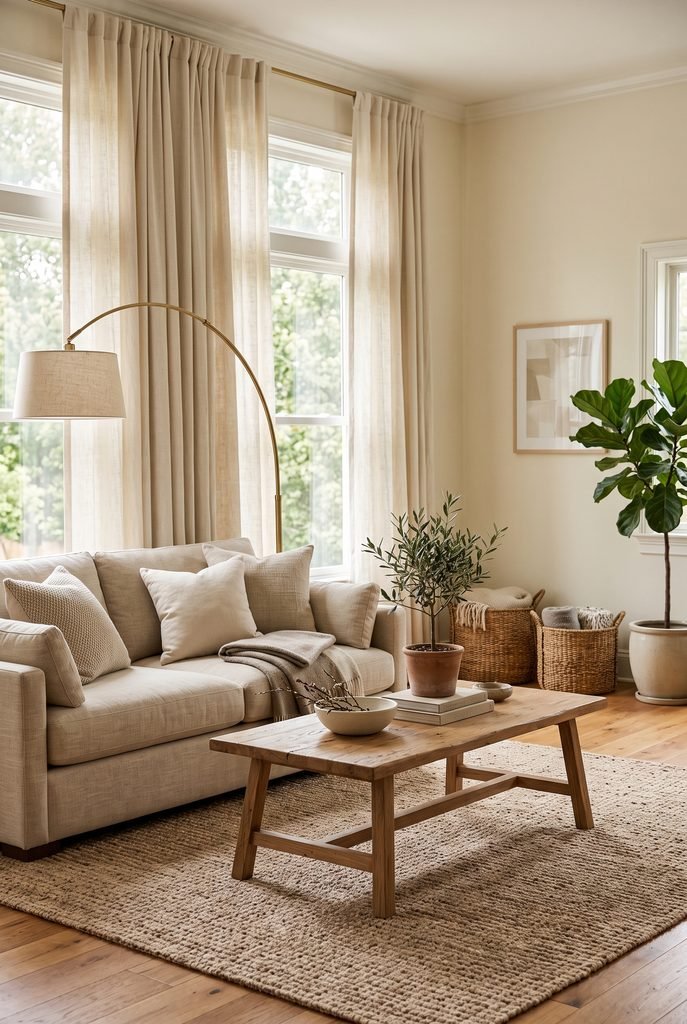
Curtains can contribute much more to coziness than many people expect. Full-length curtains soften hard window edges and introduce another layer of fabric into the room. Linen or linen-look panels in cream, oatmeal, or warm white work especially well with neutral interiors.
Hang the curtain rod high and allow the fabric to reach close to the floor for a more polished appearance. If privacy is not a concern, sheer panels can provide softness while still allowing daylight into the room. Heavier curtains can add extra visual warmth and create a more enclosed feeling in the evening.
12. Create a Cozy Gallery Wall
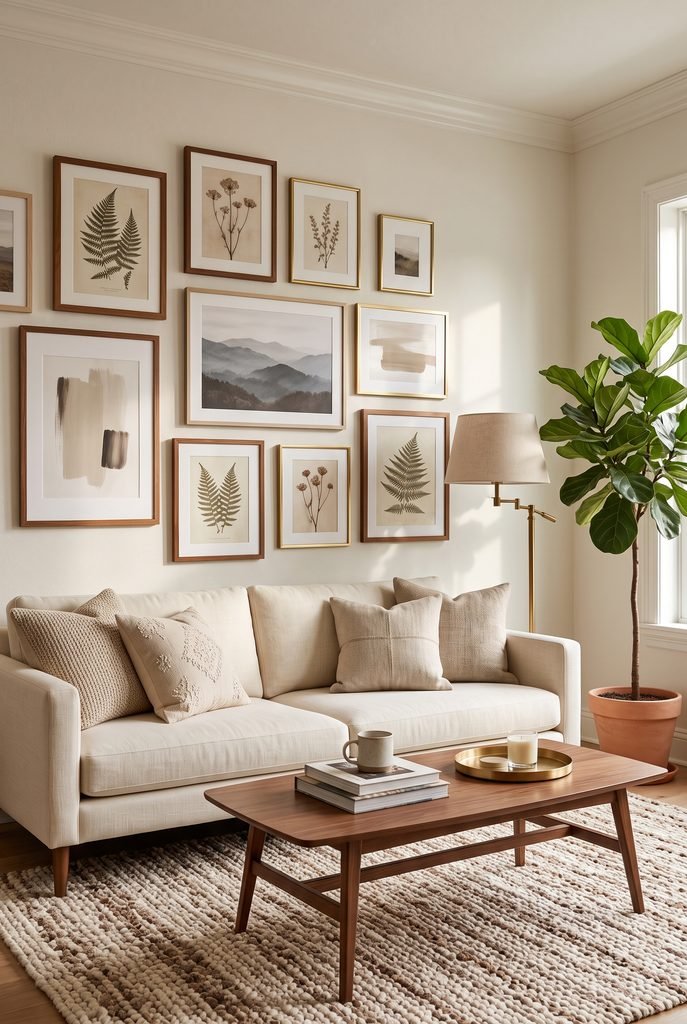
Artwork can make a living room feel personal without adding clutter to the floor. A gallery wall above the sofa is a useful way to introduce color, pattern, and visual interest. For a cozy look, choose artwork with muted landscapes, botanical illustrations, abstract shapes, or warm neutral tones.
Frames do not have to be identical. A mixture of natural wood, black, brass, or antique-inspired finishes can create a collected appearance. Before hanging everything, arrange the frames on the floor so you can experiment with spacing and proportions. Keep the overall composition connected to the width of the furniture below it.
13. Add a Built-In Bookcase
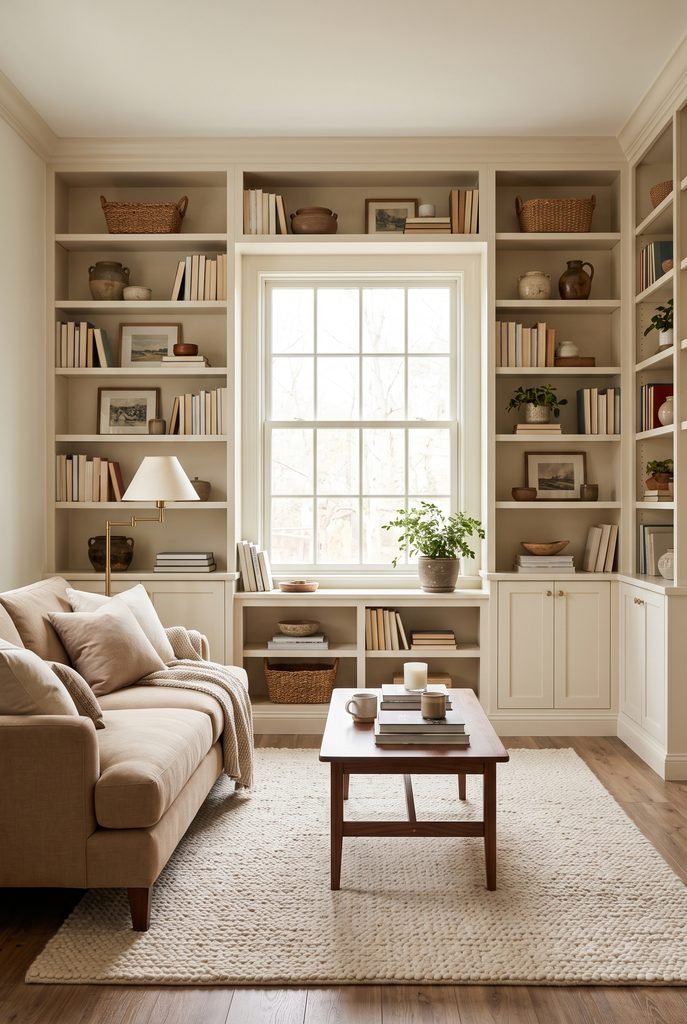
Built-in shelving can make a living room feel warm and established while providing useful storage. Fill the shelves with a combination of books, baskets, ceramics, framed artwork, and a few plants. Leaving some open space between objects is important because completely packed shelves can make the room feel visually heavy.
For a cohesive appearance, repeat a few colors found elsewhere in the room. Warm wood, cream ceramics, muted green, and natural woven materials work particularly well. If you do not have built-ins, freestanding bookcases can create a similar effect and give you flexibility if your layout changes later.
14. Bring in Indoor Greenery
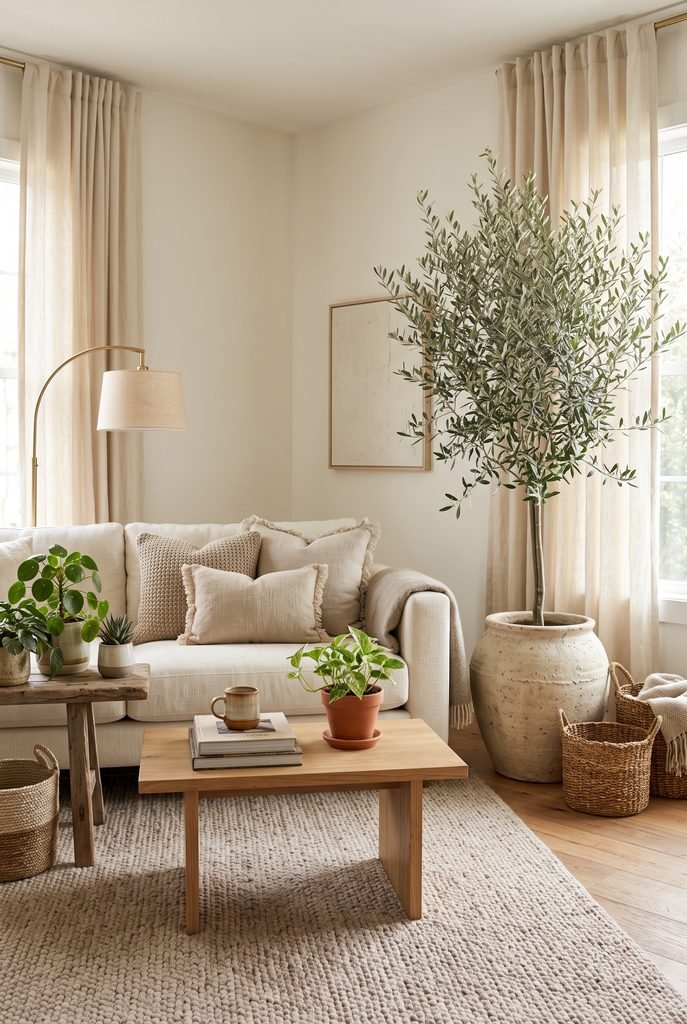
Plants add a natural element to a living room and can break up a neutral color scheme. A tall plant in an attractive planter can fill an empty corner, while smaller plants work nicely on shelves, side tables, or a console. Choose containers that complement the room rather than treating every planter as a separate decorative statement.
If you prefer a simpler look, one large plant can be enough. Olive trees, leafy tropical plants, and understated branches all suit warm interiors. Position greenery where it receives suitable light for the plant you choose. The visual effect should feel fresh and organic without turning the living room into a crowded indoor garden.
15. Mix Leather With Soft Fabrics
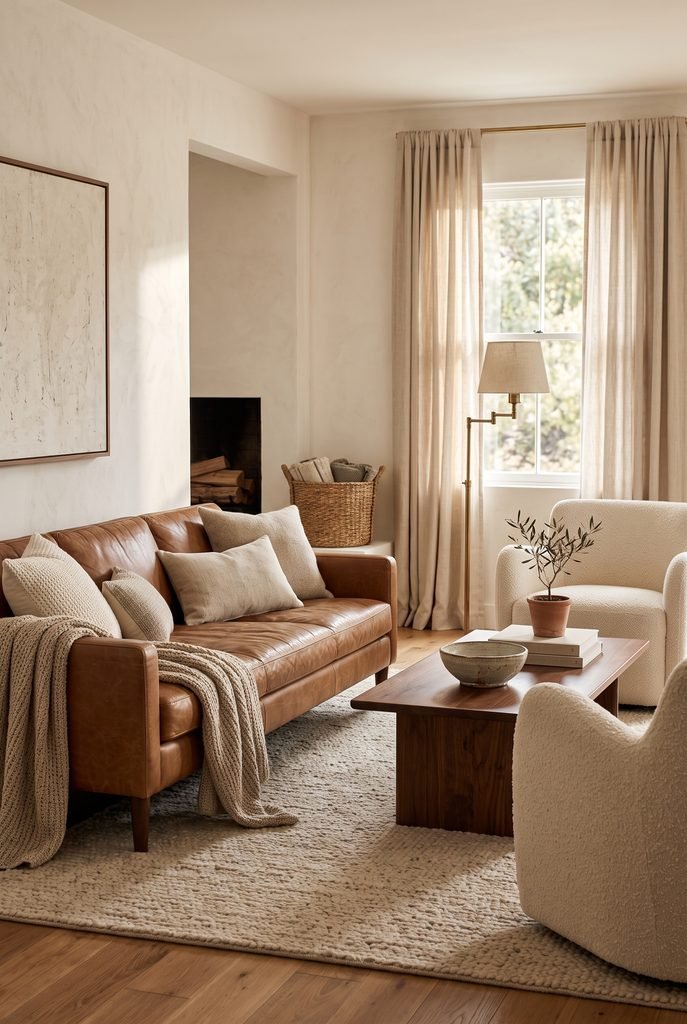
Leather can bring depth and character to a cozy living room, especially when balanced with softer materials. A caramel or cognac leather sofa looks inviting when paired with wool rugs, linen cushions, knitted throws, and upholstered accent chairs. The contrast keeps the room from feeling too uniform.
Warm leather tones work particularly well with walnut, oak, cream, beige, and muted green. If a full leather sofa feels too strong for your space, consider a leather ottoman or accent chair instead. Mixing materials is the important part. Soft upholstery provides comfort while leather contributes structure and a subtle sense of richness.
16. Use a Warm Accent Wall
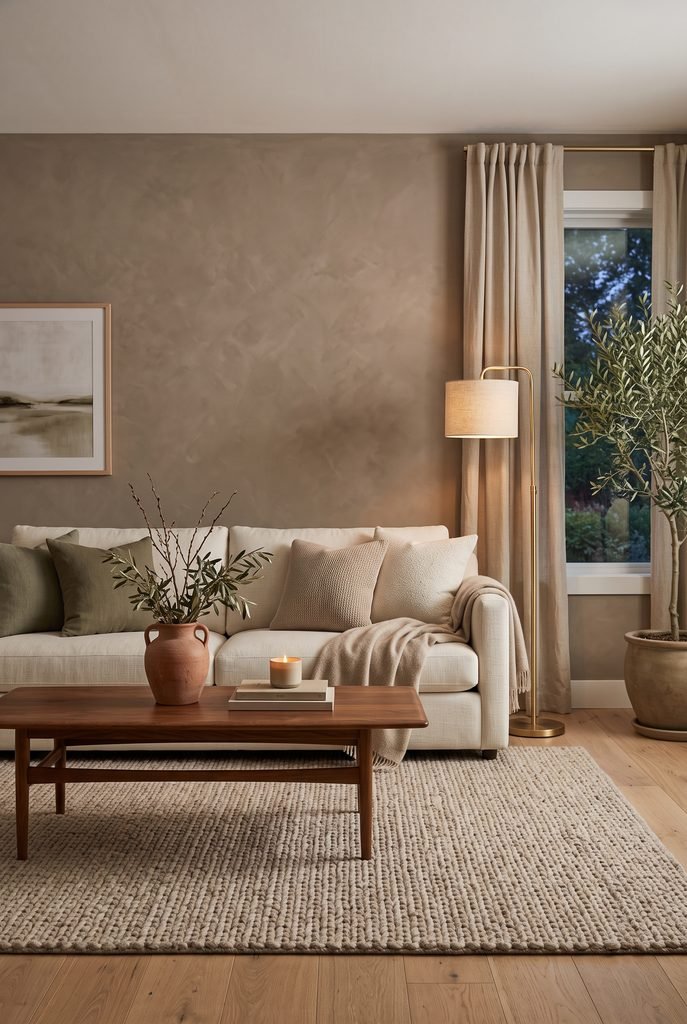
An accent wall can make a living room feel more intimate without changing every surface. Warm taupe, muted clay, mushroom, olive, or soft brown can create a gentle backdrop for lighter furniture. A subtly textured paint finish can add depth, but even a simple matte color can work beautifully.
Keep the surrounding furnishings relatively calm so the wall has room to breathe. A cream sofa against a warm taupe wall creates an especially comfortable contrast. If you rent or prefer temporary changes, artwork, a large textile wall hanging, or removable wallpaper can provide a similar visual effect.
17. Create a Cozy Conversation Layout
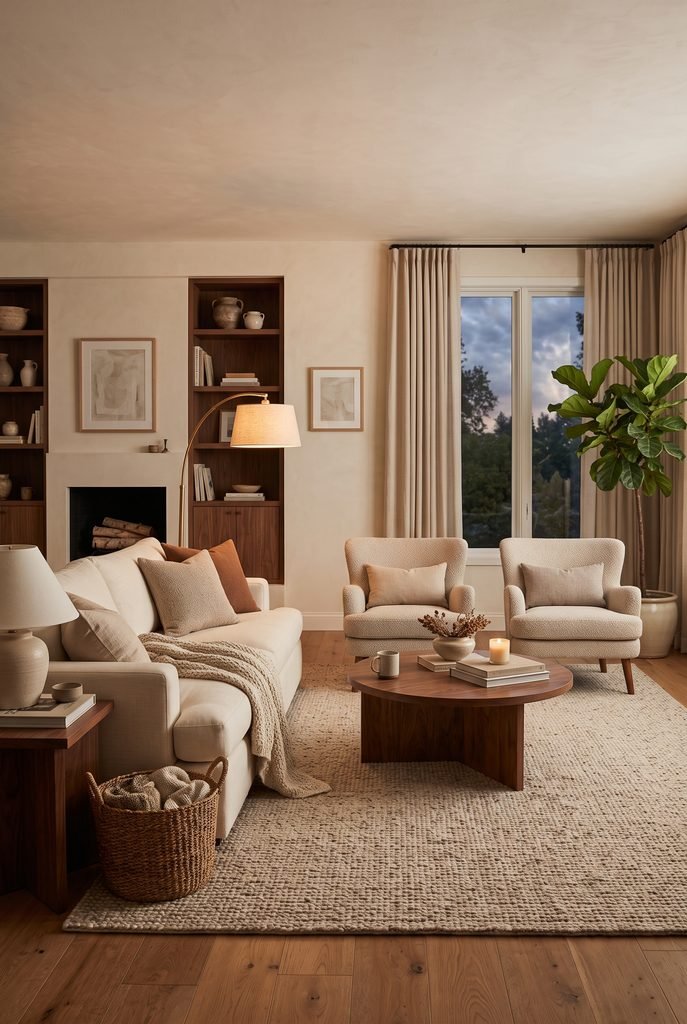
Furniture placement has a major impact on how welcoming a living room feels. Instead of pushing every piece against the walls, try creating a defined seating group with the sofa and chairs facing one another. A coffee table in the center helps connect the arrangement and keeps essentials within reach.
Leave enough walking space around the seating so the room does not feel cramped. In larger rooms, a rug can help visually define the conversation area. The arrangement should make it easy for people to sit comfortably and talk without having to turn awkwardly toward one another.
18. Add a Cozy Ottoman
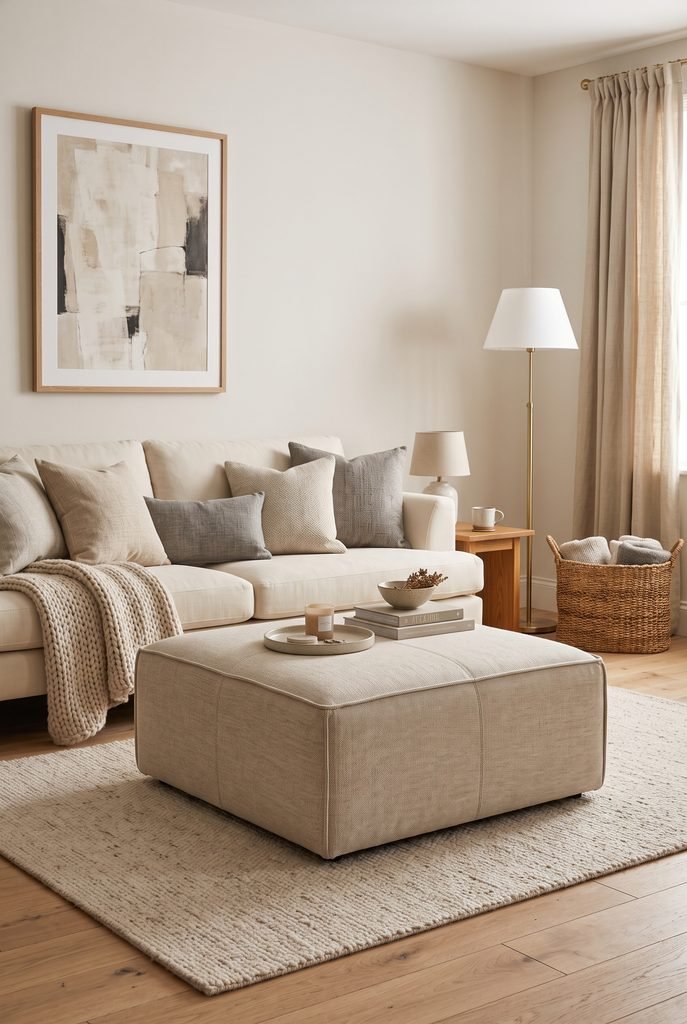
An upholstered ottoman can make a living room feel softer and more relaxed than a traditional hard coffee table. Choose a generously sized piece in linen, boucle, velvet, or another durable fabric that complements the sofa. A tray placed on top provides a stable surface for drinks and decorative items.
An ottoman can also serve several purposes throughout the day. It can work as a footrest, extra seating, or a casual place to set a book. For small rooms, choose one with hidden storage so blankets and other living room essentials can disappear when they are not being used.
19. Style With Woven Baskets
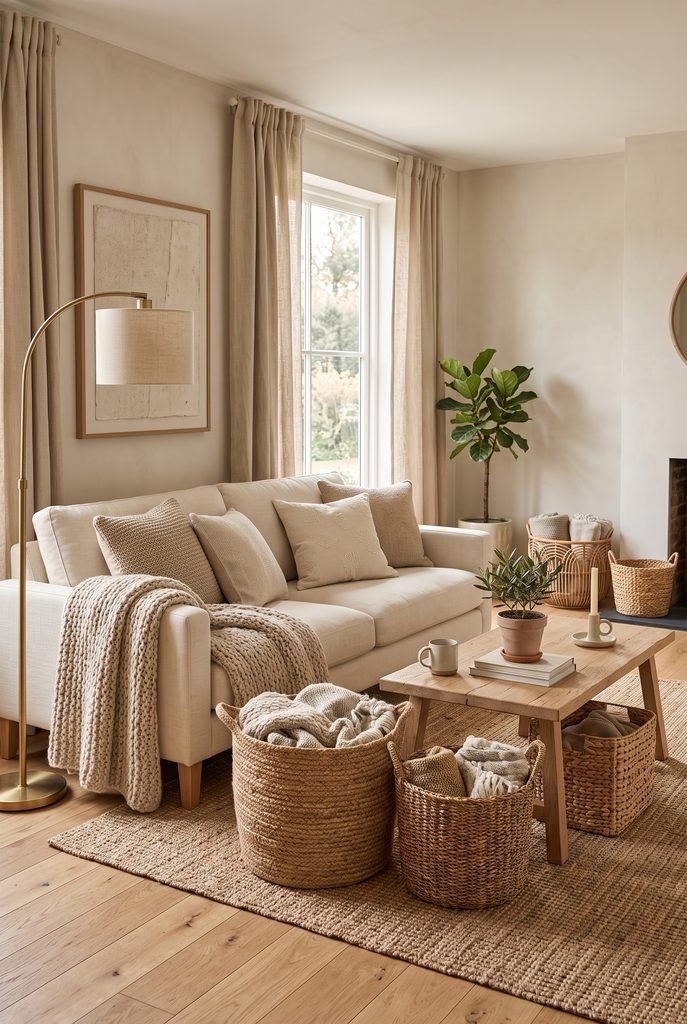
Woven baskets are one of those decor pieces that can look attractive while solving a practical problem. Place a large basket beside the sofa for blankets, a smaller one underneath a console for accessories, or a lidded basket in an unused corner for items you want nearby but out of sight.
Natural seagrass, rattan, jute, and water hyacinth textures pair beautifully with warm neutral rooms. Rather than using many baskets throughout the space, choose a few in complementary shapes and tones. This keeps the room organized while adding the tactile character that makes cozy interiors feel inviting.
20. Layer Wall Art Above the Sofa
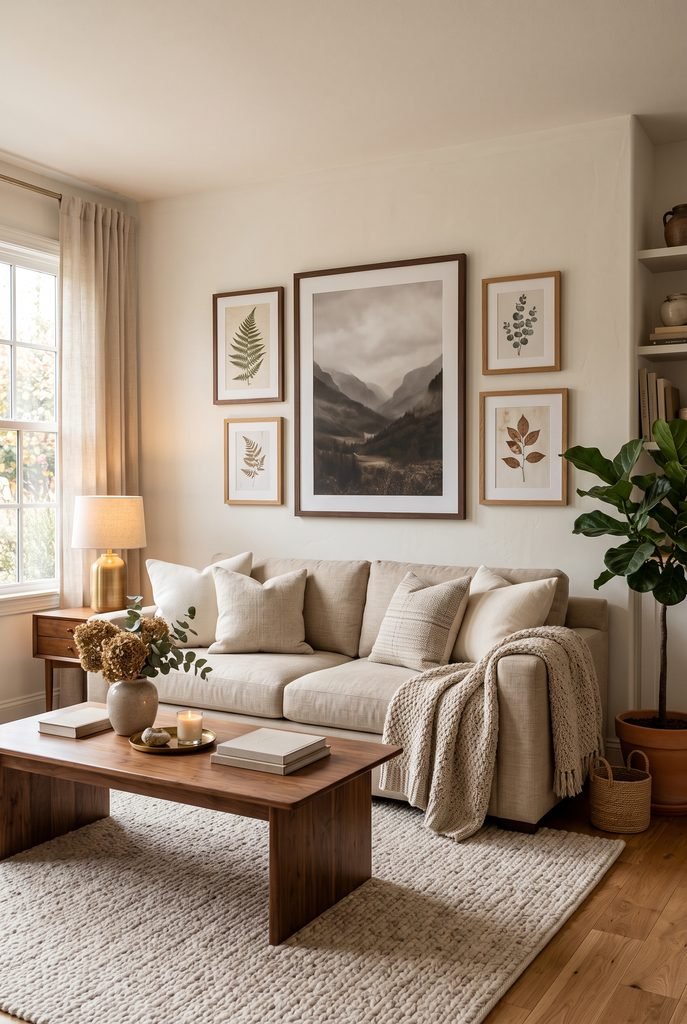
The wall above the sofa is often a large blank area that can make a living room feel unfinished. A thoughtfully arranged selection of artwork can fill that space while adding personality. Try one large statement print or several smaller pieces arranged in a balanced composition.
Landscape art, botanical prints, abstract pieces, and quiet photography can all suit a cozy interior. Choose frames that relate to your existing furniture and accessories. The artwork does not have to match exactly, but repeating a few colors throughout the room will help the entire arrangement feel intentional.
21. Introduce Soft Candlelight
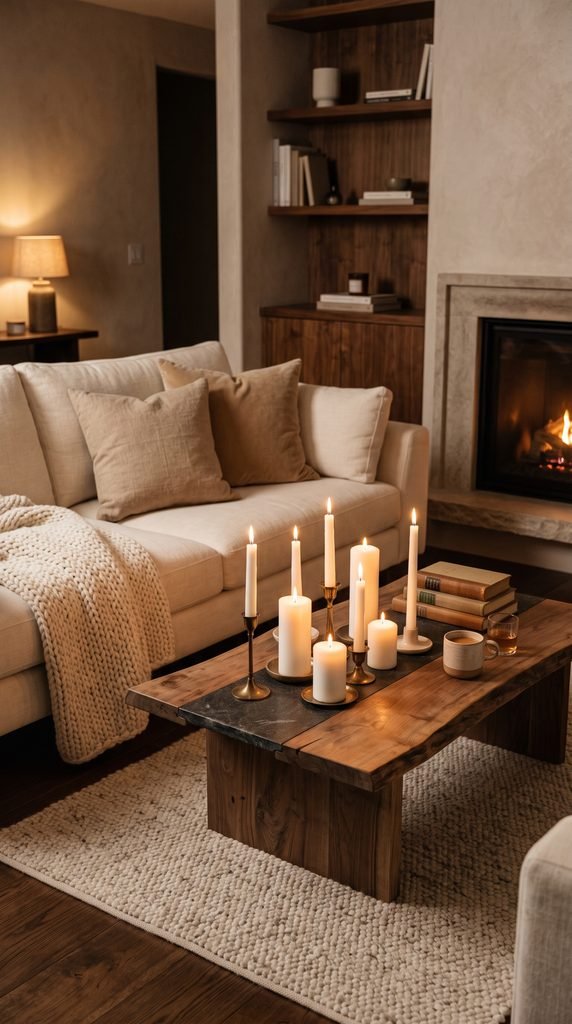
Candlelight can add a gentle glow that feels especially cozy in the evening. Use a small grouping of candles on a tray, mantel, or coffee table rather than scattering them randomly around the room. Glass holders, ceramic vessels, or simple brass holders can complement different decorating styles.
For safety, keep candles on stable, heat-resistant surfaces and away from fabrics, curtains, children, and pets. Flameless LED candles are another practical option if you want a similar atmosphere without an open flame. The goal is soft illumination rather than a room filled with decorative objects.
22. Try a Cozy Modern Rustic Style
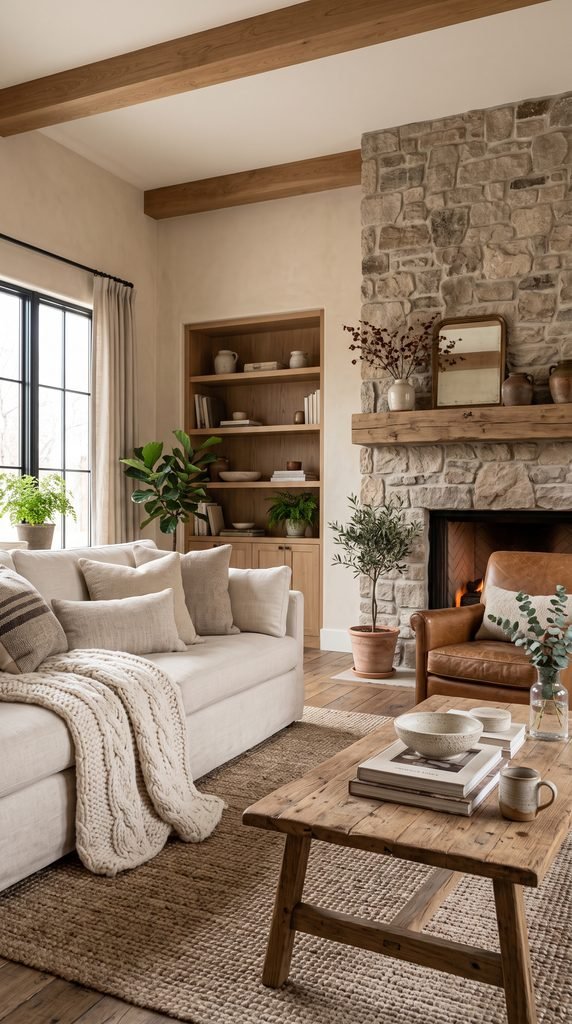
Modern rustic decorating combines the comfort of traditional materials with cleaner contemporary shapes. Think natural wood, stone, leather, linen, woven textiles, and simple furniture rather than heavily distressed pieces. A cream sofa paired with a substantial wood coffee table can establish the look without making the room feel themed.
Keep accessories restrained and choose pieces with visible texture. A stone fireplace, woven rug, or leather chair can become a focal point while the rest of the room stays calm. Warm neutrals help connect the different materials and create an inviting atmosphere that feels relaxed rather than overly formal.
23. Make a Small Living Room Feel Cozy
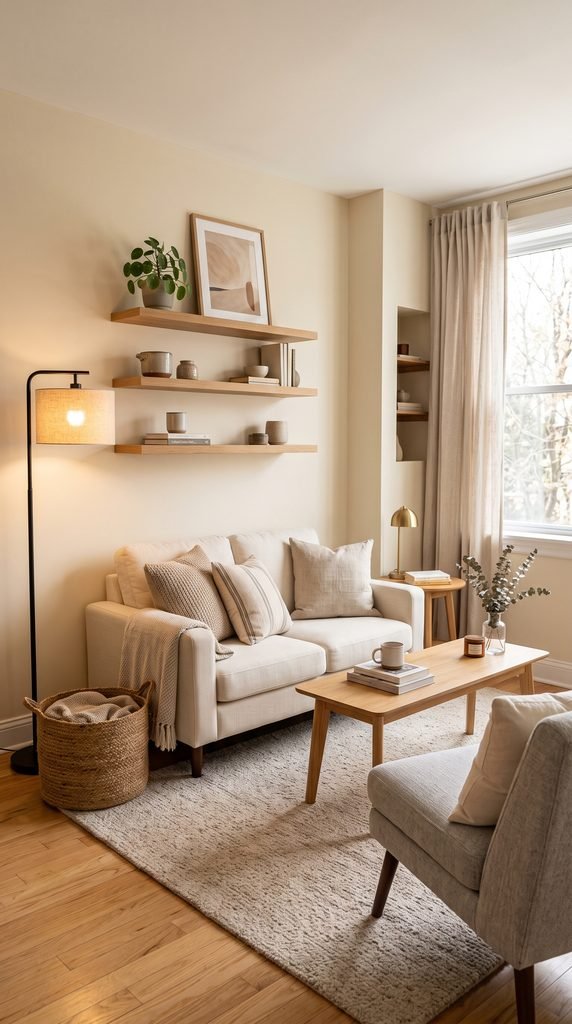
Small living rooms can actually feel especially cozy because the seating naturally creates a more intimate atmosphere. Choose furniture that fits the room rather than oversized pieces that block pathways. A compact sofa, slim coffee table, and one comfortable accent chair can provide plenty of seating without making the room feel crowded.
Use vertical space for storage and decoration. Wall shelves, tall curtains, and narrow bookcases can draw the eye upward while preserving valuable floor area. A light rug, warm lighting, and a few carefully chosen textiles will add softness without creating visual clutter.
24. Combine Cream With Deep Brown
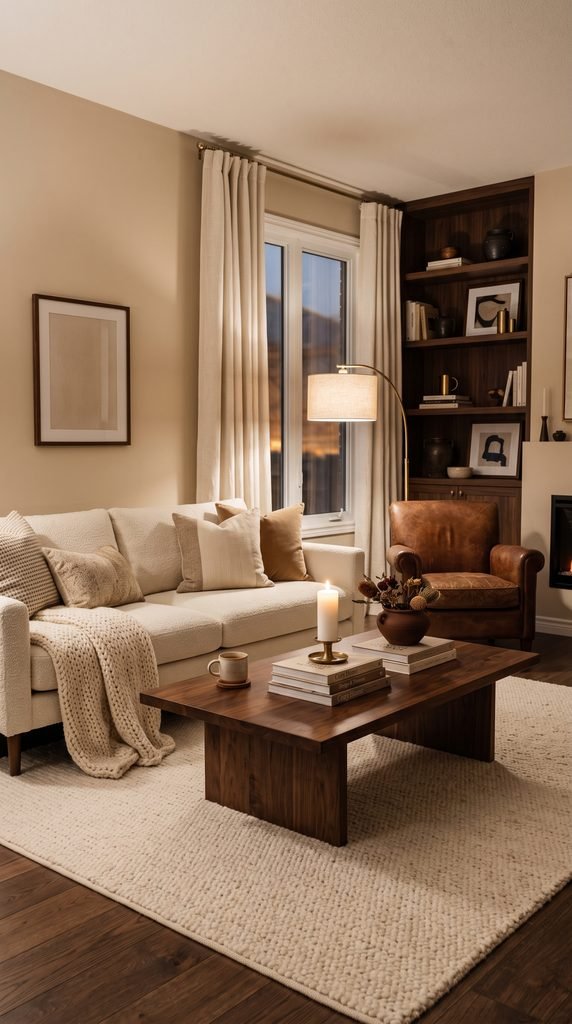
Cream and deep brown create a classic combination for a warm living room. Use cream as the lighter foundation through the sofa, rug, curtains, or walls, then introduce deeper brown through wood furniture, leather, cushions, or smaller decorative pieces.
The contrast gives the room depth without requiring bright colors. Walnut furniture is particularly effective because its natural grain adds visual warmth. If the room begins to feel too dark, balance the deeper tones with warm white textiles, pale ceramics, and plenty of layered lighting.
25. Add Seasonal Cozy Accents
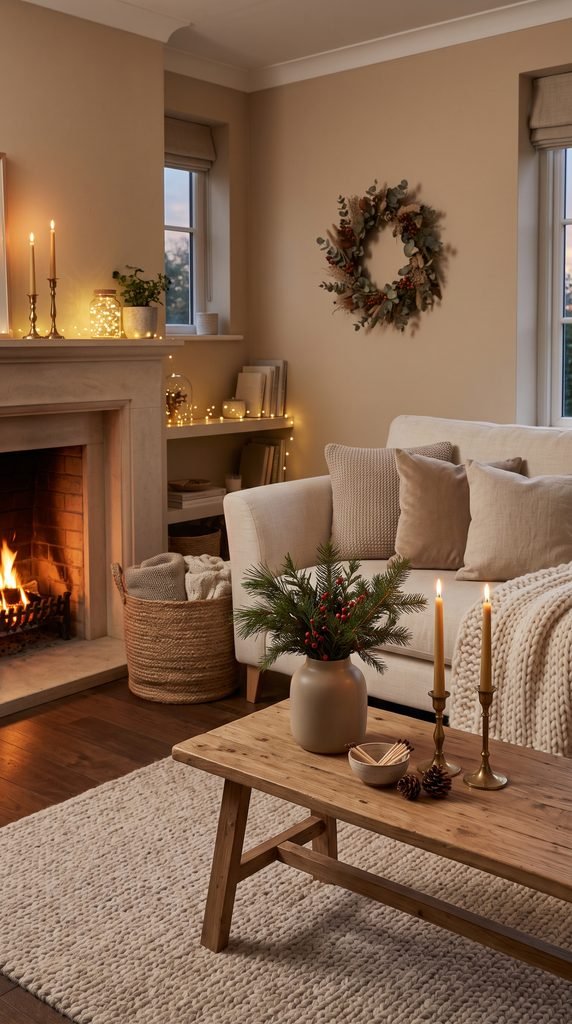
Seasonal decorating can make a cozy living room feel fresh without requiring a complete makeover. Instead of replacing large furniture pieces, change smaller details such as cushions, throws, greenery, candles, or tabletop decor. This makes it easier to adjust the room throughout the year.
For a winter-inspired look, evergreen branches, warm lights, cream knits, and subtle brass accents can create a welcoming atmosphere. During other seasons, swap these details for lighter fabrics, fresh greenery, or natural decorative objects. Keeping the larger furniture neutral gives you plenty of flexibility.
26. Create a Cozy Layered Lighting Nook
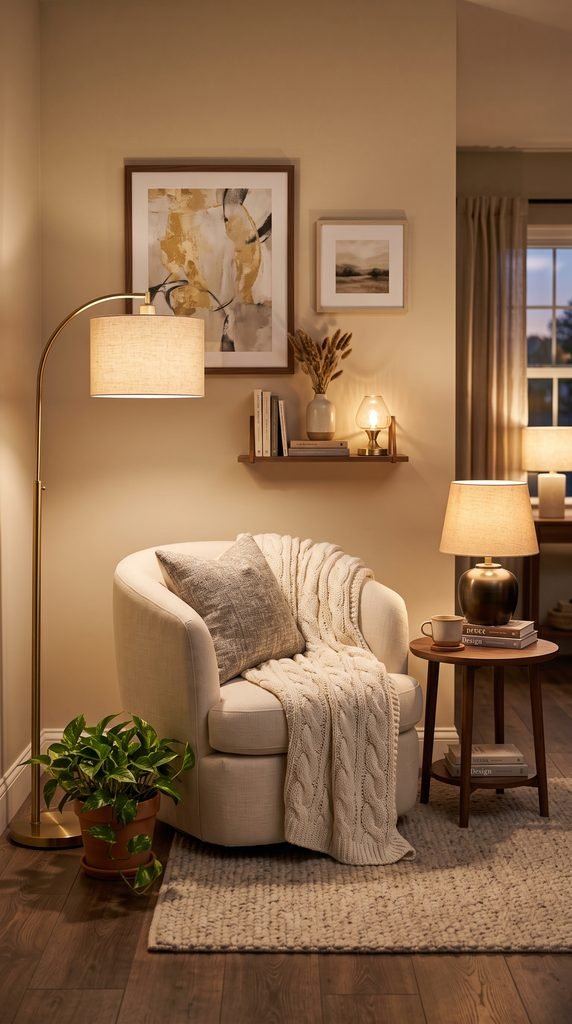
A quiet corner with several layers of lighting can give a living room a completely different mood after dark. Combine a table lamp, floor lamp, and small decorative light so the illumination comes from different heights. This creates a softer effect than relying on a single central ceiling fixture.
Keep the furniture simple and comfortable. A chair, small side table, throw, and a piece of artwork may be all the space needs. Warm bulbs and fabric shades help diffuse the light. This type of nook works particularly well beside a bookshelf, window, or empty corner that otherwise feels overlooked.
27. Finish With a Collected, Lived-In Look
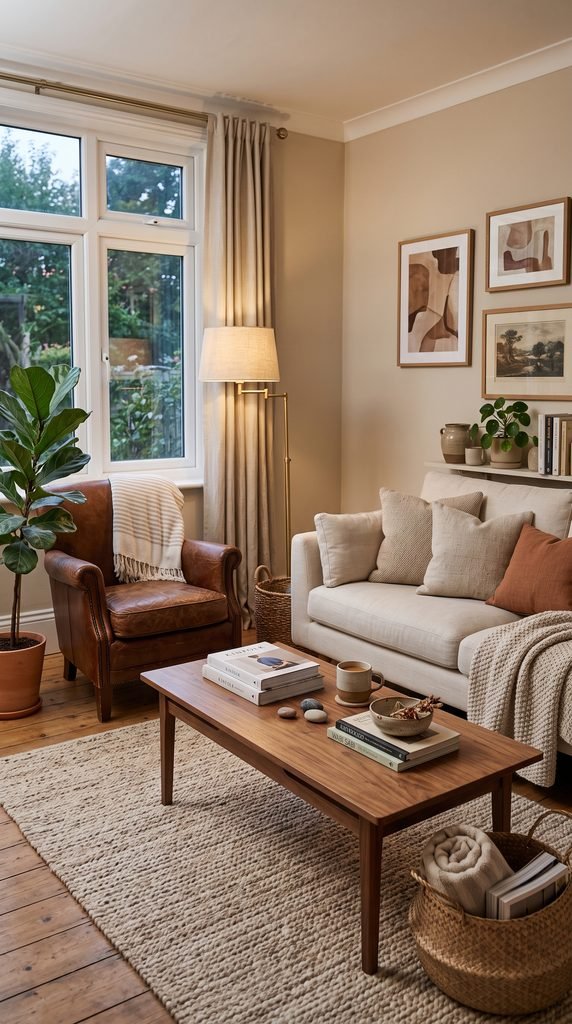
The coziest living rooms rarely look as though every object was purchased at the same time. Mixing new pieces with vintage-inspired furniture, handmade-looking ceramics, books, woven accessories, and natural materials can give the room more personality. The result should feel collected rather than perfectly coordinated.
Leave a little breathing room between decorative pieces and allow useful objects to remain visible. A blanket over the sofa, a book on the coffee table, or a basket beside a chair can make the room feel ready to use. Cozy decorating is ultimately about creating a space that feels comfortable, welcoming, and genuinely connected to everyday living.
Bringing Your Cozy Living Room Together
A warm living room usually comes together through layers rather than one dramatic change. Start with the pieces that have the biggest impact, such as the sofa, rug, curtains, and lighting. Once those feel right, add smaller touches like cushions, throws, baskets, artwork, greenery, and ceramics.
Pay attention to how the room feels at different times of day. Natural daylight may highlight your textures beautifully, while evening lighting can completely change the atmosphere. You do not need to copy every idea in this list. Choose the ones that suit your room, lifestyle, and existing furniture, then build gradually. A comfortable living room should feel inviting enough for quiet evenings, casual conversations, and everyday moments.
Frequently Asked Questions
How can I make my living room feel cozy without buying new furniture?
Start by changing the layers around your existing furniture. Add a textured throw, rearrange cushions, introduce a soft rug, and use several warm light sources instead of one overhead fixture. Moving furniture into a more conversational arrangement can also make a noticeable difference without spending anything.
What colors make a living room feel warm and cozy?
Warm neutrals such as cream, beige, taupe, caramel, brown, and warm gray are easy choices for a cozy palette. You can also introduce muted earthy colors such as olive, terracotta, clay, or rust. Using several related shades creates depth while keeping the room visually calm.
How do I make a small living room feel more inviting?
Choose furniture that fits the scale of the room and avoid blocking pathways. Use a properly sized rug to connect the seating area, add vertical storage where possible, and use warm layered lighting. Light curtains and a limited number of decorative accessories can help the room feel comfortable without becoming crowded.
What type of lighting is best for a cozy living room?
A combination of lighting sources usually works better than relying on one fixture. Try a floor lamp beside the sofa, table lamps on side tables or consoles, and small accent lights on shelves. Warm-toned bulbs can complement neutral fabrics, wood, and earthy colors while creating a softer evening atmosphere.
How can I decorate my living room for a cozy seasonal look?
Keep your larger furniture and main decor relatively neutral, then update smaller pieces throughout the year. Throws, cushions, candles, greenery, wreaths, and tabletop accessories can introduce seasonal character without requiring a complete room makeover. For winter, warm knits, evergreen branches, soft lighting, and natural textures create a particularly inviting atmosphere.