27 Transitional Living Room Ideas That Blend Classic and Modern Style
A transitional living room has a special kind of charm. It brings together the timeless beauty of traditional interiors and the clean, comfortable feel of modern design. The result is a room that feels polished without being overly formal, cozy without looking cluttered, and stylish without following every passing trend.
One of the things I love about transitional living room design is how flexible it can be. You can pair a classic tufted sofa with a simple contemporary coffee table, mix warm wood furniture with elegant brass accents, or introduce modern lighting alongside traditional architectural details. Small choices like these make a room feel thoughtfully decorated rather than overly matched.
In this collection of 27 transitional living room ideas, you’ll find beautiful furniture combinations, calming color palettes, layered textures, elegant lighting, and practical decorating inspiration. Whether you’re refreshing an existing room or planning a complete makeover, these ideas will help you create a welcoming space that feels timeless and current.
1. Neutral Transitional Living Room With Timeless Furniture
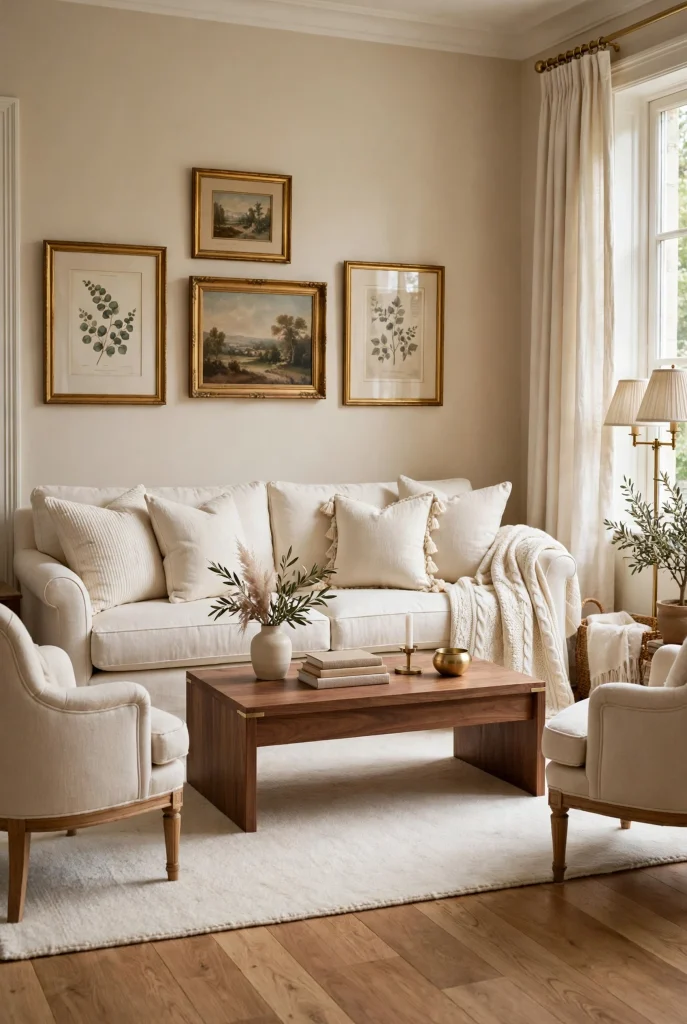
A neutral transitional living room is a lovely starting point if you appreciate both traditional elegance and modern simplicity. Begin with a comfortable sofa in ivory, beige, or warm taupe. Add classic accent chairs with softly curved arms and a coffee table featuring clean contemporary lines. These contrasting shapes create visual interest without making the room feel busy. A large cream rug can help anchor the furniture while giving the space a softer, more welcoming foundation.
Keep the remaining decor thoughtfully layered. Traditional framed artwork, simple ceramic vases, and understated brass accessories work beautifully together. I especially like the combination of warm wood and soft upholstery because it gives a neutral room more depth. Choose a few different textures rather than filling every surface with decorations. The finished space should feel collected, comfortable, and effortlessly balanced.
2. Cream and Beige Transitional Living Room
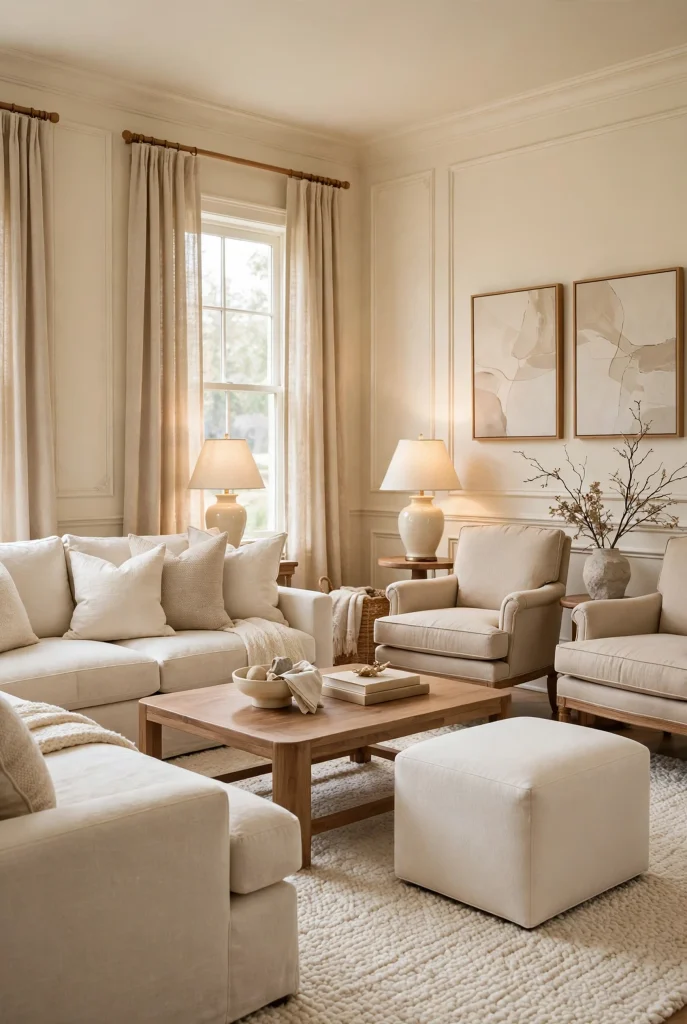
Cream and beige create a beautiful foundation for transitional interiors because these colors feel equally at home in classic and contemporary spaces. A cream sofa paired with beige armchairs creates a gentle contrast while keeping the overall room calm. Consider an upholstered ottoman instead of a traditional coffee table if you want a softer appearance. Light walnut furniture and a textured area rug introduce warmth without distracting from the neutral palette.
The secret to making this combination interesting is layering different shades and finishes. Use linen curtains, boucle cushions, woven baskets, and ceramic accessories to create subtle variation. Wall molding can add traditional character, while simple artwork keeps the room feeling current. The result is a comfortable living room that feels refined without becoming too formal.
3. Classic Tufted Sofa With Modern Coffee Table
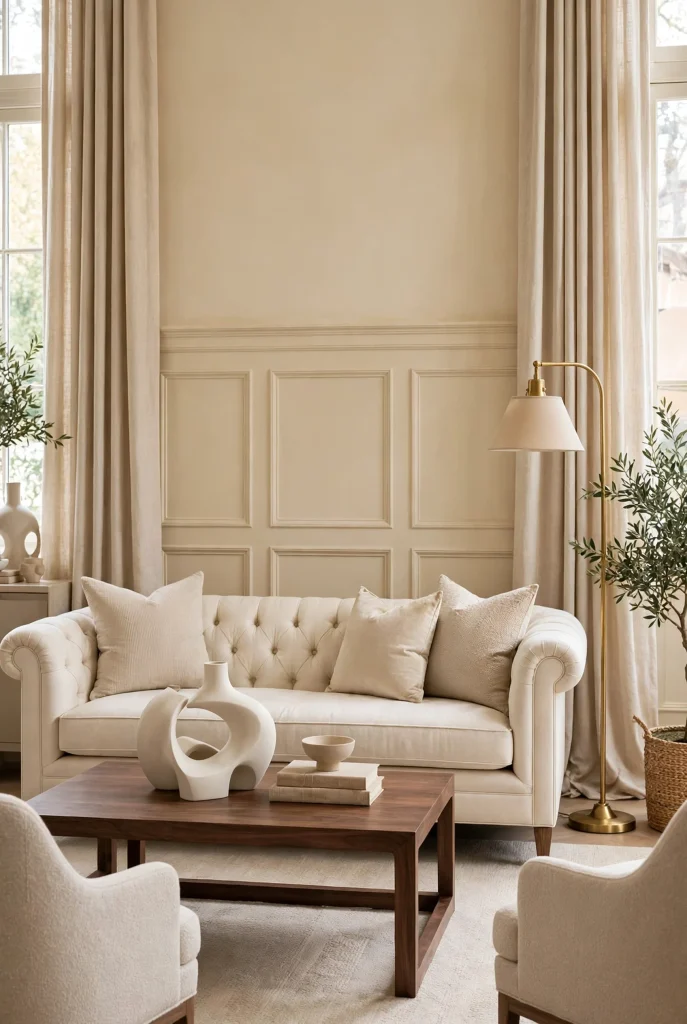
A classic tufted sofa can bring instant character to a transitional living room. Its button detailing and traditional silhouette introduce a sense of elegance, especially when upholstered in a soft neutral fabric. Instead of surrounding it with equally traditional furniture, introduce a modern coffee table with a simple walnut finish and clean architectural shape. This contrast prevents the room from looking like a formal furniture showroom.
Balance the sofa with contemporary accent chairs, a neutral rug, and understated decorative pieces. A sculptural ceramic bowl or a stack of carefully selected books can make the coffee table feel finished. Keep the cushions relaxed rather than perfectly arranged. This combination works particularly well when you want traditional furniture to feel fresh, comfortable, and appropriate for everyday living.
4. Transitional Living Room With Warm Wood Accents
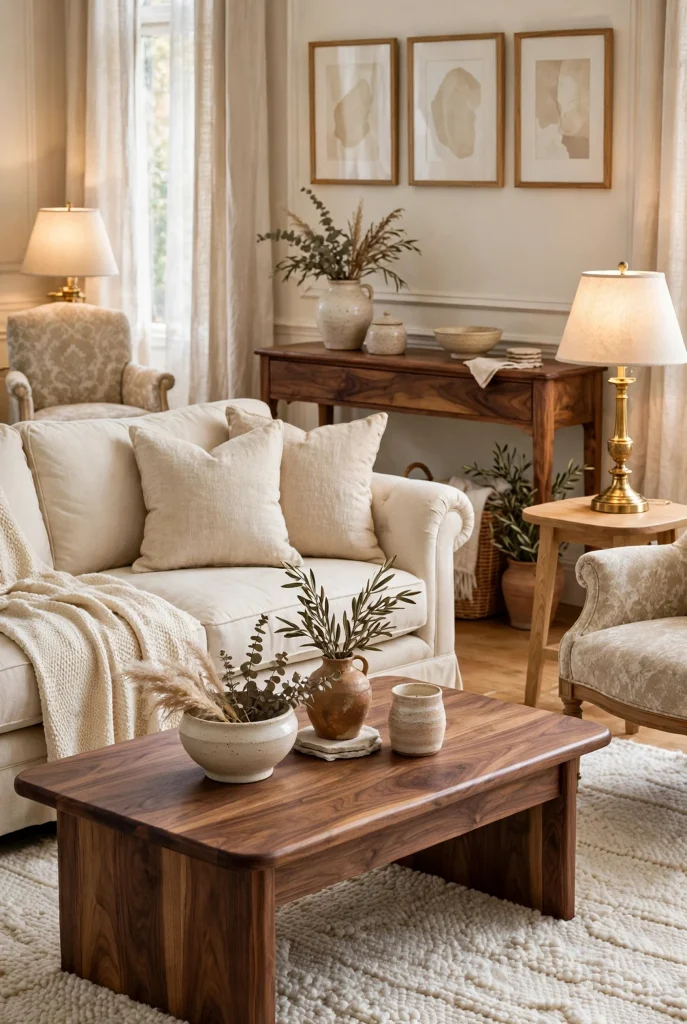
Wood is one of the easiest ways to make a transitional living room feel warm and welcoming. Walnut, oak, and other natural finishes bring a traditional sense of richness while working beautifully with modern furniture. A walnut coffee table can become the focal point of the seating area, especially when surrounded by light upholstered furniture and a soft neutral rug. A wooden console behind the sofa adds another layer of warmth.
Try mixing different wood tones carefully rather than purchasing every piece in an identical finish. The undertones should complement one another, even if the shades are slightly different. Pair the furniture with brass lamps, ceramic accessories, and simple artwork. These details help connect the traditional warmth of wood with the clean appearance of contemporary decor.
5. Transitional Living Room With Elegant Wall Molding
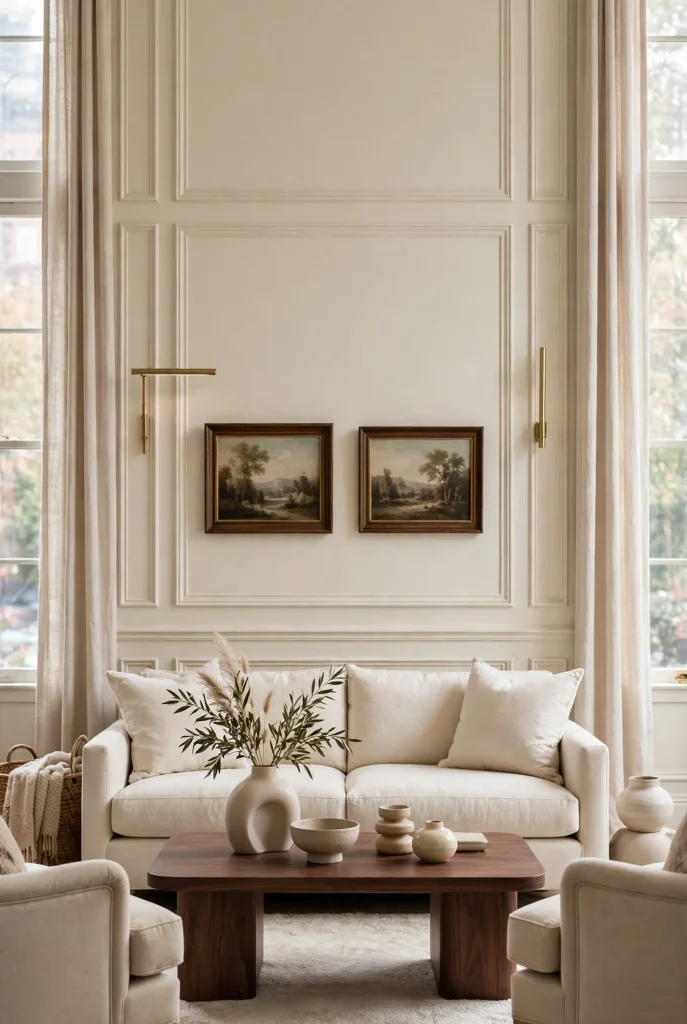
Wall molding adds architectural interest that can make even a simple living room feel more considered. Traditional panel details look especially attractive when painted the same warm ivory or soft beige as the surrounding walls. This creates depth without introducing a strong color contrast. Pair the molding with a comfortable modern sofa and streamlined coffee table to keep the overall design from becoming too formal.
Lighting and artwork can help complete the look. Consider slim brass sconces, understated framed prints, or a large contemporary painting centered above the sofa. Avoid overly decorative accessories that compete with the wall details. The goal is to let the architecture provide the traditional character while the furniture and decor introduce a fresh, relaxed atmosphere.
6. Modern Transitional Living Room With Curved Furniture
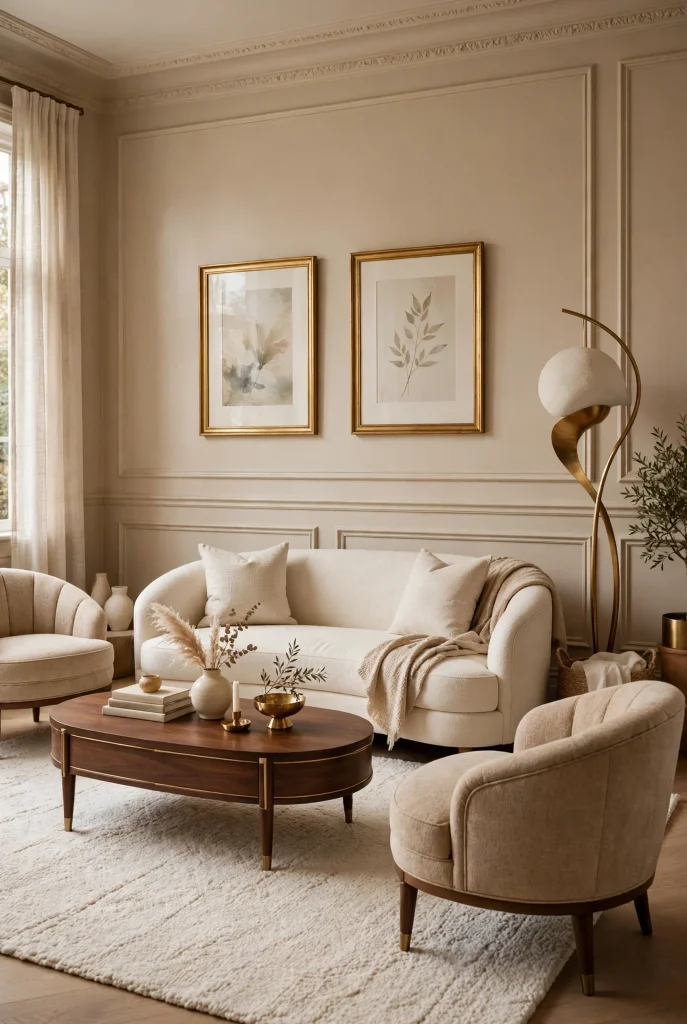
Curved furniture is a beautiful way to soften the appearance of a transitional living room. A gently rounded sofa or pair of curved accent chairs introduces a modern silhouette without making the room feel too contemporary. These shapes look particularly appealing against traditional architectural features such as wall molding, tall windows, or classic wood flooring. An oval coffee table can continue the softer lines while providing a practical surface.
Keep the upholstery in a warm neutral shade so the furniture feels connected to the rest of the room. A sculptural floor lamp and simple decorative objects add contemporary character, while framed artwork and brass accents provide a more traditional touch. Leave enough space around curved furniture to appreciate its shape and maintain an easy walking path.
7. Transitional Living Room With a Classic Fireplace
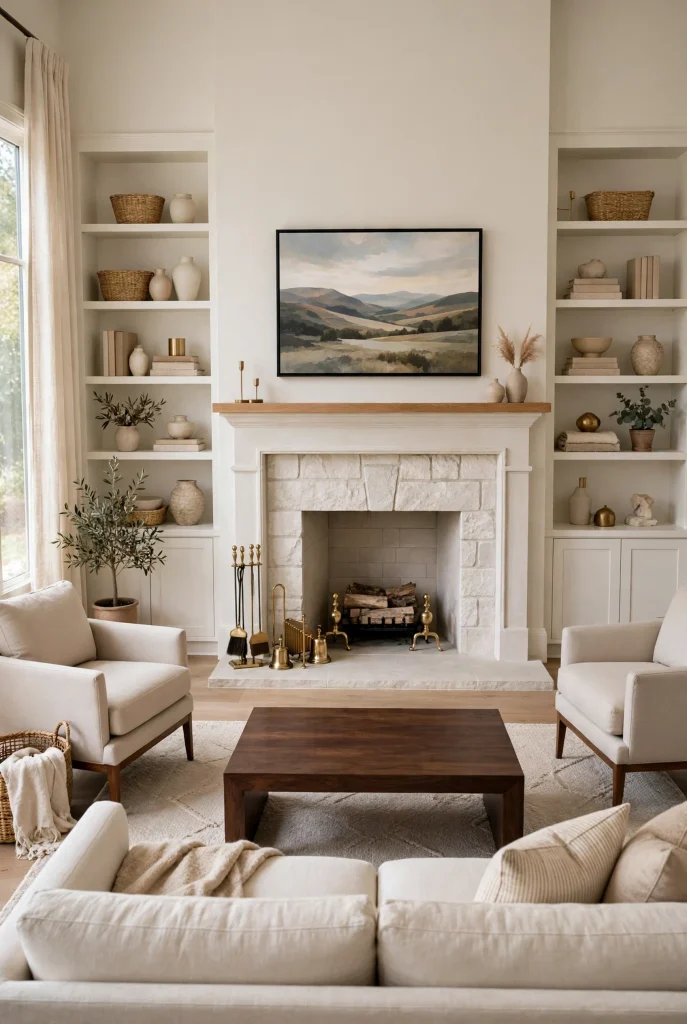
A fireplace naturally creates a focal point, making it a wonderful feature for a transitional living room. A traditional limestone or painted wood mantel introduces classic character, while simple furniture keeps the surrounding space feeling fresh. Arrange a comfortable sofa and a pair of modern armchairs around a walnut coffee table to create an inviting conversation area. A neutral rug helps bring the seating arrangement together.
Keep the mantel styling relatively simple. One large framed artwork, a pair of understated candleholders, or a few ceramic objects can provide enough decoration. Built-in shelving beside the fireplace offers room for books and carefully selected accessories. This approach allows the fireplace to remain the traditional centerpiece while the rest of the room feels relaxed and contemporary.
8. Transitional Living Room With Navy Blue Accents
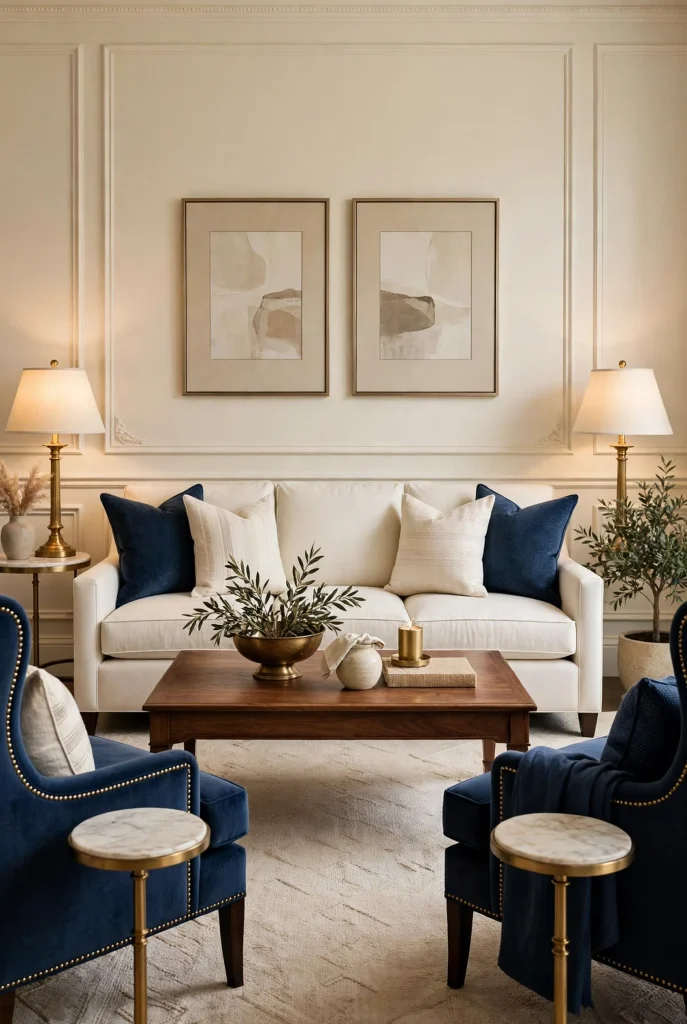
Navy blue is a wonderful choice when you want a transitional living room to have a little more personality. It brings depth and a classic sense of elegance without requiring a dramatic change to the entire color scheme. Start with an ivory sofa and introduce navy through accent chairs, cushions, or a decorative throw. The contrast looks especially attractive alongside walnut furniture and warm brass finishes.
To keep the room balanced, allow neutral colors to remain the dominant feature. Beige walls, cream upholstery, and a soft rug will prevent the navy accents from making the room feel too dark. Traditional framed artwork and simple contemporary accessories can complete the arrangement. Even a small amount of navy can give a neutral living room a more distinctive appearance.
9. Transitional Living Room With Natural Stone Details
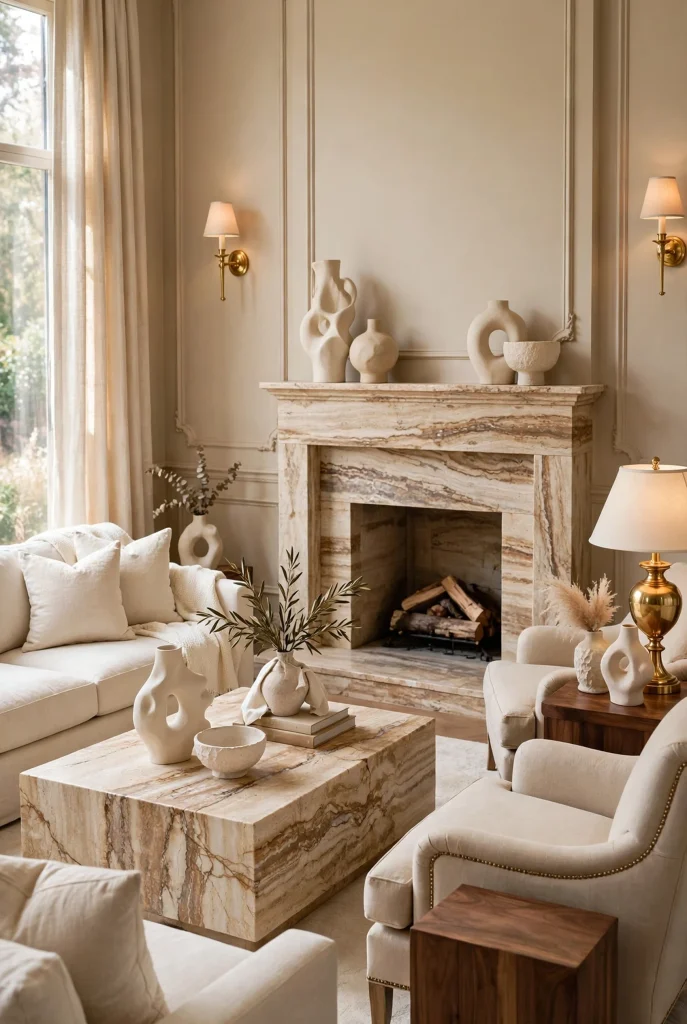
Natural stone can give a transitional living room a beautiful sense of permanence. A travertine coffee table, marble side table, or limestone fireplace introduces texture that feels both classic and contemporary. These materials have natural patterns that add interest without requiring bold colors. Pair them with a cream sofa, beige armchairs, and warm wood furniture to create a comfortable foundation.
Try keeping the decorative accessories simple so the stone finishes remain noticeable. A ceramic vase, a few books, and a small sculptural object are often enough for a coffee table arrangement. Soft lighting and linen curtains help balance the harder surfaces. The combination creates a sophisticated room that still feels inviting enough for everyday family time.
10. Transitional Living Room With Layered Neutral Textures
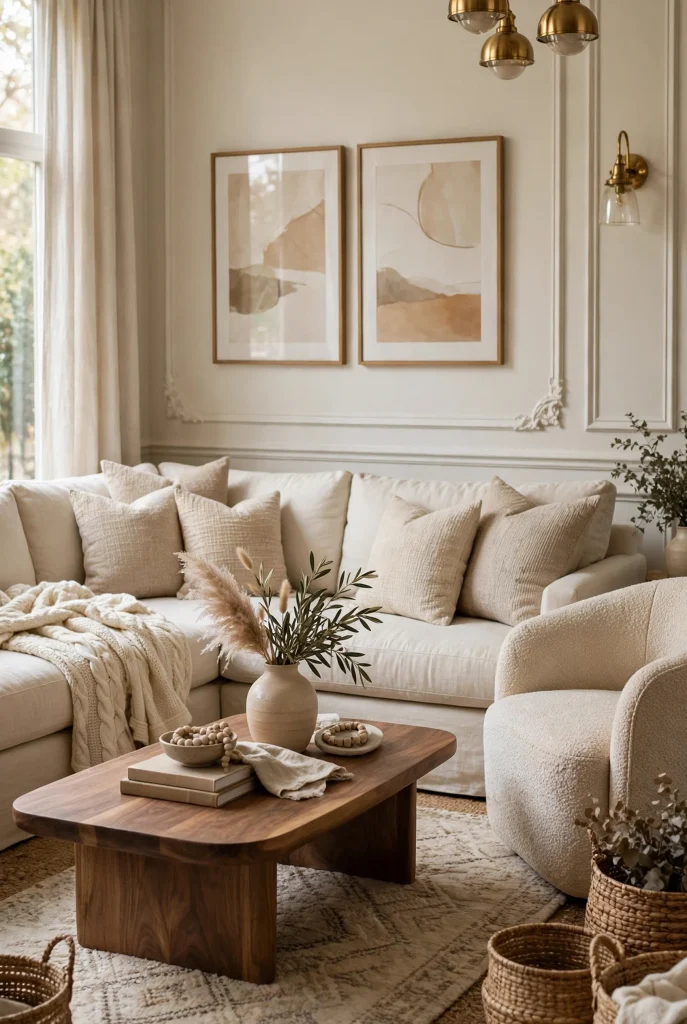
A neutral living room becomes much more interesting when several textures are used together. Instead of relying on different colors for contrast, combine linen, wool, boucle, natural wood, and woven materials. A cream sofa with textured cushions can feel especially inviting when paired with a chunky throw and a boucle accent chair. A natural fiber rug layered beneath a softer wool rug adds another dimension.
The traditional side of the design can come through in the wall molding, classic artwork, and warm wood furniture. Keep the modern details simple, using clean silhouettes and restrained accessories. I especially like this approach for rooms where the color palette needs to stay calm but the overall design should still feel rich and thoughtfully decorated.
11. Transitional Living Room With Traditional Accent Chairs
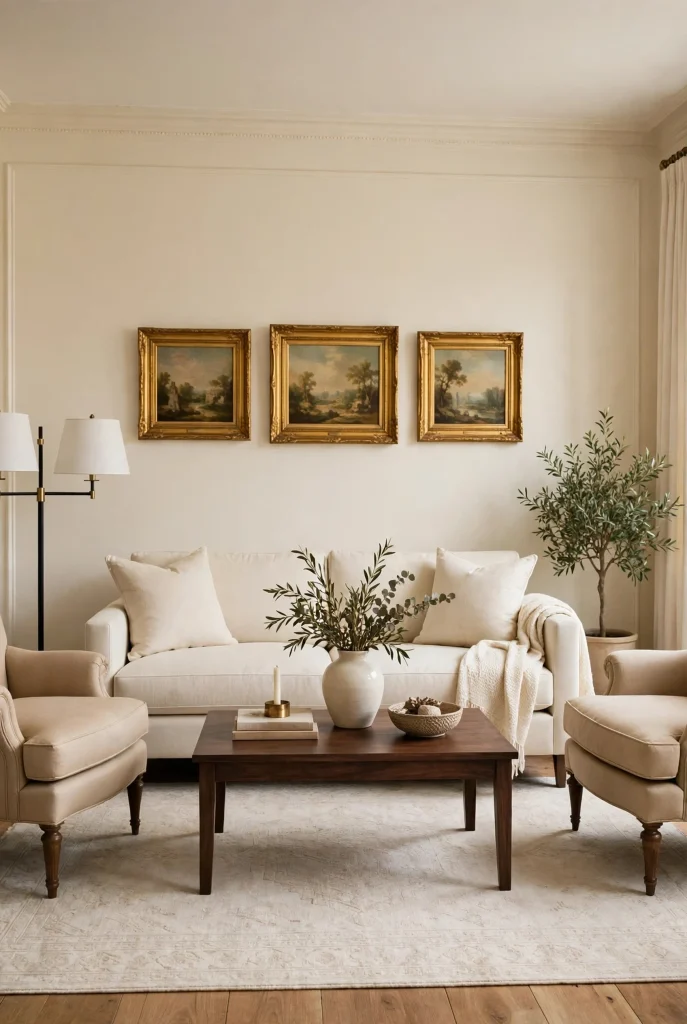
Traditional accent chairs can introduce personality and elegance without requiring the entire living room to follow a classic style. Look for chairs with gently curved arms, tailored upholstery, or subtle piping. These details provide a timeless appearance while neutral fabrics make them easy to combine with modern furniture. Place two matching chairs across from a simple cream sofa to create a balanced seating arrangement.
A streamlined coffee table and understated lighting will keep the space from looking too traditional. You can also introduce a small pattern through the cushions or chair upholstery if the rest of the room is relatively plain. This is a particularly useful decorating approach when you want to keep an existing modern sofa but give the room more classic character.
12. Transitional Living Room With Statement Lighting
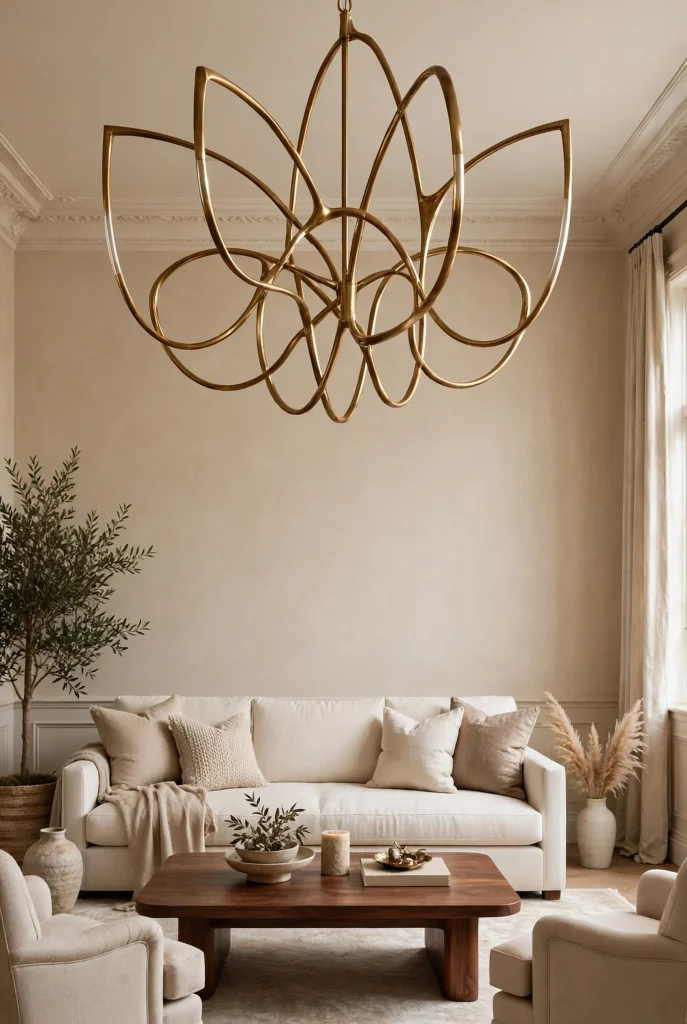
Lighting can change the entire feeling of a transitional living room, and a statement chandelier is an effective way to bring both styles together. Consider a brass fixture with a graceful traditional shape but a cleaner, more contemporary finish. It can become a focal point above the seating area or in the center of the room without overwhelming the furniture.
Add table lamps and floor lighting to create a comfortable atmosphere after sunset. A classic chandelier paired with modern furniture feels especially balanced when the remaining decor is restrained. Choose warm light, complementary metal finishes, and simple shades. The result is a living room that feels elegant in the daytime and welcoming in the evening.
13. Transitional Living Room With Soft Sage Green
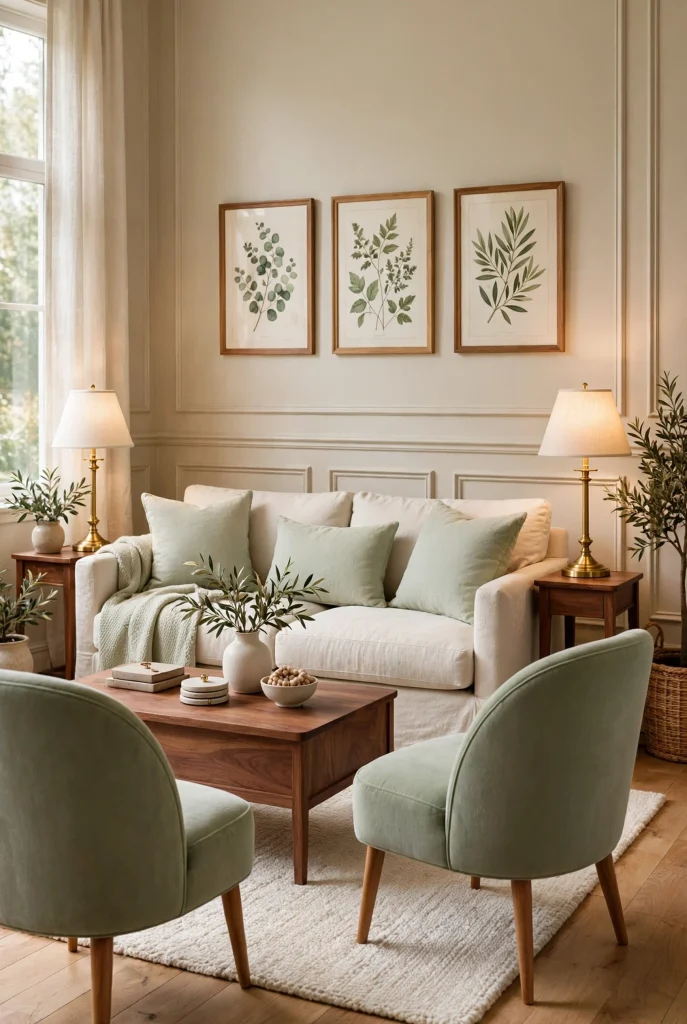
Soft sage green brings a gentle natural touch to transitional living rooms. It works beautifully with cream, beige, walnut, and warm white, making it easy to introduce without changing the entire design. A pair of sage upholstered chairs can add a subtle color accent, while smaller touches through cushions, artwork, or ceramics create an even quieter effect.
To maintain the classic and modern balance, combine sage with traditional details such as wall molding or framed botanical artwork. Modern furniture shapes and simple brass lighting will keep the room feeling current. Avoid using too many different greens. A carefully chosen shade repeated in a few places creates a more cohesive look and allows the natural materials to stand out.
14. Transitional Living Room With a Statement Area Rug
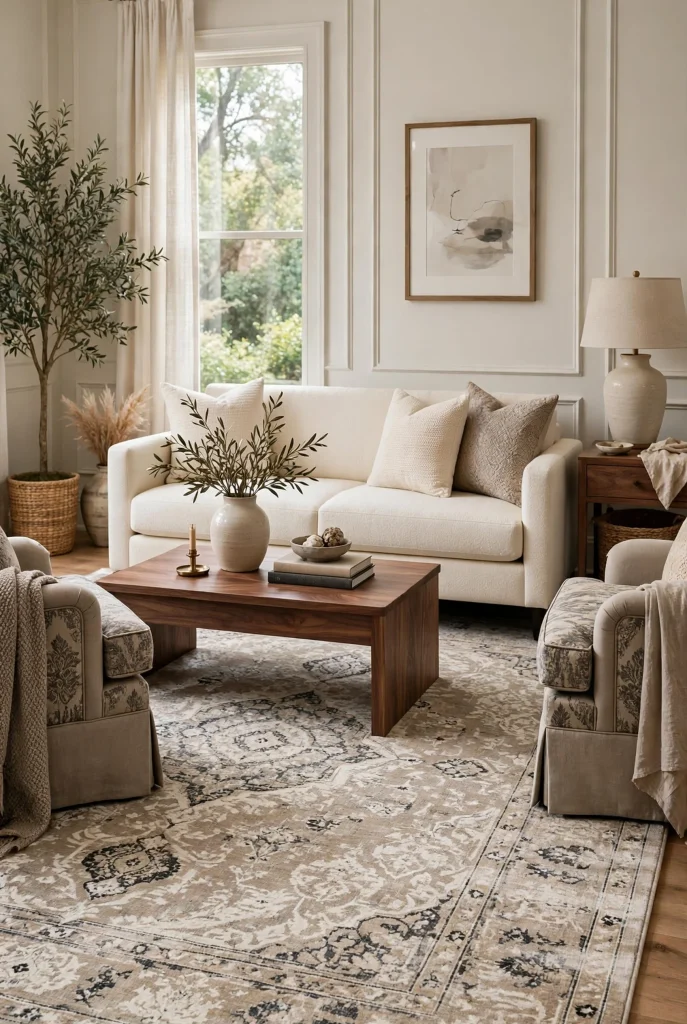
A patterned area rug is an easy way to introduce traditional character into a modern living room. Look for subtle Persian-inspired motifs, faded geometric designs, or understated borders in shades of beige, taupe, and ivory. These patterns bring visual depth while allowing contemporary furniture to remain the main focus. A large rug also helps define the seating area and makes the furniture arrangement feel more connected.
Keep the surrounding upholstery relatively simple so the rug has room to stand out. A cream sofa, neutral accent chairs, and a walnut coffee table create a lovely foundation. Repeat one or two colors from the rug in cushions or artwork. This small detail helps the entire room feel coordinated without making everything look identical.
15. Transitional Living Room With Built-In Bookshelves
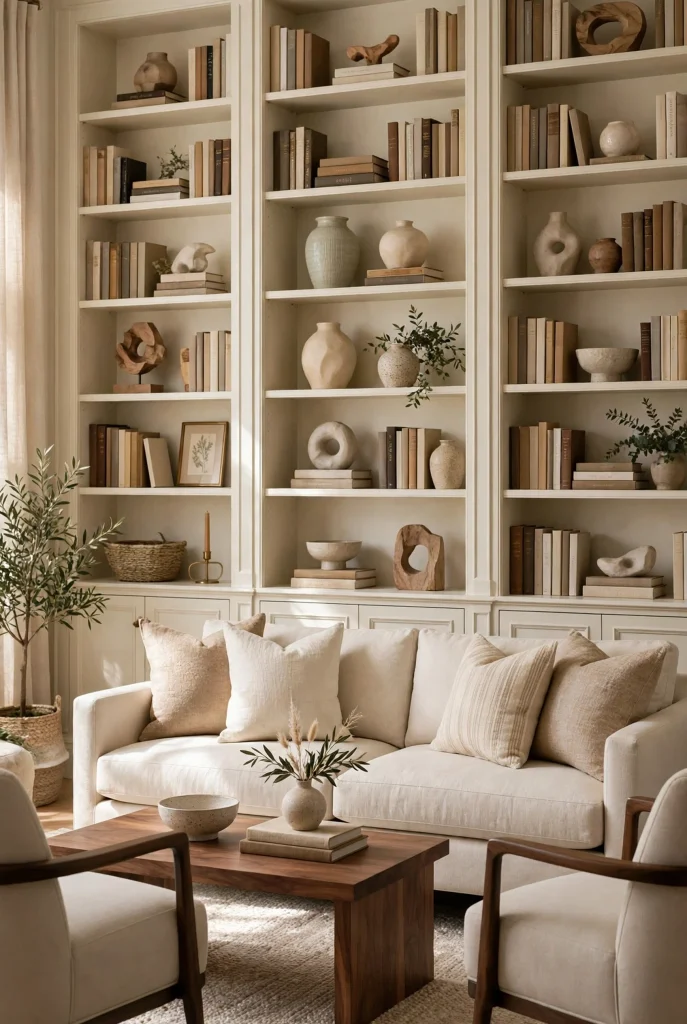
Built-in bookshelves offer a practical way to combine traditional architecture with contemporary styling. The shelving itself can have classic proportions and simple panel details, while the objects displayed inside bring a more modern personality. Arrange books horizontally and vertically, leaving some open spaces for ceramic vases, framed artwork, and sculptural accessories. This creates a collected appearance instead of making every shelf look crowded.
For the seating area, choose simple upholstered furniture in cream or beige and introduce warmth through a walnut coffee table. A soft rug will make the room feel more comfortable, especially if the shelves extend across an entire wall. This idea works particularly well for readers who want their living room to feel personal, organized, and visually interesting.
16. Transitional Living Room With Leather Accent Furniture
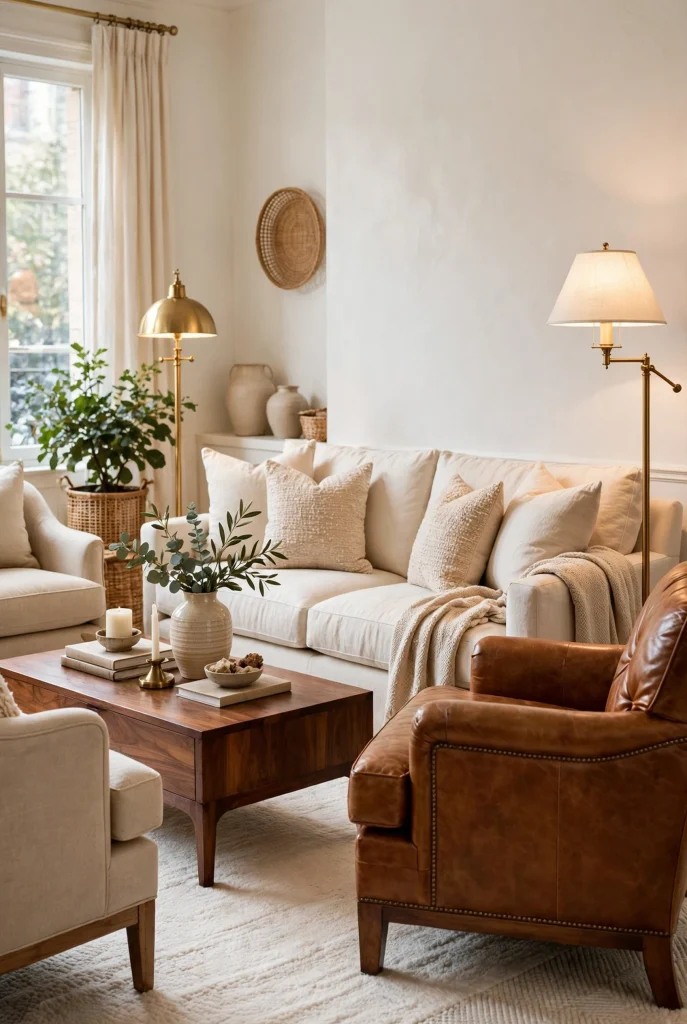
Leather furniture is a lovely way to add warmth and contrast to a neutral transitional living room. A caramel or cognac leather accent chair looks especially attractive beside a cream linen sofa. The different materials create visual interest, while their warm undertones keep the room feeling connected. Choose a chair with a timeless shape rather than an overly industrial design.
Bring the combination together with walnut furniture, beige cushions, and a soft ivory rug. Brass lighting and traditional framed artwork can add a little elegance without making the room feel formal. Leather also develops a distinctive appearance as it ages, so a carefully chosen accent chair can become a lasting part of the room’s design.
17. Transitional Living Room With Black Decorative Accents
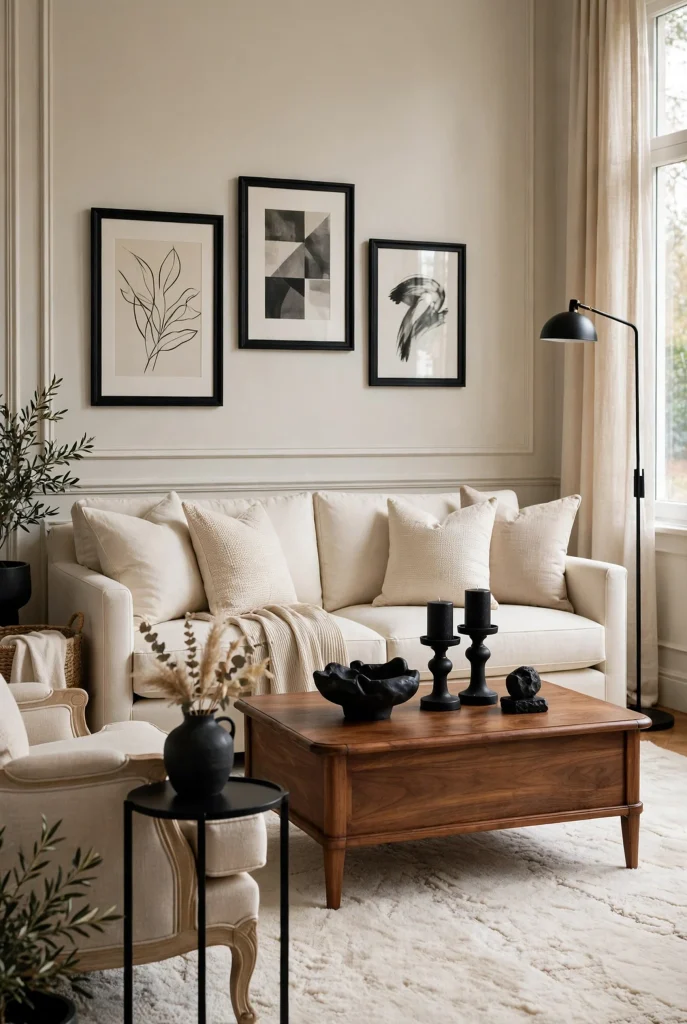
Black accents can give a soft neutral living room a little more definition. The key is to use them selectively rather than allowing dark finishes to dominate. A slim black floor lamp, a few dark picture frames, or a small metal side table can create a crisp contrast against cream upholstery and warm beige walls. This approach works especially well when the furniture has gentle traditional curves.
Keep the remaining finishes warm to prevent the room from feeling too stark. Walnut furniture, brass accessories, and natural fabrics soften the darker details. You can repeat black in two or three places so the accents feel intentional. Even a small amount of contrast can make a transitional living room look more polished and visually balanced.
18. Transitional Living Room With Elegant Window Treatments
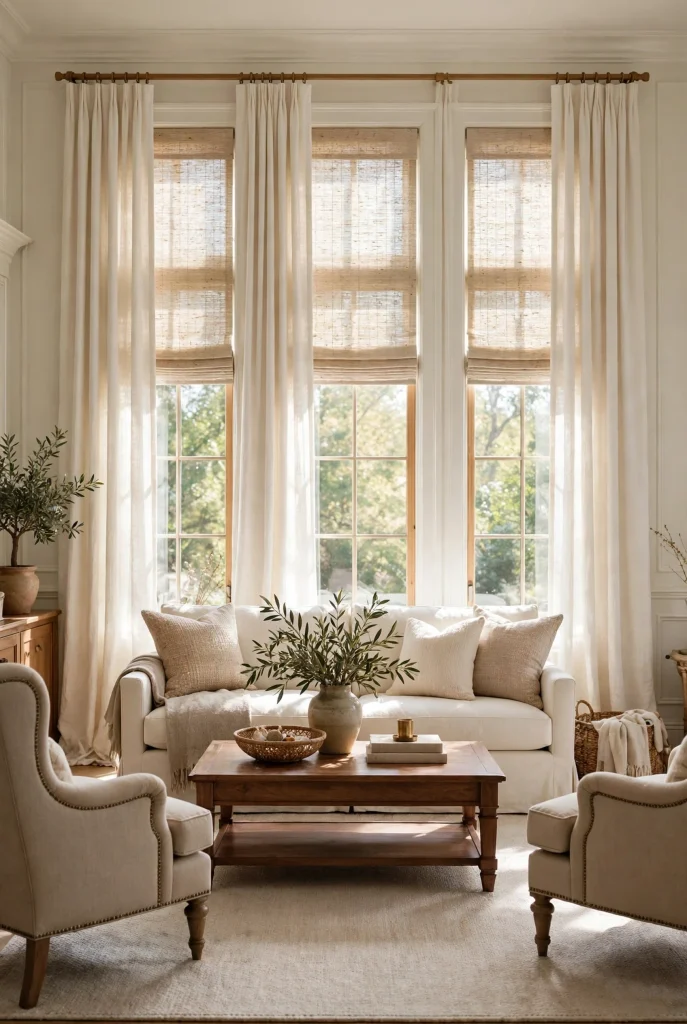
Window treatments have a surprisingly important role in the overall appearance of a living room. Full-length linen curtains bring softness and a classic sense of elegance, while simple Roman shades introduce a cleaner contemporary touch. Combining the two can make windows feel more finished without adding unnecessary decoration. Choose warm ivory, oatmeal, or light beige to complement a neutral transitional palette.
Hang curtains high enough to create a graceful visual line and allow them to fall naturally toward the floor. Pair the window treatments with comfortable upholstered furniture and warm wood finishes. Brass curtain hardware adds a subtle traditional detail. The finished room will feel softer, brighter, and more thoughtfully styled throughout the day.
19. Transitional Living Room With Marble Coffee Table
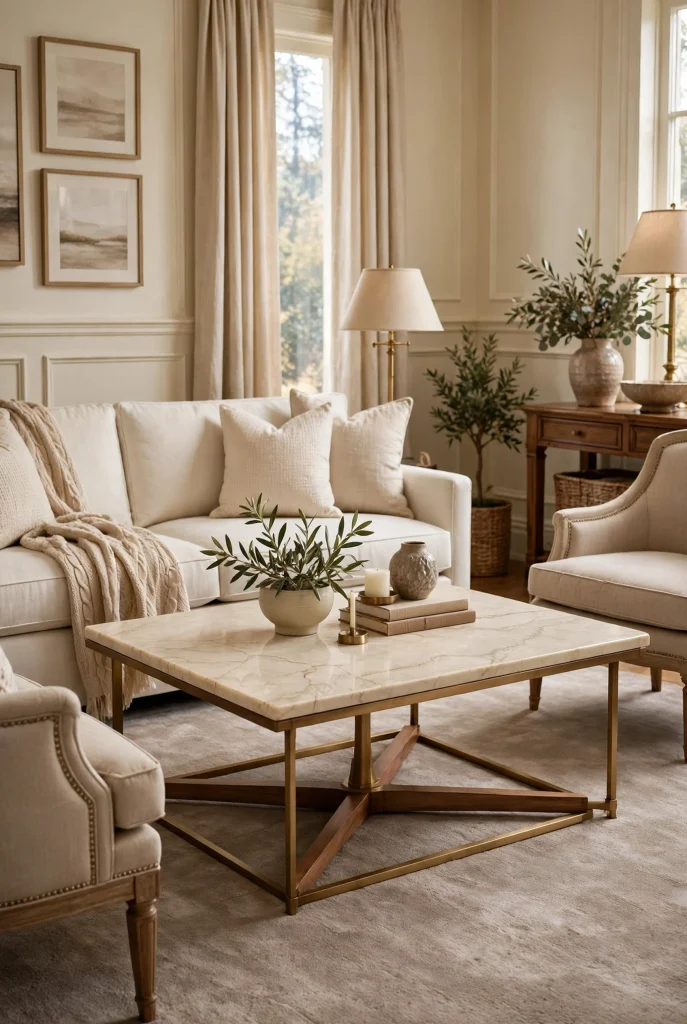
A marble coffee table can introduce a timeless detail while still feeling right at home in a modern transitional interior. Choose a design with simple proportions and natural veining rather than overly ornate decoration. A marble top paired with walnut or brass creates an attractive combination of materials. It also gives the seating area a focal point without needing a bold color or complicated pattern.
Surround the table with soft upholstered furniture and a textured rug to balance its harder surface. Keep the tabletop styling uncomplicated with a small tray, a ceramic vase, and a few books. The mix of refined stone, natural wood, and comfortable fabrics creates a room that feels sophisticated but still suitable for everyday use.
20. Transitional Living Room With Traditional Gallery Wall
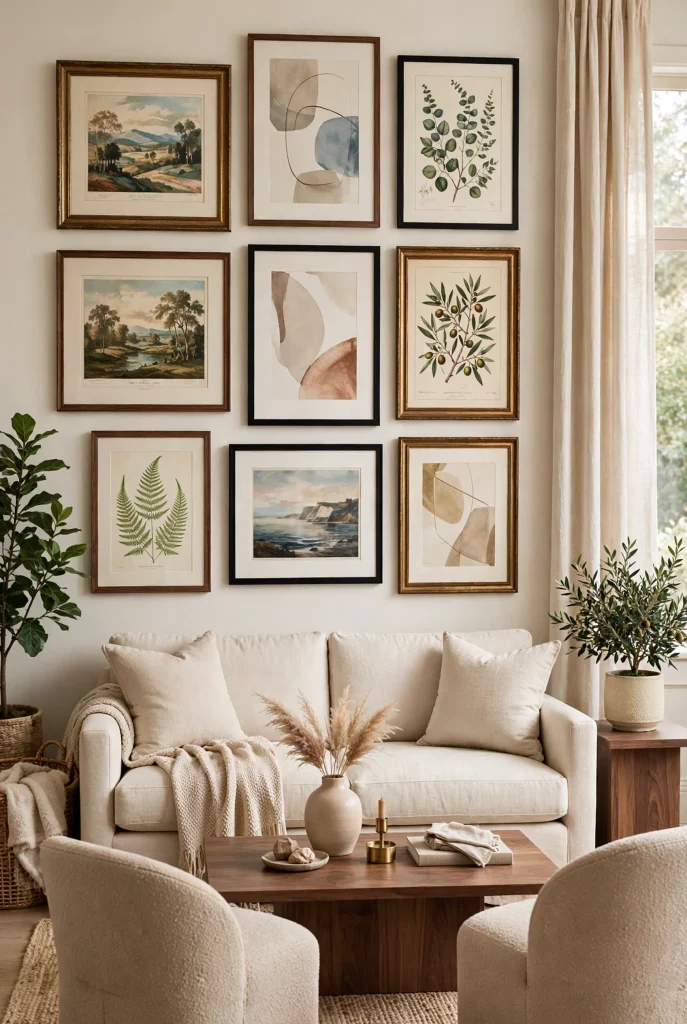
A gallery wall is a wonderful opportunity to combine traditional and modern design in one place. Mix classic landscapes or botanical prints with a few contemporary abstract pieces. The variety creates a collected appearance that feels more personal than using a single matching set of artwork. To keep everything cohesive, choose frames in a limited selection of finishes such as walnut, brass, and black.
Arrange the artwork above a sofa or along a large empty wall, paying attention to spacing and overall proportions. Neutral furniture will help the gallery remain the main visual feature. You can also repeat colors from the artwork in cushions or small accessories. This is a relatively simple decorating update that can give a transitional living room much more personality.
21. Transitional Living Room With Symmetrical Furniture Arrangement
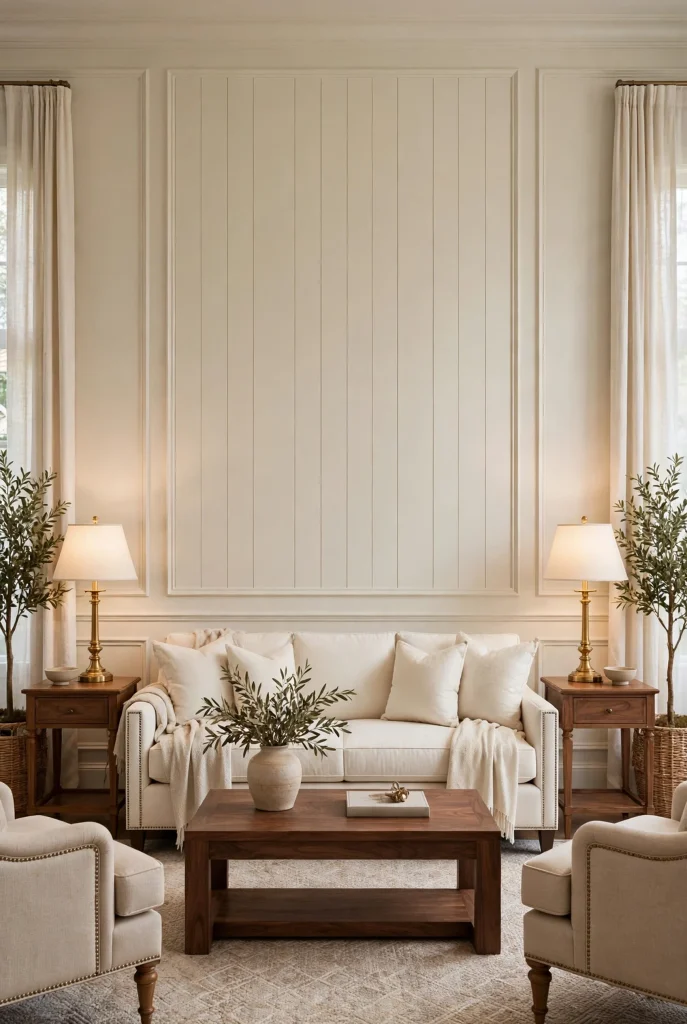
Symmetry is a classic decorating technique that can make a transitional living room feel calm and organized. Place a sofa in the center of the main wall and position two matching chairs opposite or beside it. Matching side tables and lamps can create a sense of balance, while a central coffee table connects the arrangement. This approach works especially well in rooms with a fireplace or a strong architectural focal point.
To keep the layout from feeling too formal, introduce relaxed cushions, soft textiles, and a few contemporary accessories. The furniture does not need to look overly decorative. Simple shapes and comfortable upholstery help the room feel welcoming. If the space is smaller, leave enough room between pieces to maintain easy movement.
22. Transitional Living Room With Warm Greige Walls
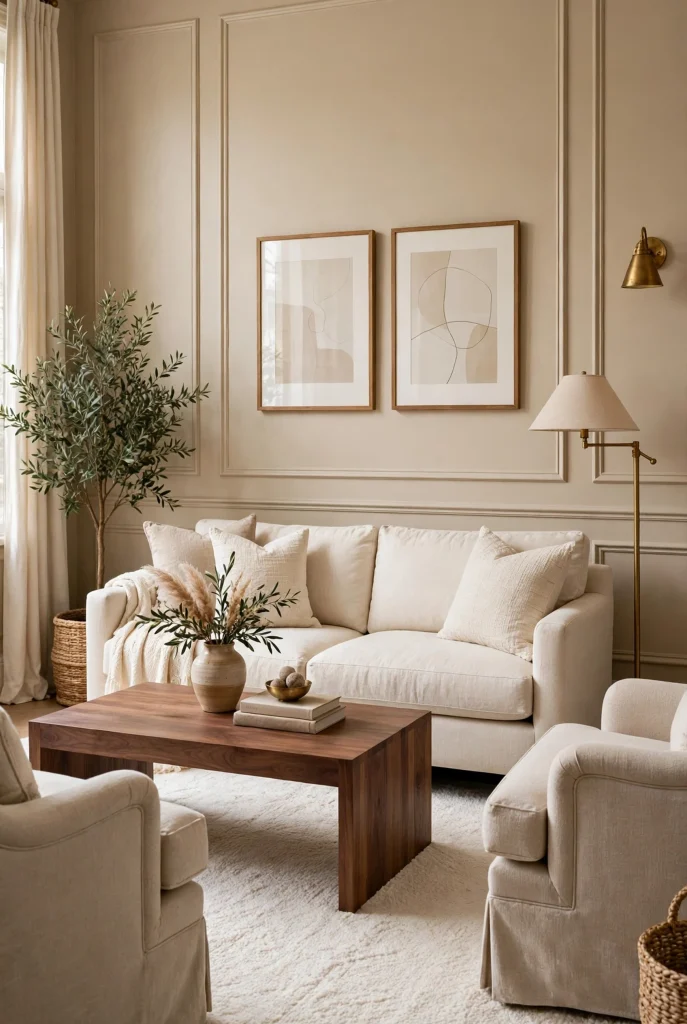
Greige is a useful wall color for transitional living rooms because it sits comfortably between gray and beige. It can make a room feel warm and sophisticated without becoming too yellow or too cool. Use it on the walls and keep the larger furniture pieces in cream, ivory, or soft taupe. The subtle contrast gives the room depth while maintaining a calm overall appearance.
Classic wall molding looks especially attractive against a greige background, while modern furniture shapes prevent the space from appearing old-fashioned. Add walnut furniture, brass lighting, and natural textiles to bring everything together. Before painting the entire room, test a few samples in different lighting conditions because greige shades can look noticeably different throughout the day.
23. Transitional Living Room With Modern Minimalist Decor
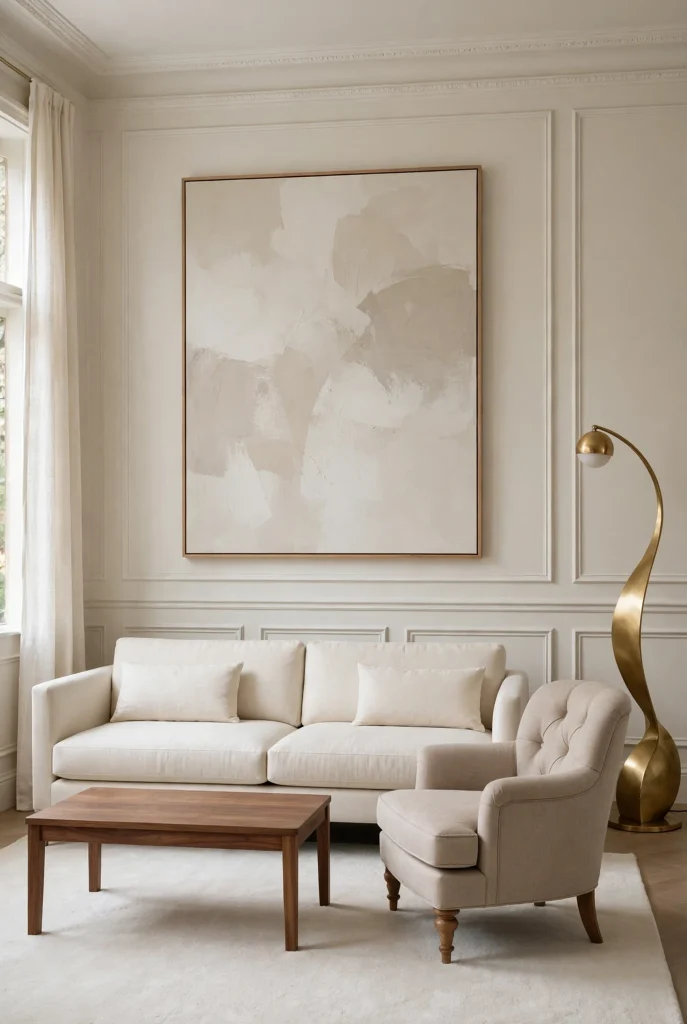
Minimalist decorating can work beautifully with transitional design when the room retains a few traditional details. Start with simple furniture, a comfortable sofa, and a practical coffee table. Instead of filling the space with accessories, choose a handful of pieces that contribute to the overall appearance. A classic accent chair, subtle wall molding, or an elegant framed artwork can give a minimalist room the character it needs.
Pay attention to quality-looking textures and balanced proportions. Linen upholstery, warm wood, and a soft rug can make a restrained interior feel comfortable rather than empty. Leave open surfaces where possible and avoid overcrowding the walls. The result is a clean, relaxed living room with enough classic detail to feel welcoming and timeless.
24. Transitional Living Room With Brass and Gold Details
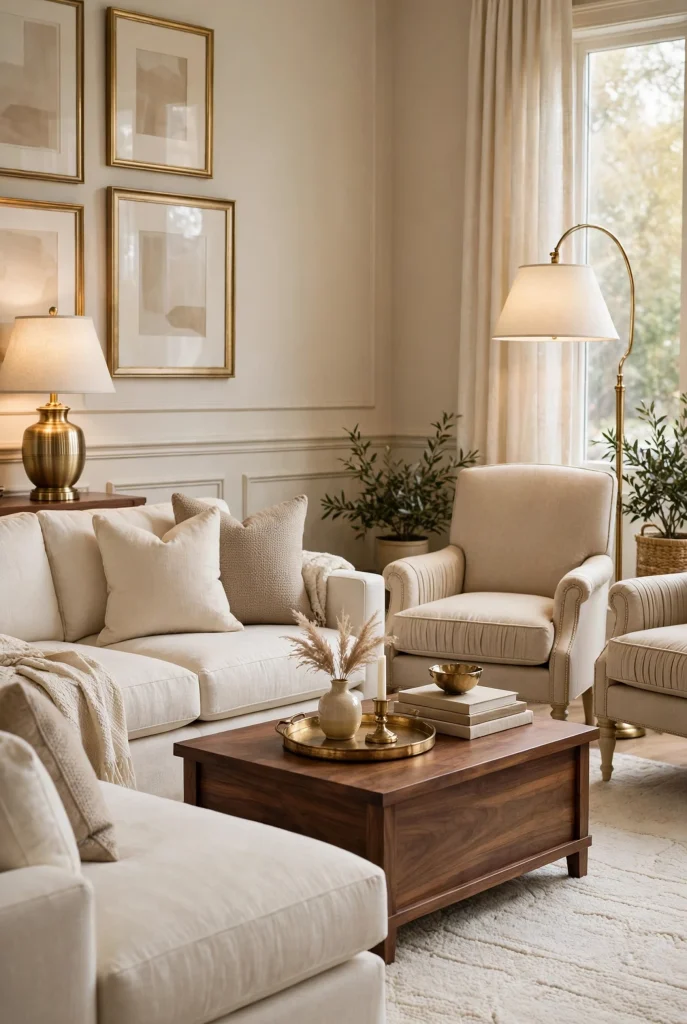
Brass and gold finishes add a subtle touch of warmth that works particularly well in transitional living rooms. They look beautiful alongside cream upholstery, beige walls, and walnut furniture. Rather than introducing shiny metal everywhere, choose a few carefully placed details. A brass table lamp, a framed artwork, or a decorative tray can be enough to create a consistent finish throughout the room.
Brushed brass often gives a softer appearance than highly polished gold, making it suitable for relaxed interiors. Pair it with natural fabrics and understated furniture to avoid an overly glamorous result. Repeating the same metal finish in a few places helps the room feel coordinated, while different materials keep the design interesting.
25. Small Transitional Living Room With Space-Saving Furniture
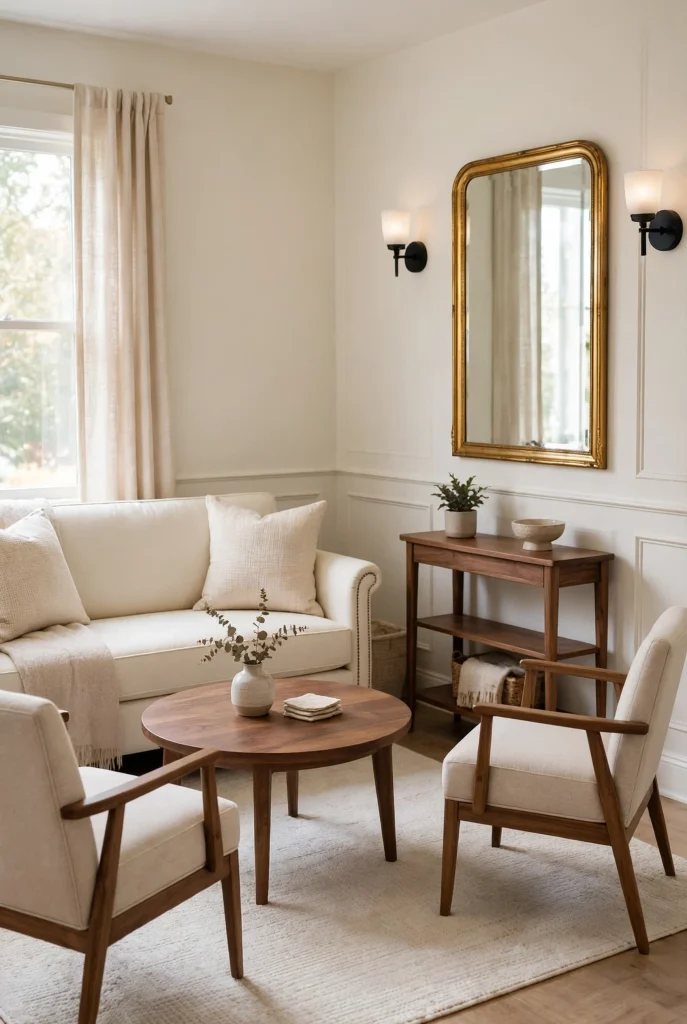
A small living room can still have plenty of transitional charm. The key is choosing furniture that suits the available floor space. A compact sofa with gently curved arms, petite accent chairs, and a round coffee table can create a comfortable seating area without making the room feel crowded. Furniture with visible legs can also help maintain a lighter appearance.
Use the walls thoughtfully. A large mirror can reflect natural light, while wall-mounted lamps free up valuable table space. Choose a narrow console instead of a bulky cabinet and keep accessories limited to a few useful pieces. Soft neutral colors, subtle molding, and natural wood finishes provide the classic and modern balance without overwhelming a smaller room.
26. Transitional Living Room With Organic Modern Touches
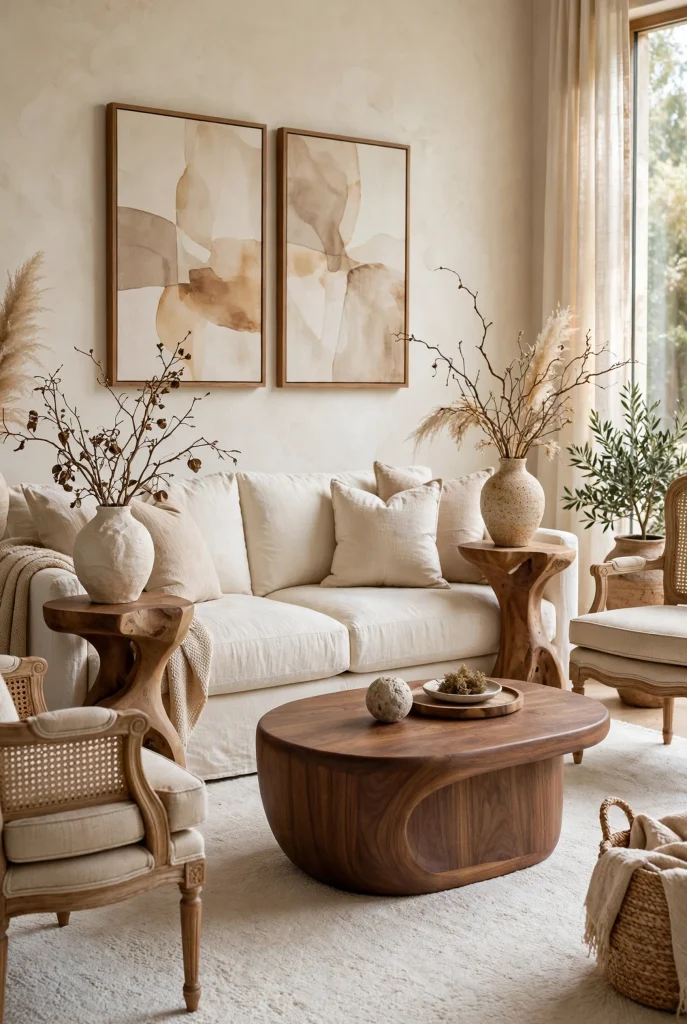
Organic modern details are a natural fit for transitional living rooms because they bring softness and a connection to natural materials. Consider rounded wood tables, handmade ceramic vases, natural branches, and furniture with gentle curves. These elements can make a classic room feel more relaxed without removing the timeless details that give it character.
A cream sofa and traditional upholstered chairs provide a comfortable foundation. Add subtle wall molding, brass lighting, and a natural fiber rug to connect the different styles. Keep the accessories simple and choose pieces with interesting shapes or textures. This approach is especially appealing if you prefer warm, understated interiors that feel thoughtfully decorated rather than overly styled.
27. Elegant Transitional Living Room With Timeless Modern Style
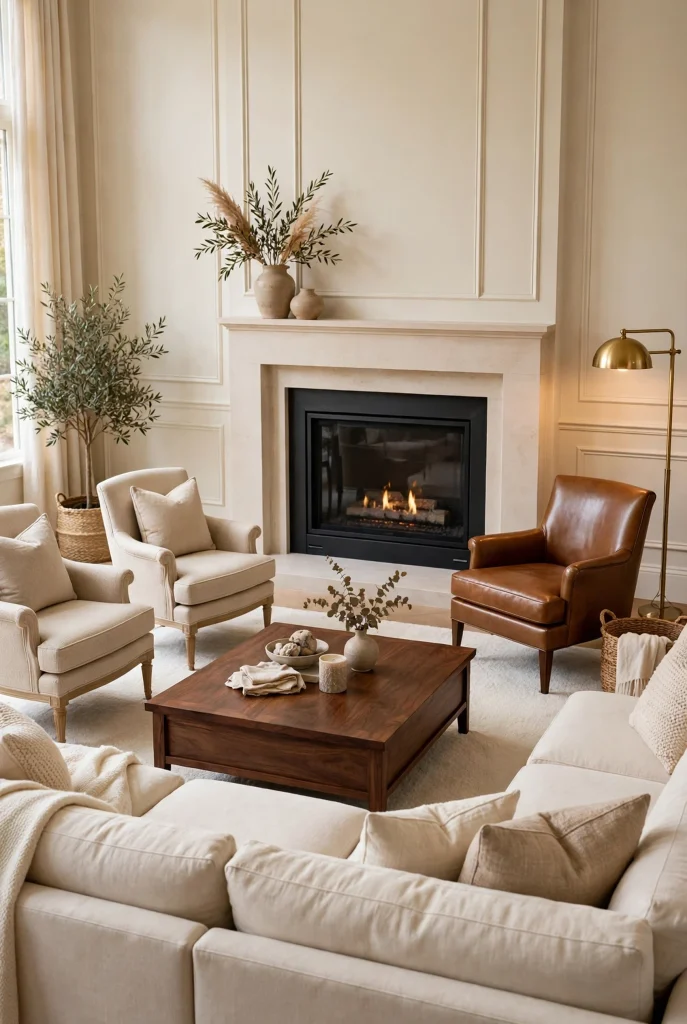
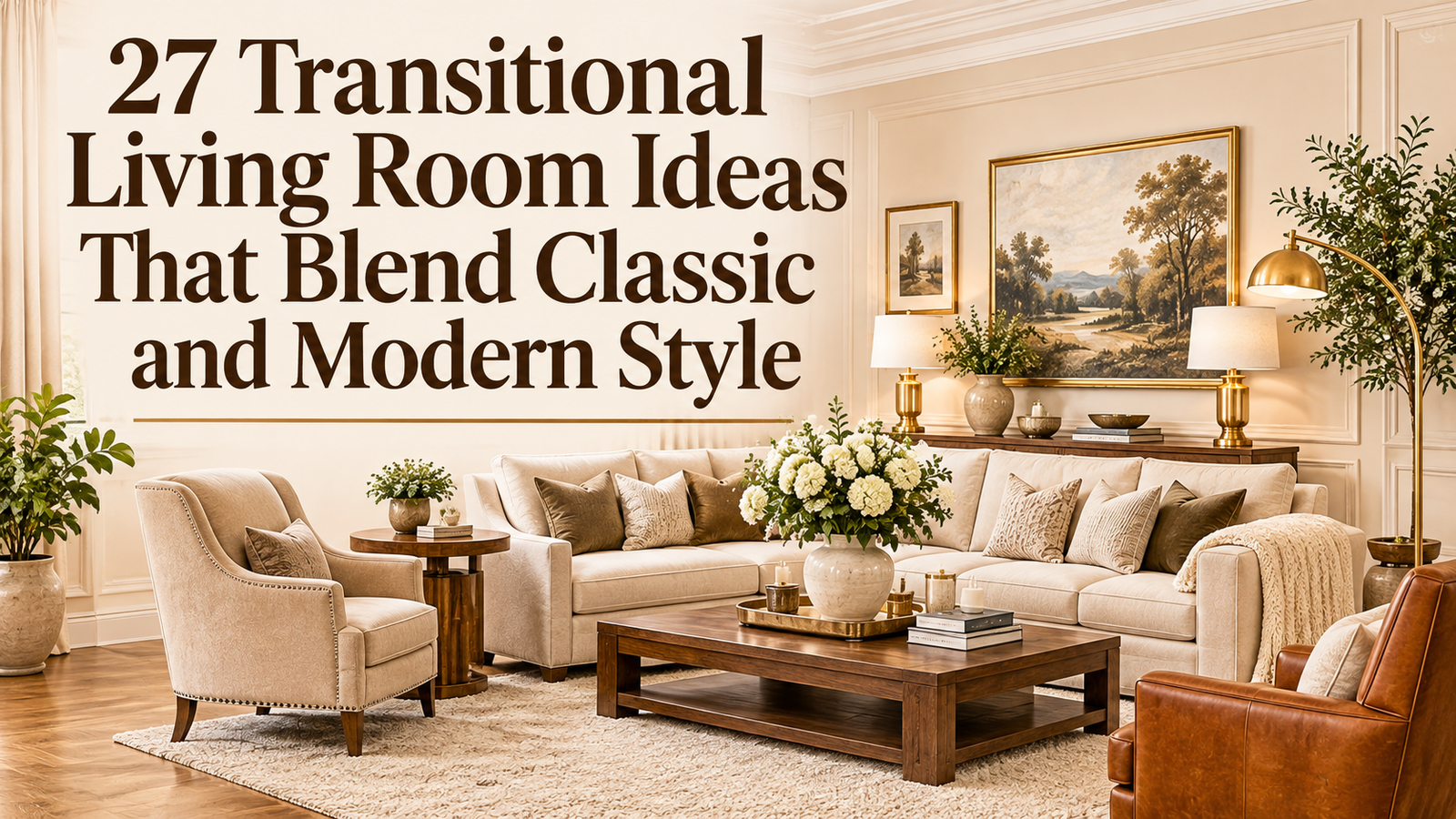
An elegant transitional living room brings together all the elements that make this decorating style so appealing. A comfortable cream sectional, traditional accent chairs, and a contemporary walnut coffee table establish a balanced foundation. Add a caramel leather chair for warmth and a large ivory rug to connect the furniture. Subtle wall paneling and a modern fireplace can provide architectural character without making the room feel too formal.
Finish the space with brass lighting, neutral artwork, linen curtains, and a few carefully chosen decorative objects. The most important thing is to let both styles complement one another. You do not need perfectly matching furniture or an elaborate collection of accessories. A thoughtful combination of classic details, modern shapes, and natural materials is often enough to create a beautiful, lasting interior.
Conclusion
Transitional living rooms are a wonderful choice for anyone who appreciates the elegance of traditional interiors but prefers the comfort and simplicity of modern decorating. The style gives you plenty of freedom to mix furniture shapes, natural materials, classic architectural details, and contemporary accessories without making the room feel disconnected.
Start with a comfortable neutral foundation, then introduce character through wood finishes, textured rugs, statement lighting, artwork, and a few carefully selected accent colors. You can make small changes gradually instead of replacing everything at once.
The best transitional living room is one that feels balanced, welcoming, and practical for everyday life. Use the ideas that suit your home, combine the details you love, and create a space that will continue to feel beautiful for years.
Frequently Asked Questions
1. What is a transitional living room?
A transitional living room combines traditional and modern interior design. It often features comfortable upholstered furniture, neutral colors, natural wood, classic architectural details, and contemporary accessories. The overall look is balanced and welcoming rather than overly formal or strictly minimalist.
2. What colors work best in a transitional living room?
Cream, ivory, beige, taupe, greige, and warm white are popular choices. These colors create a flexible foundation for different furniture styles. You can introduce navy, sage green, charcoal, or caramel through accent chairs, cushions, artwork, and decorative accessories.
3. How do you mix traditional and modern furniture?
Choose one or two pieces with traditional details and balance them with simpler contemporary furniture. For example, combine a classic tufted sofa with a streamlined coffee table, or pair traditional accent chairs with a modern sectional. Repeating complementary colors and materials helps everything feel connected.
4. Is transitional design suitable for small living rooms?
Yes. Transitional design works well in smaller spaces because it does not require elaborate furniture or excessive decoration. Choose compact seating, round coffee tables, light neutral colors, and multifunctional furniture. Subtle traditional details can add character without taking up additional floor space.
5. What is the difference between transitional and contemporary living room design?
Transitional design blends traditional details with modern simplicity, while contemporary design focuses more directly on current styles and evolving design trends. A transitional room might include classic wall molding and traditional upholstered chairs alongside modern lighting and clean-lined furniture. It generally has a warmer, more timeless appearance.