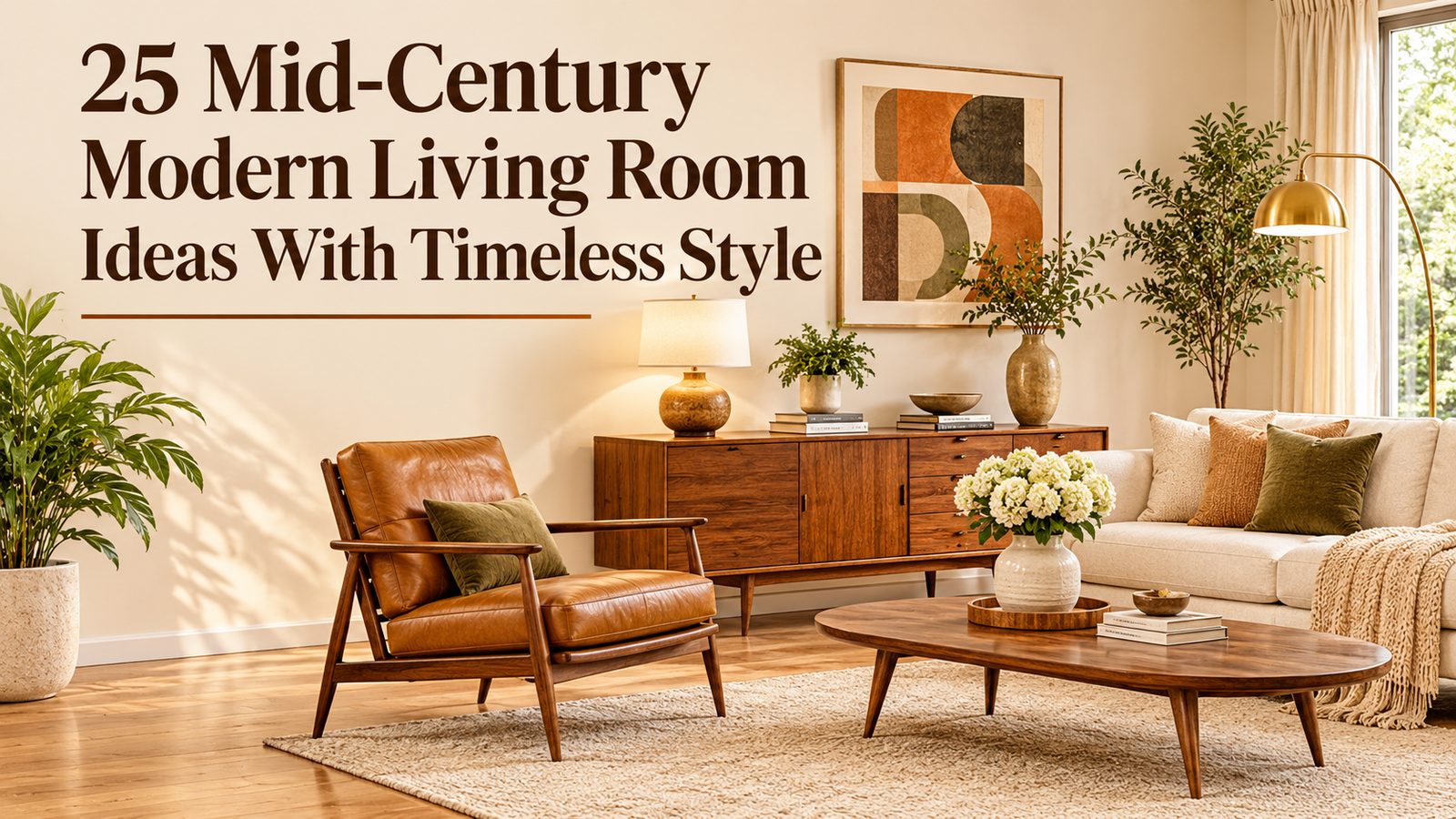
25 Mid-Century Modern Living Room Ideas With Timeless Style
Mid-century modern living rooms have a special charm that never seems to go out of style. The combination of warm wood tones, clean lines, organic shapes, and thoughtfully chosen furniture creates a space that feels both sophisticated and comfortable. This decorating style takes inspiration from the designs of the 1940s through the 1960s, but its appeal works beautifully in today’s homes.
One of the things I love about mid-century modern decorating is how easily it balances simplicity with personality. You can introduce a vintage walnut sideboard, a sculptural accent chair, or a beautiful statement light without making the room feel crowded.
In this collection of 25 mid-century modern living room ideas, you’ll find inspiration for different room sizes, color palettes, furniture arrangements, and decorative details. From classic retro interiors to softer contemporary interpretations, these ideas will help you create a welcoming living room with lasting style.
1. Warm Walnut Furniture and Neutral Sofas
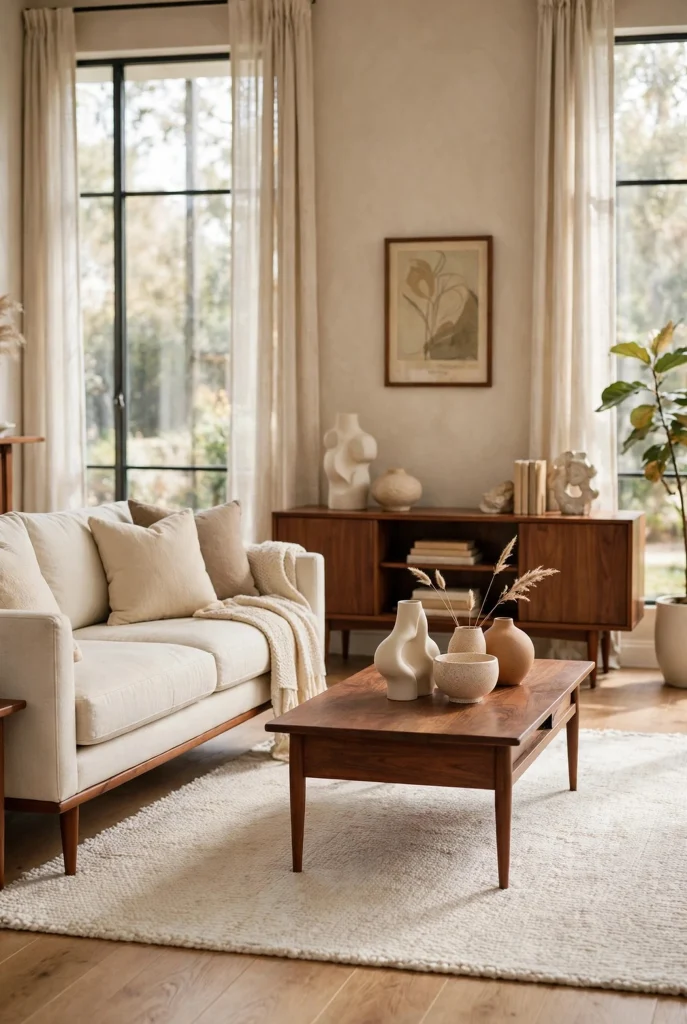
Warm walnut furniture is one of the defining features of a beautiful mid-century modern living room. Its rich brown color brings natural warmth into the space while the clean silhouettes keep everything looking polished. A walnut coffee table, media console, or sideboard can become the foundation of the entire decorating scheme.
Pair these wooden pieces with a cream or beige sofa to create an inviting contrast. I especially like the look of walnut furniture against warm white walls because it allows the wood grain to stand out without making the room feel dark. Keep the accessories simple with ceramic vases, a textured rug, and a few carefully selected decorative objects. The result feels timeless rather than overly retro, making it easy to enjoy this style for years.
2. Iconic Mid-Century Modern Accent Chairs
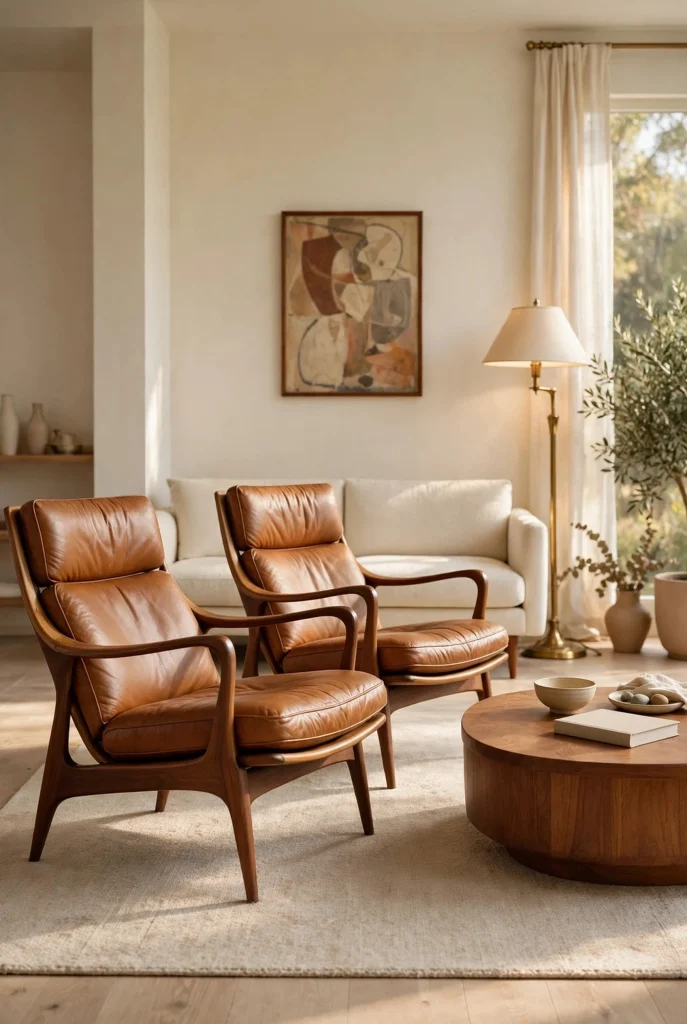
An iconic accent chair can give a living room an unmistakable mid-century modern personality. Look for designs with exposed wooden frames, gently curved arms, tapered legs, and comfortable upholstery. These details make the furniture feel visually interesting without relying on elaborate decoration.
Caramel leather, warm tan fabric, olive green, and muted rust are lovely upholstery choices. Place one chair beside the sofa or create a small conversation area with two matching chairs and a round coffee table. The beauty of this approach is that the chairs become decorative features as well as practical seating. Even in a contemporary living room, one thoughtfully chosen vintage-inspired chair can introduce plenty of character.
3. A Classic Mid-Century Modern Sofa
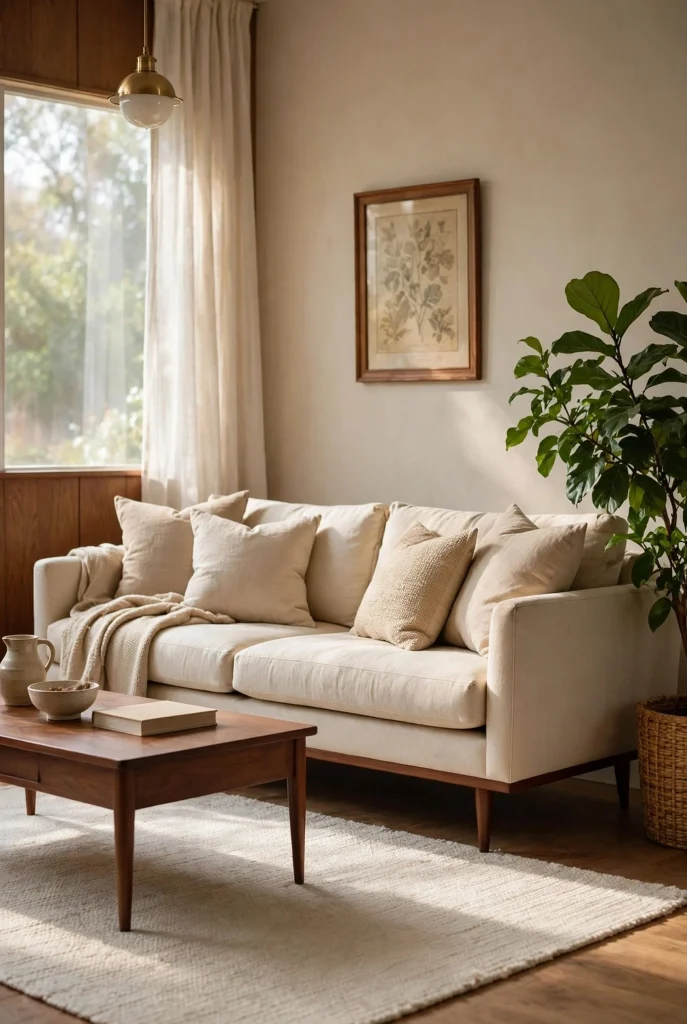
The sofa is often the most noticeable piece of furniture in a living room, so choosing the right silhouette makes a difference. A classic mid-century modern sofa usually has a relatively low back, streamlined arms, visible wooden legs, and a simple overall shape.
Cream, oatmeal, warm gray, and muted olive upholstery all work beautifully with this design. These shades create a calm foundation that can accommodate different accent colors as your decorating preferences change. For a comfortable arrangement, layer the sofa with a few cushions in different textures rather than filling every available space. A walnut coffee table and a soft wool rug complete the look while allowing the sofa’s beautiful proportions to remain visible.
4. Earthy Mid-Century Modern Color Palette
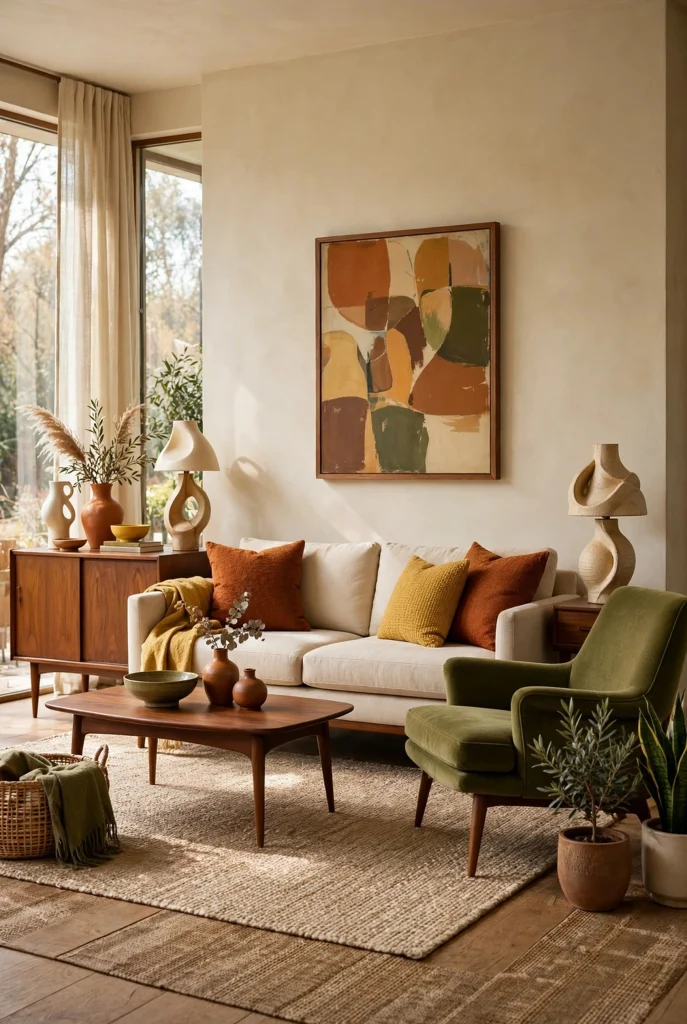
Mid-century modern interiors are particularly beautiful when they incorporate earthy colors. Burnt orange, olive green, mustard yellow, terracotta, and warm brown all complement the natural wood furniture associated with this style.
You don’t have to introduce every color at once. Start with a neutral sofa and add two or three earthy shades through cushions, artwork, and decorative accessories. A rust-colored accent chair or olive green curtains can also make an attractive statement. For a more balanced appearance, keep the larger surfaces relatively light. Warm ivory walls and a neutral rug give the stronger colors room to stand out without overwhelming the living room.
5. Mid-Century Modern Living Room With a Statement Coffee Table
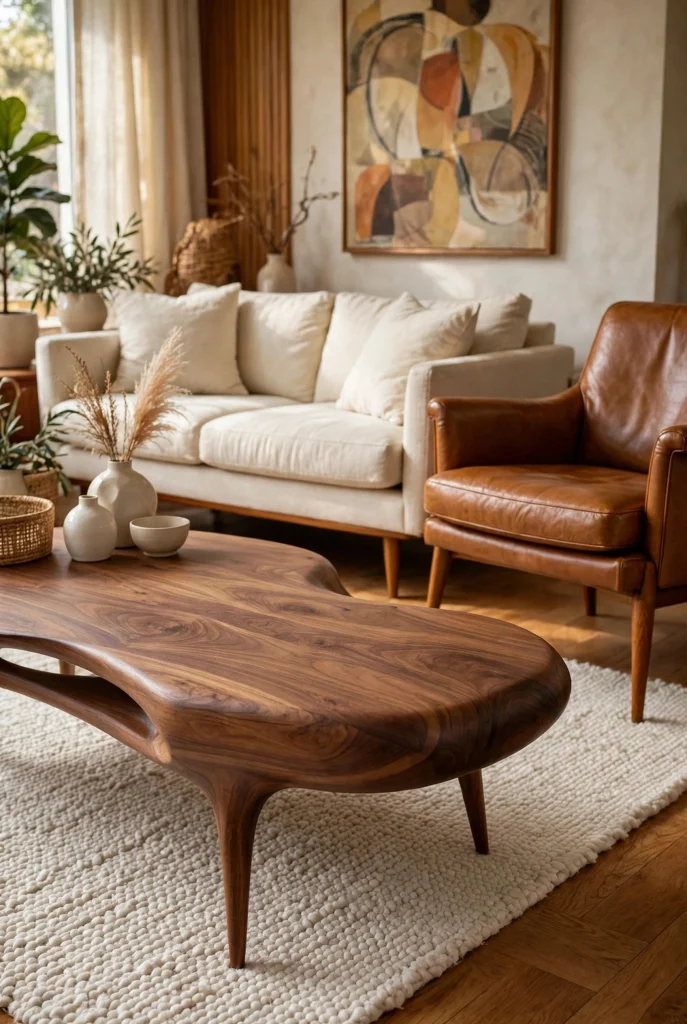
A statement coffee table is a wonderful way to introduce mid-century modern design without replacing all your existing furniture. Look for a low wooden table with tapered legs, rounded edges, an oval top, or an interesting geometric base.
Walnut and teak finishes are especially attractive because their natural tones bring depth to neutral interiors. The table should feel substantial enough to anchor the seating area while leaving comfortable space for walking around it. Style the surface with a small ceramic bowl, a couple of carefully selected books, and a simple vase. Avoid filling every corner with accessories. The table’s shape and craftsmanship should remain the main attraction.
6. Vintage Mid-Century Modern Living Room Decor
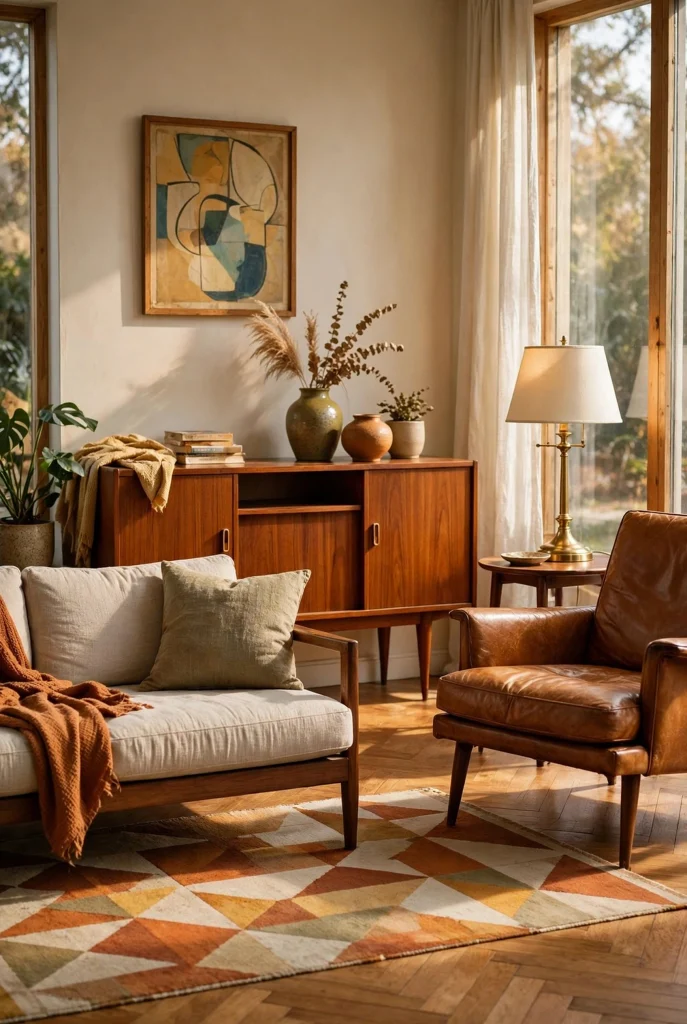
Vintage pieces give mid-century modern living rooms a sense of history and individuality. A teak sideboard, original wooden lounge chair, or beautifully preserved cabinet can introduce the kind of character that newer furniture sometimes lacks.
The trick is to mix vintage furniture with comfortable contemporary pieces. For example, a vintage wooden console can look wonderful behind a modern cream sofa. You can also introduce a retro table lamp or framed abstract print without making the entire room feel like a period set. Choose items that complement one another through their materials, colors, and proportions. A little contrast makes the room feel collected and personal rather than overly coordinated.
7. Mid-Century Modern Living Room With Olive Green Accents
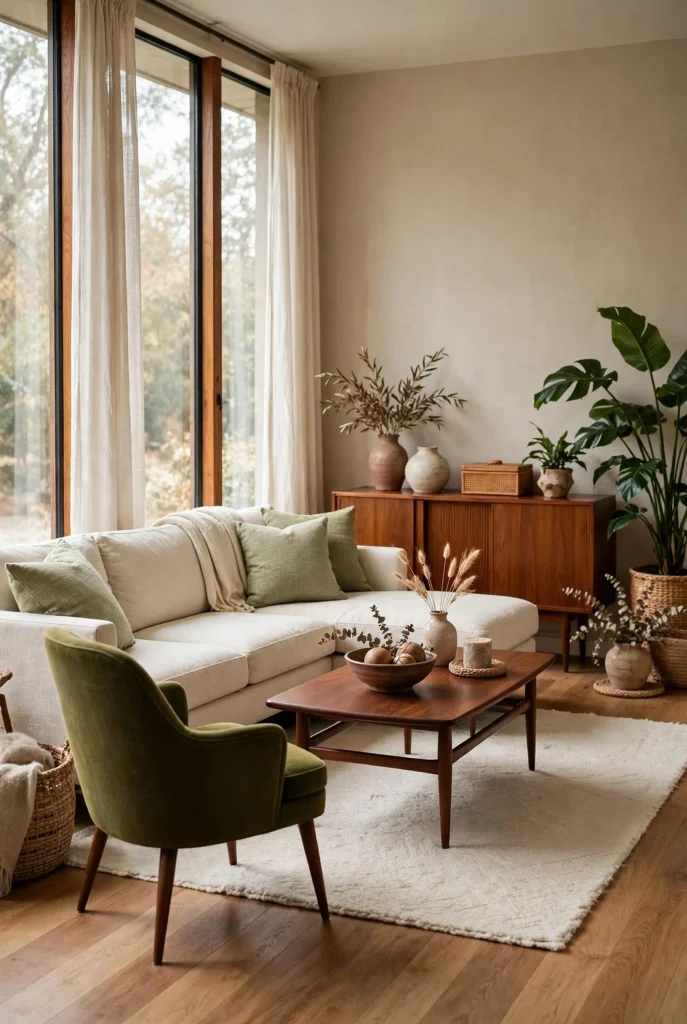
Olive green is one of the easiest colors to incorporate into a mid-century modern living room. It has an earthy quality that works beautifully with walnut, teak, caramel leather, and creamy neutrals.
A green accent chair can add color without taking attention away from the main furniture. If you prefer something more subtle, introduce olive green through cushions, artwork, a throw blanket, or a beautiful indoor plant. Keep the rest of the room relatively understated so the green details feel intentional. Warm wood furniture and an ivory rug help tie everything together, creating a living room that feels relaxed, natural, and sophisticated.
8. Teak Wood Sideboard as a Focal Point
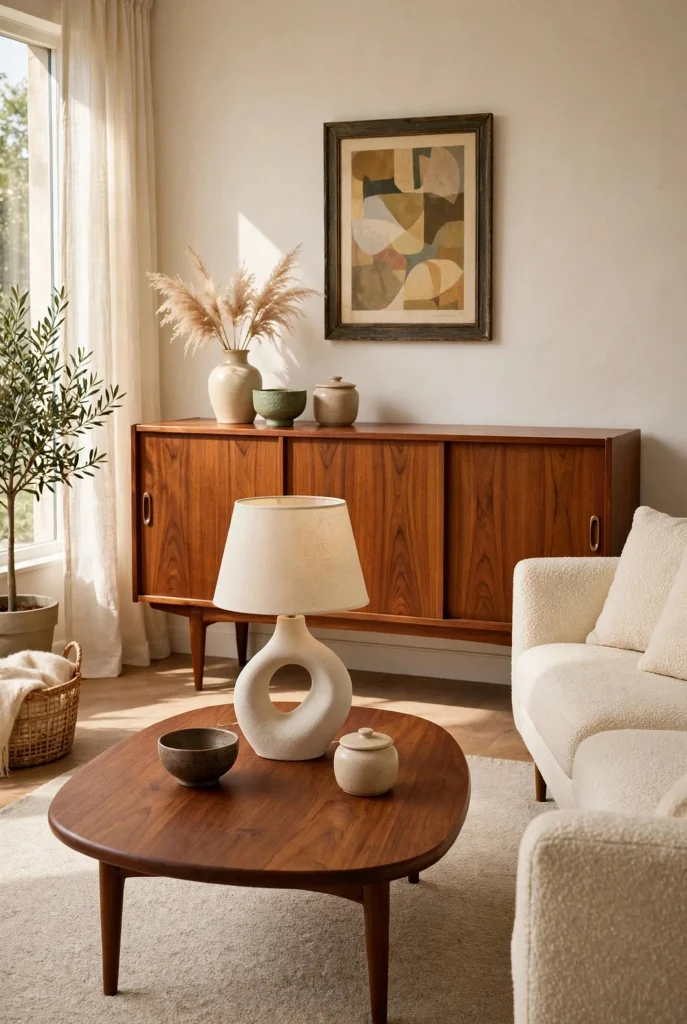
A teak sideboard can become one of the most beautiful features in a mid-century modern living room. Its long horizontal shape, warm wood finish, and simple construction make it both practical and decorative.
Use the sideboard for storing books, electronics, board games, and other everyday items. Its surface offers a lovely place to display a ceramic lamp, a small collection of pottery, or a framed piece of artwork. To keep the arrangement looking balanced, avoid placing too many small objects together. A few larger accessories usually create a more attractive display. This furniture piece also works especially well in open-plan homes where a little additional storage is always useful.
9. Geometric Rugs for a Mid-Century Modern Living Room
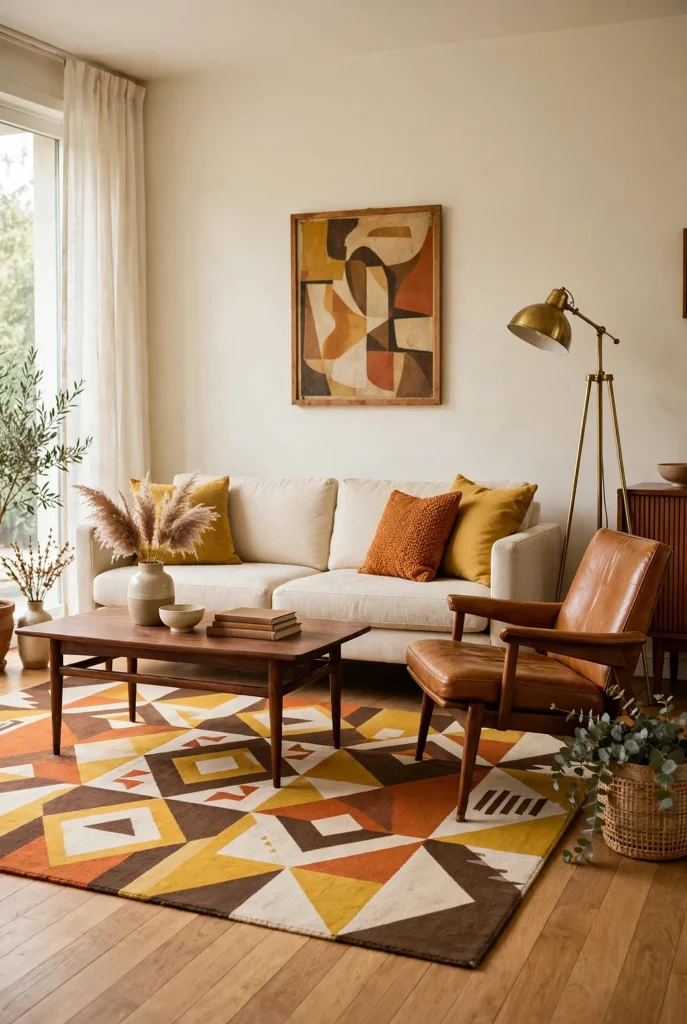
A geometric rug is an easy way to add pattern to a mid-century modern living room without making the space feel busy. Look for simple shapes such as circles, arches, triangles, and repeated lines in warm, earthy colors. These patterns echo the graphic artwork and textiles that were popular during the mid-century period.
Choose a rug that is large enough for the front legs of the sofa and chairs to sit on it, so the seating area feels connected. A cream rug with rust and olive details works well with walnut furniture, while a bolder pattern can become the focal point in a more neutral room. Keep the rest of the textiles simple so the rug has room to stand out and the room still feels calm and welcoming.
10. Sculptural Lighting for a Mid-Century Modern Living Room
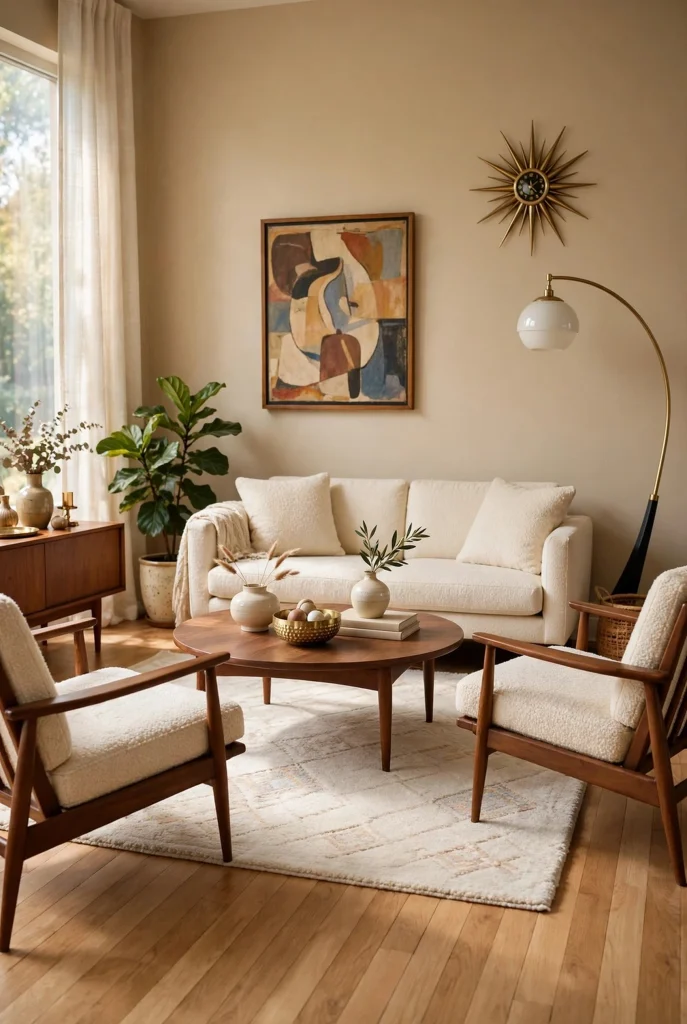
Lighting in a mid-century modern living room can be both practical and sculptural. A globe pendant, an arc floor lamp, or a sputnik-style chandelier can add shape and personality while keeping the rest of the room simple. Brass, walnut, and matte black finishes all work beautifully with this style.
Layer your lighting so the room feels warm in the evening. A main ceiling light, a floor lamp beside the sofa, and a small table lamp on a sideboard create a soft, inviting glow. Choose warm bulbs and simple shades that let the form of each light shine. When the lighting is thoughtfully layered, the room feels comfortable at every time of day.
11. Mid-Century Modern Living Room With a Fireplace
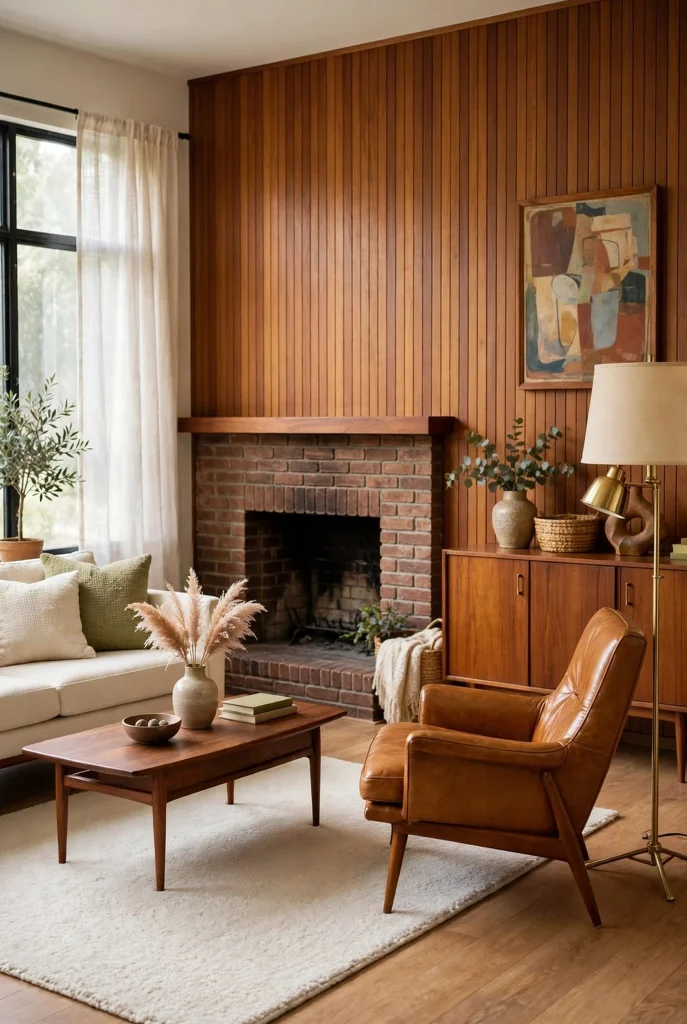
A fireplace gives a mid-century modern living room a natural gathering place. A simple brick or stone surround, a low wooden mantel, and clean lines keep the fireplace feeling honest and understated. The fireplace can anchor the furniture arrangement and make the room feel warm even when it is not lit.
Arrange the sofa and chairs so they face the fireplace while still leaving room for conversation. A walnut coffee table, a soft rug, and a few ceramic pieces on the mantel complete the look without hiding the beauty of the fireplace itself. If you have a vintage fireplace, let its original materials and proportions guide the rest of the room.
12. Small Mid-Century Modern Living Room Ideas
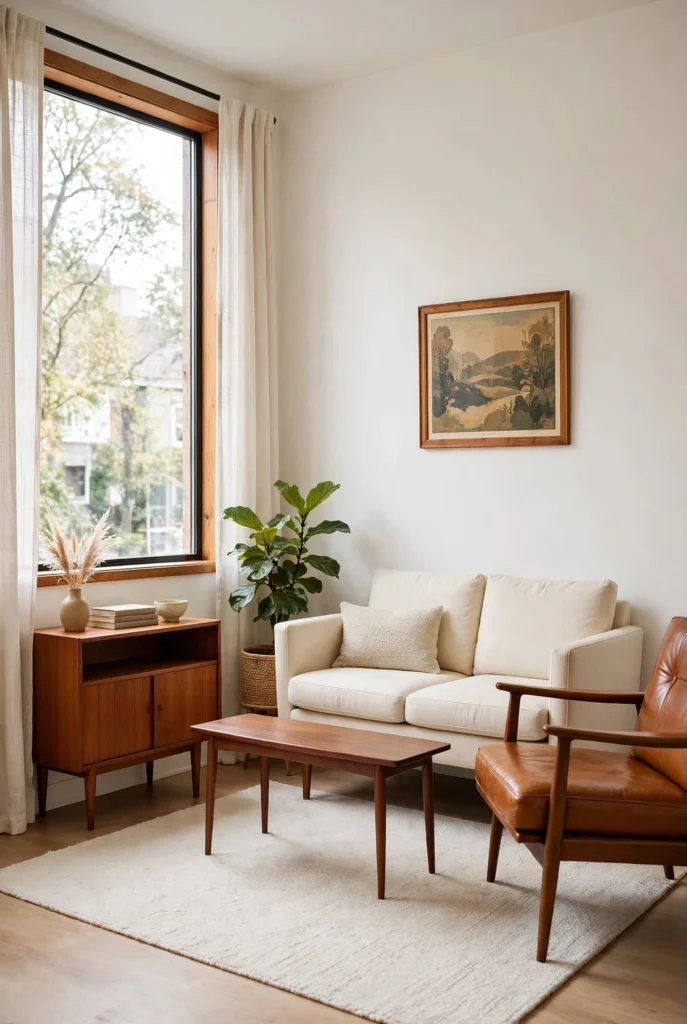
Mid-century modern design works especially well in a small living room because the furniture is usually light, low, and uncluttered. Choose a compact sofa with slim arms and tapered legs, a small round coffee table, and one or two accent chairs that can be moved easily. Furniture that shows a little floor underneath helps the room feel more open.
Keep the color palette light and the accessories few. A mirror, a simple piece of artwork, and a single indoor plant can add personality without taking up valuable space. Use a sideboard or a wall-mounted shelf for storage instead of bulky cabinets. With a few well-chosen pieces, even a small living room can feel spacious, comfortable, and full of character.
13. Plants in a Mid-Century Modern Living Room
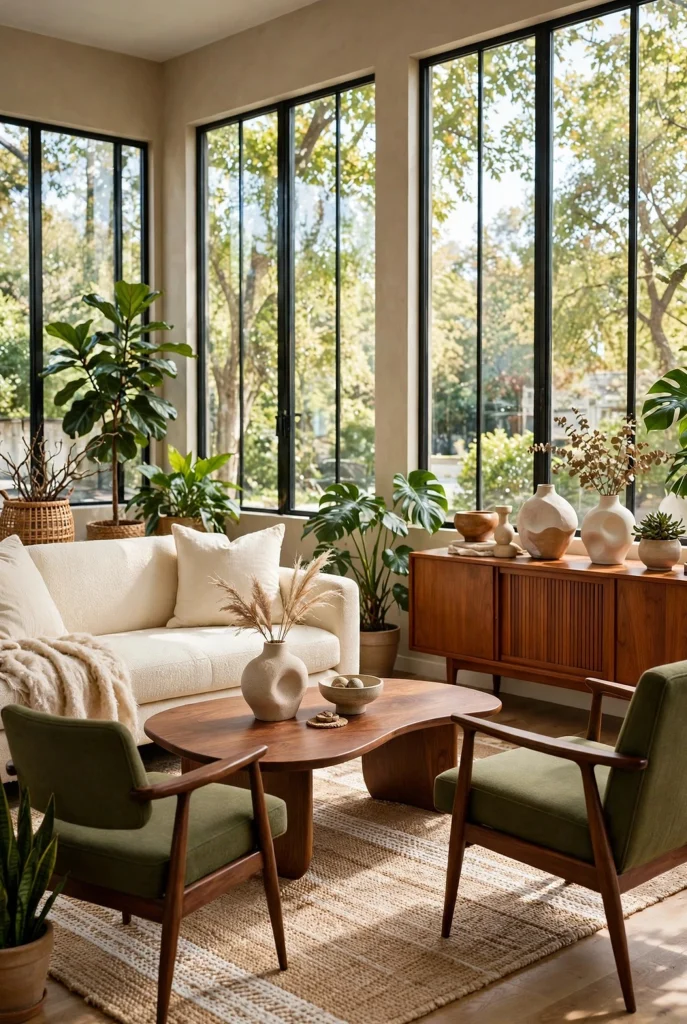
Plants bring life and softness to a mid-century modern living room. A tall fiddle-leaf fig, a trailing pothos, or a simple snake plant can add height, color, and organic shape to a room filled with straight lines and warm wood. Plants also help the space feel relaxed and lived in.
Choose planters that suit the style, such as simple ceramic pots, woven baskets, or plant stands with tapered wooden legs. Place a large plant beside the sofa or sideboard, and a smaller one on a shelf or coffee table. Keep the arrangement simple and give each plant room to grow. A few healthy plants can make the whole room feel fresher and more welcoming.
14. Mustard Yellow Accents in a Mid-Century Modern Living Room
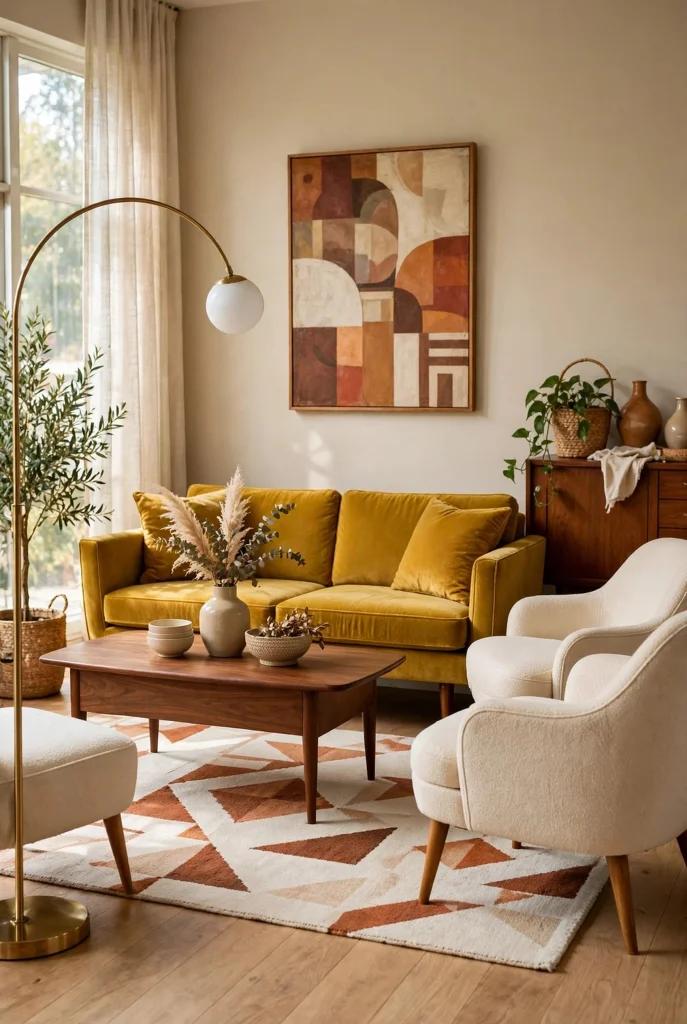
Mustard yellow is a warm, cheerful color that fits beautifully with mid-century modern design. It works well with walnut wood, cream upholstery, olive green, and burnt orange. A little mustard yellow can brighten a neutral room without making it feel loud or overwhelming.
Introduce this color through cushions, a throw blanket, a piece of artwork, or a single accent chair. If you love the color, a mustard sofa can also become a beautiful focal point when the rest of the room stays calm. Keep the larger surfaces neutral and let the mustard details add warmth and personality. The result feels sunny, retro, and timeless at the same time.
15. Ceiling Lights for a Mid-Century Modern Living Room
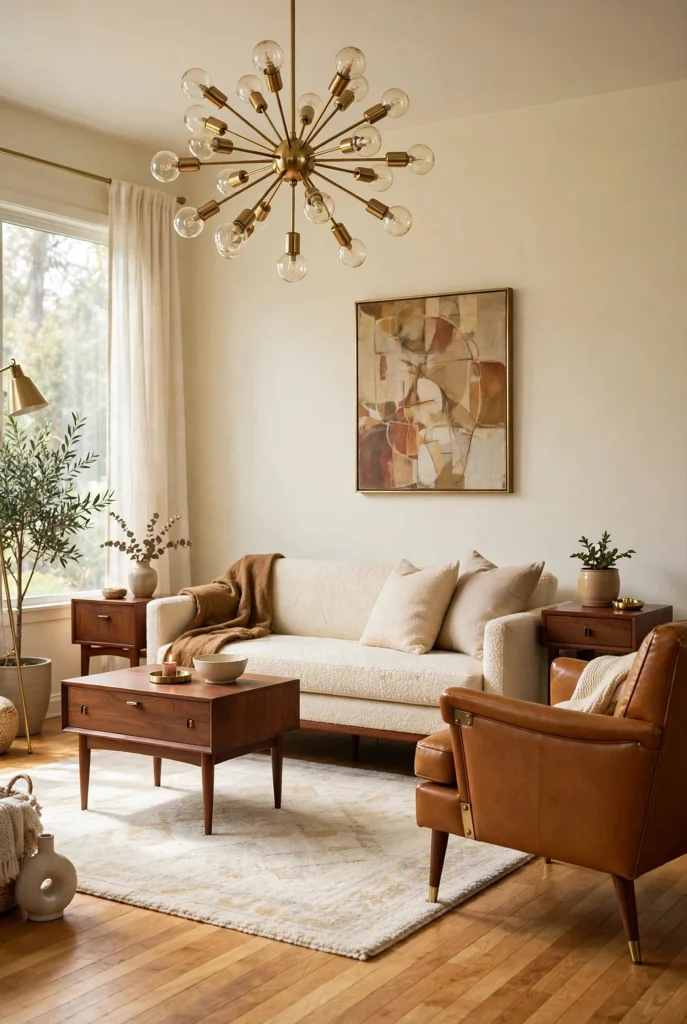
The ceiling light can set the tone for the entire living room. A mid-century modern pendant with a globe, cone, or sputnik shape adds sculptural interest while keeping the design simple. Warm brass, walnut, and soft white finishes all blend beautifully with the natural materials in this style.
Hang the light at a height that leaves the room feeling open and balanced, especially above a coffee table or seating area. If the ceiling is low, choose a flush or semi-flush design that still has a beautiful shape. Pair the ceiling light with lamps for softer evening lighting. When the ceiling light is chosen with care, it becomes a quiet focal point rather than just a practical detail.
16. Curved Sofas in a Mid-Century Modern Living Room
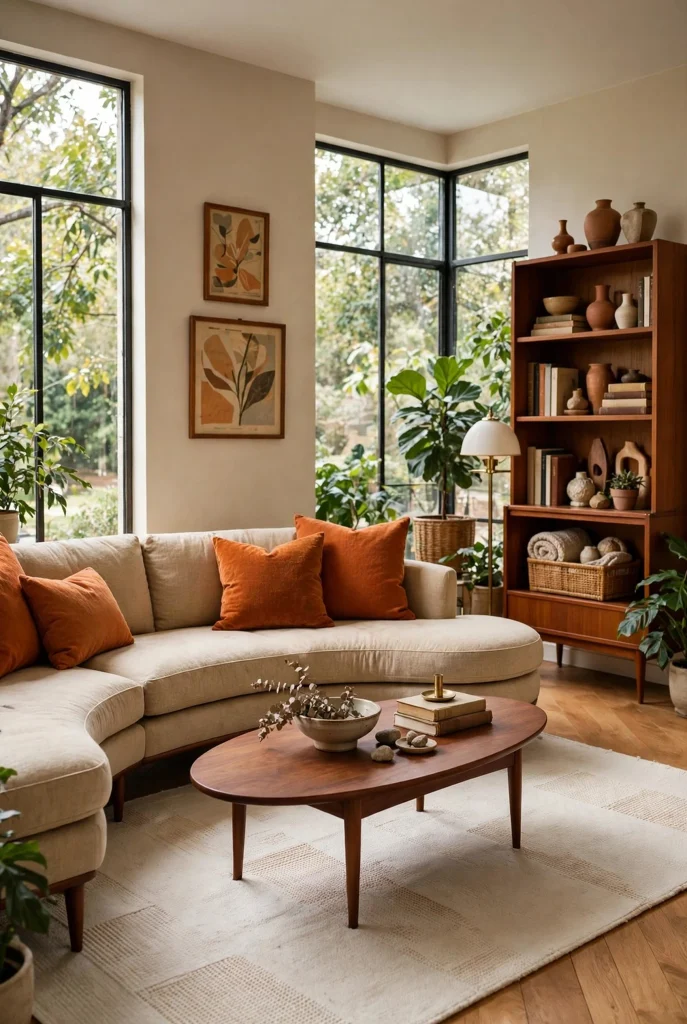
A curved sofa adds softness and movement to a mid-century modern living room. Its gentle shape invites conversation and makes the seating area feel relaxed and welcoming. Curved sofas work especially well in larger rooms where the curve can be appreciated from different angles.
Keep the rest of the furniture simple so the sofa remains the star. A round coffee table follows the curve of the sofa and keeps the arrangement feeling balanced. Choose a calm upholstery color such as cream, oatmeal, or muted olive, and add a few cushions in warm earthy tones. The combination of clean lines and one soft curve creates a room that feels both elegant and comfortable.
17. Terracotta Wall in a Mid-Century Modern Living Room
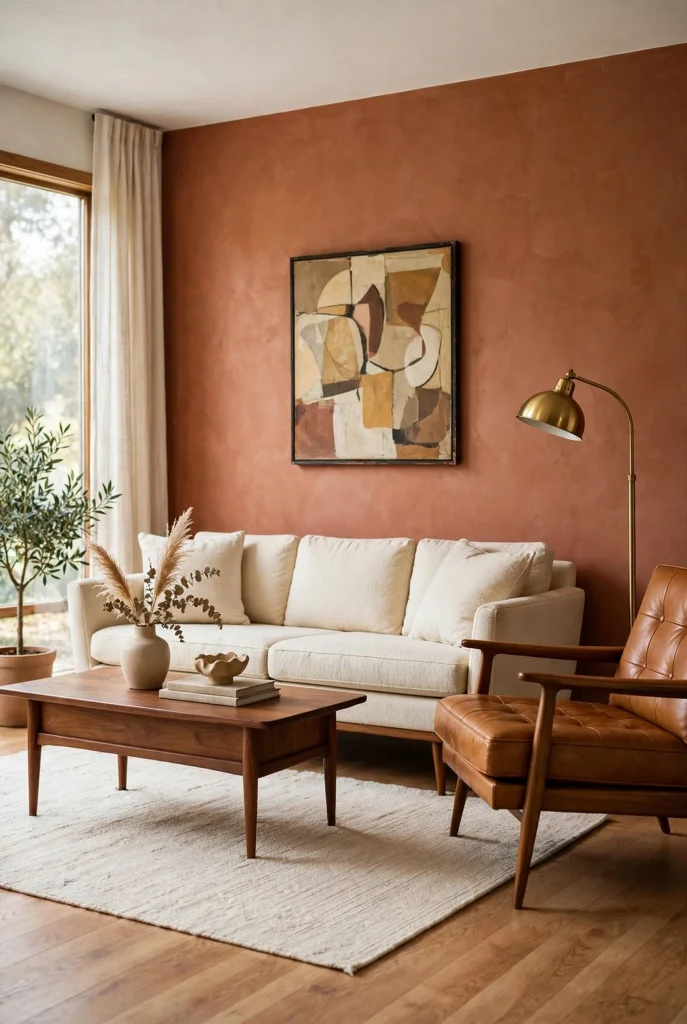
A terracotta wall adds warmth and depth to a mid-century modern living room. This earthy shade pairs beautifully with walnut and teak furniture, cream upholstery, and olive green accents. A single accent wall is often enough to change the feeling of the whole room.
Keep the furniture and textiles relatively calm so the wall feels intentional rather than overwhelming. A cream sofa, a walnut coffee table, and simple artwork allow the terracotta color to shine. Natural light helps the color feel warm and rich throughout the day. With a few plants and ceramic accessories, the room feels grounded, cozy, and full of character.
18. Reading Corner in a Mid-Century Modern Living Room
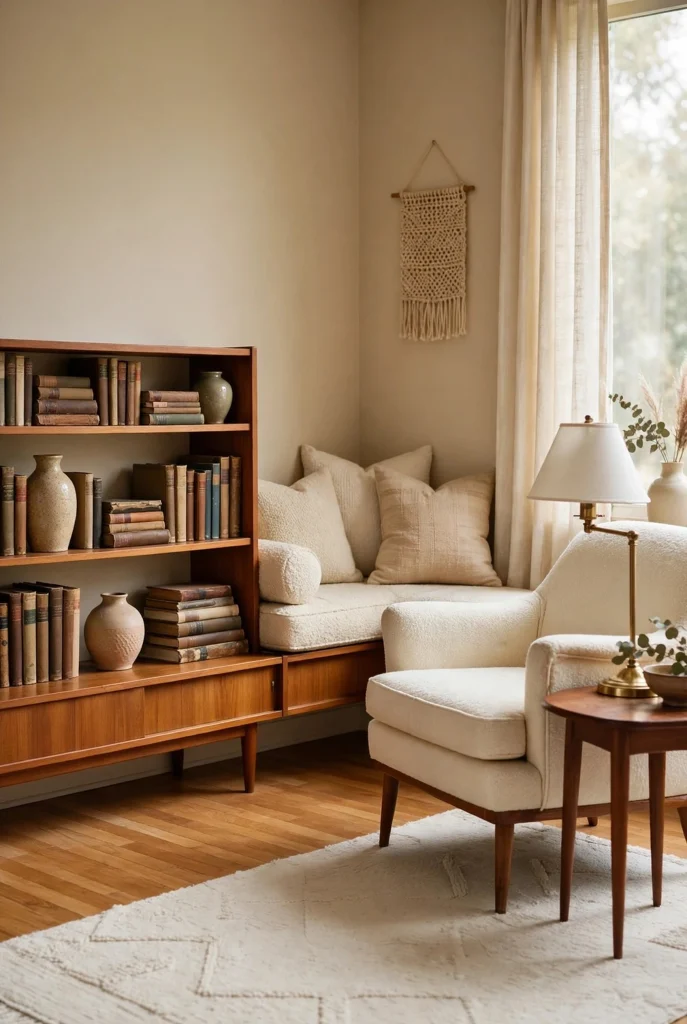
A reading corner gives a living room a quiet, personal place to slow down. All you need is a comfortable accent chair, a small side table, and a good floor lamp. Choose a chair with a supportive shape, a soft cushion, and warm upholstery that invites you to sit and stay a while.
Place the reading corner near a window if possible, so you can enjoy natural light during the day. Add a small basket for books, a throw blanket, and a plant to make the corner feel complete. Keep the area simple and uncluttered so it remains a calm place to relax. A well-designed reading corner makes the whole living room feel more thoughtful and welcoming.
19. Black and Walnut in a Mid-Century Modern Living Room
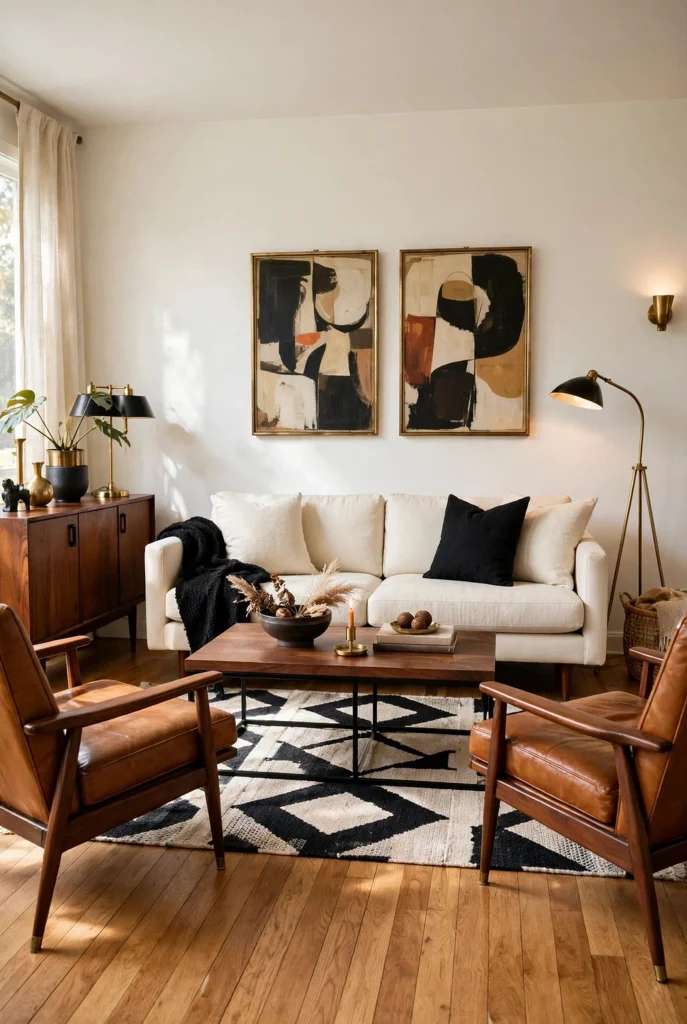
Black and walnut is a classic combination that feels both bold and timeless. The dark tones add contrast and structure, while the warm wood keeps the room from feeling cold. A black accent chair, a black-framed artwork, or black metal lighting can anchor the space beautifully.
Balance the darker pieces with light walls, a cream sofa, and a soft neutral rug. This contrast allows both the black details and the wood grain to stand out. Keep the accessories simple and let the materials do the work. When black is used in small, thoughtful amounts, the room feels sophisticated, grounded, and easy to live with.
20. Open-Plan Mid-Century Modern Living Room
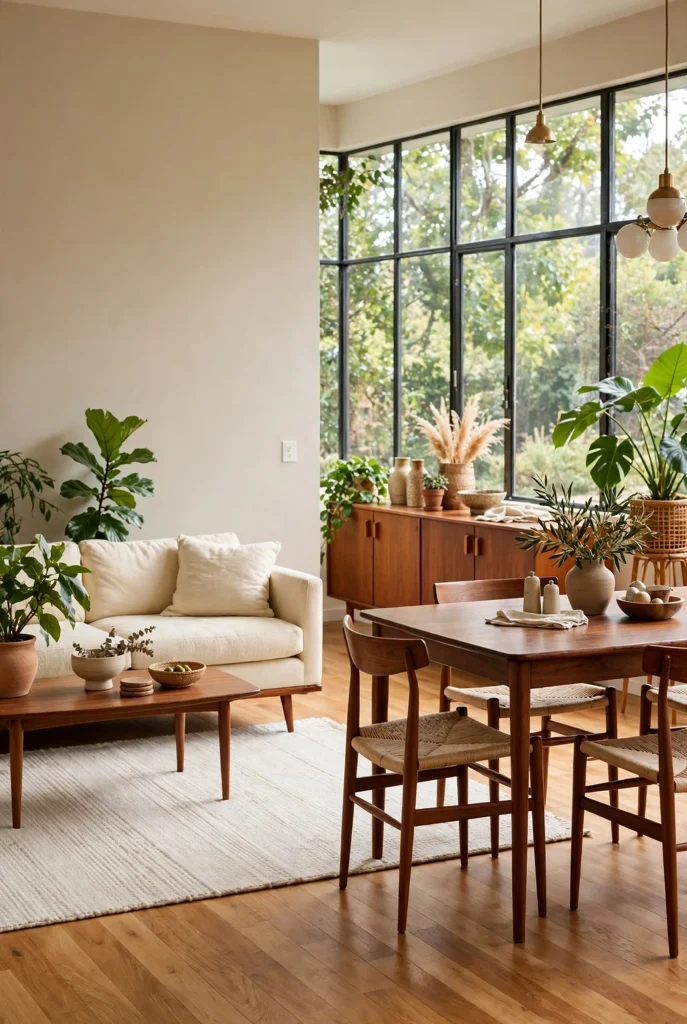
In an open-plan home, mid-century modern furniture helps define the living area without closing it off. A low sofa, a walnut sideboard, and a large rug can mark the boundaries of the seating area while keeping the space feeling open and connected to the kitchen or dining area.
Use furniture placement rather than walls to create zones. Place the sofa with its back to the dining area, add a console behind it, and keep walkways clear. Choose a consistent palette of warm wood, cream, and earthy accents throughout the open space so the rooms feel related. The result is a home that feels spacious, social, and easy to move through.
21. Gallery Wall in a Mid-Century Modern Living Room
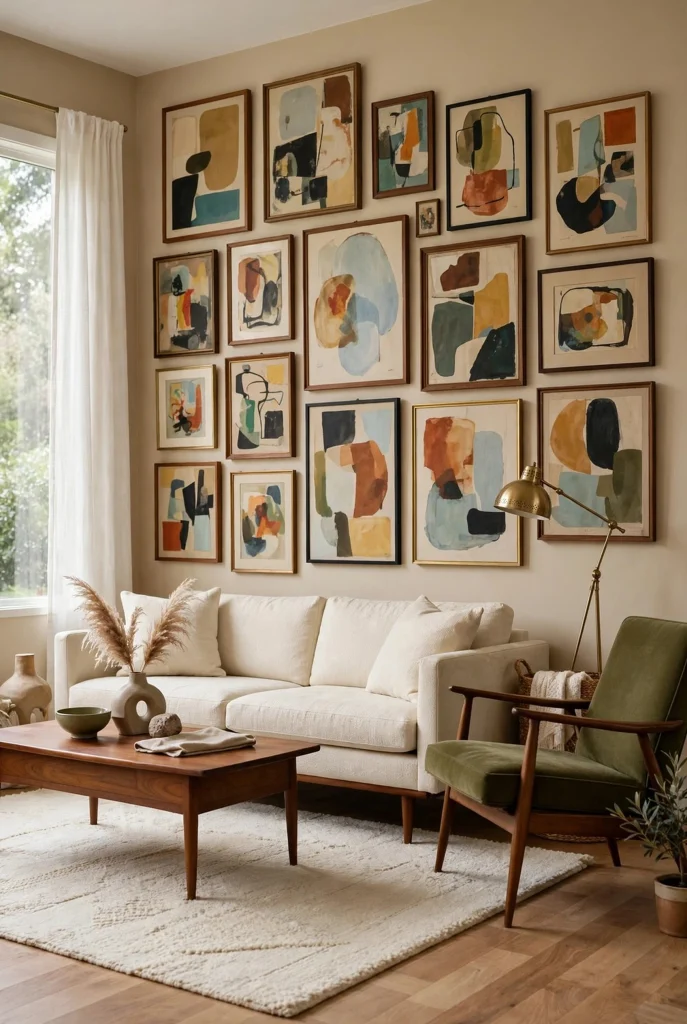
A gallery wall is a wonderful way to add personality to a mid-century modern living room. Choose abstract prints, line drawings, and vintage posters in simple frames. A mix of warm colors, black and white, and natural tones keeps the display feeling collected rather than busy.
Plan the arrangement before you hang anything, and leave consistent space between the frames. A gallery wall works well above a sofa, a sideboard, or in a hallway that leads to the living room. Keep the frames simple in walnut, black, or warm brass so the artwork remains the focus. A thoughtful gallery wall makes the room feel personal and lived in.
22. Autumn Styling for a Mid-Century Modern Living Room
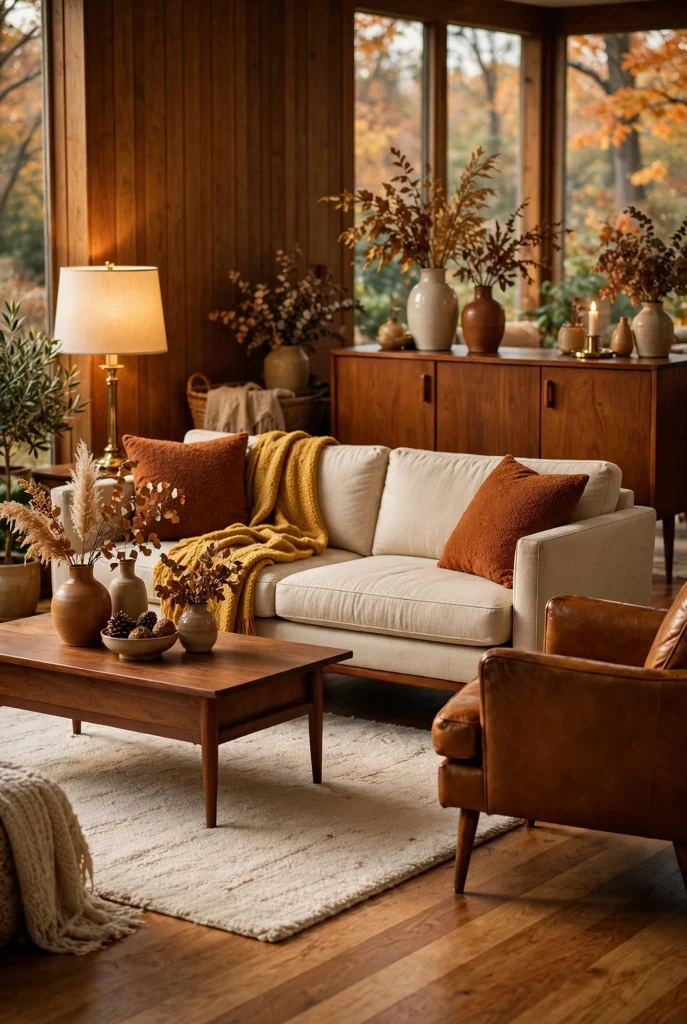
Autumn styling brings the warm colors of the season into a mid-century modern living room. Rust, mustard, terracotta, and olive tones all feel natural in this style. A few cushions, a wool throw, and a simple ceramic vase can change the mood of the room without a complete redecoration.
Add natural details such as dried branches, a small pumpkin, or a bowl of pinecones on the coffee table. Keep the arrangement simple and let the warm colors and textures speak for themselves. A soft rug, warm lighting, and a comfortable chair complete the cozy autumn feeling. This seasonal approach keeps the room feeling fresh while staying true to its timeless style.
23. Velvet and Brass in a Mid-Century Modern Living Room
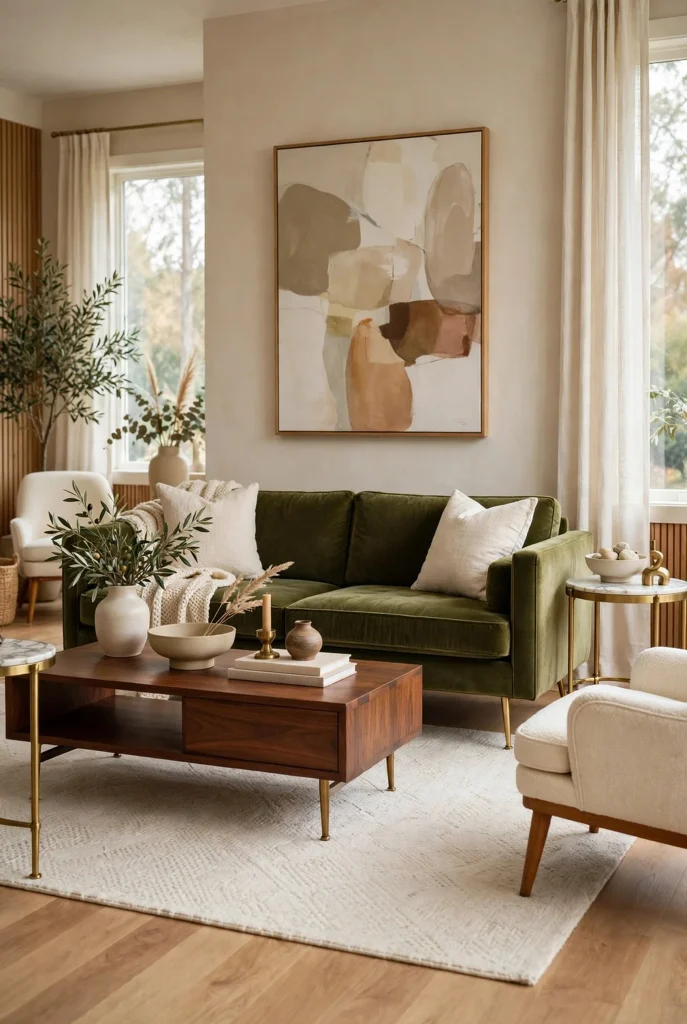
Velvet and brass add a touch of softness and shine to a mid-century modern living room. A velvet sofa or accent chair in olive, rust, or warm gray feels luxurious without looking formal. Brass details in lighting, table legs, and small accessories add warmth and a gentle glow.
Use these materials in moderation so the room still feels calm and comfortable. Pair a velvet chair with a walnut coffee table, a cream rug, and simple ceramic pieces. The contrast between soft velvet, warm brass, and natural wood creates a room that feels rich, inviting, and beautifully balanced.
24. Exposed Beams in a Mid-Century Modern Living Room
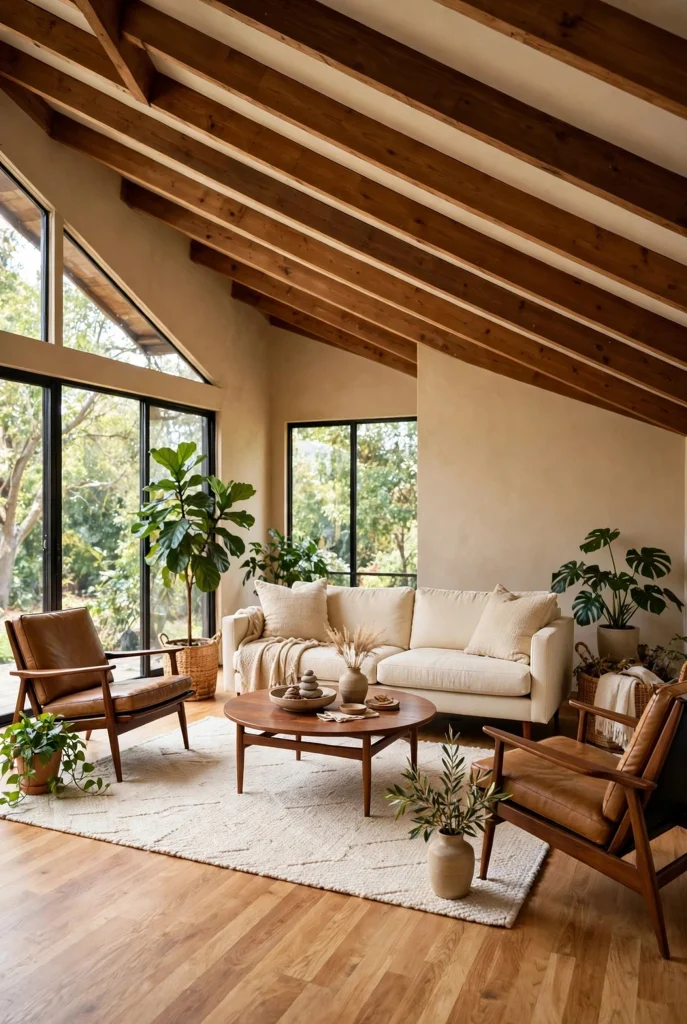
Exposed beams add structure and warmth to a mid-century modern living room. Natural wood beams draw the eye upward and make the ceiling feel like part of the design. They pair beautifully with walnut furniture, warm neutral walls, and simple lighting.
Keep the rest of the room calm so the beams remain a feature rather than competing with too many details. A low sofa, a simple rug, and a few earthy accents allow the architecture to shine. If the beams are dark, balance them with light upholstery and soft lighting. A room with exposed beams feels honest, grounded, and full of character.
25. A Timeless Mix for a Mid-Century Modern Living Room
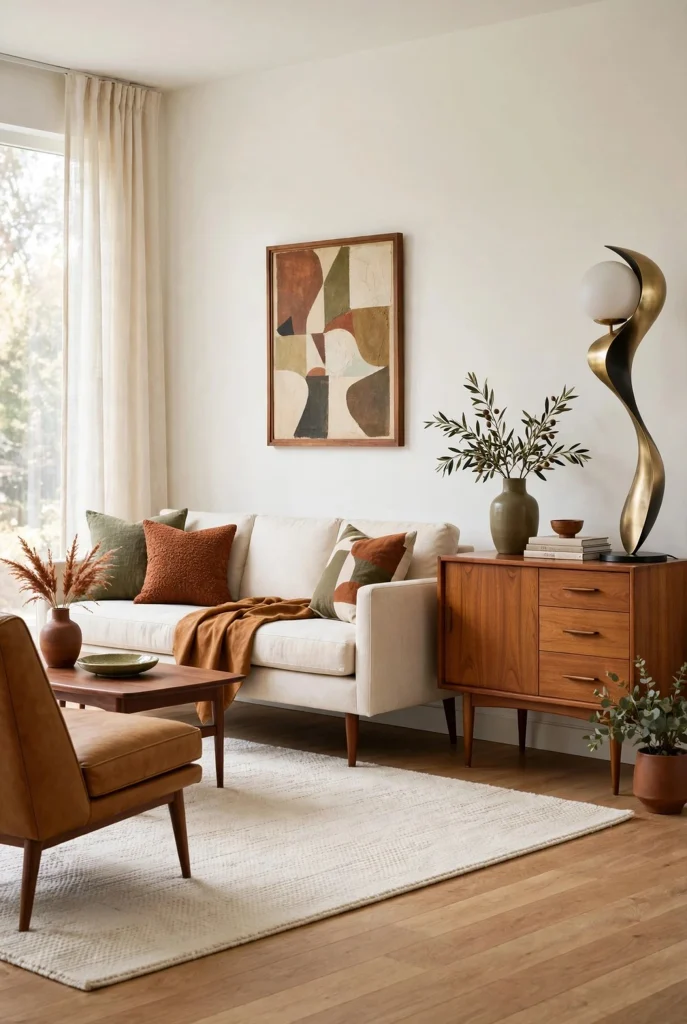
The most timeless mid-century modern living rooms are not perfectly matched. They mix old and new, warm and cool, and simple and sculptural pieces. A vintage sideboard, a contemporary sofa, a favorite piece of artwork, and a plant collected over time can come together to create a room that feels personal.
Choose pieces you truly love and let the room grow slowly. Keep the palette warm and the layout simple, and allow space for each piece to be appreciated. A timeless mix does not follow every trend, and that is exactly why it lasts. When the room reflects your life and your taste, it becomes a place you will enjoy for many years.
Final Thoughts
Mid-century modern style endures because it is built on simple ideas: honest materials, clean lines, comfortable furniture, and a warm, welcoming feeling. You do not need to change everything at once to enjoy this look. Even one well-chosen piece, a new color, or a thoughtful arrangement can make a meaningful difference.
Take your time, choose pieces you love, and let your living room grow in a way that feels personal. With warm wood, earthy colors, and simple details, you can create a mid-century modern living room that feels timeless, comfortable, and truly your own.
Frequently Asked Questions
1. What are the main features of a mid-century modern living room?
A mid-century modern living room typically features clean lines, tapered furniture legs, organic shapes, warm wood finishes, and simple decorative accessories. Common materials include walnut, teak, leather, linen, and wool. Earthy colors such as olive green, mustard, rust, and caramel are also popular. The overall look combines practical furniture with attractive, uncomplicated design.
2. What colors work best in a mid-century modern living room?
Warm neutrals and earthy shades work particularly well. Cream, beige, warm white, and soft gray create a comfortable foundation, while olive green, burnt orange, mustard yellow, and caramel add character. Walnut and teak furniture naturally complement these colors. You can keep the palette mostly neutral and introduce stronger shades through accent chairs, cushions, rugs, and artwork.
3. How can I decorate a mid-century modern living room on a budget?
Start with a few noticeable changes instead of replacing all your furniture. A vintage-inspired coffee table, tapered furniture legs, geometric cushions, and simple abstract artwork can introduce the style without a complete makeover. Consider secondhand wooden furniture and update its appearance carefully if needed. Warm lighting and natural textures are also affordable ways to create a more cohesive look.
4. Can mid-century modern style work in a small living room?
Absolutely. Many mid-century modern furniture designs have slim profiles, exposed legs, and streamlined shapes that work nicely in smaller rooms. Choose a compact sofa, a small coffee table, and a narrow media console. Light-colored walls, simple rugs, and limited accessories can help maintain an open appearance. Furniture with built-in storage is another practical choice.
5. Is mid-century modern decorating still in style?
Mid-century modern decorating remains a popular interior design choice because its emphasis on natural materials, useful furniture, and simple shapes works well in many contemporary homes. You can keep the look fresh by mixing classic wooden furniture with modern upholstery, contemporary artwork, and comfortable accessories. Rather than copying an entire vintage interior, choose the elements that suit your home.