25 Festive Home Decor Ideas for Christmas
Christmas decorating is one of those seasonal rituals that can make an ordinary home feel especially welcoming. A few thoughtful touches can bring warmth to the living room, dining area, entryway, bedroom, or even a quiet corner that usually gets overlooked. The best Christmas decor does not have to mean filling every surface with ornaments. Sometimes a simple wreath, a strand of warm lights, or a bowl of greenery is enough to create that festive feeling.
In this guide, you will find 25 festive home decor ideas for Christmas that combine classic holiday charm with comfortable, livable styling. There are ideas for traditional red and green interiors, soft neutral spaces, rustic homes, elegant rooms, and simple decorating styles. Use the suggestions as inspiration, then mix and match the details that suit your home, budget, and personal taste.
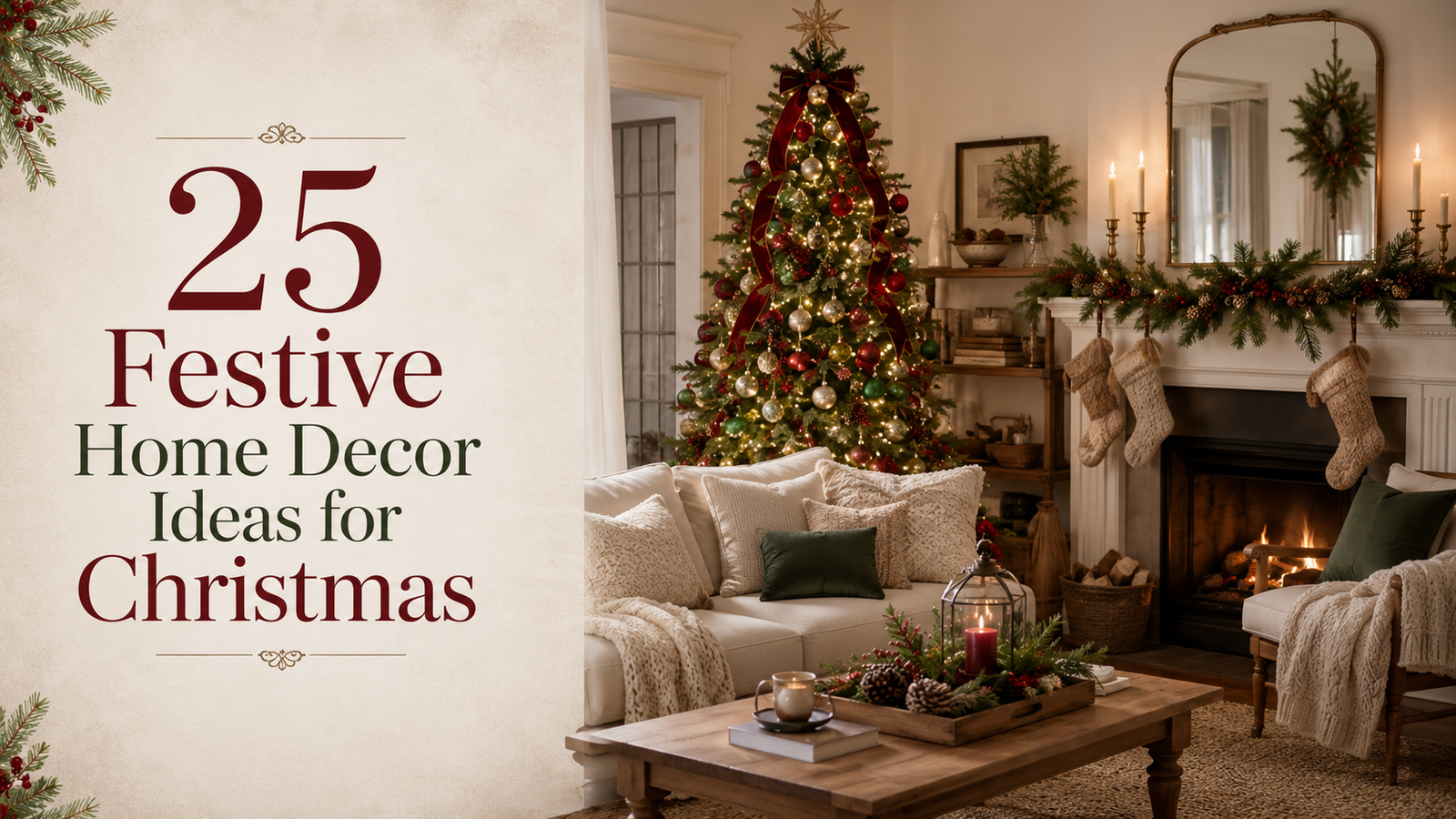
1. Create a Cozy Christmas Mantel
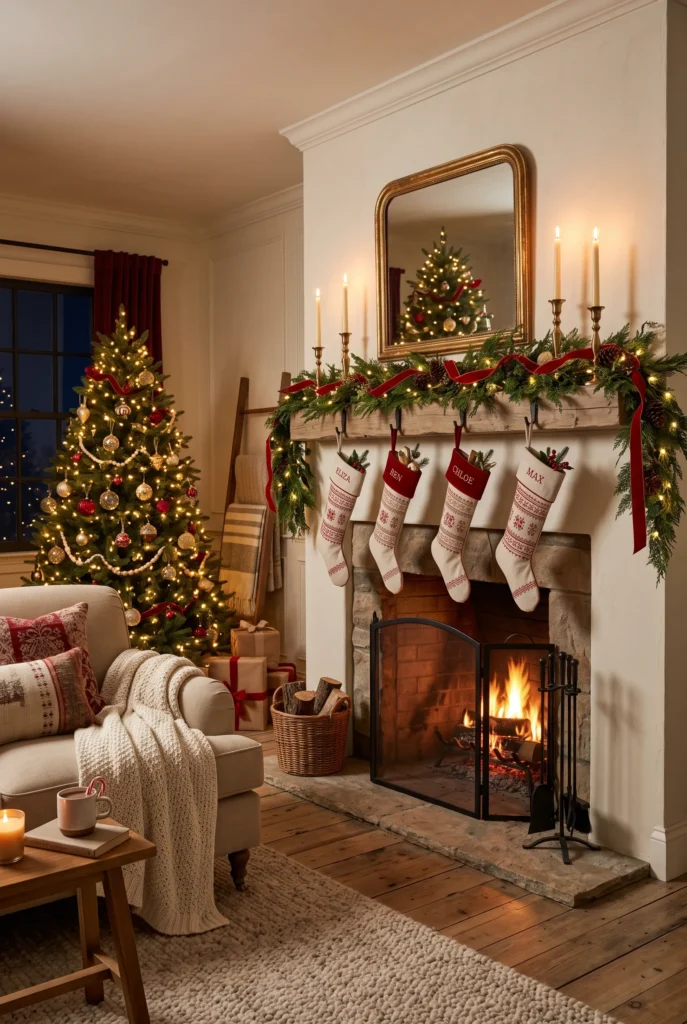
A Christmas mantel can become the visual centerpiece of the living room without requiring a complicated arrangement. Start with a simple evergreen garland and let it drape naturally across the fireplace. Add pinecones, small ornaments, ribbon, or candle holders to give the display more depth. For a traditional look, combine greenery with red accents. If your room is already colorful, cream, brass, and natural wood details can create a calmer arrangement that still feels festive.
Keep the mantel practical by leaving enough open space around candles and other decorative pieces. A few larger elements usually look more intentional than a collection of tiny objects scattered across the surface. Finish the area with stockings underneath, a basket of firewood nearby, and soft lighting that makes the entire room feel warm after sunset.
2. Decorate the Christmas Tree With Layered Textures
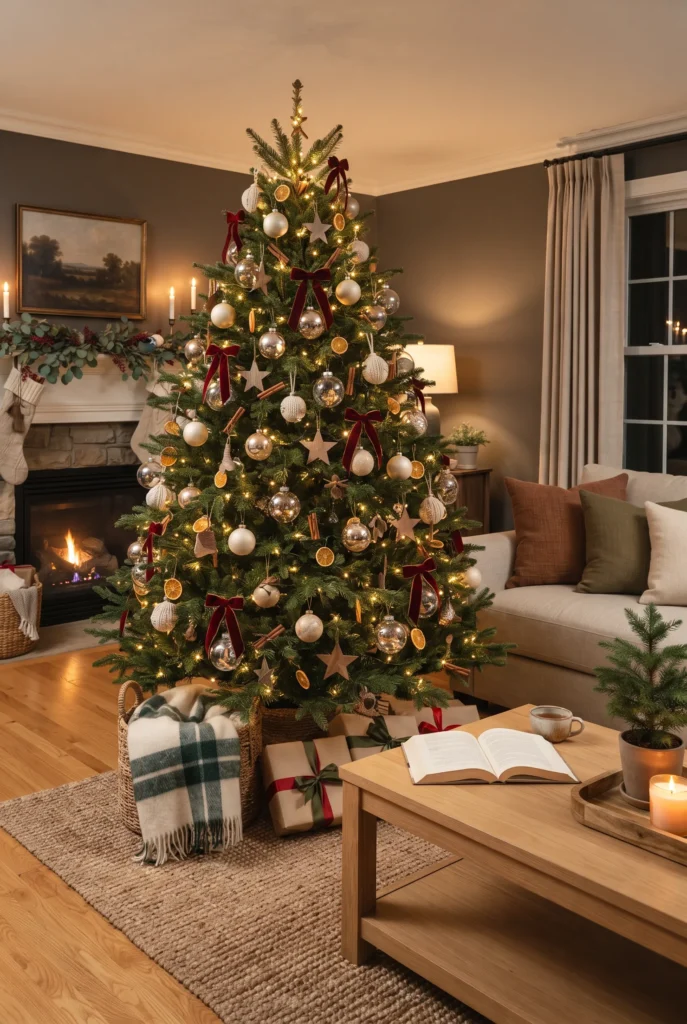
A Christmas tree feels much more interesting when the decorations include several different textures. Instead of relying only on shiny baubles, combine velvet ribbon, wooden ornaments, glass pieces, paper stars, and natural elements such as pinecones. Choose two or three main colors and repeat them throughout the tree so the finished arrangement feels coordinated. Warm white lights work especially well when you want the ornaments and branches to remain the focus.
Do not worry about making every branch look perfectly symmetrical. Step back while decorating and look for areas that need a little extra volume or color. Larger ornaments can fill empty spaces, while smaller decorations help soften the edges. A simple woven basket or fabric tree skirt underneath can also make the base look finished without adding visual clutter.
3. Add a Festive Entryway Wreath
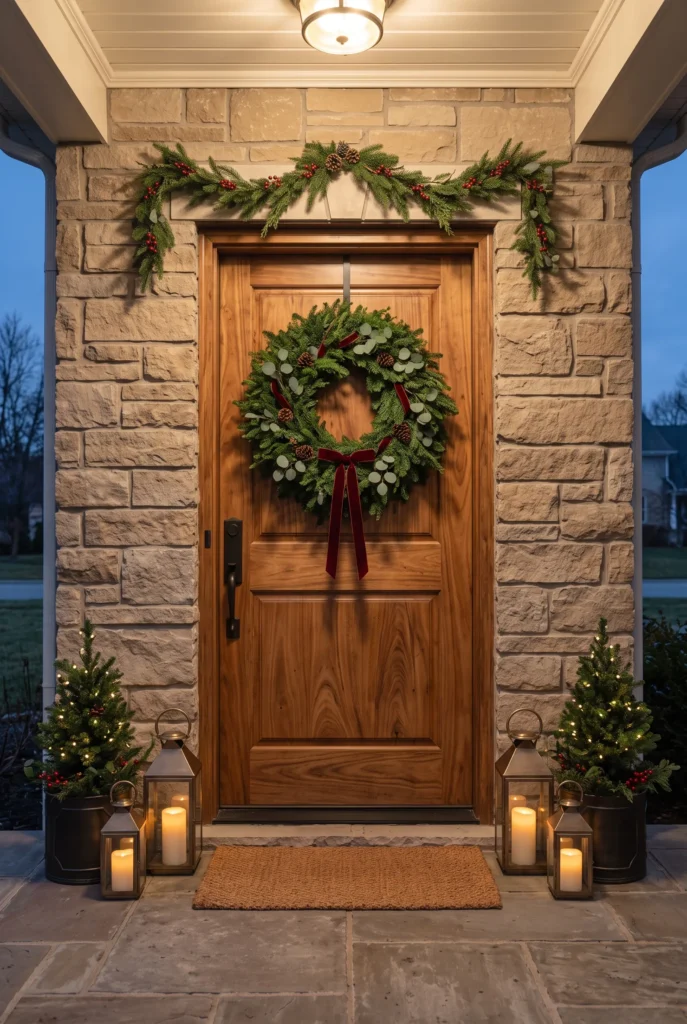
The entryway sets the mood before anyone steps inside, so a Christmas wreath is an easy place to begin. A classic evergreen wreath looks beautiful with a simple velvet ribbon, while eucalyptus, pinecones, berries, or dried citrus can give it a more natural character. Choose a wreath size that suits the door rather than selecting the largest option available. The goal is to make the entrance feel decorated, not crowded.
You can extend the look beyond the door by placing two simple planters on either side of the entrance. Add evergreen branches, pinecones, or small lanterns for a layered effect. If you have a covered porch, a soft outdoor-safe light can make the greenery visible after dark. Keep the colors connected to your interior so the seasonal style feels consistent from the front door onward.
4. Style a Christmas Coffee Table
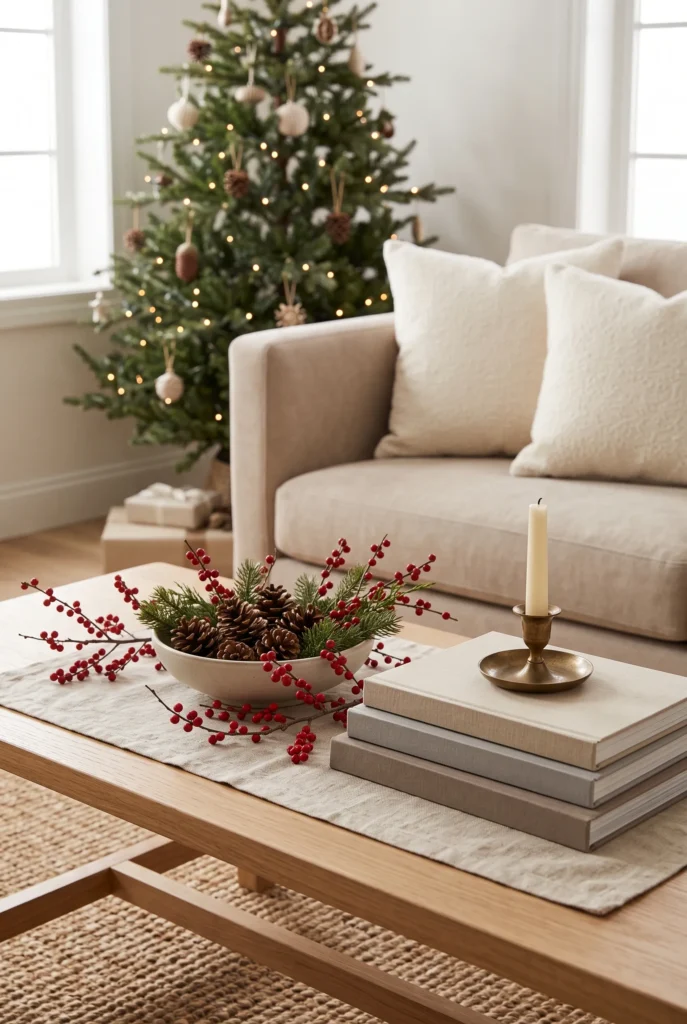
The coffee table is a small surface, but it can carry plenty of Christmas personality when the arrangement is kept simple. Try placing a shallow tray in the center and adding a candle, a small bowl of pinecones, and a few evergreen sprigs. A stack of books can add height without making the display feel overly decorative. Natural wood, ceramic, linen, and brass work particularly well together for a cozy winter look.
Remember that the coffee table still needs to be usable. Leave some clear space for mugs, snacks, or everyday items. If your table is small, choose one central arrangement rather than several separate decorations. For homes with children or pets, avoid fragile pieces around the edges and consider using sturdy, lightweight decorations that are easier to move when needed.
5. Bring Christmas Greenery Into the Kitchen
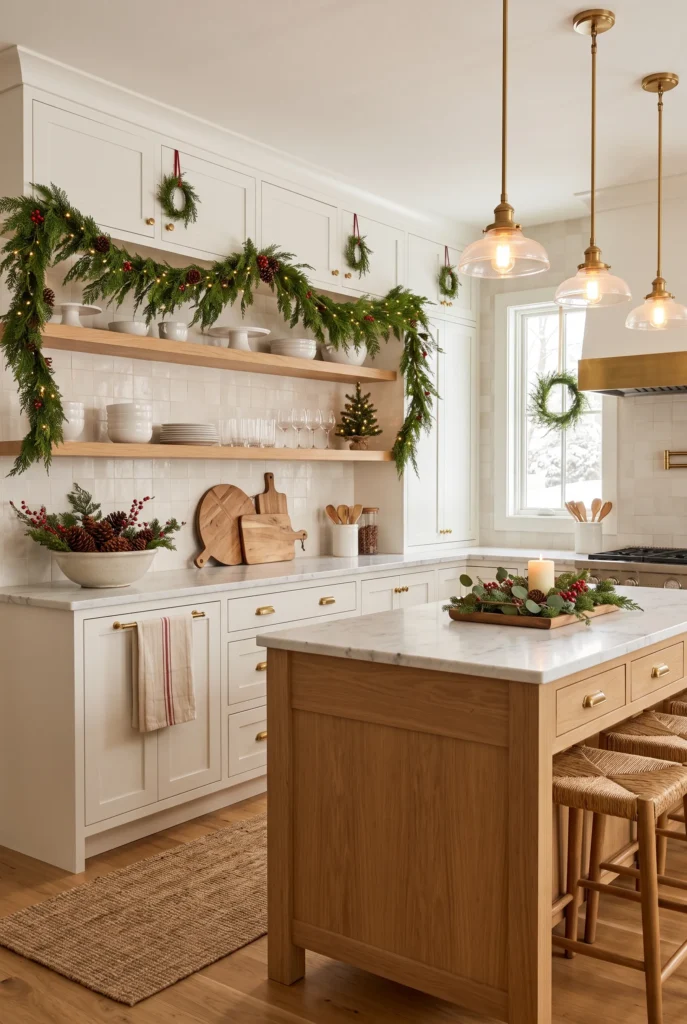
The kitchen often gets overlooked during Christmas decorating, even though it is one of the busiest rooms during the holidays. A little greenery can make a noticeable difference. Place a short evergreen garland above open shelving, add a small wreath to a cabinet door, or put a bowl of pinecones beside a wooden cutting board. These small touches bring seasonal character without taking away valuable workspace.
For a softer look, use natural greens with cream ceramics and wood accents. If you prefer traditional Christmas colors, add a few red berries or a patterned tea towel. Keep decorations away from stovetops, ovens, and areas where they could become a safety concern. The kitchen should remain functional first, with seasonal details added around the spaces you naturally leave clear.
6. Make a Warm Christmas Dining Table
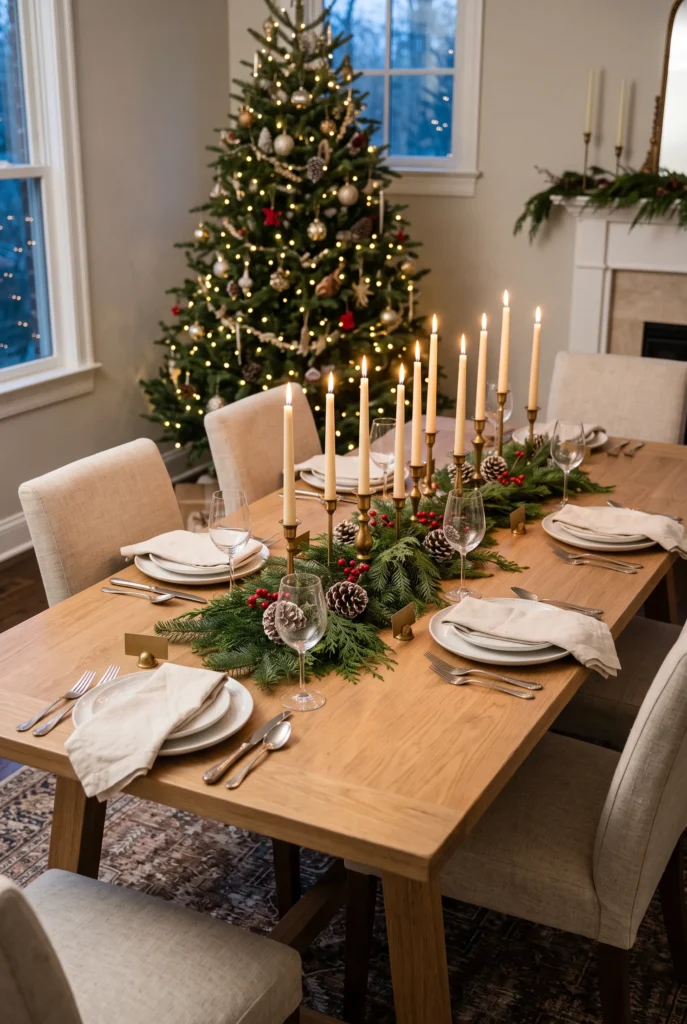
A Christmas dining table can feel special without looking like a formal event setup. Start with a natural centerpiece made from evergreen branches, pinecones, or eucalyptus. Add simple candles in brass or ceramic holders and use linen napkins to bring softness to the table. White plates and natural wood allow the greenery to stand out while keeping the overall arrangement relaxed.
If you are preparing the table for a gathering, leave enough room for serving dishes and comfortable conversation. You can also place a tiny sprig of greenery or a pinecone at each setting instead of using elaborate place cards. Warm candlelight adds a beautiful seasonal glow in the evening, while a few red berries or ribbon details can bring in classic Christmas color without overwhelming the table.
7. Hang Stockings in an Unexpected Spot
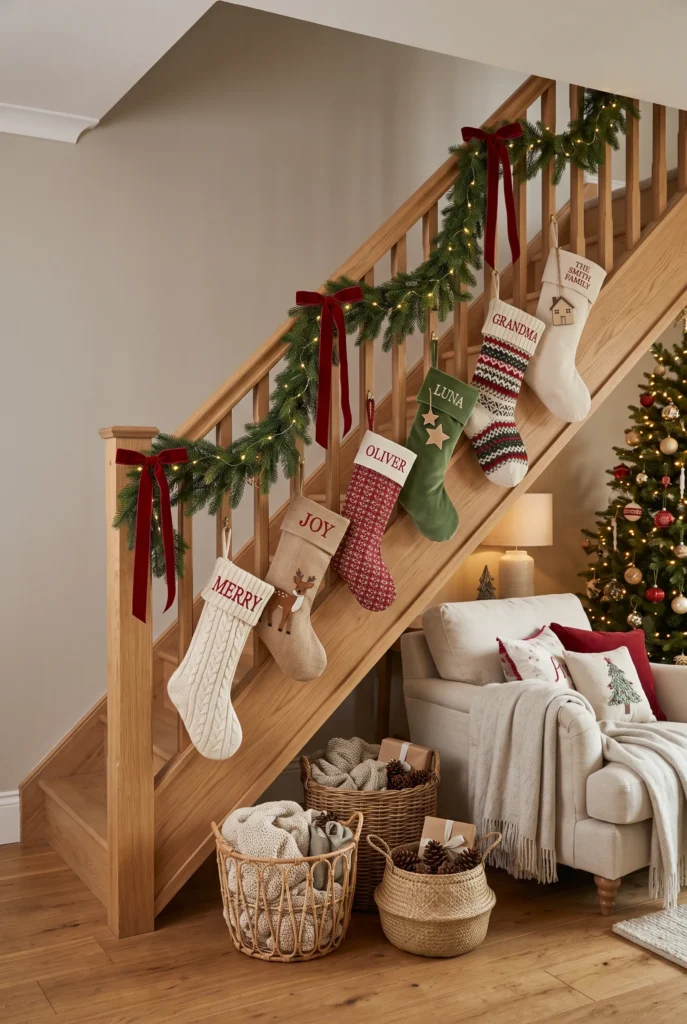
A fireplace is a classic place for stockings, but it is certainly not the only option. If your home does not have a mantel, try hanging stockings along a staircase railing, a sturdy console, or a decorative wall-mounted hook arrangement. Choose stockings that complement the rest of your Christmas palette so the display feels like part of the room rather than an isolated decoration.
A staircase can look especially charming with evergreen garland woven gently along the railing. Add warm lights and a few ribbons, but avoid making the walkway difficult to use. For a console table, hang stockings beneath the surface if the structure allows it. The result is practical, decorative, and easy to personalize without needing a traditional fireplace.
8. Use Red and Green in Small Doses
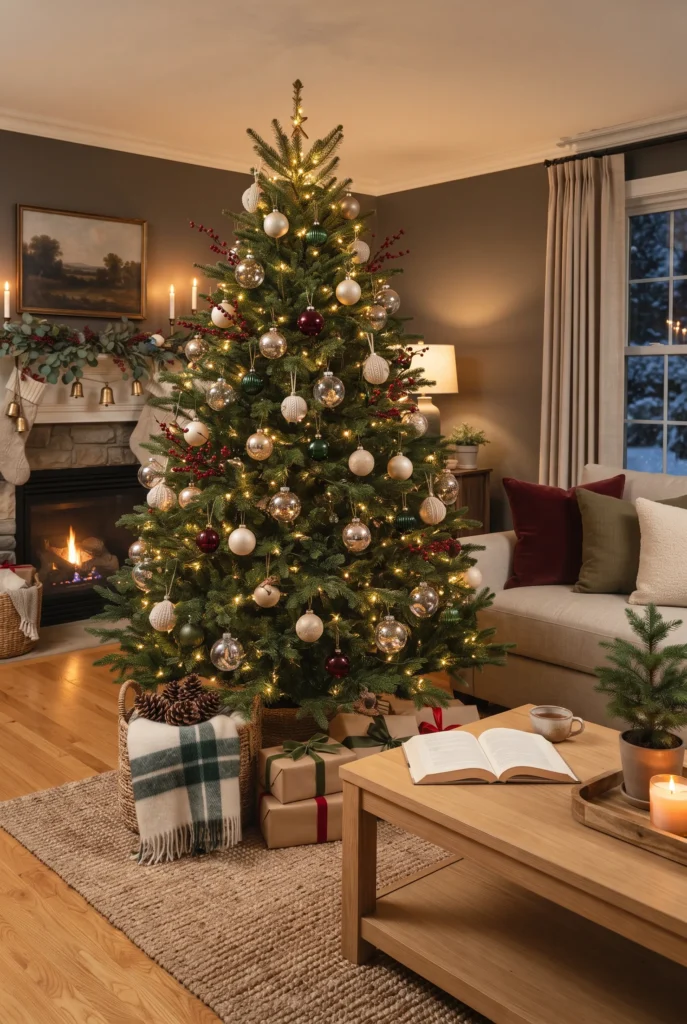
Traditional red and green instantly suggest Christmas, but you do not have to use them everywhere. A few carefully placed accents can be enough. Try a red velvet cushion on a neutral sofa, a small arrangement of evergreen branches on the coffee table, or a few red ornaments on the tree. Keeping the larger furniture and walls neutral allows those seasonal colors to stand out naturally.
This approach also makes decorating easier when the holidays are over. Instead of replacing an entire room, you can simply remove the Christmas accents and return to your everyday decor. Repeat the same red and green shades in a few different locations for visual connection. A consistent palette makes even simple decorations feel thoughtfully planned.
9. Add Warm Lights Around Windows
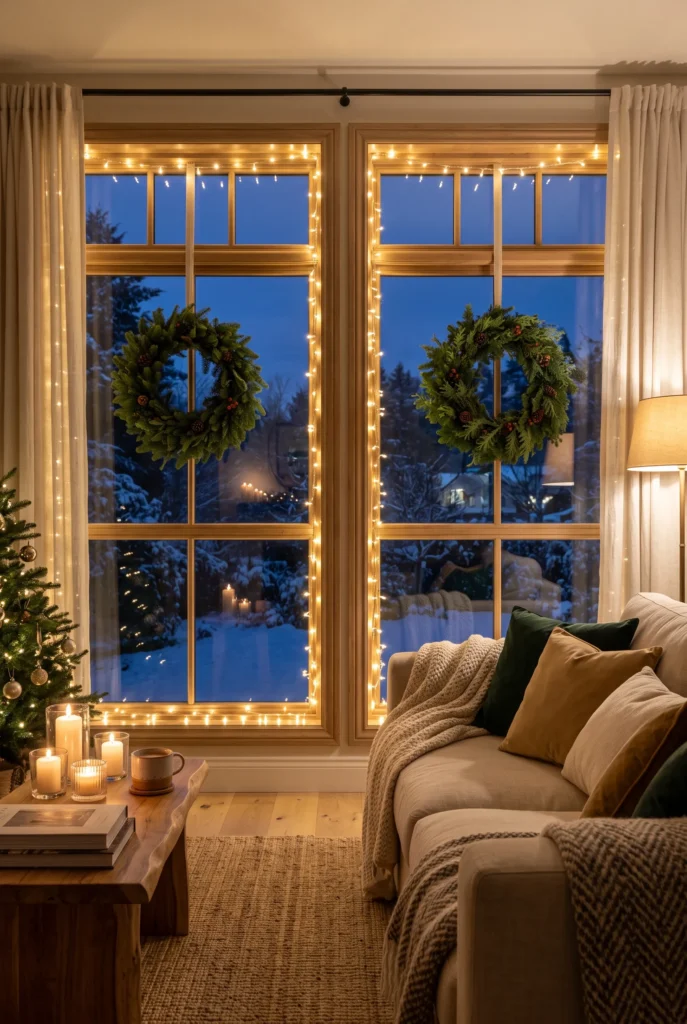
Windows offer an easy opportunity to add Christmas atmosphere, especially in the evening. Warm white string lights can be arranged around the frame, while small wreaths or hanging ornaments add a little extra character. Keep the display simple so the natural light during the day is not blocked. Battery-operated or low-profile lighting can be useful when outlets are inconvenient.
The glow from a decorated window can make a room feel especially cozy after sunset. Pair the lights with soft curtains, natural greenery, and a few warm-toned accessories nearby. If you have several windows in the same room, you do not need to decorate all of them equally. One or two focal windows can create enough seasonal interest while keeping the overall room calm.
10. Create a Christmas Reading Corner
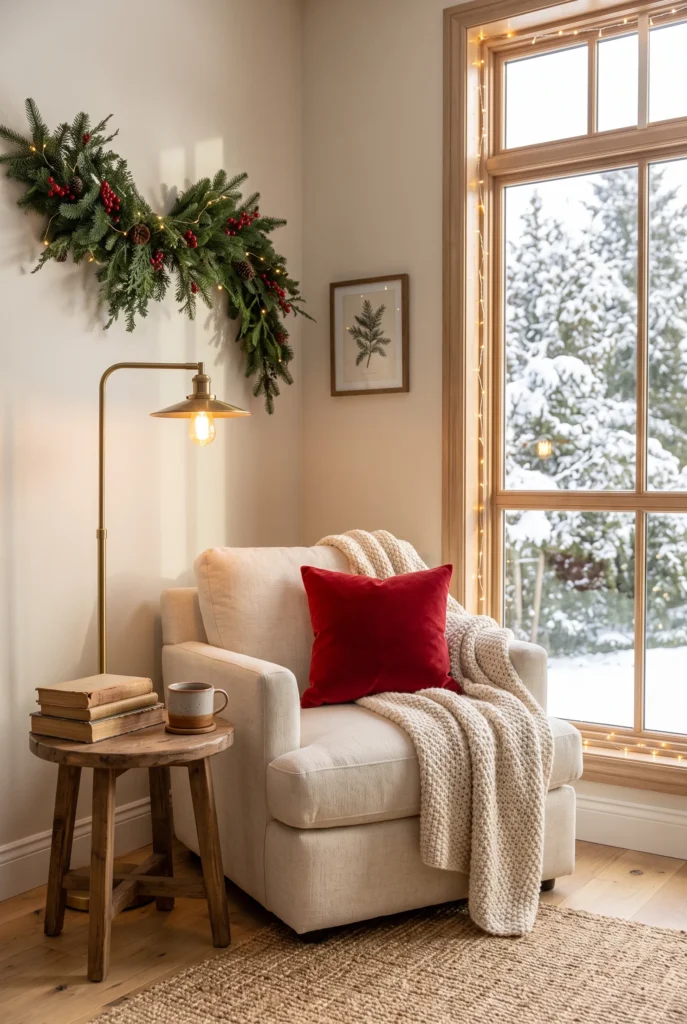
A quiet reading corner can become one of the coziest parts of the house during Christmas. Start with a comfortable chair, a soft throw, and a small side table. Add a warm lamp and a little seasonal greenery rather than covering the entire area in decorations. A red cushion, pinecone arrangement, or small wreath can introduce Christmas color while keeping the corner suitable for everyday use.
The key is to make the space feel comfortable before adding seasonal details. Choose fabrics with visible texture, such as wool, boucle, cotton, or chunky knits. A small basket beside the chair can hold blankets or books and also help keep the corner organized. Finish with warm lighting that creates a gentle glow without making the space feel overly formal.
11. Decorate With Natural Pinecones
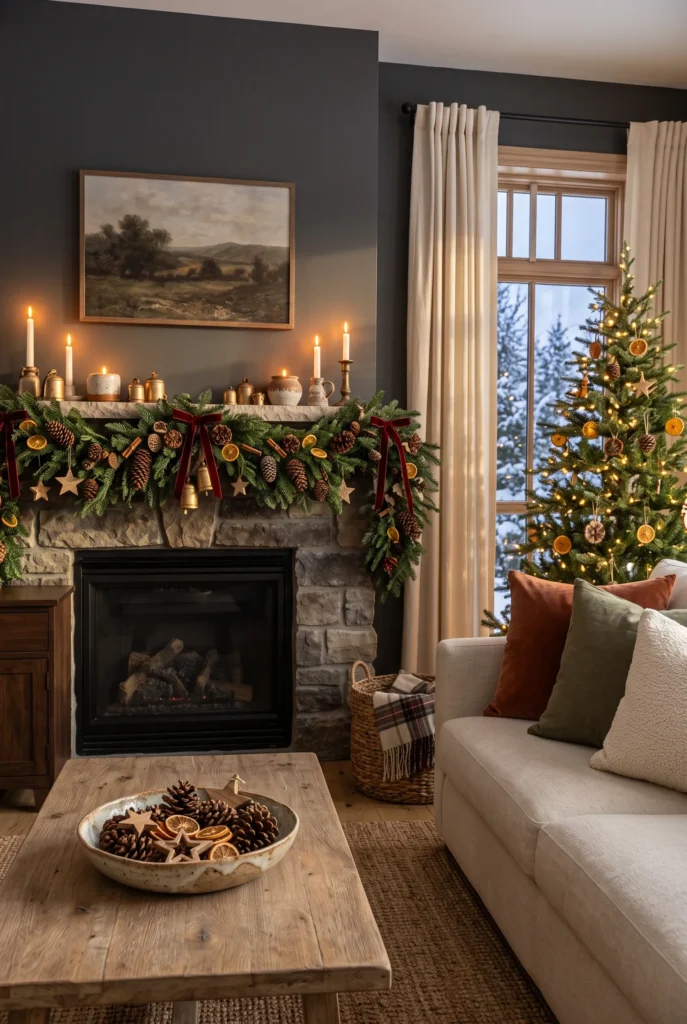
Pinecones are one of the easiest natural decorations to incorporate into Christmas styling. Their earthy color works beautifully with evergreen branches, wood, linen, ceramic, and warm metals. Place them in a bowl, scatter a few along a mantel, or use them as small accents on a dining table. Their simple shape adds texture without competing with larger decorations.
For a coordinated look, repeat pinecones in two or three areas of the room rather than placing them everywhere. You can combine them with dried orange slices, cinnamon sticks, or wooden ornaments for a natural woodland-inspired arrangement. Keep the colors mostly neutral if you want a relaxed Scandinavian or rustic feel, or introduce red ribbon for a more traditional Christmas palette.
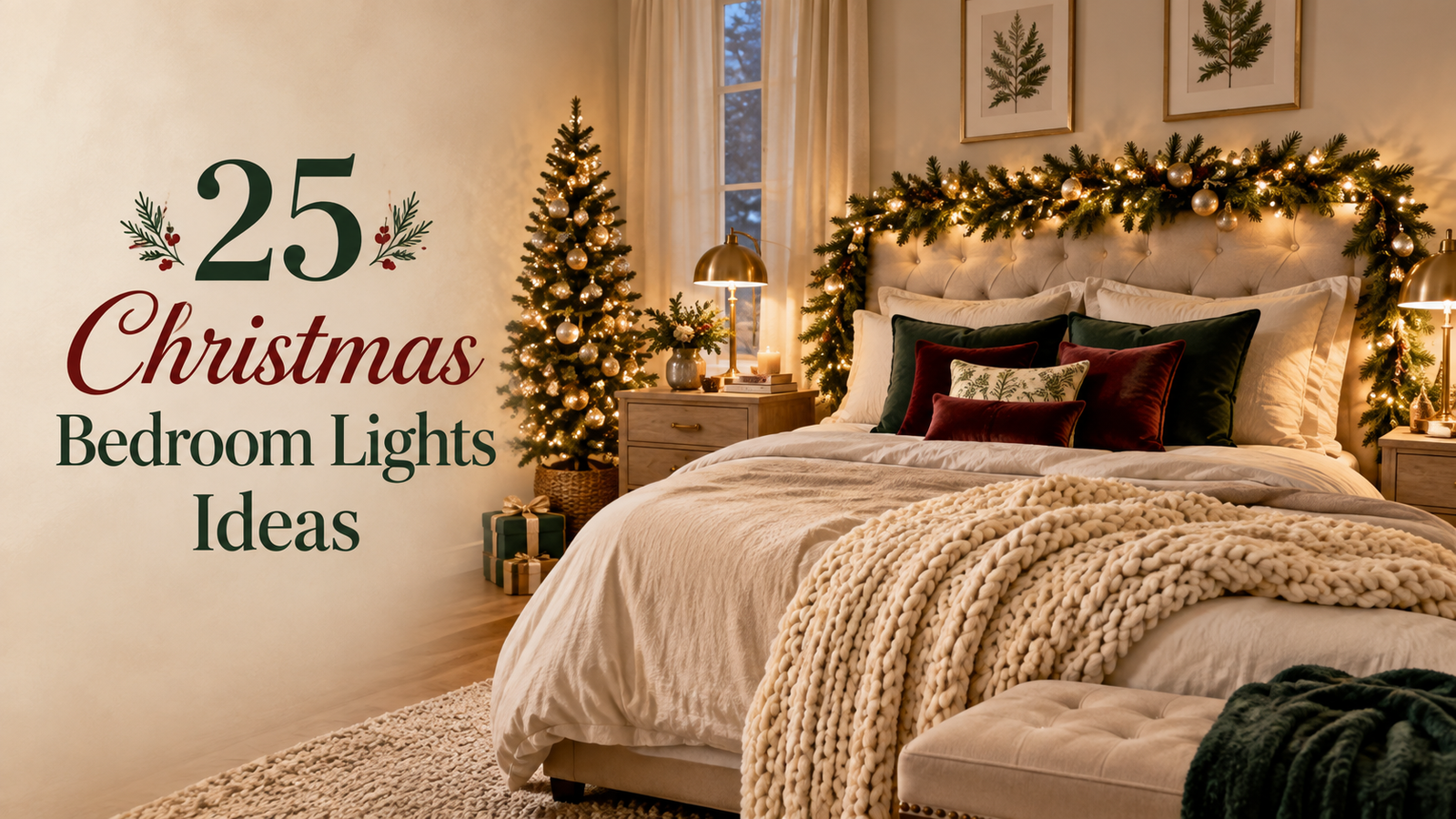
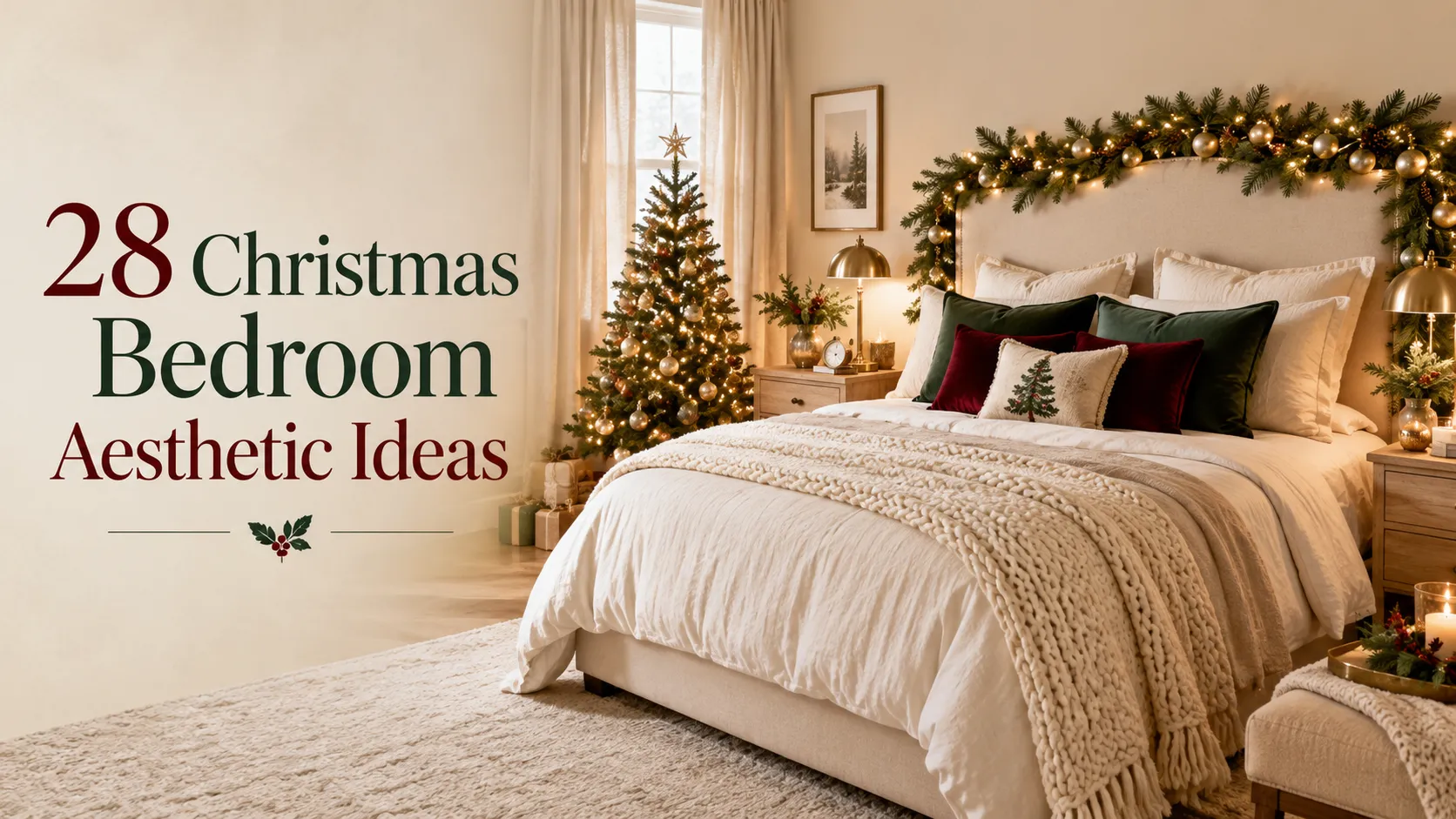
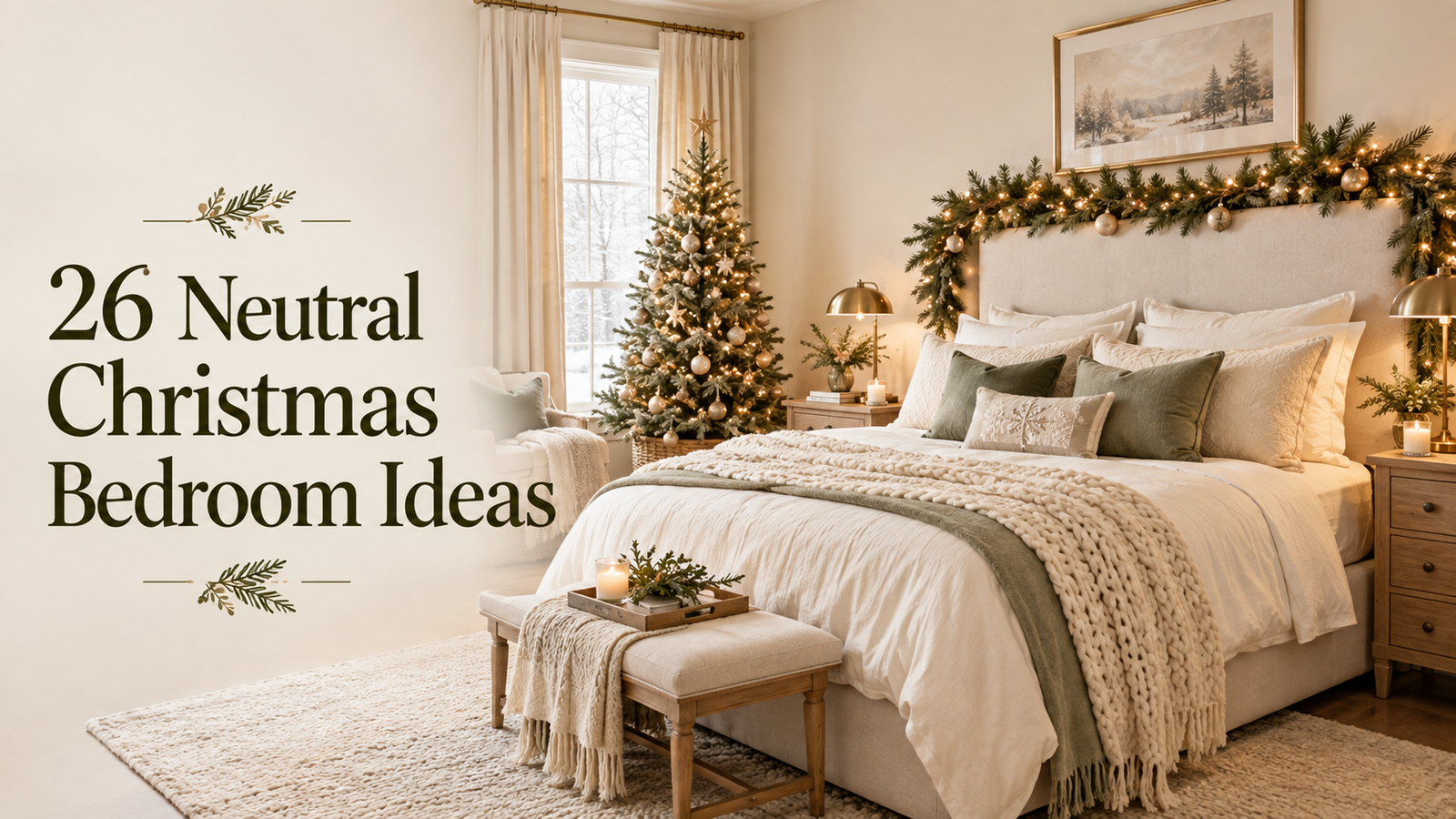
12. Style the Bedroom With Soft Christmas Accents
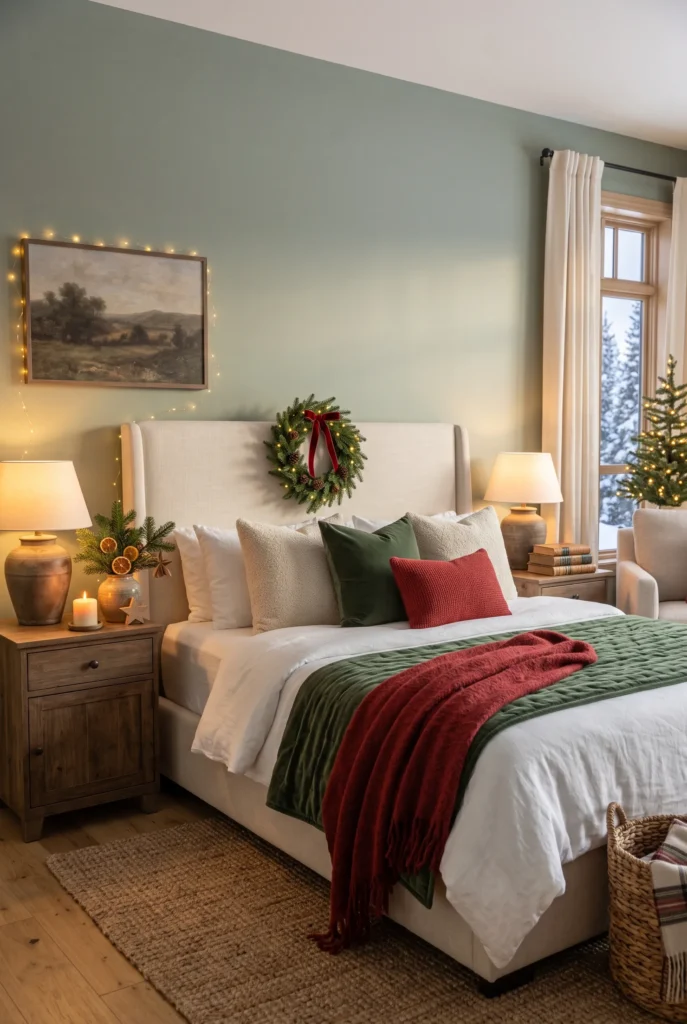
Christmas decor does not have to stop at the living room. A few subtle details can make the bedroom feel festive without disrupting its peaceful atmosphere. Add a seasonal throw, velvet cushions, a small wreath above the bed, or a vase filled with evergreen branches. Soft greens, creams, and natural wood are especially soothing when combined with warm lighting.
Avoid overcrowding the nightstands or bed because bedrooms benefit from visual calm. One small arrangement on each side of the bed can be enough. If you enjoy traditional colors, use a little burgundy or muted red in the textiles rather than bright decorations. The goal is to create a wintery feeling that still works for relaxing and sleeping.
13. Add a Christmas Bar Cart
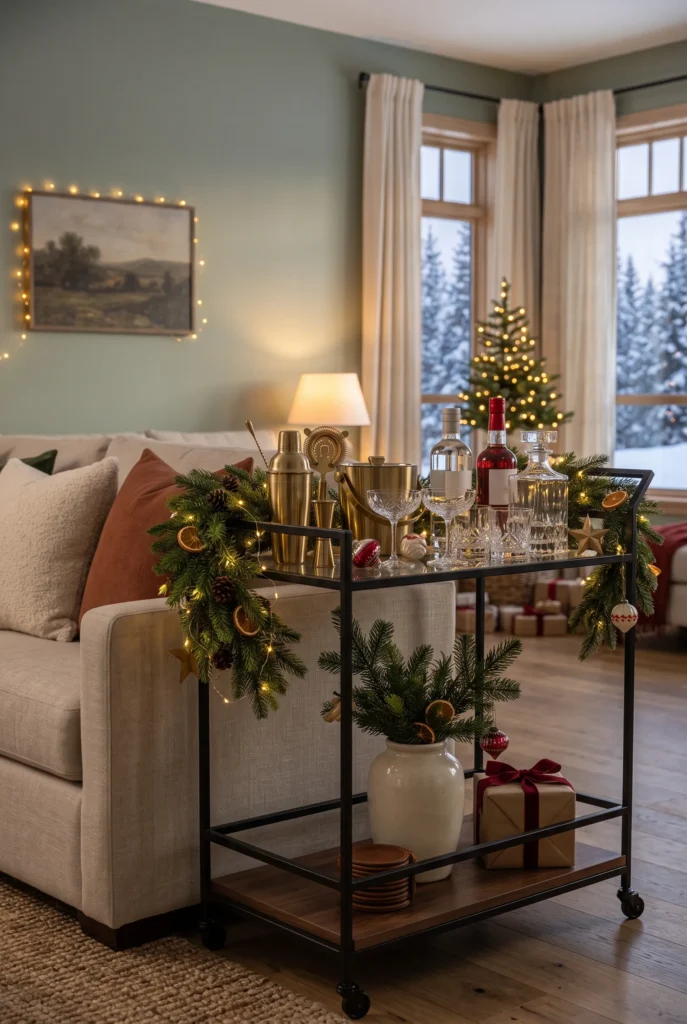
A bar cart can become a charming seasonal display even when it is used mainly for serving non-alcoholic drinks, coffee, or festive refreshments. Add a small evergreen branch, a few ornaments, and a decorative tray. Brass, glass, wood, and greenery create a polished combination that feels festive without requiring lots of color.
Keep the cart organized by grouping similar items together. Glassware can sit on one level, while a tray holds mugs, napkins, or seasonal accessories on another. If you have limited space, a narrow console can create the same effect. A small Christmas sign is optional, but the display usually looks more sophisticated when the decorations themselves provide the seasonal character.
14. Make a Simple Christmas Gallery Wall
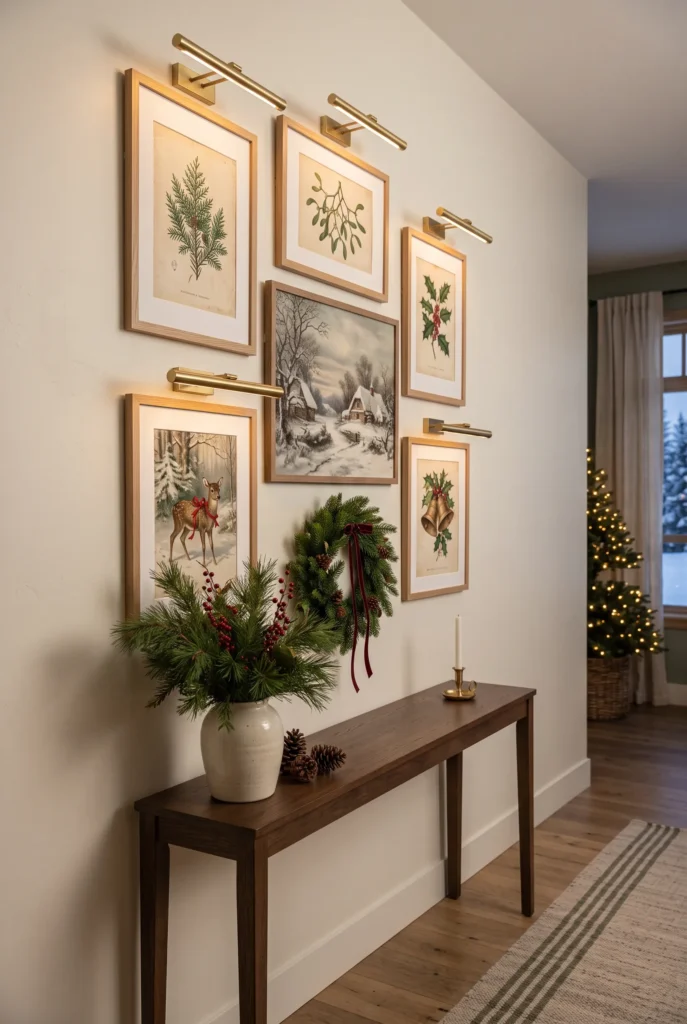
A gallery wall does not need to be completely replaced for Christmas. Instead, add one or two seasonal pieces among your existing artwork. A small vintage-style print, botanical illustration, or winter landscape can introduce holiday character without making the display feel temporary. You can also hang a small wreath between frames if the arrangement has enough breathing room.
Look for colors already present in the room and choose Christmas artwork that complements them. A neutral hallway can handle richer greens and reds, while a colorful gallery wall may look better with muted seasonal tones. A small console underneath the artwork can complete the display with a vase of evergreen branches, a candle, or a simple ceramic bowl.
15. Decorate Open Shelves for Christmas
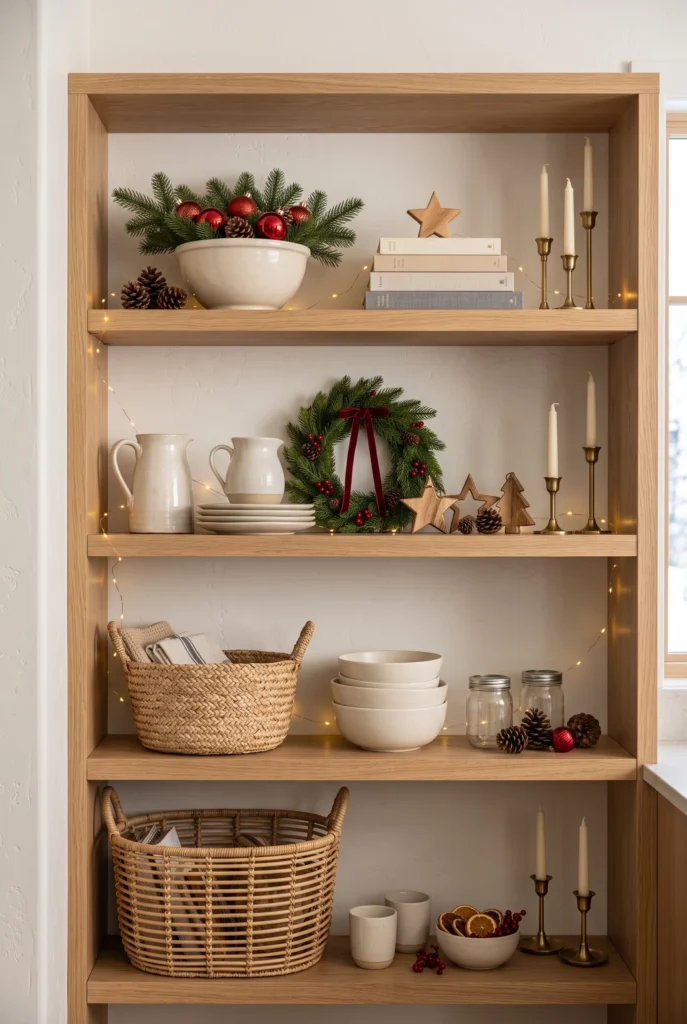
Open shelves are ideal for small Christmas updates because you can work with objects you already own. Add evergreen sprigs to ceramic vases, place a few wooden ornaments beside stacked dishes, or tuck small wreaths between everyday pieces. The secret is to decorate around the existing objects instead of removing everything and starting from scratch.
Use different heights to keep the shelves visually interesting. A tall vase can balance a stack of bowls, while smaller ornaments fill little gaps. Avoid putting seasonal decorations on every shelf because a little empty space helps the display breathe. If your kitchen shelves are heavily used, keep decorative pieces toward the back or in areas that do not interfere with daily cooking.
16. Use Velvet Ribbons Throughout the Room
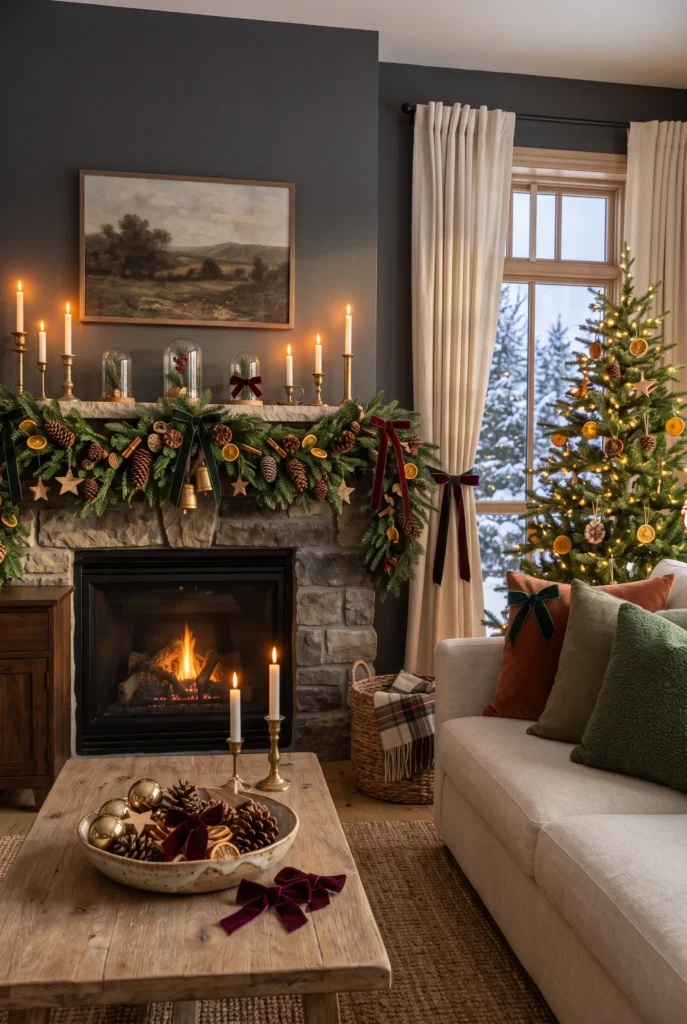
Velvet ribbon brings softness and richness to Christmas decor, and you only need a small amount to make an impact. Tie loose bows around wreaths, tree branches, garlands, or even the handles of a decorative basket. Deep green, burgundy, cream, and muted red all work beautifully for a classic winter palette.
Try repeating the same ribbon color in several places rather than using different colors in every room. This creates a visual thread throughout the house. For a relaxed look, allow the ribbon tails to hang naturally rather than making every bow perfectly symmetrical. The slightly imperfect shape can make the decorating feel more relaxed and handmade.
17. Create a Festive Console Table
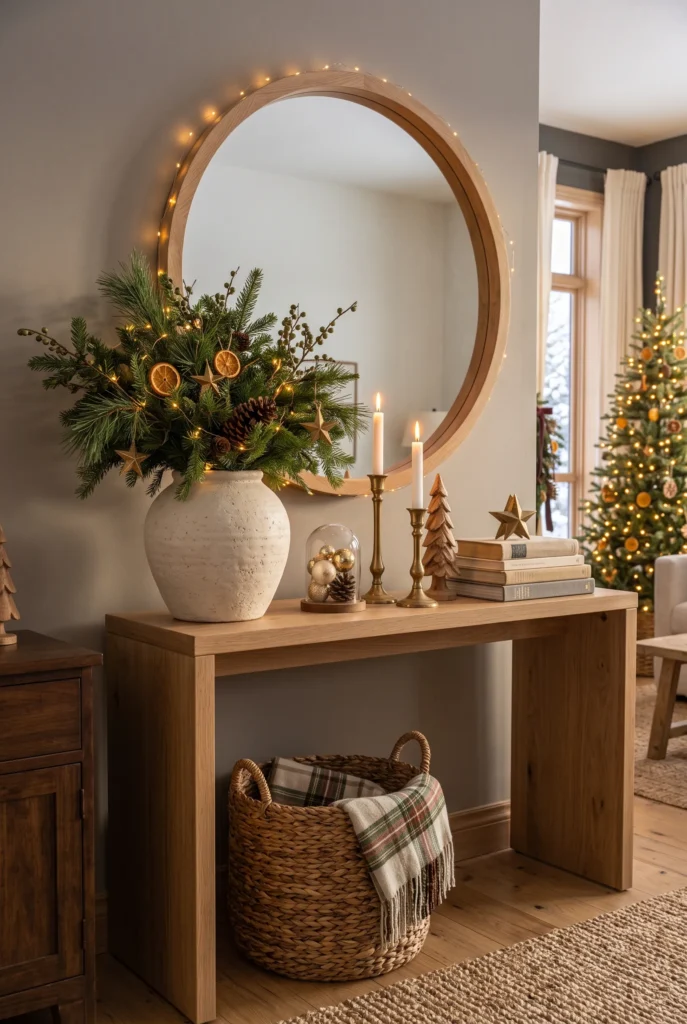
A console table can act as a small Christmas display without taking up much floor space. Start with one tall element, such as a vase filled with evergreen branches, then add a candle, bowl, or small seasonal object nearby. A mirror above the console can reflect the greenery and warm lighting, making the arrangement feel more substantial.
Keep the surface useful by leaving enough room for everyday items if the console sits in the entryway. A basket underneath can hold scarves, blankets, or other seasonal necessities while contributing to the decor. Choose natural materials and a restrained color palette if you want the arrangement to work comfortably with your everyday interior after Christmas.
18. Add Christmas Decor to the Staircase
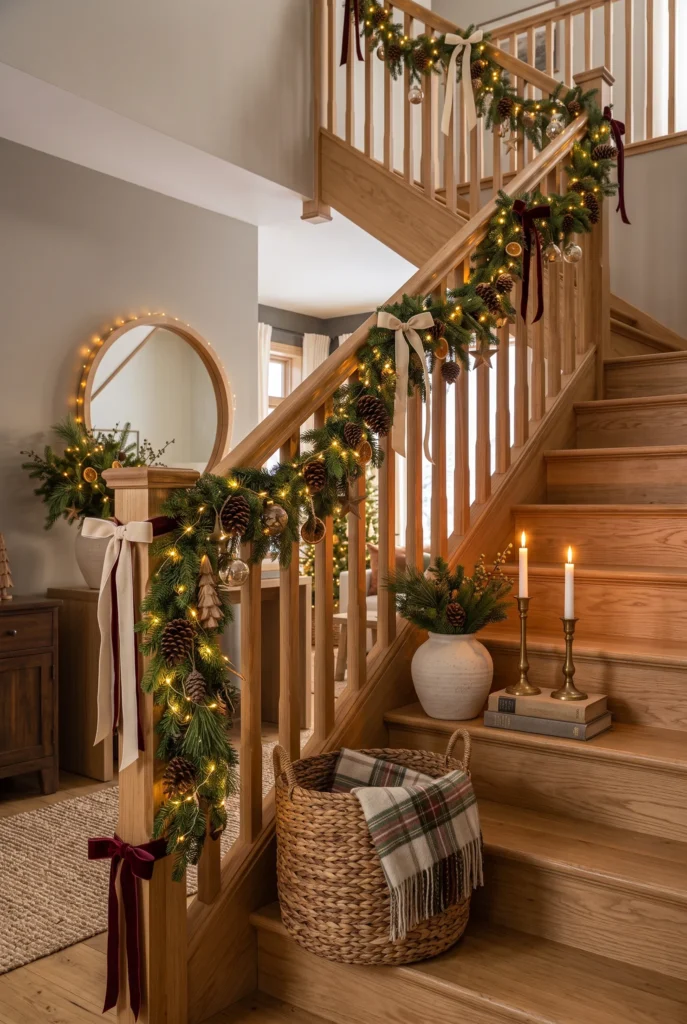
The staircase is often one of the largest unused vertical areas in a home, making it a natural place for Christmas greenery. A garland along the railing can create a beautiful focal point without requiring extra furniture. Add warm lights and a few ribbons for dimension, keeping the arrangement secure and clear of the walking path.
If you prefer a minimalist look, use greenery alone and let its natural texture provide the decoration. For a more traditional style, add red ribbon or a few lightweight ornaments. Make sure anything attached to the railing is secure and does not interfere with hands or movement. A safe, simple arrangement will always look better than one that makes the staircase difficult to use.
19. Make a Christmas Bedroom Tray
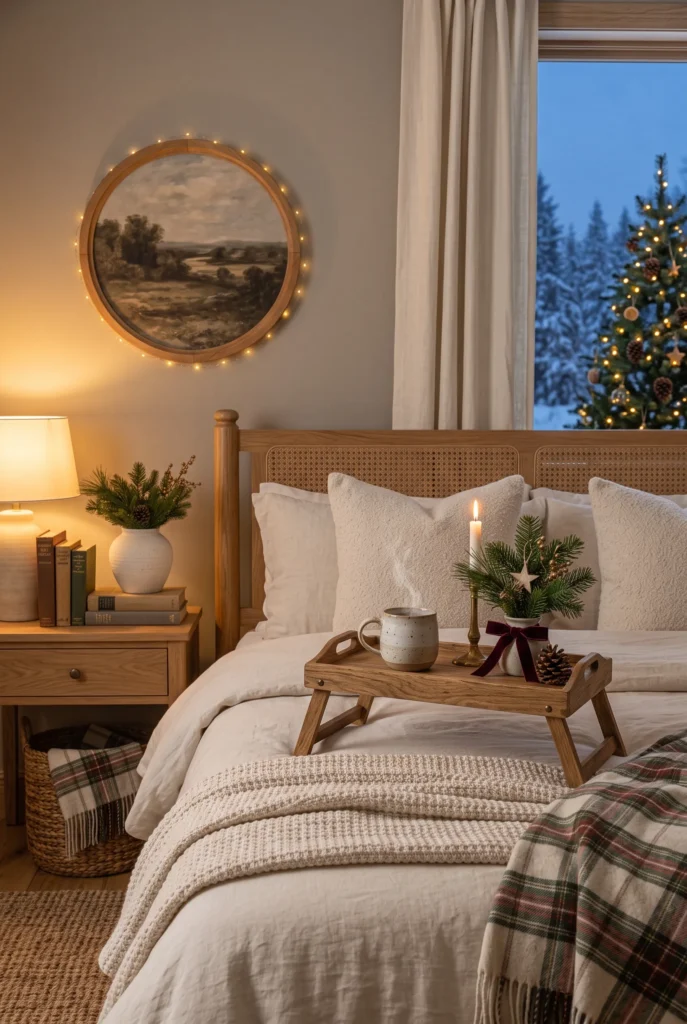
A decorative tray can bring a small dose of Christmas charm to the bedroom without requiring a complete seasonal makeover. Place a wooden tray on a neatly made bed and add a small evergreen branch, ceramic mug, candle, or pinecone. A folded knit throw beside it can make the arrangement feel especially cozy and winter-ready.
This idea is also easy to change throughout the season. You might use the tray for breakfast, books, or other everyday items, then add a seasonal accent when you want the room to feel festive. Choose natural materials such as wood, linen, ceramic, and wool for a calm look. Keep candles away from bedding and other flammable materials when lit.
20. Decorate With Dried Orange Slices
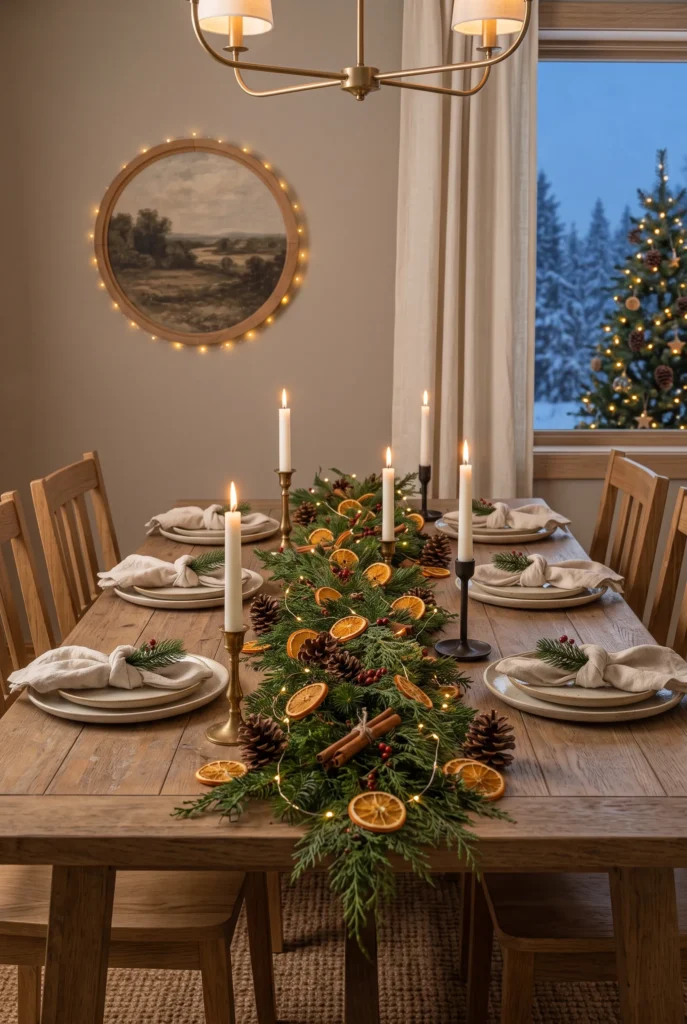
Dried orange slices add color, texture, and a naturally warm feeling to Christmas arrangements. They can be threaded onto garlands, placed around candles, added to a bowl of pinecones, or used as small accents on a dining table. Their golden-orange color works especially well with evergreen branches, wood, cream textiles, and traditional red details.
You can keep the look rustic by combining the oranges with cinnamon sticks, pinecones, and dried foliage. For a more refined arrangement, use only a few slices among fresh greenery and brass accents. The organic shapes keep the display from feeling overly polished, while the warm color adds a gentle seasonal glow that works beautifully in dining rooms and kitchens.
21. Add a Christmas Throw to the Sofa
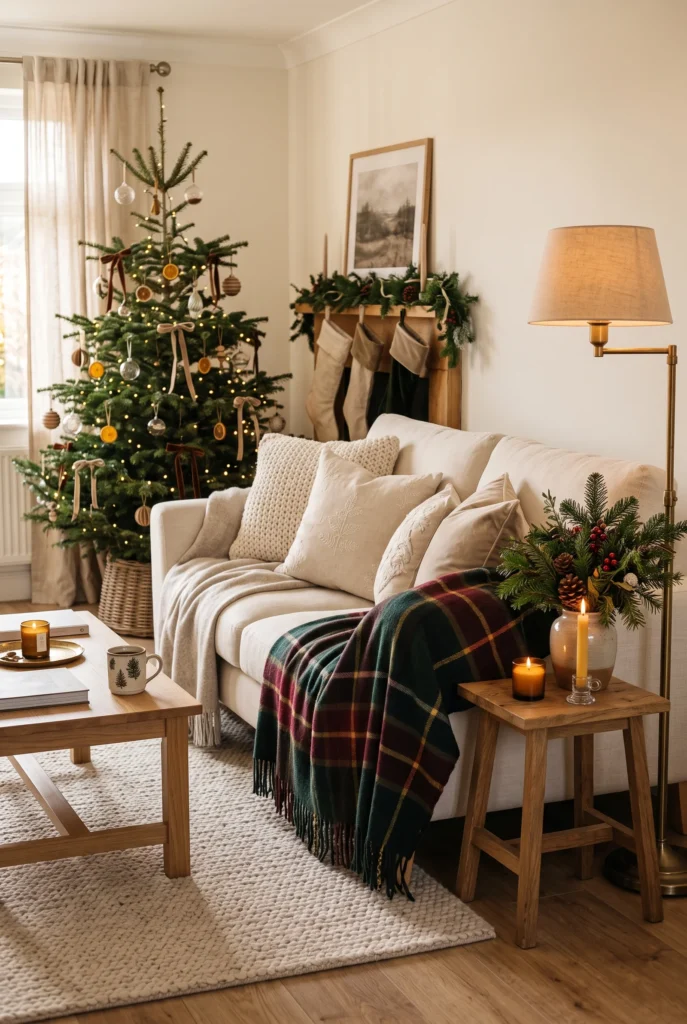
One of the simplest Christmas decorating ideas is also one of the most practical: change a few soft furnishings. A seasonal throw can introduce color and texture to the sofa without requiring permanent changes to the room. Choose forest green, burgundy, cream, or a muted red if you want traditional holiday character without an overly bright palette.
Layer the throw casually over the arm or back of the sofa so it remains easy to use. Add one or two cushions that share the same color family rather than covering every seat with Christmas patterns. This approach keeps the living room comfortable and makes it easy to return to your regular decor when the season ends.
22. Create a Minimalist Christmas Corner
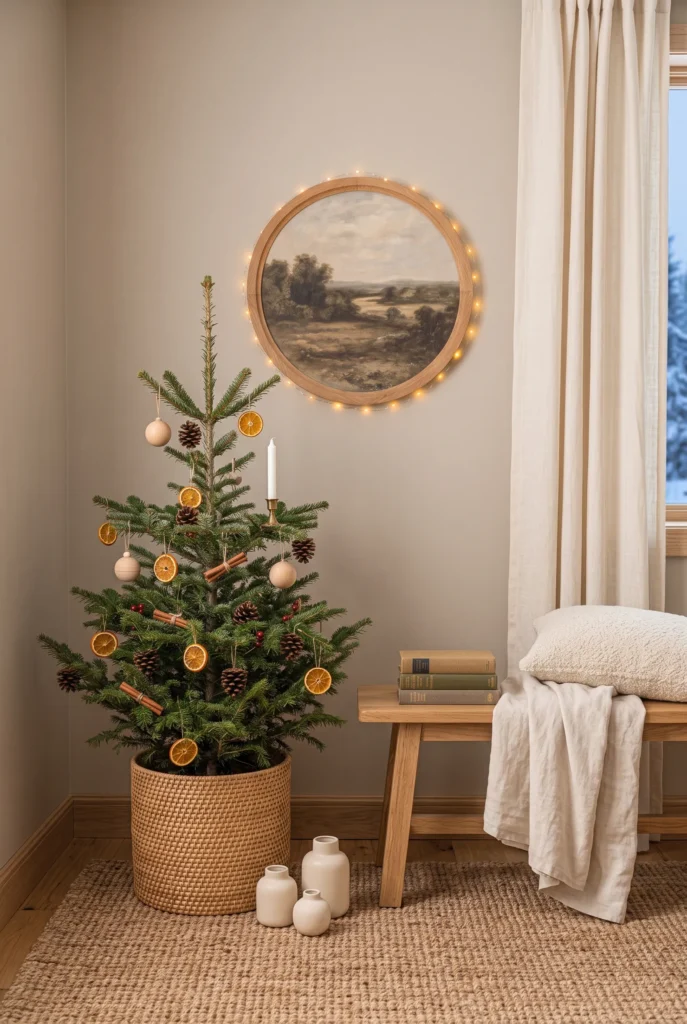
Christmas decorating can be beautiful even when you prefer a minimalist home. Choose one corner and give it a clear seasonal focus instead of decorating every surface. A slim evergreen tree with warm lights and a handful of wooden or cream ornaments can be enough. A small bench, basket, or ceramic vase can help anchor the display.
The minimalist approach works especially well in small rooms because it avoids visual crowding. Stick with a limited palette and leave some wall and floor space open. Natural materials such as wood, linen, ceramic, and woven fibers add warmth without introducing too many colors. The finished corner should feel intentional and peaceful rather than empty.
23. Add Christmas Candles and Lanterns
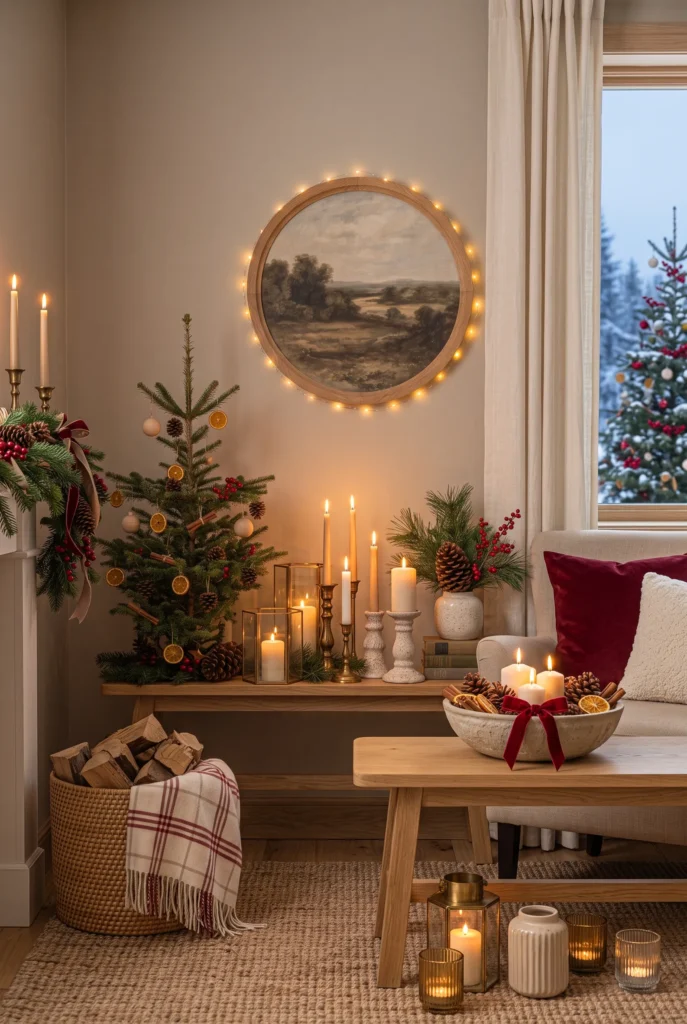
Candles and lanterns can make Christmas decor feel warm and inviting, especially once the sun goes down. Group a few candle holders at different heights on a mantel, console, or dining table. Glass lanterns can also work beautifully near an entryway or fireplace, while brass and ceramic holders add different textures to the arrangement.
When using real candles, keep them on stable, heat-resistant surfaces and away from curtains, greenery, paper, and other flammable materials. Flameless candles are another practical choice, particularly in homes with children or pets. Warm light works best when it is layered with existing lamps and Christmas tree lights rather than used as the only illumination.
24. Style a Christmas Breakfast Nook
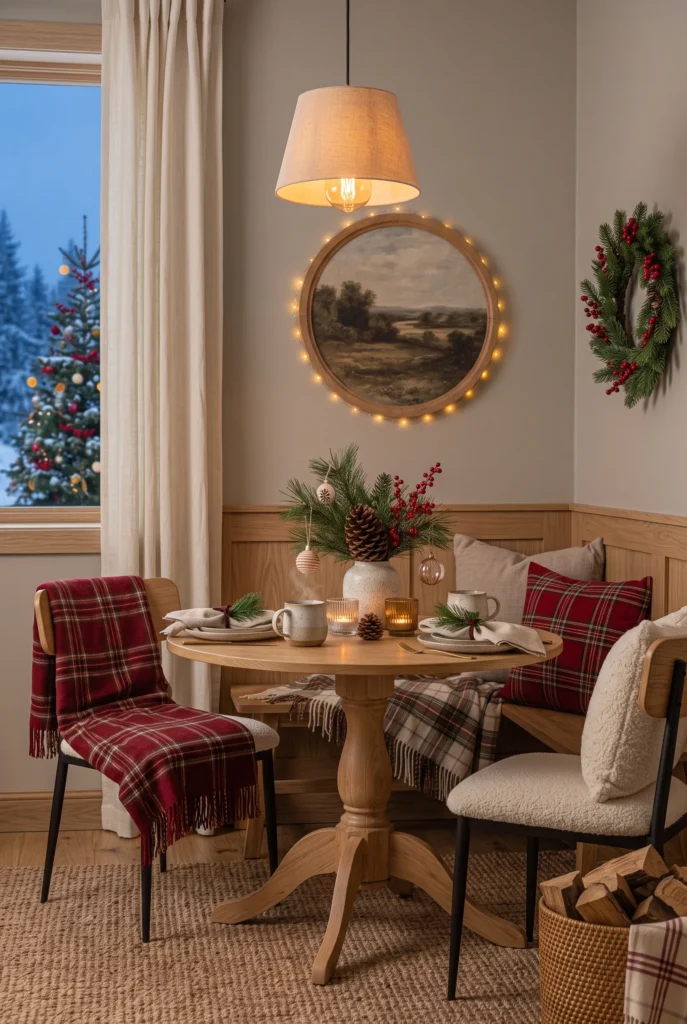
A breakfast nook can become a cheerful seasonal corner with just a few thoughtful details. Add a small evergreen arrangement to the table, a festive cushion to the bench, and a wreath or garland nearby. If you use patterned textiles, repeat one color elsewhere in the space so the look remains connected.
Keep the centerpiece low enough that people can see across the table comfortably. A small ceramic vase or bowl is often all you need. During the holidays, this little area can become a welcoming spot for morning coffee or casual meals. Because the decor is limited to a small area, it is also easy to change when the season is over.
25. Finish the Room With a Christmas Scent Station
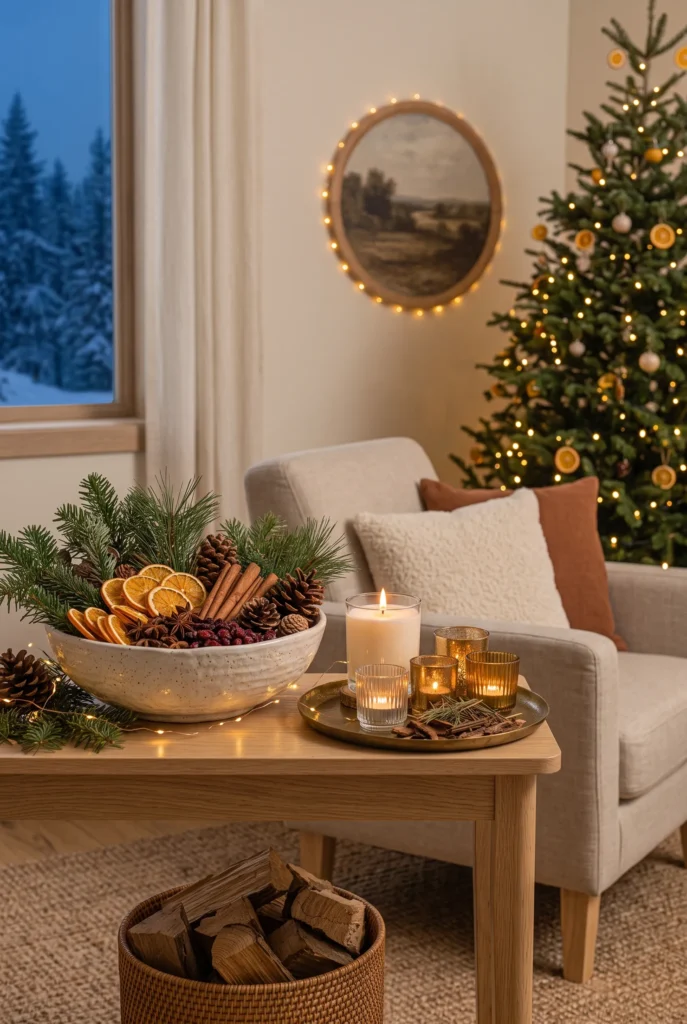
A seasonal scent station can add another sensory layer to Christmas decorating while keeping the visual display simple. Arrange dried orange slices, cinnamon sticks, pinecones, and evergreen sprigs in a shallow bowl or tray. A candle can sit nearby to complete the display, provided it is used safely and never left unattended.
Choose a small surface such as a console, kitchen shelf, or side table so the arrangement does not take over the room. Natural ingredients pair beautifully with neutral ceramics and wood. If you prefer not to use scented candles, simply let the dried botanicals become the decorative feature. The result feels seasonal without relying on bright colors or elaborate ornaments.
Christmas decorating does not have to mean changing every room or buying a large collection of new decorations. A few well-placed details can make the home feel festive while keeping it comfortable and functional. Start with the spaces you naturally spend the most time in, then add smaller touches to nearby areas such as the kitchen, bedroom, entryway, or staircase.
The ideas above can easily be mixed together. Combine evergreen greenery with warm lights, add a little velvet ribbon, introduce natural pinecones, or bring in a few traditional red accents. If your style is more minimal, choose just one or two ideas and let them breathe. The most inviting Christmas homes usually feel personal, relaxed, and lived in. Choose the details that make your own space feel warm and ready for the season.
Frequently Asked Questions
How can I decorate my home for Christmas without spending a lot?
Start with what you already have. Rearrange existing vases, baskets, candles, blankets, and neutral accessories, then add inexpensive seasonal elements such as evergreen branches, pinecones, ribbon, or dried oranges. Concentrating decorations in a few key areas can also make a small collection feel more intentional.
What Christmas colors work well in a neutral home?
Forest green, burgundy, warm red, cream, brass, and natural wood all work beautifully with neutral interiors. You do not need to use every color. Choose two or three shades and repeat them throughout the room for a coordinated appearance.
How can I make Christmas decor look elegant instead of cluttered?
Use fewer decorations but give them enough space to stand out. Repeating materials such as greenery, wood, linen, brass, or velvet can create visual consistency. Varying the height of objects also helps displays feel balanced without filling every surface.
What are easy Christmas decorating ideas for a small home?
Focus on vertical and temporary decorations. Wreaths, string lights, staircase greenery, small tabletop trees, seasonal cushions, and narrow console displays can add Christmas character without taking up much floor space. Keeping the palette simple will also help a small room feel more open.
How early can I start decorating my home for Christmas?
There is no single decorating schedule that works for every household. Some people enjoy beginning in late November, while others prefer December. A practical approach is to start with neutral winter greenery and warm lights, then add more traditional Christmas details as the holiday gets closer.