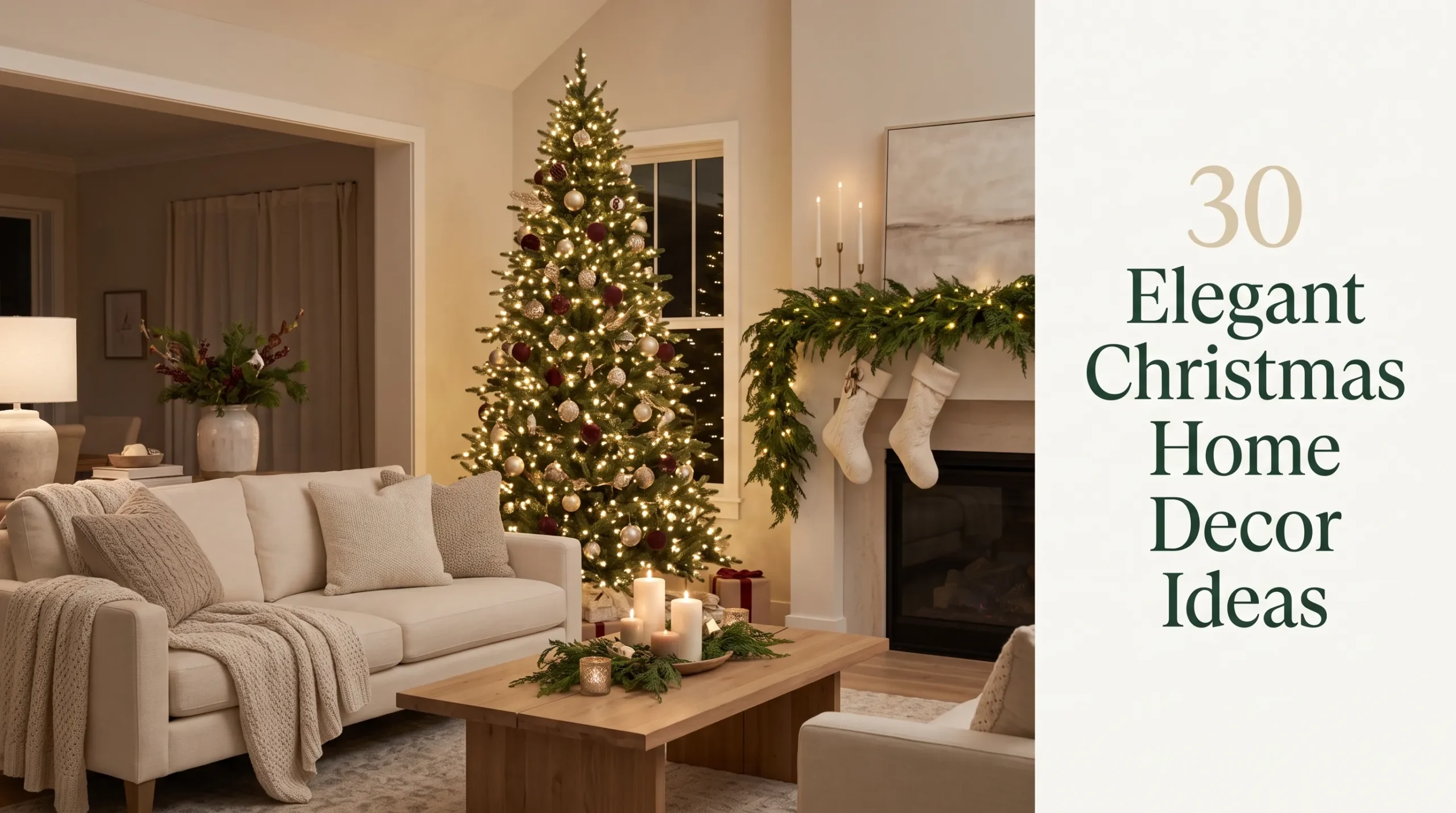
30 Elegant Christmas Home Decor Ideas
Christmas decorating does not have to mean filling every corner with glitter, oversized ornaments, or bright colors. Some of the most beautiful holiday interiors are surprisingly simple. A few thoughtful changes in texture, lighting, greenery, and color can make a room feel warm and festive while still looking polished.
These Christmas home decor ideas are designed for real homes and different decorating styles, from classic and traditional to modern, neutral, rustic, and cozy. You will find ideas for living rooms, dining areas, entryways, bedrooms, shelves, fireplaces, and small spaces. Many can also be adapted using decorations you already own.
If you are preparing your home for the holidays and want a refined look rather than a cluttered one, these ideas offer plenty of inspiration to save for later and recreate at your own pace.
1. Style a Classic Green and White Mantel
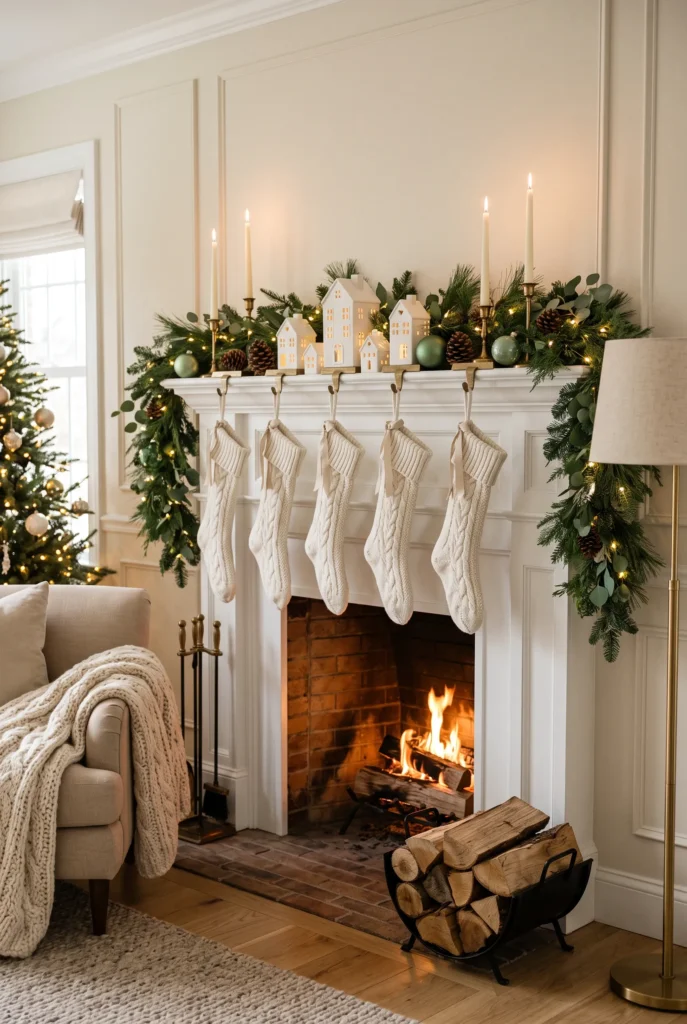
A green and white mantel is one of those Christmas decorating ideas that feels festive without becoming visually overwhelming. Drape a full evergreen garland across the mantel, allowing a few branches to fall naturally at the sides. Add ivory stockings, white candles, and a handful of pinecones for texture. If your fireplace is already a strong architectural feature, keep the accessories simple so the greenery remains the star.
For a more elegant finish, repeat the same colors elsewhere in the room. A few green pillows, a cream throw, or white ceramic accents can quietly connect the mantel with the rest of the space. Warm white lights woven through the garland add a soft glow in the evening without making the room feel overly decorated.
2. Create a Cozy Christmas Coffee Table
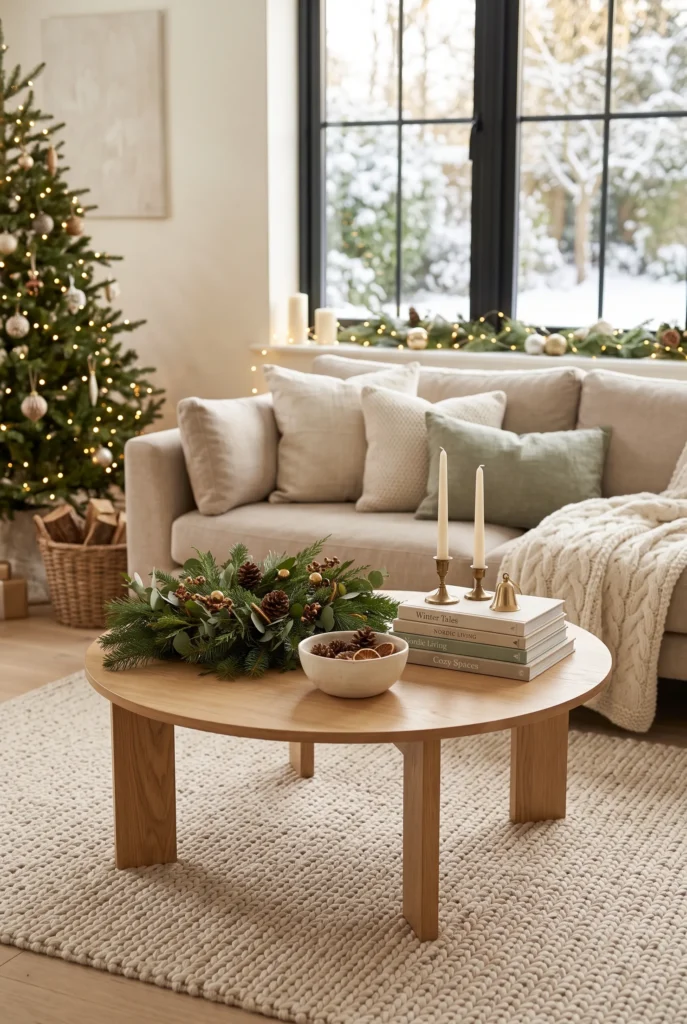
The coffee table is an easy place to introduce Christmas details because you can change the arrangement without committing to a major decorating project. Start with a shallow tray or decorative bowl, then add a small evergreen branch, pinecones, candles, and one or two understated ornaments. Keeping everything low helps preserve the table’s usefulness and leaves enough space for mugs, books, or conversation.
Try mixing materials instead of adding more decorations. A ceramic vessel beside natural greenery and a wooden bowl can create much more interest than a collection of shiny ornaments. I especially like using warm neutrals here because they allow the greenery to stand out while keeping the living room calm and inviting throughout the holiday season.
3. Add a Simple Evergreen Staircase Garland
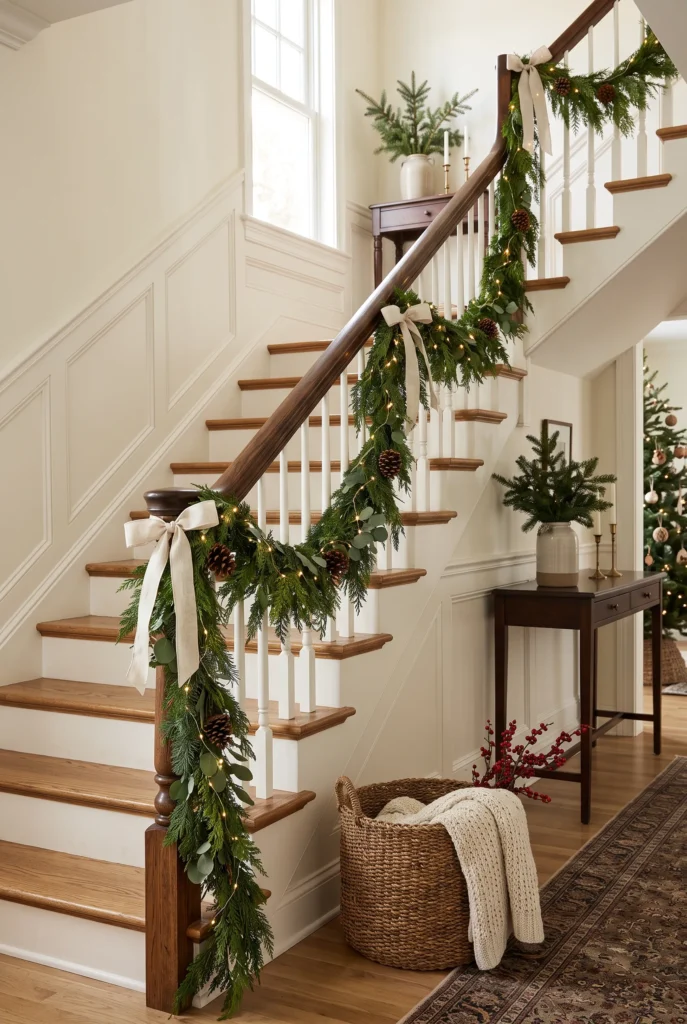
A staircase naturally draws attention, so a little greenery can have a big decorative effect. Instead of tightly wrapping every inch of the railing, loosely secure evergreen garland so it follows the shape of the staircase. Add warm white lights and a few pinecones for a relaxed, natural appearance. A narrow velvet or linen ribbon can also add softness without making the arrangement too formal.
If your staircase is small, keep the garland lightweight and minimal. You do not need a large arrangement to create a festive focal point. Secure everything carefully so the railing remains safe and easy to use. For homes with children or pets, avoid loose cords, fragile ornaments, and decorations positioned where they can be easily pulled down.
4. Decorate the Entryway With Christmas Greenery
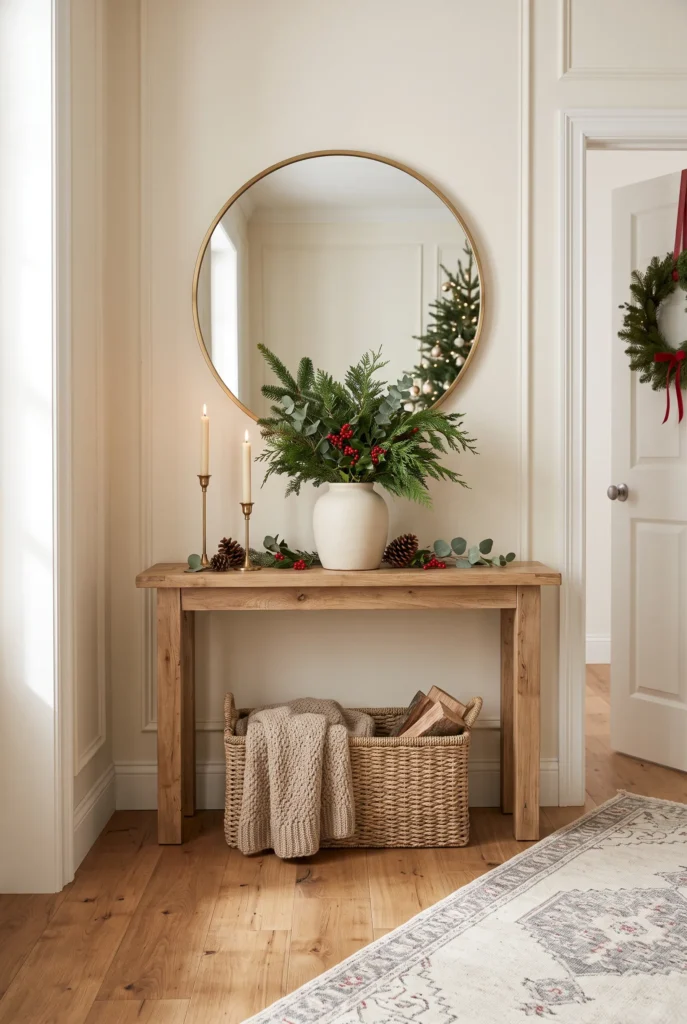
The entryway is a wonderful place to start decorating because guests see it as soon as they arrive. A few evergreen branches in a ceramic vase can instantly create a Christmas mood without taking up much space. Add a mirror above the console, then introduce a candle, a small bowl, or a simple decorative house to complete the arrangement.
Try keeping the surface functional as well as beautiful. Leave room for keys and everyday essentials instead of covering the entire console. A woven basket underneath can hold scarves, slippers, or seasonal accessories while adding natural texture. If you prefer traditional Christmas color, a few muted red berries can provide just enough contrast without overpowering the greenery.
5. Layer Neutral Christmas Pillows
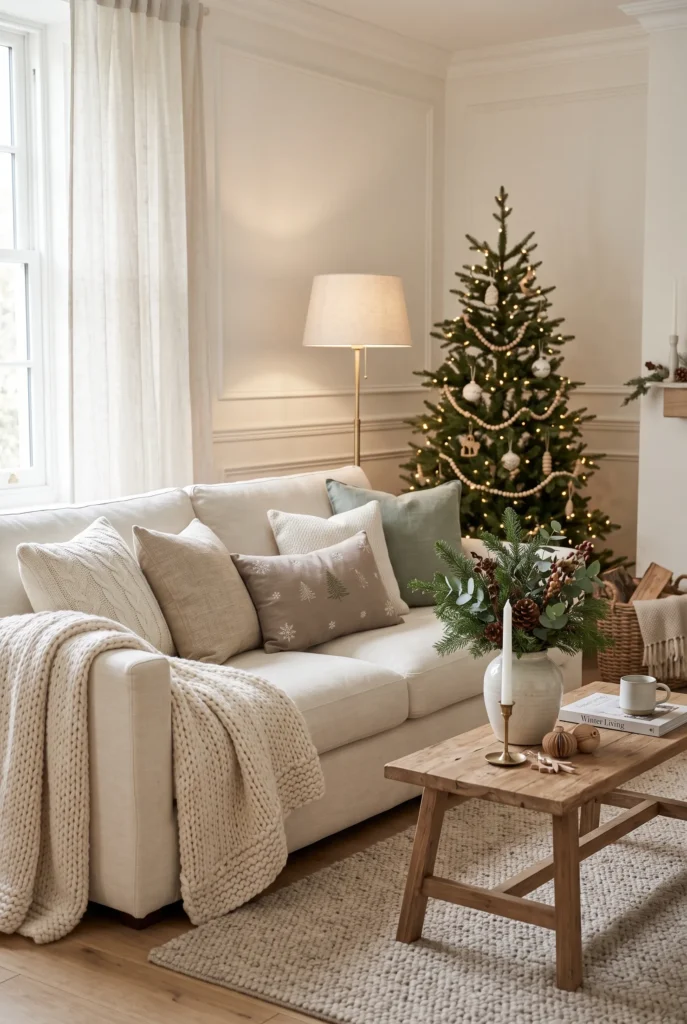
Christmas pillows are an easy way to make a living room feel seasonal without replacing larger pieces of furniture. Choose a small collection in complementary shades such as cream, oatmeal, forest green, muted red, or warm brown. Mixing linen, boucle, velvet, and knitted fabrics keeps the arrangement interesting while maintaining a cohesive palette.
You can also use removable pillow covers so the storage requirements stay manageable after the holidays. A few seasonal designs are enough. There is no need to put a Christmas message on every cushion. Subtle botanical patterns, snowflakes, stripes, or simple embroidered details often look more timeless and can work with your existing decor long after the initial holiday decorating is finished.
6. Hang a Fresh Christmas Wreath on an Interior Door
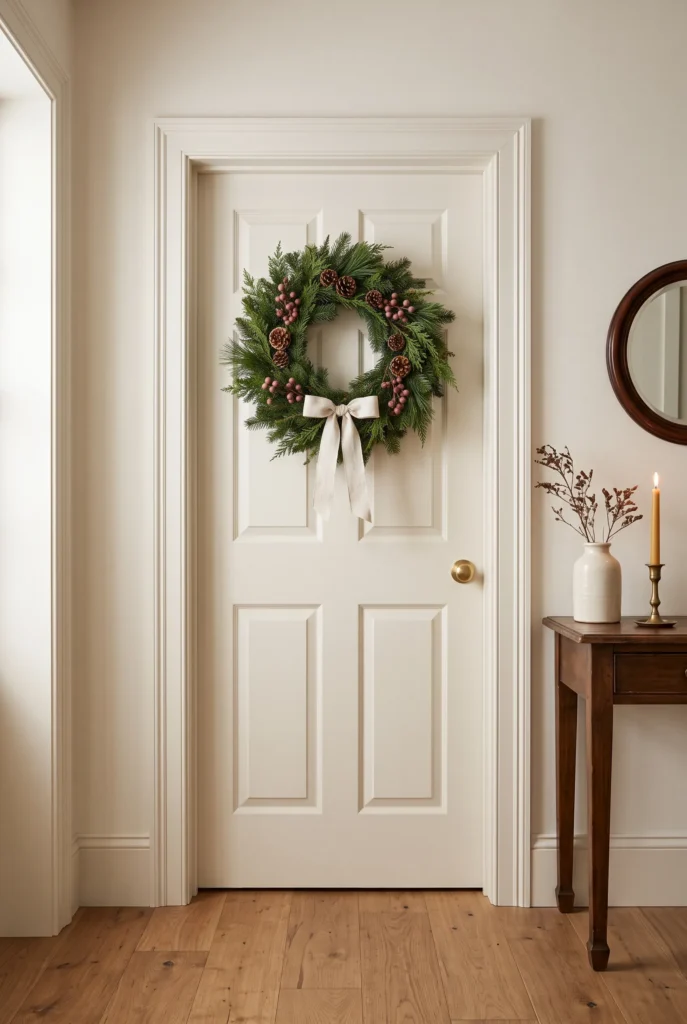
A wreath does not have to stay on the front door. Hanging one on an interior door can create a charming seasonal detail in a hallway, bedroom, pantry, or dining area. A simple evergreen wreath works particularly well because its shape provides visual interest without requiring many additional decorations.
Choose a wreath that fits the scale of the door and secure it with a suitable removable hanger or over-the-door method. For a softer look, add a linen or velvet ribbon in a color already used elsewhere in the room. Repeating one small detail, such as the ribbon color, across several rooms can make your Christmas decorating feel coordinated without making every space identical.
7. Make the Dining Table Feel Festive
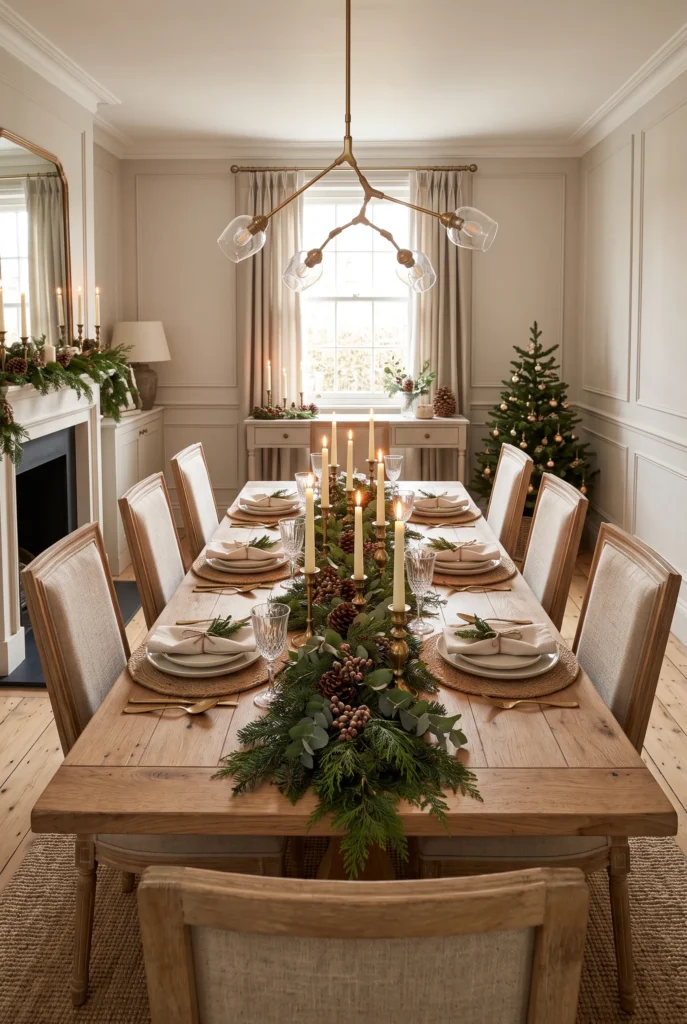
A Christmas dining table can be beautiful without becoming difficult to clear when dinner is served. Instead of building a tall centerpiece, try a low arrangement of evergreen branches running through the center of the table. Add taper candles in simple holders and scatter a few pinecones between the greenery. This creates a festive look while leaving plenty of sightlines across the table.
For place settings, use what you already have and introduce seasonal details through napkins or small greenery sprigs. Linen napkins in cream, forest green, or burgundy feel elegant without being overly formal. A wooden or ceramic serving piece can add warmth and keep the table connected to the rest of your home’s natural textures.
8. Style Open Shelves for Christmas
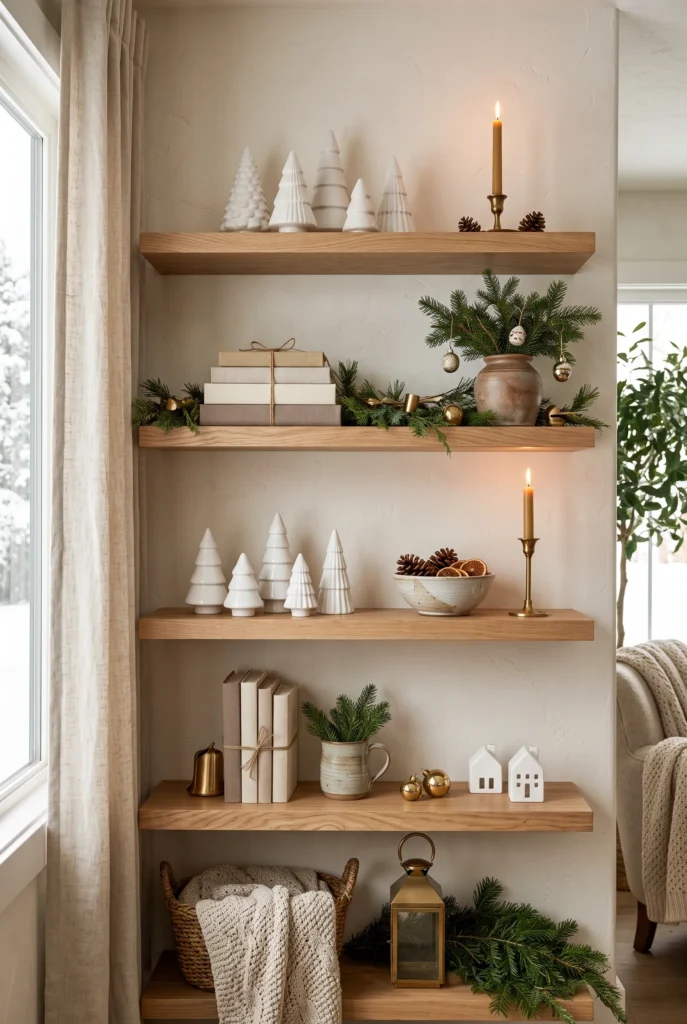
Open shelves can become crowded quickly during the holidays, so editing is especially important. Remove a few everyday accessories first, then introduce seasonal pieces gradually. Small ceramic trees, evergreen branches, pinecones, candles, and neutral ornaments work beautifully alongside books and pottery you already own.
Use different heights to keep the shelves visually balanced. Place larger objects toward the back and smaller seasonal accents toward the front. Leaving some empty space is just as important as adding decorations. If the shelves already have a strong color scheme, select Christmas accents that complement it rather than introducing several unrelated colors.
9. Add Christmas Candles to a Bedroom
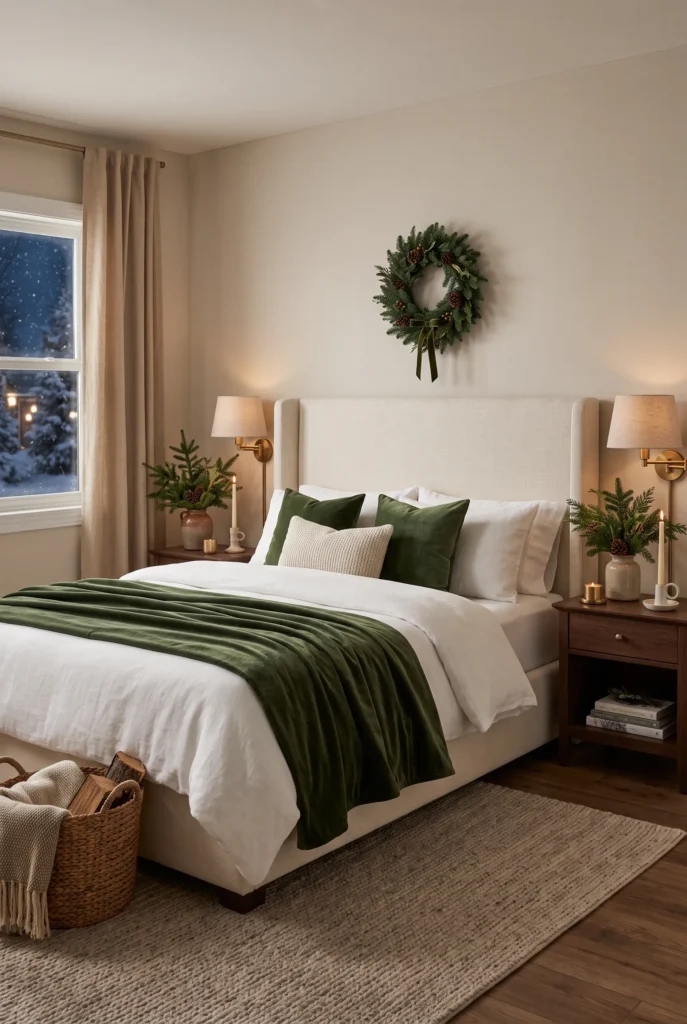
The bedroom can benefit from a quieter approach to Christmas decorating. A small evergreen branch beside the bed, a textured holiday throw, and a couple of seasonal pillows are enough to make the space feel special. Candles can add warmth too, although flameless versions are a practical choice for bedrooms and small spaces.
Keep the color palette soft so the room remains restful. Cream, warm white, sage, forest green, and natural wood create a peaceful winter atmosphere. A small wreath above a dresser or a few pinecones on a tray can finish the look without covering every surface in holiday decorations.
10. Use a Statement Christmas Tree
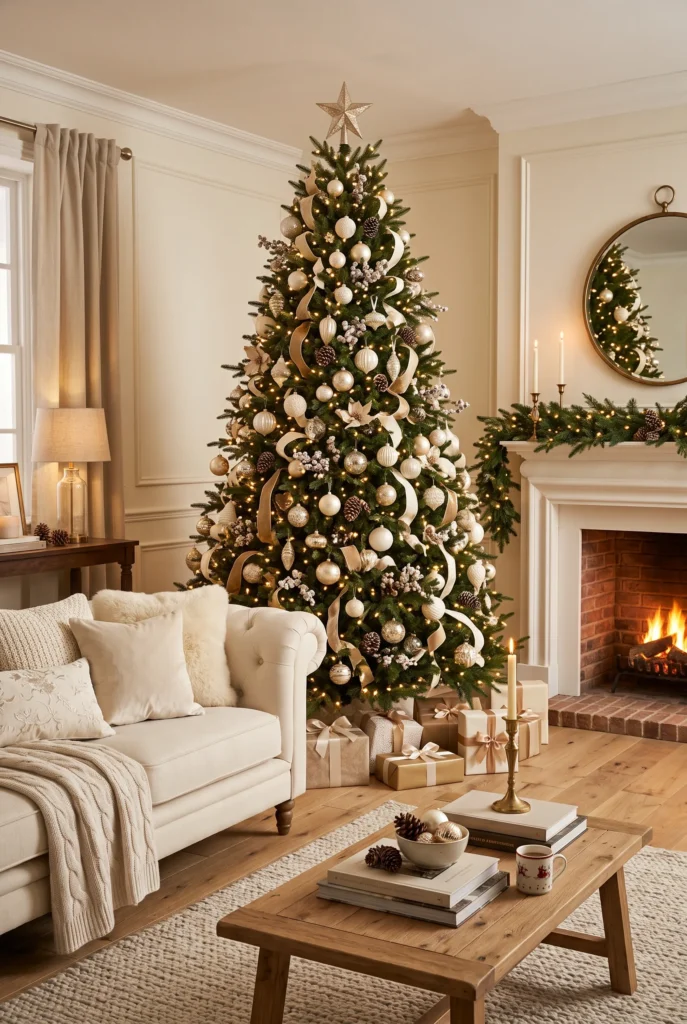
A Christmas tree can serve as the main decorative feature of the room, especially when the surrounding furniture is kept relatively simple. Choose a consistent palette and repeat it throughout the tree. Warm white lights create a soft foundation, while ivory, champagne, natural wood, and a little greenery provide depth without making the tree look overly busy.
The tree skirt or base matters too. A woven basket, neutral fabric tree collar, or simple wooden stand can complement the room more naturally than a brightly patterned option. Place the tree where it can be enjoyed from several viewpoints, but avoid blocking important walkways, heating vents, or frequently used furniture.
11. Decorate With Natural Pinecones
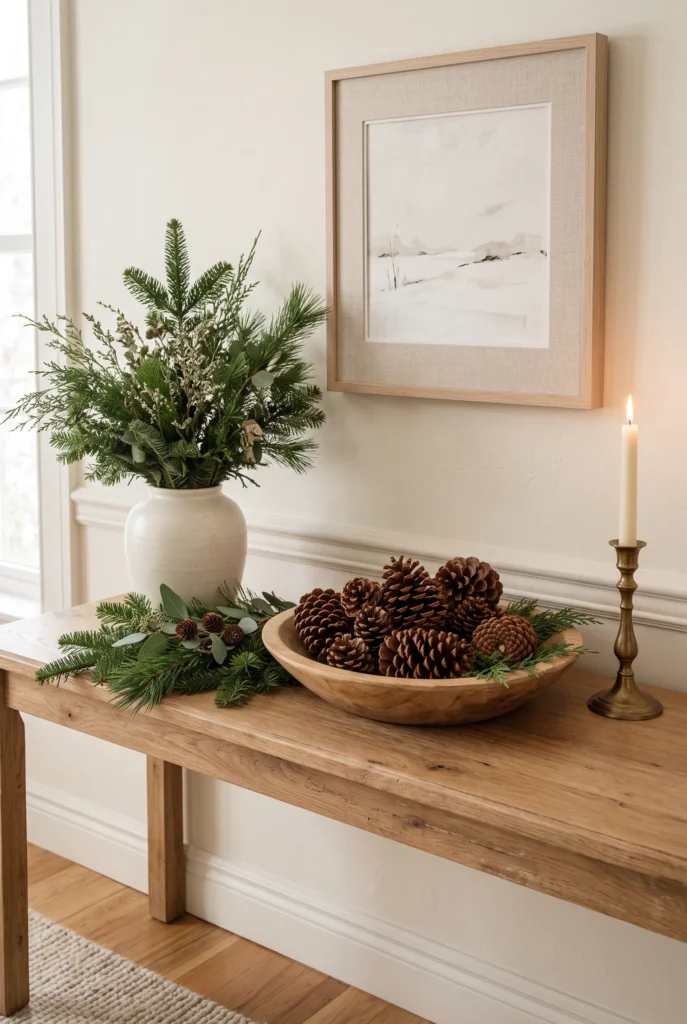
Pinecones are an inexpensive way to bring a natural Christmas feeling into your home. Their earthy color works especially well with neutral interiors, and their texture adds interest to smooth surfaces such as ceramic, glass, and metal. Arrange them in a bowl, scatter a few along a mantel, or place them around a candle display.
For a more polished arrangement, combine pinecones with evergreen branches and warm wood. You can also leave them completely natural instead of painting or glittering them. That simple approach works particularly well in rustic, Scandinavian, farmhouse, and organic modern interiors where natural materials already play an important role.
12. Create a Christmas Reading Corner
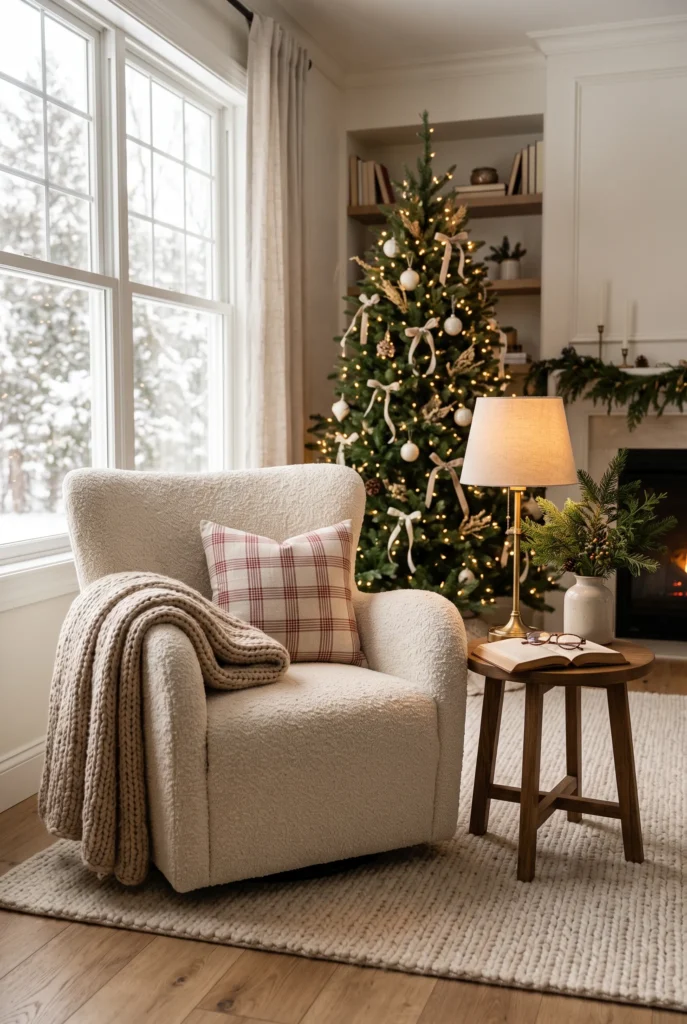
A small reading corner can become one of the coziest spots in the house during the holidays. Start with a comfortable chair and add a soft throw, seasonal cushion, and small side table. A vase filled with evergreen branches or a tiny Christmas tree nearby can introduce the holiday theme without taking over the space.
Lighting makes the corner feel especially inviting. A warm table or floor lamp provides a gentle glow during winter evenings. Keep the surrounding area relatively uncluttered so the chair remains the focal point. A basket underneath the table can also store blankets, books, or magazines while keeping the arrangement practical.
13. Bring Christmas Into the Kitchen
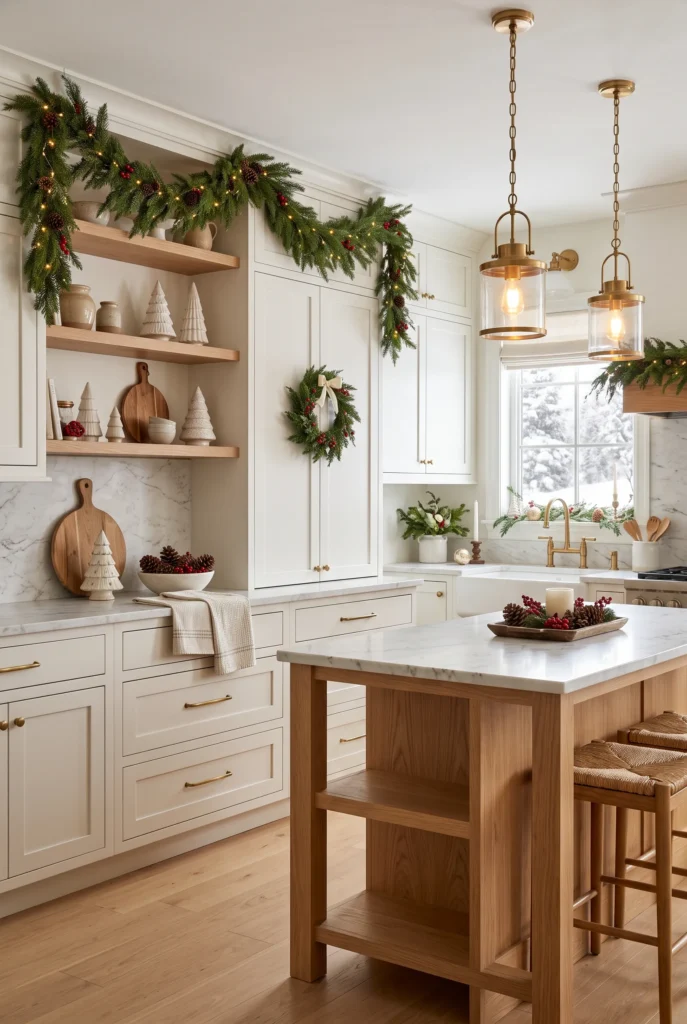
The kitchen deserves some holiday attention because it is often one of the busiest rooms during December. Keep the decorating practical by using greenery on open shelves, a small wreath on a cabinet, or a simple branch in a sturdy vase. Seasonal tea towels and a ceramic tree can add additional touches without taking up valuable counter space.
Avoid placing decorations too close to cooking areas, hot appliances, or food preparation surfaces. A few intentional details will look more polished than covering the countertops. Natural materials such as wood, greenery, linen, and ceramic are particularly effective because they blend easily with everyday kitchen finishes.
14. Try a Burgundy Christmas Palette
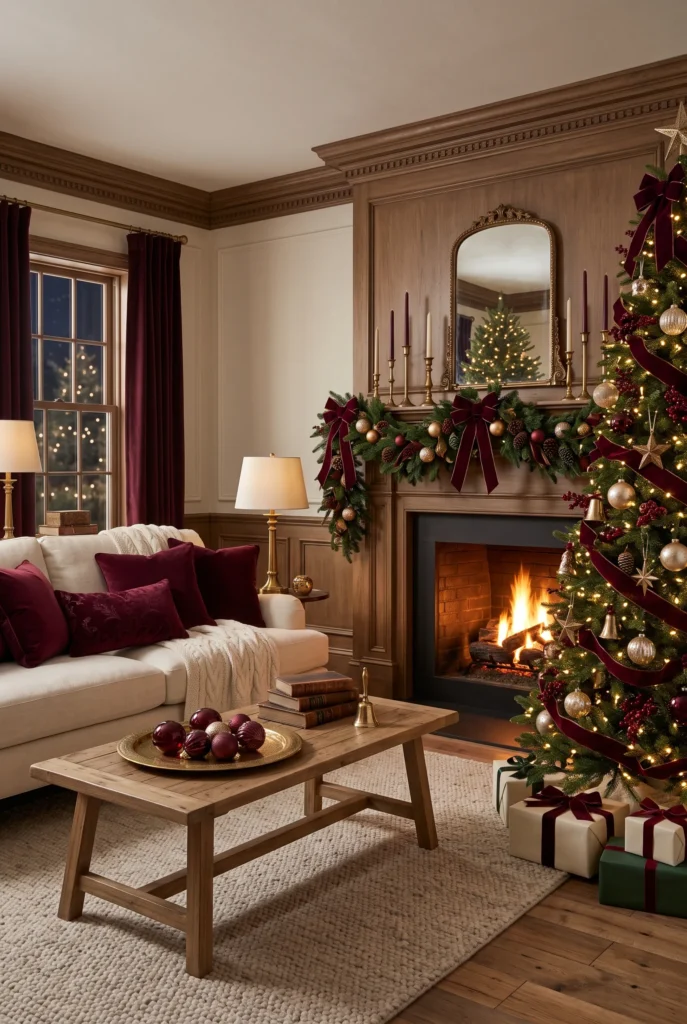
Burgundy can give Christmas decor a richer, more sophisticated character. Instead of using bright red throughout the room, introduce the deeper shade through velvet pillows, ribbon, candles, napkins, or a few ornaments. Pair it with cream and forest green to keep the palette balanced and warm.
The key is restraint. A handful of burgundy accents can make a room feel festive without turning it into a sea of red. If your furniture is neutral, this color becomes a beautiful seasonal layer. After Christmas, many burgundy textiles can remain useful through winter, making them a practical addition to your decorating collection.
15. Decorate a Console With Mini Trees
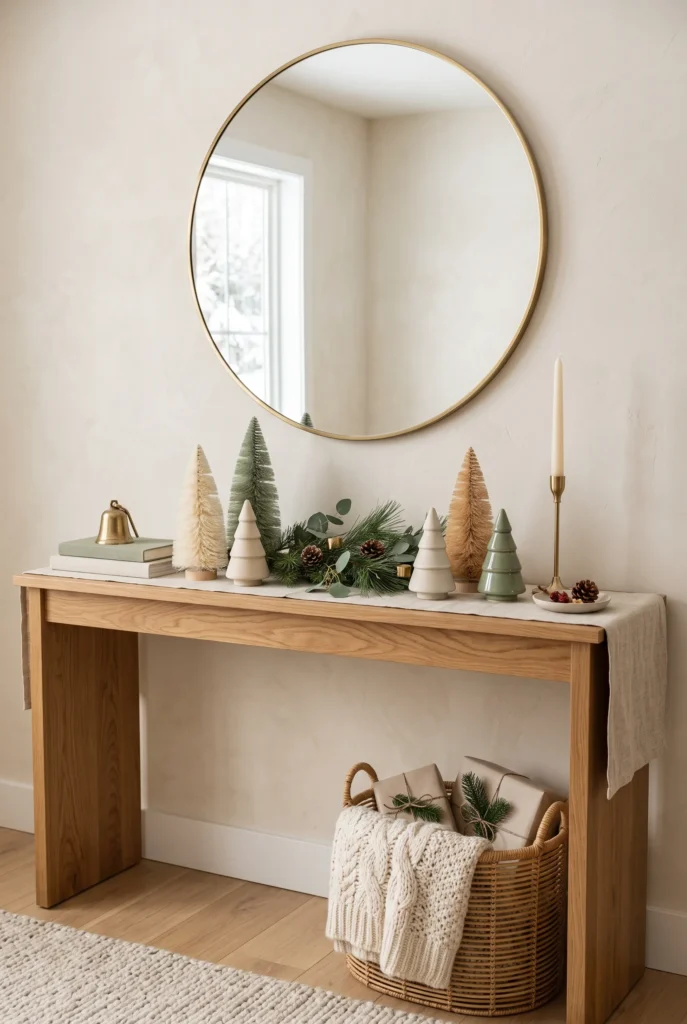
A collection of small Christmas trees can create a charming display without requiring a full-size tree. Arrange different heights across a console, mantel, shelf, or sideboard. Ceramic, wooden, or fabric trees work particularly well because they add seasonal character while maintaining a sophisticated appearance.
Try limiting the collection to two or three colors. Cream, sage, natural wood, and muted green create a calm combination that works in many interiors. Leave small gaps between the pieces so each tree has room to stand out. Adding one evergreen branch or candle can connect the display to the wider Christmas decor in the room.
16. Add Warm White Christmas Lights
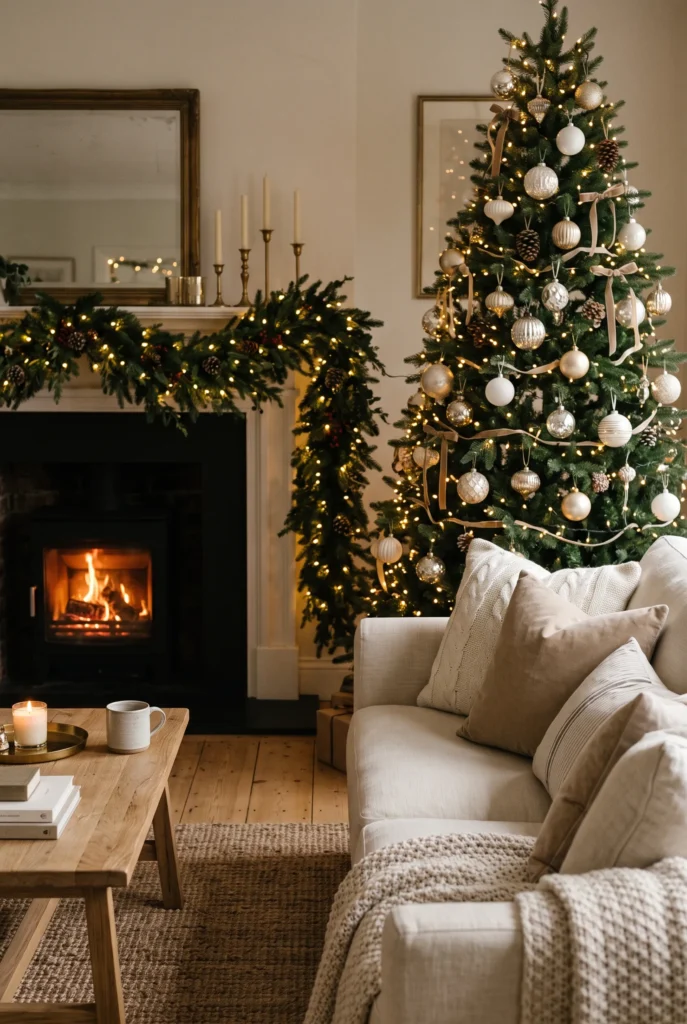
Lighting can completely change how Christmas decorations feel after sunset. Warm white string lights are especially versatile because they add a soft glow without introducing another strong color. Use them on the tree, through a mantel garland, around a banister, or inside a glass lantern.
Look for opportunities to layer several gentle light sources rather than relying on one bright fixture. A floor lamp, table lamp, fireplace, and Christmas lights can work together to create depth. For safety, use lights suitable for their intended location and keep cords neatly secured away from walking paths.
17. Style a Christmas Bedroom With Plaid
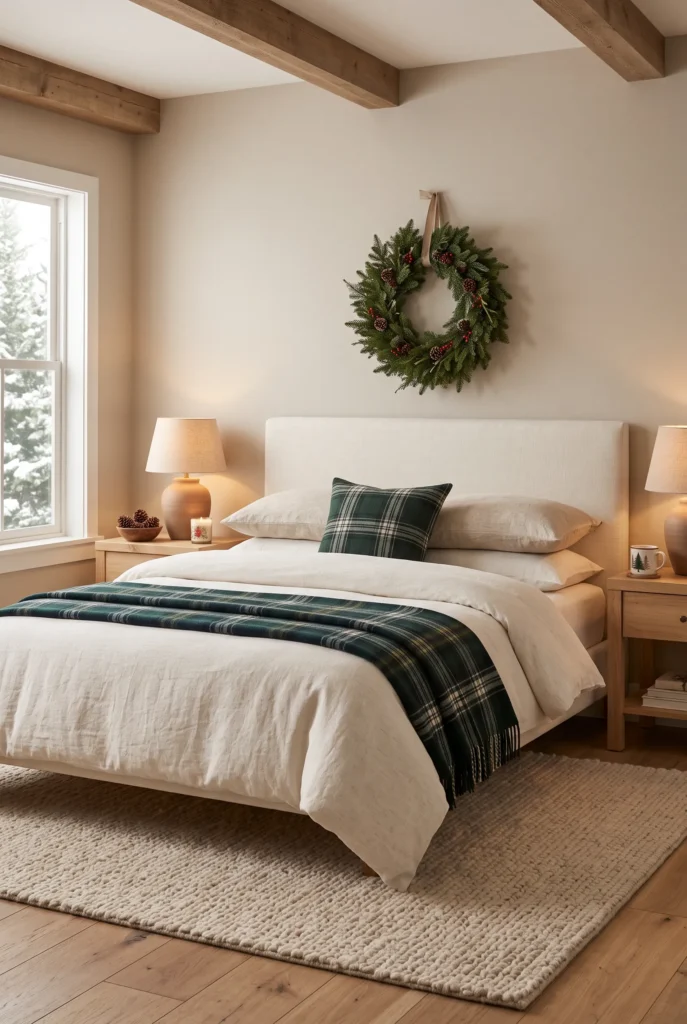
Plaid brings an instant winter feeling to a bedroom, particularly when used in a restrained way. A single plaid throw at the end of the bed can provide enough seasonal pattern without overwhelming the bedding. Forest green, burgundy, cream, and charcoal are especially easy to coordinate with neutral linens.
Balance the pattern with solid textures. A knitted blanket, linen pillowcase, or wool rug can soften the overall look. Add a small wreath or evergreen branch nearby for another seasonal cue. Because bedroom decor should remain comfortable, choose washable and practical textiles whenever possible, especially if the room is used every day.
18. Create a Minimalist Christmas Mantel
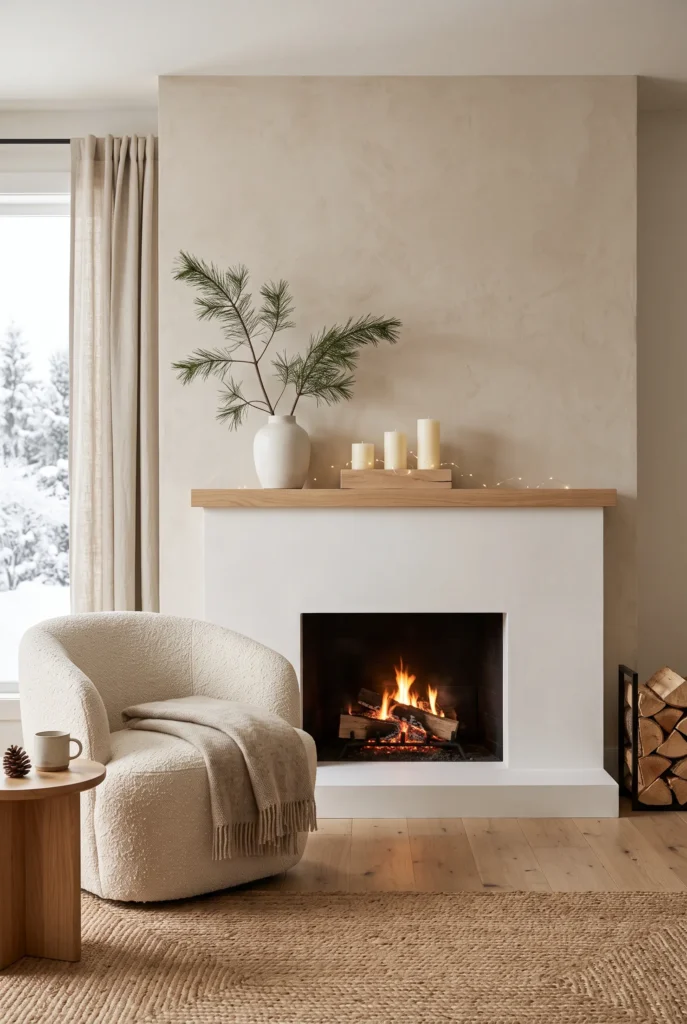
Minimalist Christmas decorating is about choosing fewer pieces and giving them enough room to breathe. A mantel can look complete with evergreen branches, a few candles, and one or two ceramic accents. Asymmetrical placement often makes a simple arrangement feel more relaxed and intentional.
This approach works particularly well if your home already has a modern or Scandinavian-inspired interior. Keep the palette restrained and let texture provide interest. Natural greenery, stoneware, wood, linen, and soft candlelight can create a festive atmosphere without relying on large collections of ornaments or brightly colored accessories.
19. Use a Wooden Christmas Tree Alternative
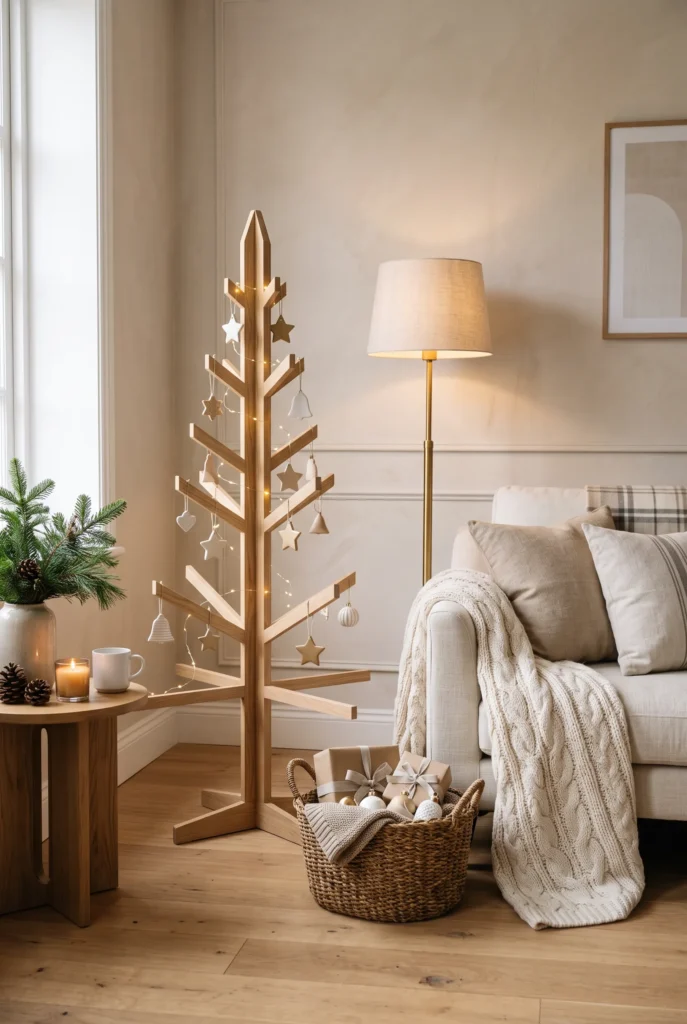
A wooden Christmas tree can be a useful alternative when you want seasonal decor without a traditional full-size tree. Choose a sculptural design that suits the scale of the room and place it beside a sofa, console, entryway bench, or reading chair. Natural wood looks especially attractive with greenery and neutral textiles.
This idea can also work well in small homes where floor space is limited. Instead of trying to squeeze a large tree into a narrow room, use one statement wooden piece and supplement it with smaller seasonal details. The result can feel intentional and festive while leaving the room comfortable to move through.
20. Decorate With Velvet Christmas Ribbons
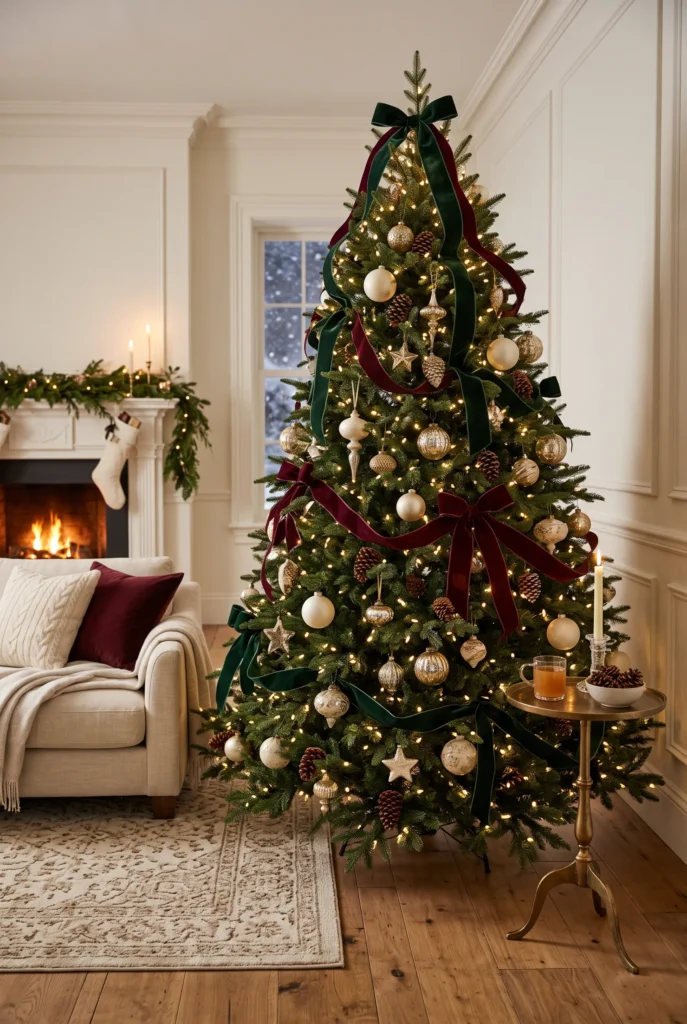
Velvet ribbon is a simple way to give Christmas decorations a richer appearance. Use it on the tree, around a wreath, through a mantel garland, or tied around a vase. Forest green, burgundy, cream, and muted gold are particularly effective when you want a traditional yet polished look.
You do not need elaborate bows everywhere. Let sections of ribbon fall naturally through the branches or tie a few simple knots around greenery. Repeating the same ribbon in two or three places around the room can create continuity. Choose ribbon widths that suit the scale of the decoration so the material does not overpower smaller pieces.
21. Add Christmas Decor to a Bathroom
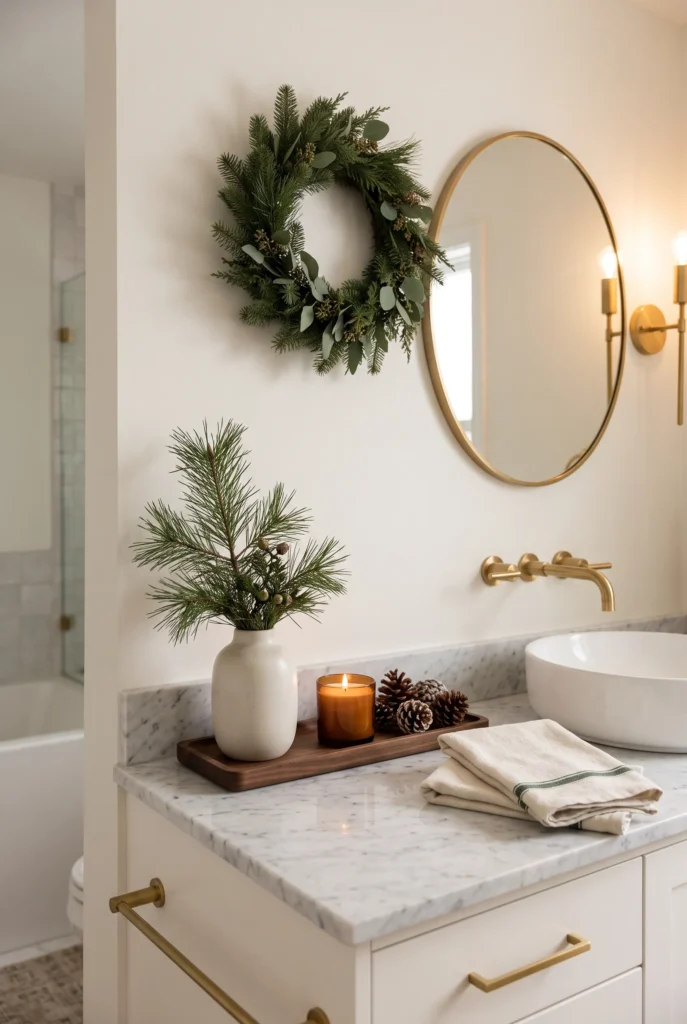
A bathroom only needs a few details to feel festive. A small evergreen branch beside the sink, seasonal hand towels, or a tiny wreath can introduce Christmas without taking away from the clean atmosphere of the room. Natural materials tend to work particularly well in bathrooms because they complement stone, wood, ceramic, and brass finishes.
Keep decorations away from areas where they can get wet or interfere with everyday use. A small tray can organize a candle, soap, and seasonal greenery on a larger vanity. If your bathroom is compact, one carefully chosen accent may be all you need.
22. Create a Cozy Christmas Fireplace Nook
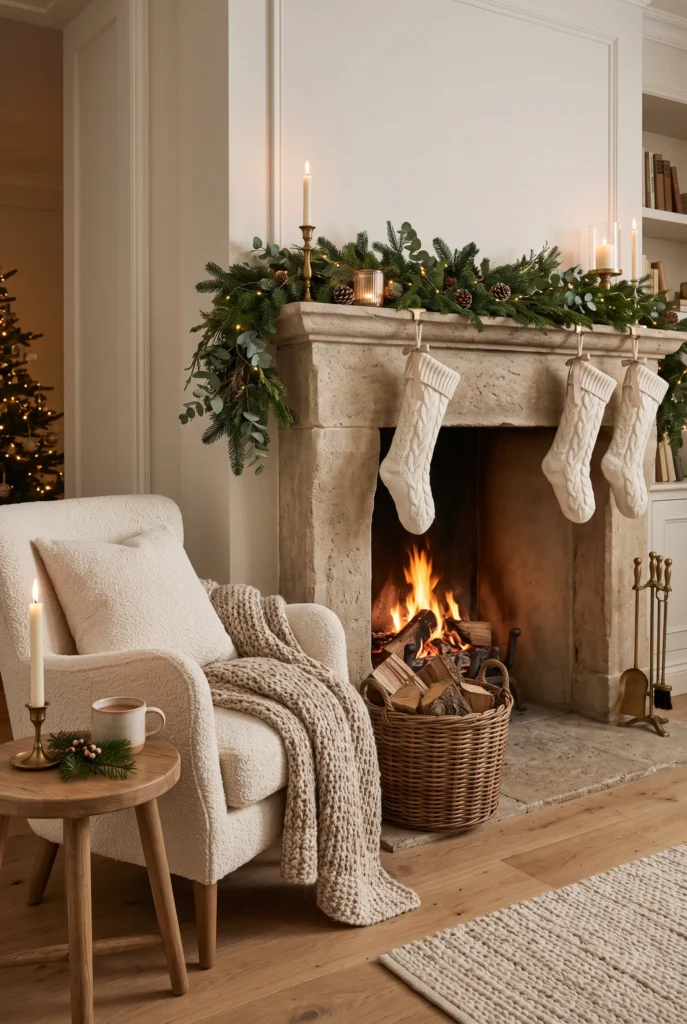
A fireplace nook naturally invites cozy seasonal styling. Start with greenery across the mantel, then add stockings, candles, and one or two natural accessories. A woven basket filled with properly stored firewood can provide both function and texture if the fireplace is designed for wood burning.
Keep the floor area around the fireplace clear enough for safe movement and follow the fireplace manufacturer’s safety guidance. A nearby chair with a soft throw can make the nook feel more welcoming. The goal is to create a comfortable winter corner rather than simply adding as many decorations as possible.
23. Use Glass Vases With Evergreen Branches
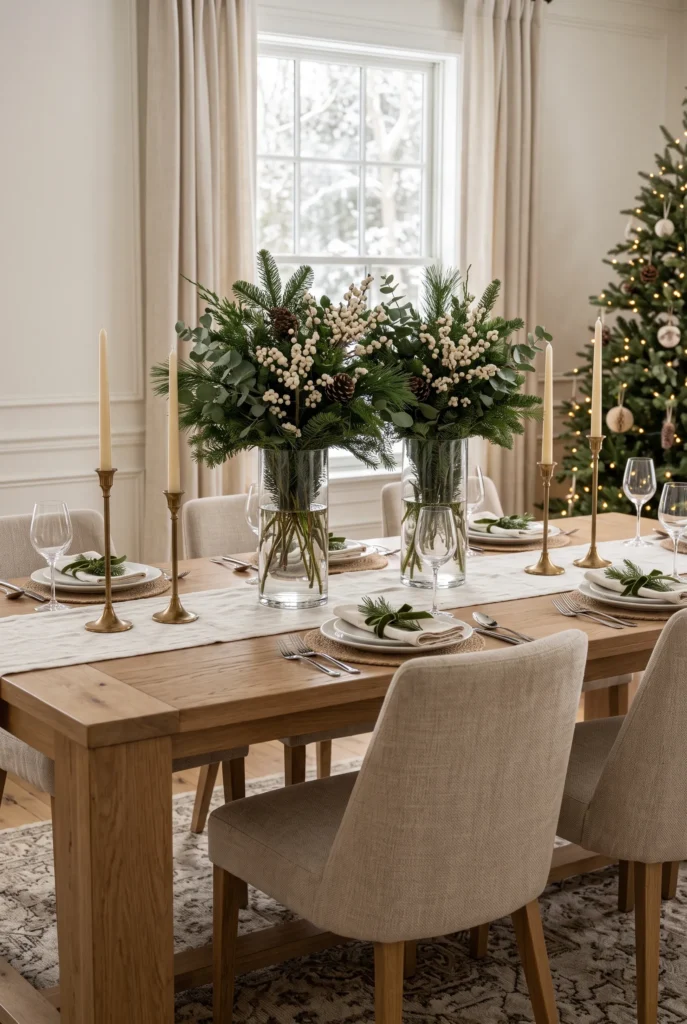
Glass vases offer a clean way to display Christmas greenery while keeping the overall arrangement light. Place one or two branches in a tall vase on a console, dining table, kitchen island, or sideboard. The transparent glass allows the natural stems to become part of the arrangement rather than hiding them completely.
For a more layered look, combine vases of different heights. Keep the greenery relatively loose and organic instead of trimming everything into a perfect shape. This decorating technique works particularly well when you prefer subtle Christmas styling because the branches bring seasonal texture without adding a large amount of color.
24. Make a Small-Space Christmas Display
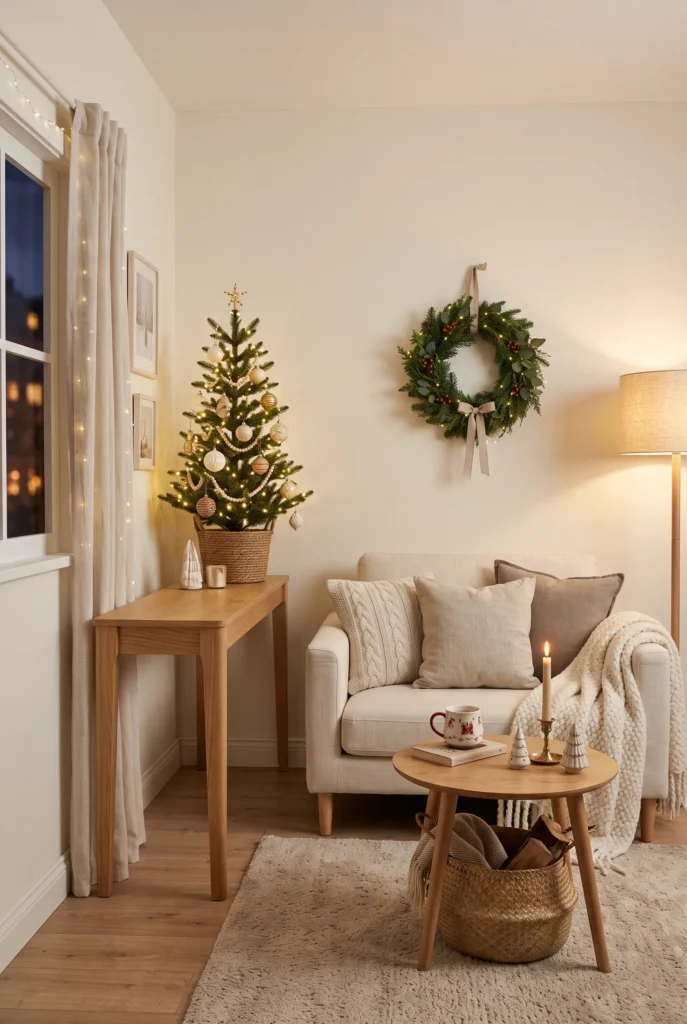
Small homes do not need to miss out on Christmas decorating. A tabletop tree, narrow wreath, small garland, and a few seasonal textiles can create plenty of holiday atmosphere without using valuable floor space. Look for vertical surfaces such as shelves, walls, doors, and the top of a console.
It also helps to replace rather than simply add. Swap everyday pillows for Christmas covers, replace a vase with a small tree, or exchange ordinary artwork for a seasonal print. This approach keeps the room organized and prevents the decorations from competing with furniture and essential storage.
25. Decorate a Christmas Sideboard
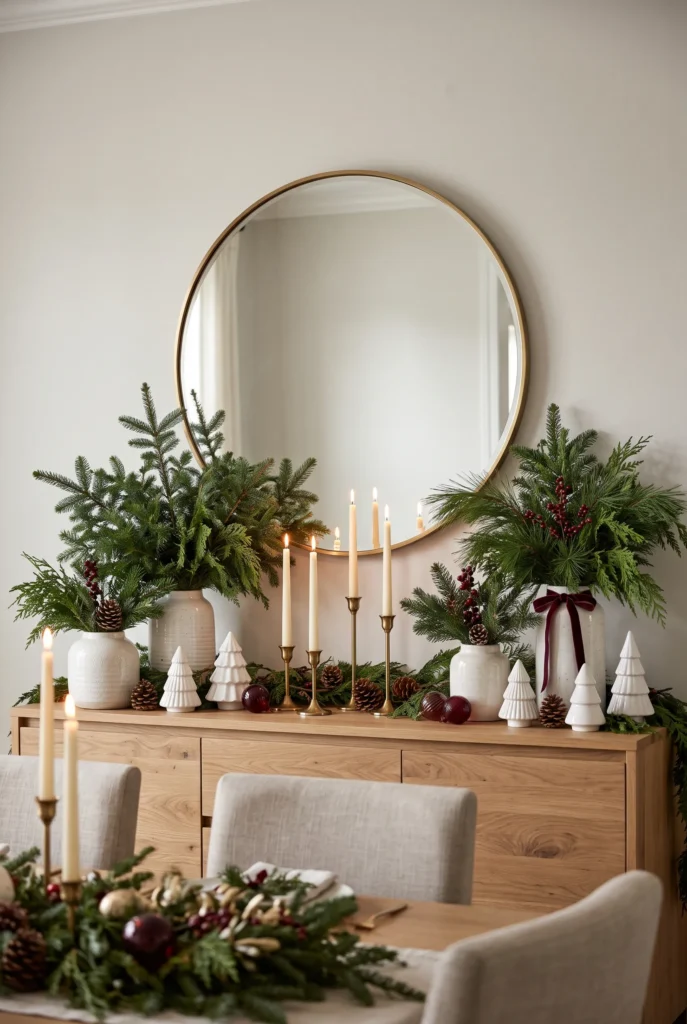
A sideboard gives you plenty of horizontal space for a layered Christmas arrangement. Start with one larger anchor, such as a mirror, artwork, or wreath, then build around it with greenery, candles, ceramic pieces, and a few ornaments. Keeping the tallest pieces toward the back helps create depth without blocking the room.
If the sideboard is used for serving food, keep the center area practical and move decorative items toward the ends. A simple arrangement also makes post-dinner cleanup easier. Repeating materials from the dining table, such as brass, wood, linen, or greenery, can make the entire dining area feel thoughtfully connected.
26. Add Subtle Gold Christmas Accents
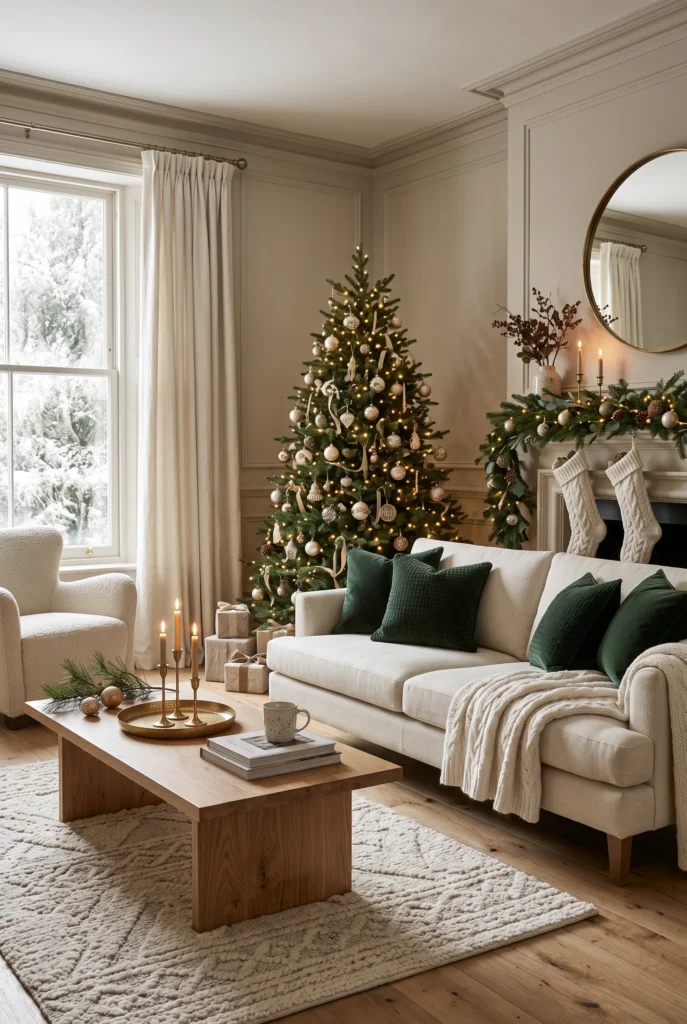
Gold can make Christmas decorating feel elegant, but it works best when used as an accent rather than the main color. Introduce it through candleholders, ornament details, picture frames, small trays, or hardware. Champagne and antique brass finishes usually feel softer than highly polished yellow gold.
Pair metallic details with natural materials to keep the room grounded. Evergreen branches, wood, linen, ceramic, and woven textures provide contrast against the reflective surfaces. If you already have brass lighting or hardware in the room, repeating that finish in a few Christmas accessories will make the seasonal decor feel naturally integrated.
27. Create a Cozy Christmas Breakfast Nook
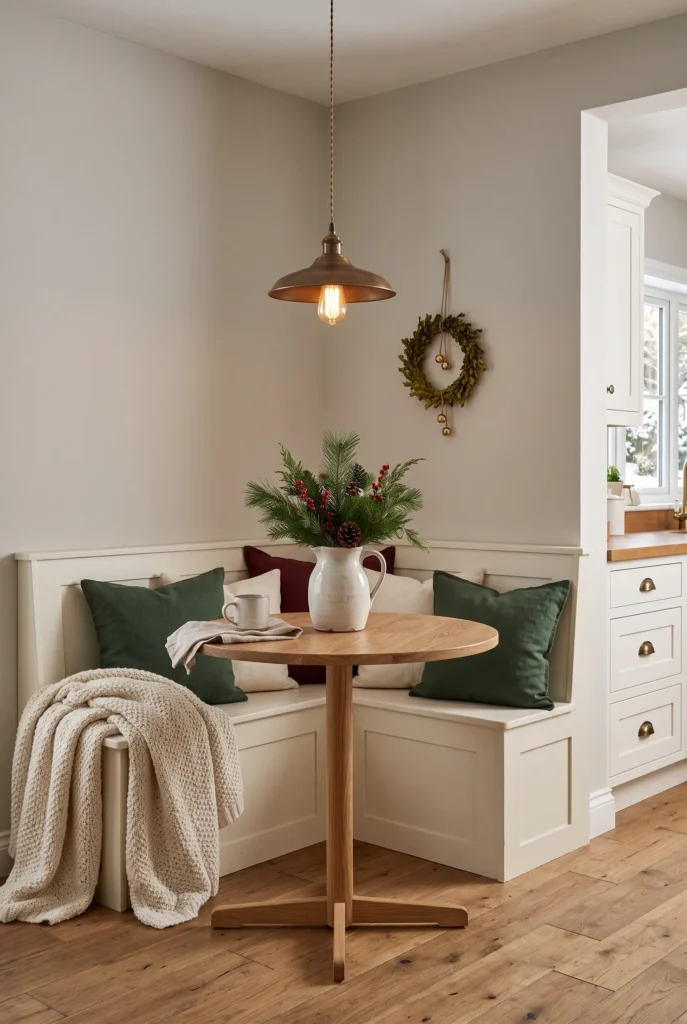
A breakfast nook can become a lovely little Christmas moment with just a few changes. Add seasonal cushions, a small evergreen centerpiece, and perhaps a wreath on the nearby wall. If you have a bench, a folded knitted throw can introduce warmth and texture while remaining useful during colder mornings.
Keep the centerpiece compact so the table remains functional. A ceramic pitcher filled with evergreen branches is an easy choice and can be moved when breakfast is served. Small touches like linen napkins, a seasonal mug, or a wooden serving board can complete the scene without requiring a full decorating overhaul.
28. Style a Natural Christmas Tablescape
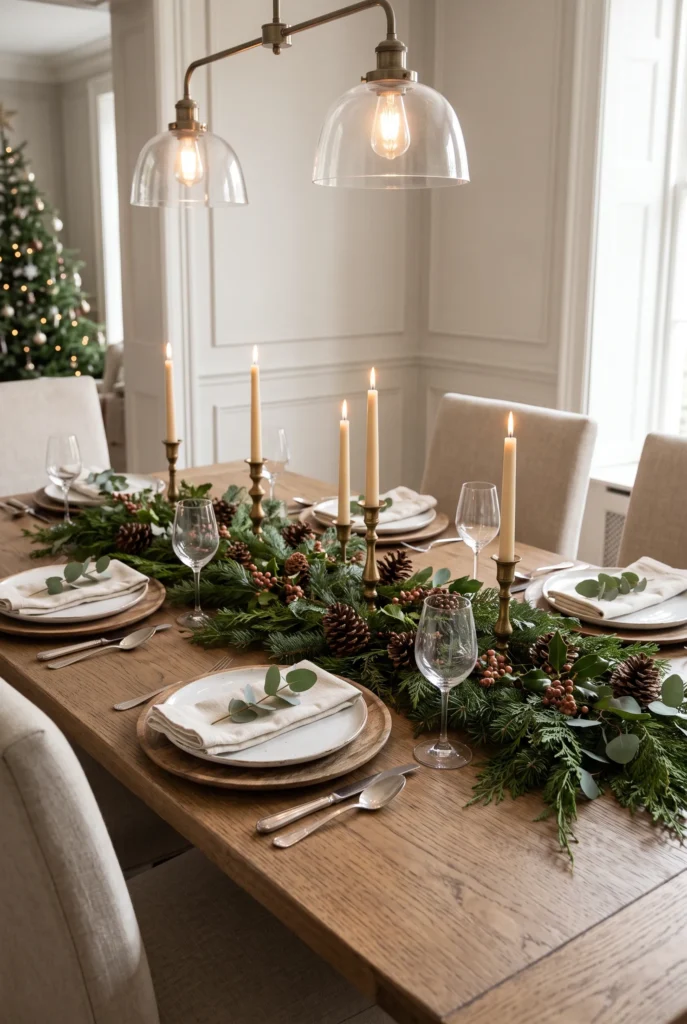
A natural Christmas tablescape can feel special without relying on elaborate centerpieces. Let the beauty of evergreen branches, pinecones, wood, linen, and handmade-looking ceramics create the foundation. Add candles in simple holders and a few berries for color if you want a traditional Christmas note.
The most useful tablescapes leave enough room for plates, serving dishes, and conversation. Keep the greenery low and spread it loosely rather than building a tall arrangement. You can also place a small evergreen sprig at each setting for a thoughtful finishing touch that costs little and takes only a few minutes to arrange.
29. Decorate With Cream and Sage Green
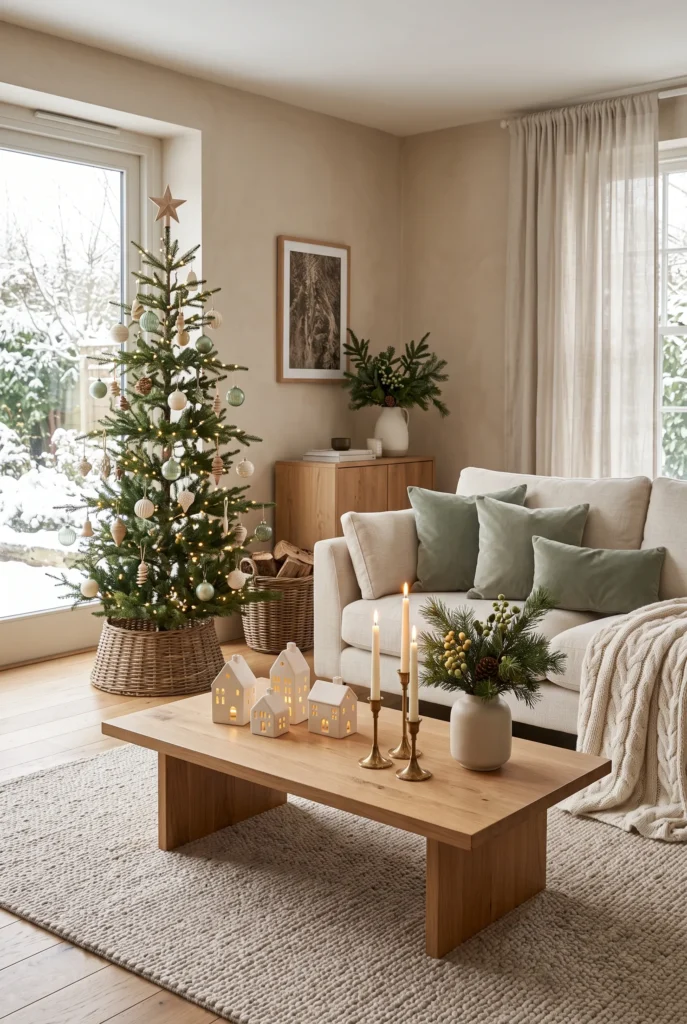
Cream and sage green create a softer alternative to traditional red Christmas decorating. The palette feels fresh, calm, and easy to blend with neutral furniture. Use sage through pillows, ribbons, ornaments, or small accessories, then let cream and warm wood provide the foundation.
Because both shades are relatively subtle, texture becomes important. Combine linen, velvet, knitted fabric, ceramic, wood, and natural greenery to keep the room from feeling flat. This palette is also flexible enough to remain attractive throughout winter, making it useful if you prefer decorations that do not feel limited to December.
30. Create a Warm Christmas Corner With Lanterns
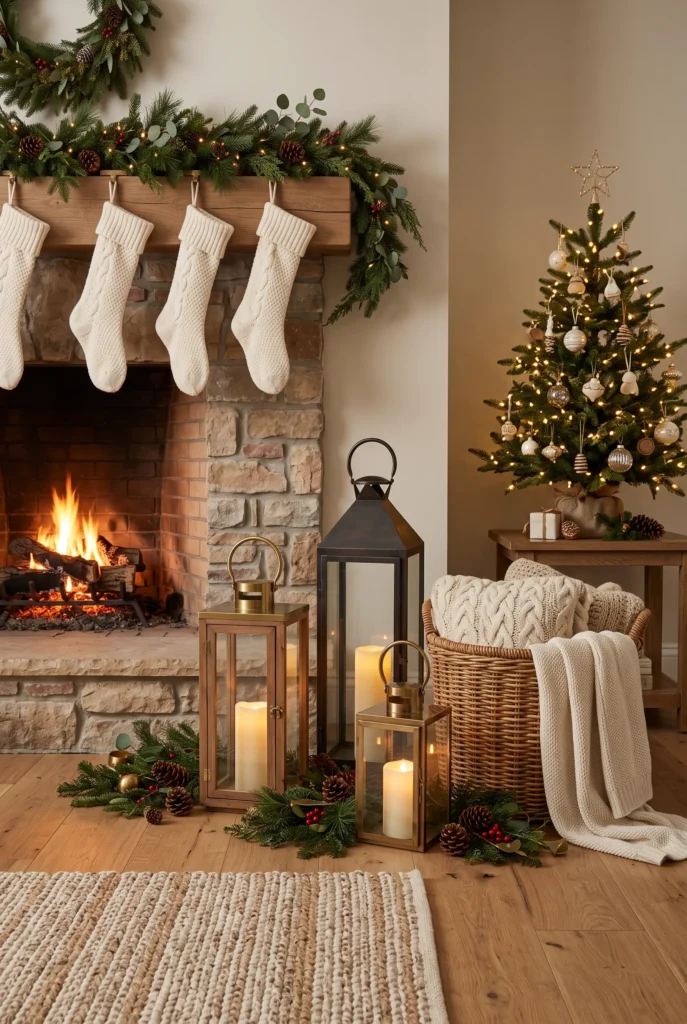
Lanterns are a lovely way to bring warm light into a Christmas corner without adding a lot of decorative objects. Arrange several sizes together beside a fireplace, on a covered porch, near an entryway, or beside a console. Add evergreen branches and pinecones around the base for a natural seasonal finish.
Flameless candles are a practical choice when you want the appearance of candlelight without an open flame. Choose lanterns with enough ventilation and keep them away from curtains, paper, and other combustible materials. The soft glow can make a small corner feel especially welcoming during winter evenings.
Conclusion
The most elegant Christmas homes are not necessarily the ones with the most decorations. A thoughtfully chosen color palette, natural greenery, warm lighting, and a few beautiful textures can create a festive atmosphere without making your rooms feel crowded. Start with the areas you use and enjoy most, then add seasonal touches gradually.
You might begin with a simple mantel, a wreath, or a few Christmas pillows before moving on to the dining table and bedrooms. There is no need to decorate everything at once. Choose the ideas that fit your home’s style, available space, and storage needs, then make them your own. A little greenery, candlelight, and warmth can go a surprisingly long way toward making the holiday season feel special.
Frequently Asked Questions
What are the easiest Christmas home decor ideas for beginners?
Start with simple changes that require little planning, such as adding evergreen branches to a vase, switching pillow covers, hanging a wreath, or placing warm white lights around a mantel. These updates create a seasonal atmosphere without requiring a complete room makeover. Once those elements are in place, you can add candles, ornaments, ribbons, or other accents that complement your existing decor.
How can I make Christmas decorations look elegant instead of cluttered?
Choose a limited color palette and repeat it throughout the room. Natural greenery, warm wood, cream textiles, and a few metallic accents can create a polished look without excessive decoration. It also helps to remove some everyday accessories before adding Christmas pieces. Leaving empty space between decorations gives each item more visual importance.
What Christmas colors work well with neutral home decor?
Cream, forest green, sage, burgundy, muted red, natural wood, and champagne gold all work beautifully with neutral interiors. You do not need to use every color at once. Choose two or three shades and repeat them through pillows, ornaments, ribbons, greenery, or table settings for a cohesive seasonal appearance.
How can I decorate a small home for Christmas?
Focus on vertical and existing surfaces rather than adding large floor decorations. A tabletop tree, door wreath, shelf greenery, small garland, or seasonal pillow covers can create plenty of Christmas atmosphere. Replacing everyday accessories instead of continually adding new ones also helps keep a small room comfortable and organized.
How do I make Christmas decor feel cozy?
Warm lighting and texture are two of the easiest ways to create a cozy holiday atmosphere. Use warm white lights, soft throws, knitted pillows, velvet accents, candles or flameless lanterns, and natural greenery. Keeping the color palette warm and relatively restrained can also help the room feel comfortable rather than visually busy.