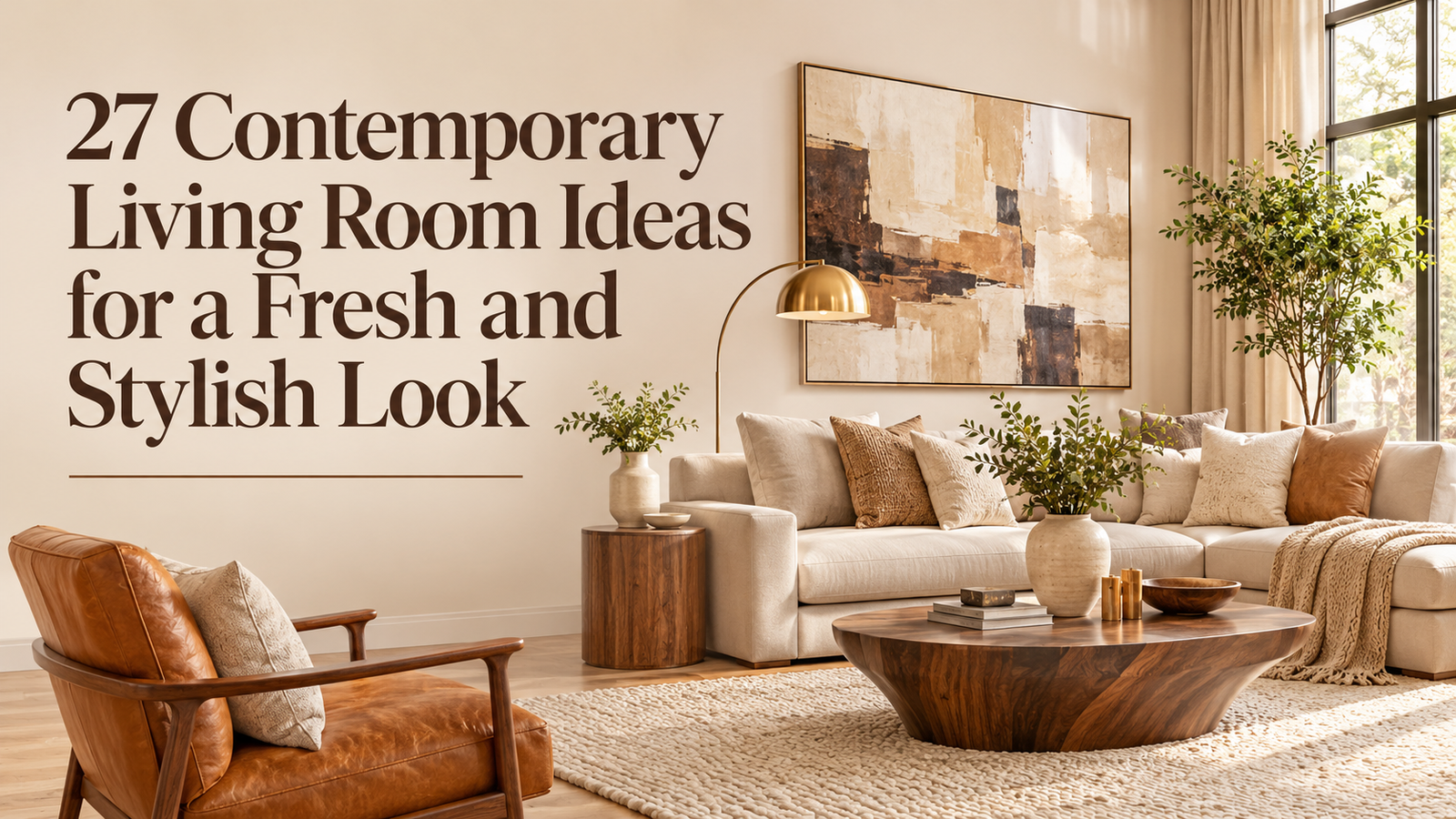
27 Contemporary Living Room Ideas for a Fresh and Stylish Look
A contemporary living room should feel fresh, comfortable, and thoughtfully designed without looking overly formal or complicated. It is a style that brings together clean lines, beautiful materials, modern furniture, and carefully chosen decorative details. The best part is that contemporary interiors can feel warm and welcoming rather than cold or minimalist.
If you are looking for contemporary living room ideas that balance modern design with everyday comfort, you are in the right place. From elegant neutral color palettes and sculptural furniture to statement lighting, natural textures, and creative accent walls, these ideas offer plenty of inspiration for different homes and decorating preferences.
You do not need to replace every piece of furniture to create a more contemporary atmosphere. Sometimes, a new color combination, better lighting, or a thoughtfully styled coffee table can make a noticeable difference. Let’s explore 27 beautiful ways to give your living room a fresh and stylish look.
1. Create a Warm Neutral Contemporary Living Room

A warm neutral palette is one of the easiest ways to create a contemporary living room that feels both sophisticated and inviting. Start with cream or beige walls, then introduce a comfortable linen sofa in a similar shade. Different textures keep the room from looking flat. Think chunky knitted cushions, a soft wool rug, natural wood furniture, and subtly textured curtains. These details add depth without making the space feel busy.
For a little contrast, bring in walnut furniture, a caramel leather chair, or dark bronze accessories. I especially like the combination of warm white, taupe, and natural wood because it creates a relaxed atmosphere while still looking polished. Keep decorative objects simple and let the beautiful materials do most of the work.
2. Add a Sculptural Contemporary Sofa
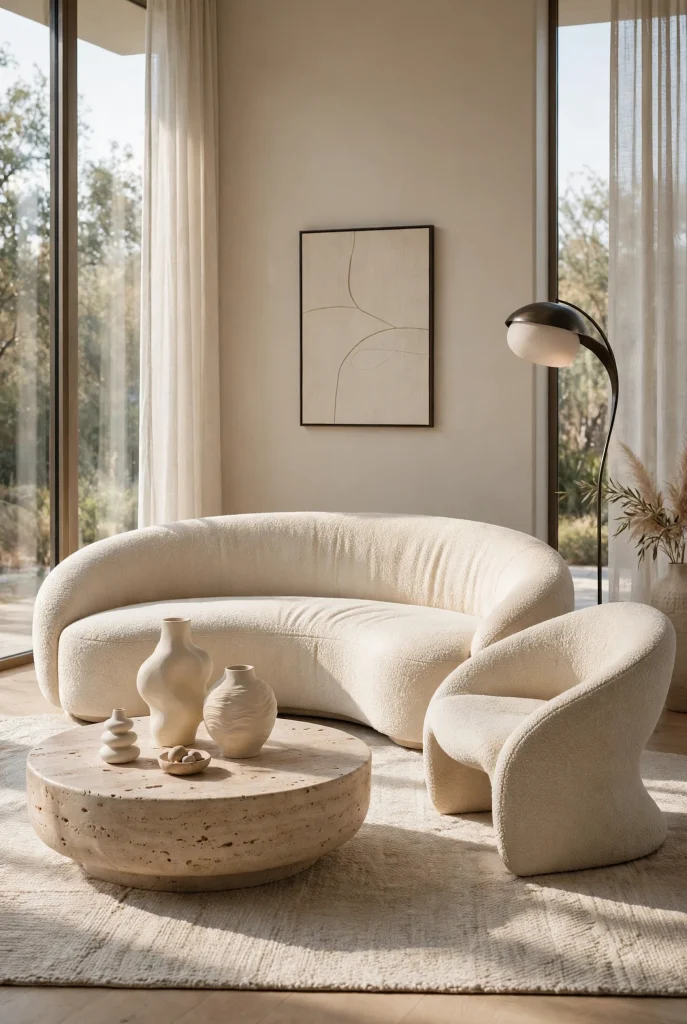
Furniture can completely change the personality of a living room, and a sculptural sofa makes a particularly striking statement. Look for gently curved edges, rounded arms, low-profile seating, or an interesting silhouette. An ivory or oatmeal-colored sofa works beautifully because its shape becomes the main feature without competing with too many colors.
You can balance the softer outline with a rectangular coffee table or a simple contemporary rug. Add a few cushions in complementary shades rather than covering the sofa with accessories. The result feels intentional and comfortable, with enough visual interest to make the seating area memorable.
3. Design a Contemporary Living Room With Floor-to-Ceiling Windows
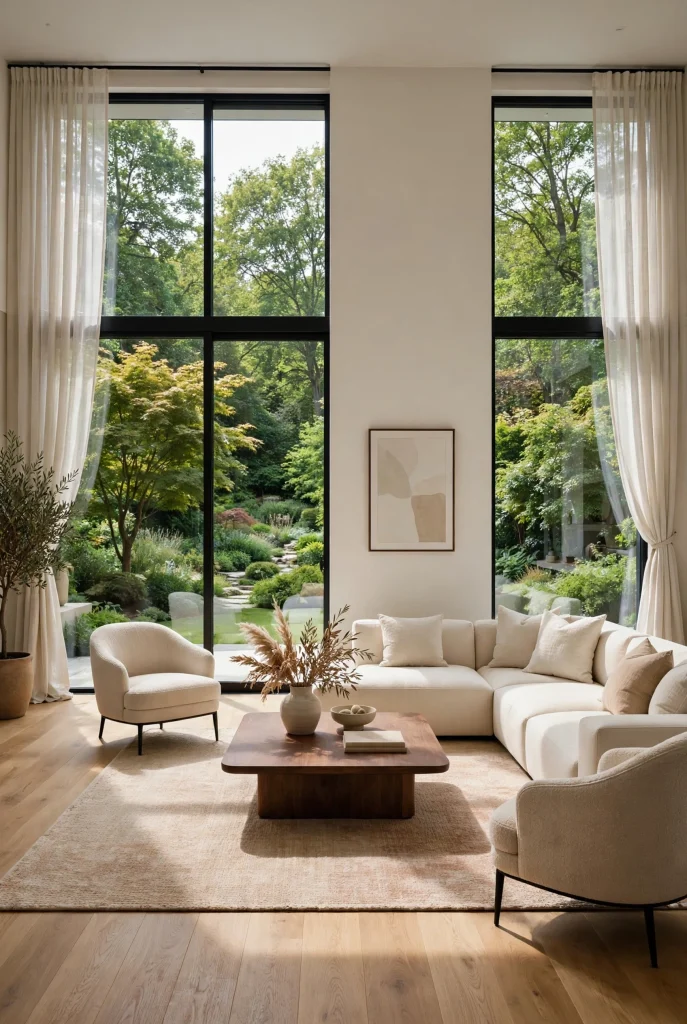
Large windows can make a living room feel open, bright, and connected to the outdoors. If your home already has generous windows, keep the surrounding decoration relatively simple so natural light remains the main attraction. A neutral sofa, streamlined furniture, and pale flooring help create a calm visual flow throughout the room.
For privacy, choose lightweight linen curtains or understated roller blinds. You can also place an indoor tree near the window to introduce a little greenery without blocking the view. Even smaller windows can benefit from this approach when you avoid heavy curtains and bulky furniture around them.
4. Introduce a Statement Contemporary Coffee Table
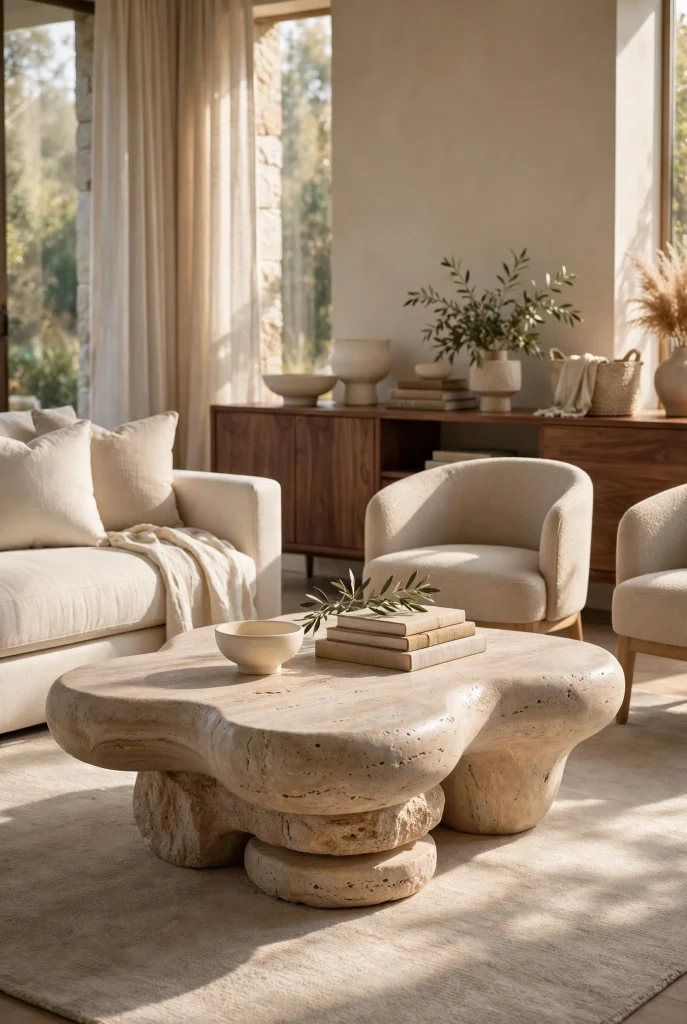
A coffee table is often the visual center of a living room, so choosing an interesting design can give the entire arrangement more character. Contemporary interiors look especially beautiful with travertine, natural stone, walnut, or sculptural wooden tables. Rounded and asymmetrical silhouettes are particularly appealing when the rest of the furniture has clean, simple lines.
Style the surface with only a few carefully selected pieces. A ceramic bowl, a small stack of books, and a decorative vase are usually enough. Leave some empty space so the table remains practical for everyday use. A beautiful coffee table should look good while still giving everyone room to put down a cup or remote.
5. Use a Contemporary Accent Wall
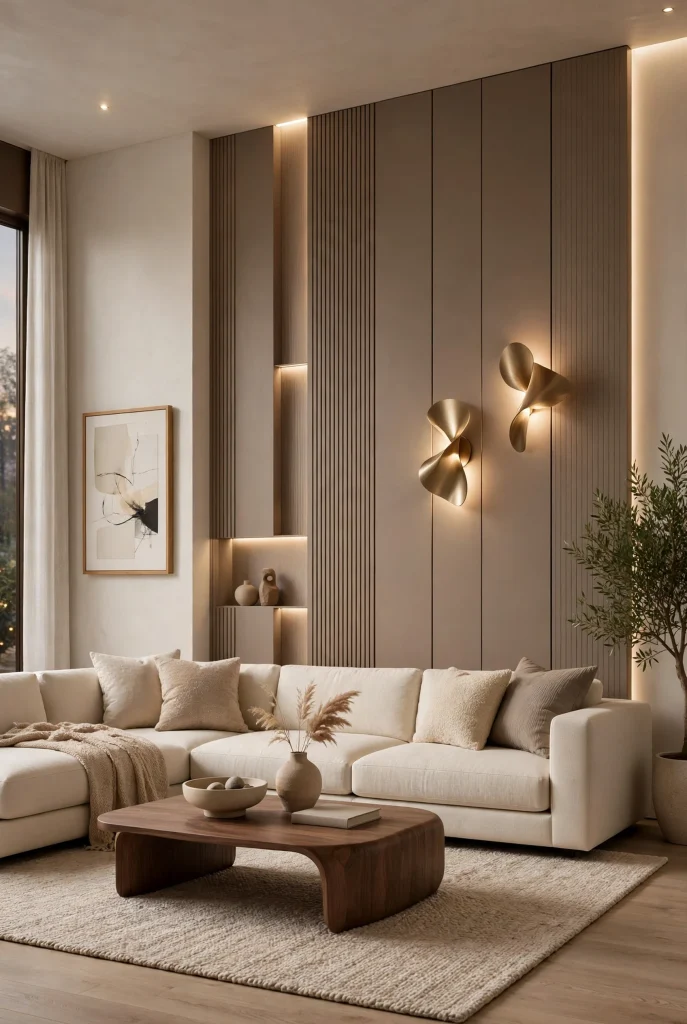
An accent wall gives a contemporary living room a stronger sense of design without requiring decoration on every surface. Consider warm taupe paint, subtle wood paneling, textured plaster, or a carefully selected stone finish. These materials add dimension and create an attractive backdrop for the main seating area.
The wall behind the sofa or television is often a natural place to introduce this feature. Keep the surrounding furniture fairly understated so the wall does not compete with everything else. If you prefer a simple decorating project, even a slightly deeper paint color can create enough contrast to make the room feel more thoughtfully finished.
6. Bring in Natural Wood Furniture
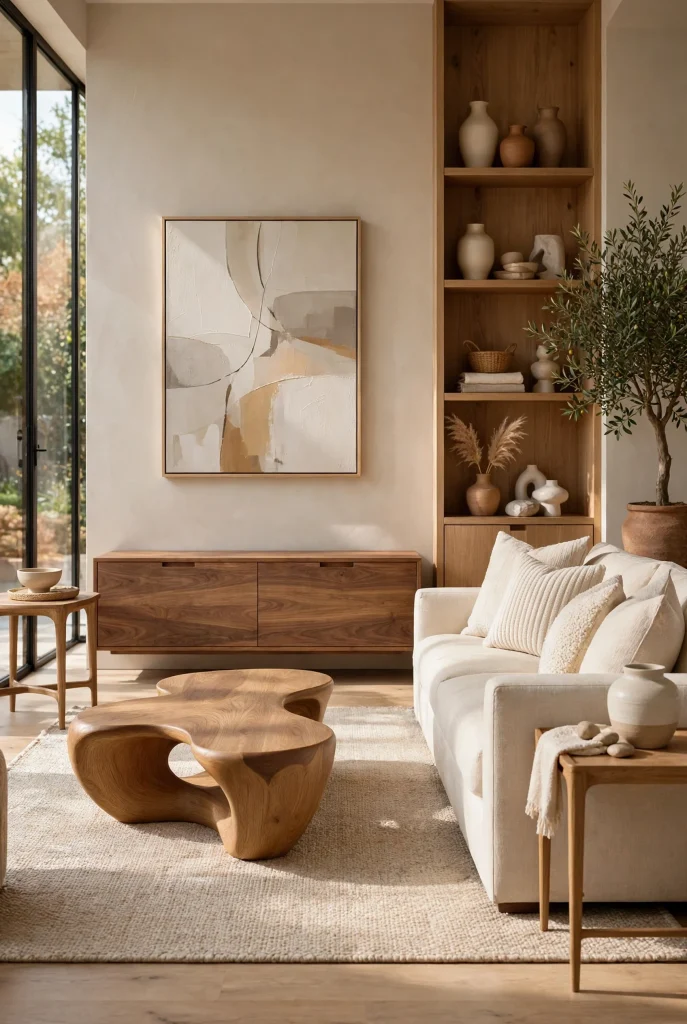
Natural wood brings warmth to contemporary interiors, especially when the room includes plenty of white, cream, or gray surfaces. Walnut adds richness, while lighter oak creates a relaxed and airy appearance. You can introduce these finishes through a coffee table, media console, shelving, or even a pair of small side tables.
Try to repeat one or two wood tones throughout the space rather than mixing too many unrelated finishes. This creates a more connected look. Pair wooden furniture with soft upholstery, textured rugs, and understated metal accents for a comfortable balance of modern and natural elements.
7. Choose a Contemporary Monochromatic Color Scheme
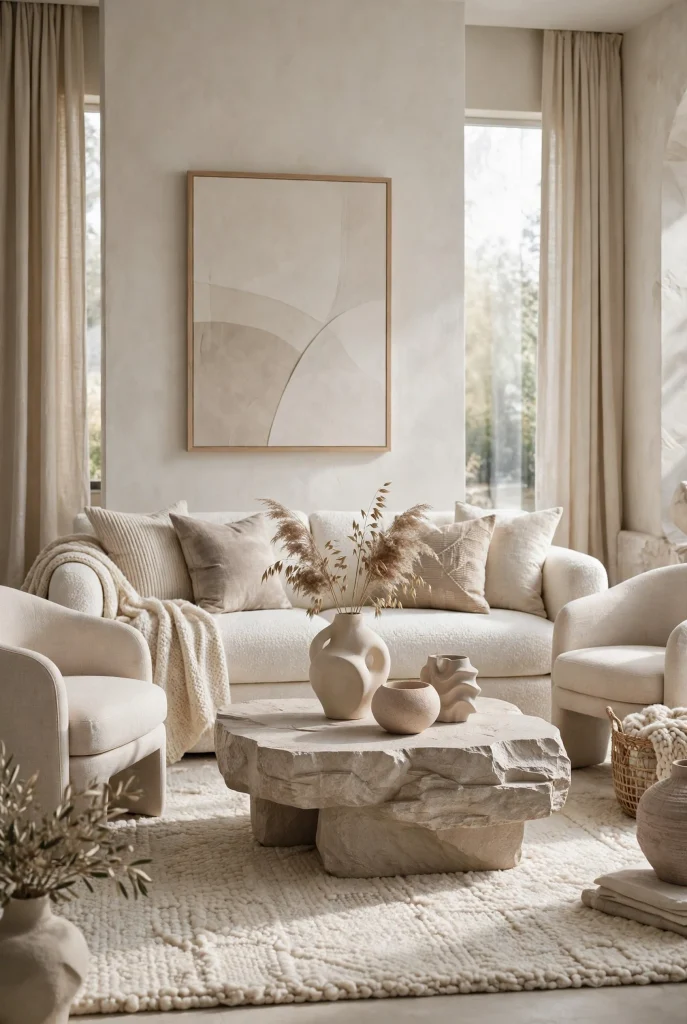
A monochromatic color scheme can make a living room feel calm, coordinated, and visually spacious. Rather than using exactly the same shade everywhere, combine several related tones. Warm white walls, oatmeal upholstery, beige curtains, and taupe accessories create subtle differences that make the room more interesting.
Texture is especially important when working with a limited color palette. Introduce bouclé, linen, wool, natural stone, and wood to keep the room from looking plain. You can also use a slightly darker rug or coffee table to anchor the seating area. The overall effect is elegant without feeling overly decorated.
8. Add a Contemporary Fireplace Surround
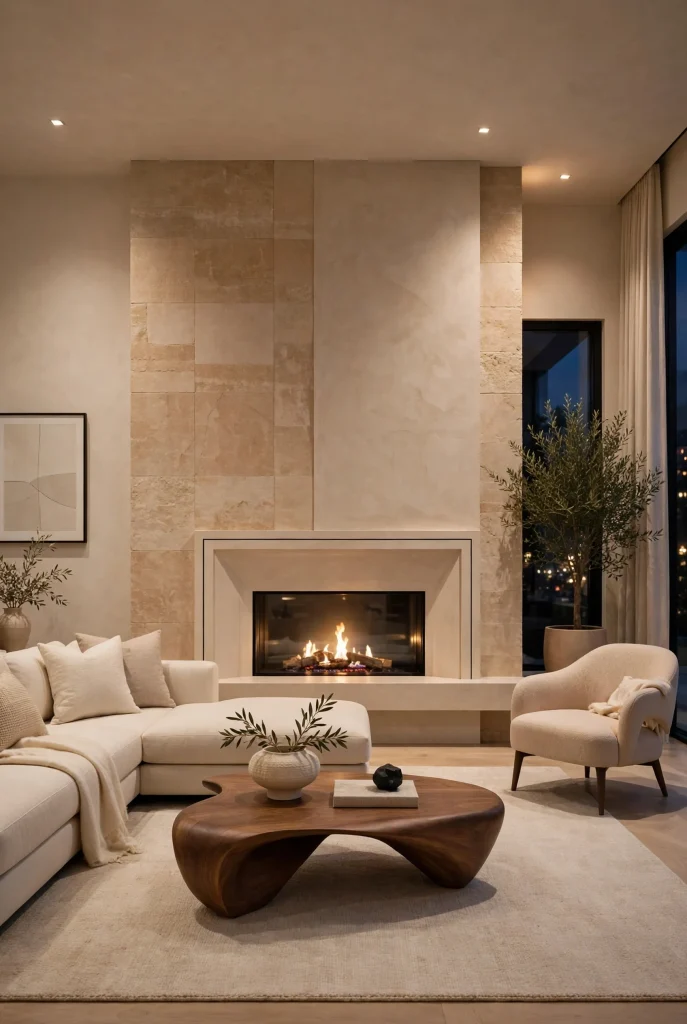
A contemporary fireplace can become a beautiful architectural feature even when the rest of the living room is relatively simple. Consider a clean linear design surrounded by limestone, textured plaster, or large-format stone. A low-profile fireplace arrangement works particularly well with modern furniture and understated decorative accessories.
If your home already has a traditional fireplace, you can update its appearance with a simpler surround, fresh paint, or a more streamlined mantel. Keep the decoration above it restrained, perhaps using one large artwork or a simple sculptural object. The aim is to create a focal point that feels connected to the rest of the room.
9. Style the Living Room With Contemporary Lighting
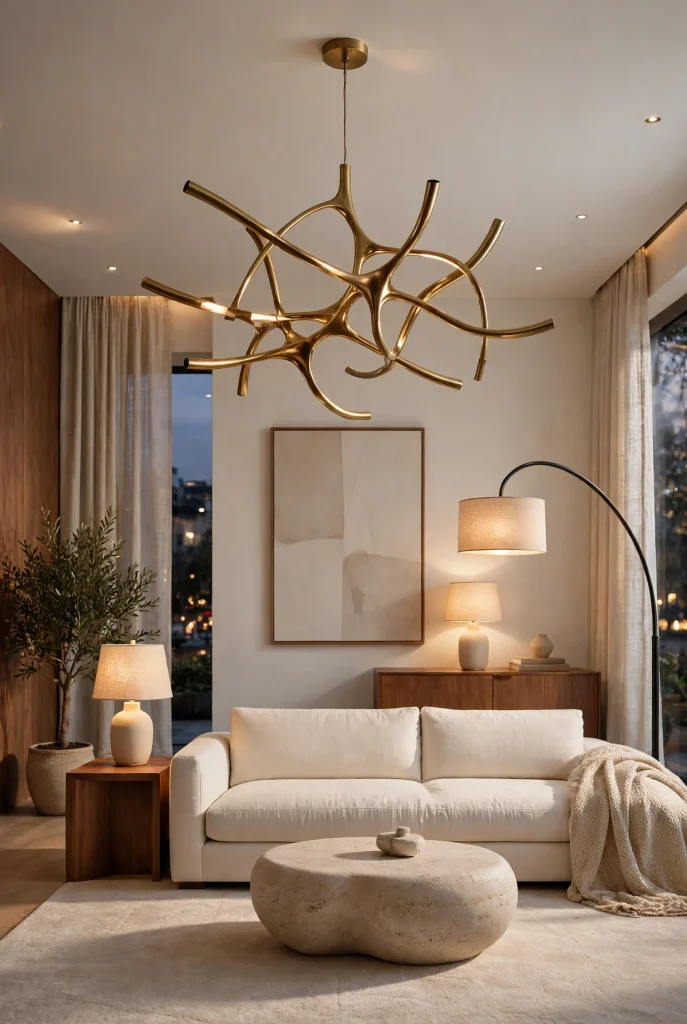
Lighting is one of the details that makes a contemporary living room feel finished. Instead of relying on one ceiling fixture, combine different light sources to create a comfortable atmosphere. A sculptural pendant can provide a focal point, while floor lamps and table lamps make the seating area feel warmer in the evening.
Choose finishes that complement your other furniture, such as brushed brass, matte black, or softly polished chrome. Warm-toned bulbs help prevent the room from feeling too stark. If you have a dimmer switch, use it to adjust the atmosphere throughout the day and create a more flexible living space.
10. Create a Contemporary Living Room With Black Accents
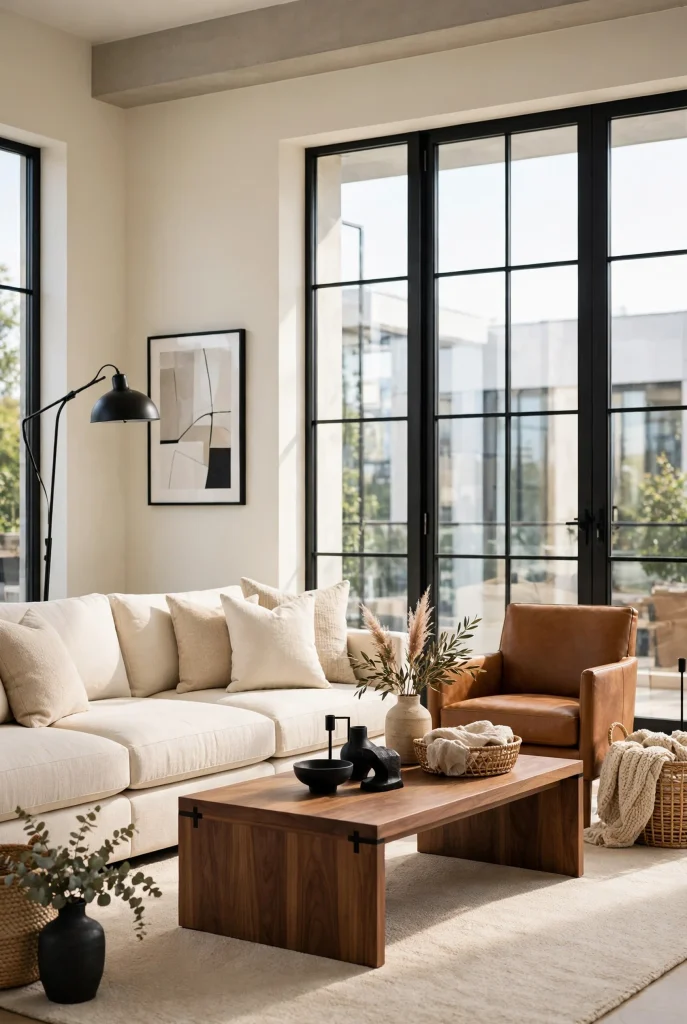
Black accents can bring definition to a neutral contemporary living room. The trick is to use them thoughtfully instead of allowing dark details to dominate the space. A black floor lamp, slim picture frames, metal shelving, or a small decorative object can provide enough contrast to make lighter furniture stand out.
Warm materials help soften the overall appearance. Combine black details with cream upholstery, natural oak, walnut, and textured beige fabrics. This pairing feels particularly attractive because it balances clean modern lines with comfortable natural finishes. Repeating the black accents in a few places also helps the room feel coordinated.
11. Incorporate a Contemporary Modular Sofa
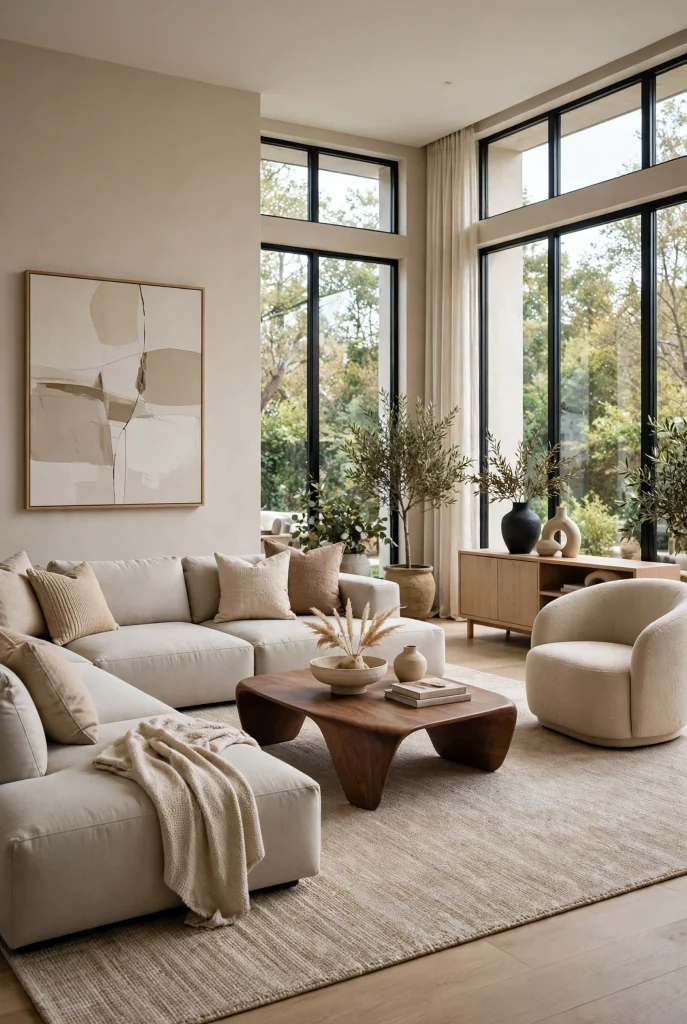
A modular sofa is a practical choice when you want a living room that can adapt to different activities. Its individual sections can often be rearranged to create an L-shaped seating area, a longer sofa, or a more open conversation arrangement. This flexibility makes modular furniture useful in both spacious and medium-sized living rooms.
Choose a fabric and color that work with your existing decoration. Oatmeal, warm gray, and soft beige are versatile options for contemporary homes. Keep the surrounding furniture relatively simple so the sofa remains the main feature. A generously sized rug can help define the seating arrangement and make it feel more complete.
12. Add Contemporary Wall Art
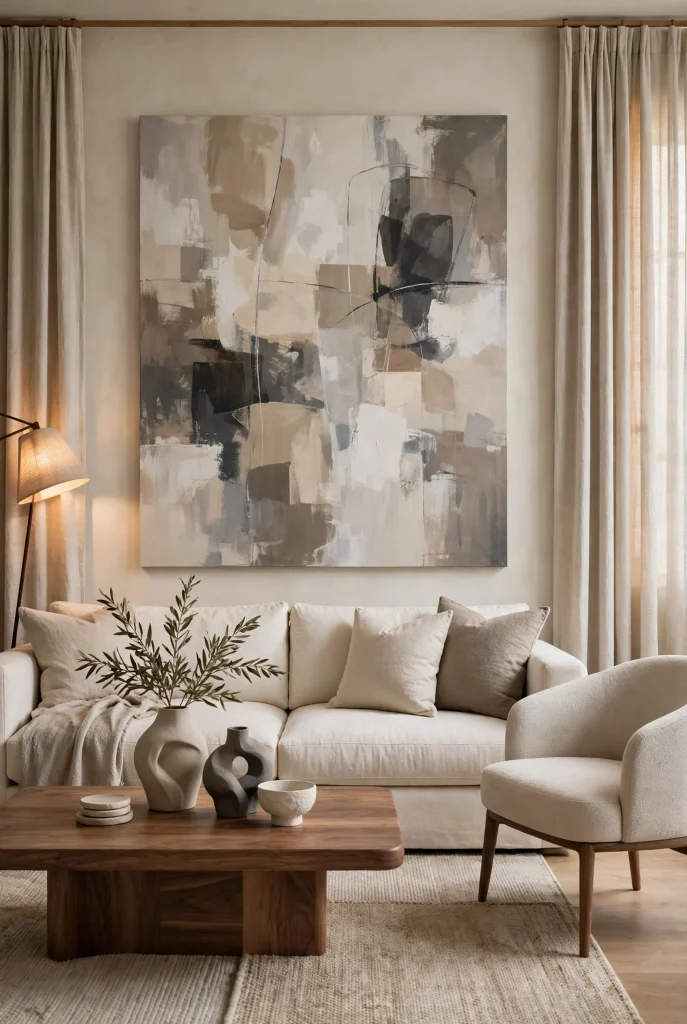
Wall art is a simple way to introduce personality into a contemporary living room. One oversized abstract painting can look more intentional than several small pieces scattered across the wall. Choose artwork with colors that connect to your upholstery, rug, or decorative accessories for a coordinated appearance.
You do not have to choose something dramatic. Soft abstract shapes, subtle landscape paintings, and minimalist line artwork can all work beautifully. Pay attention to scale when hanging your piece. Artwork that is too small above a large sofa can look disconnected, while a well-proportioned canvas helps visually anchor the entire seating arrangement.
13. Use Contemporary Built-In Shelving
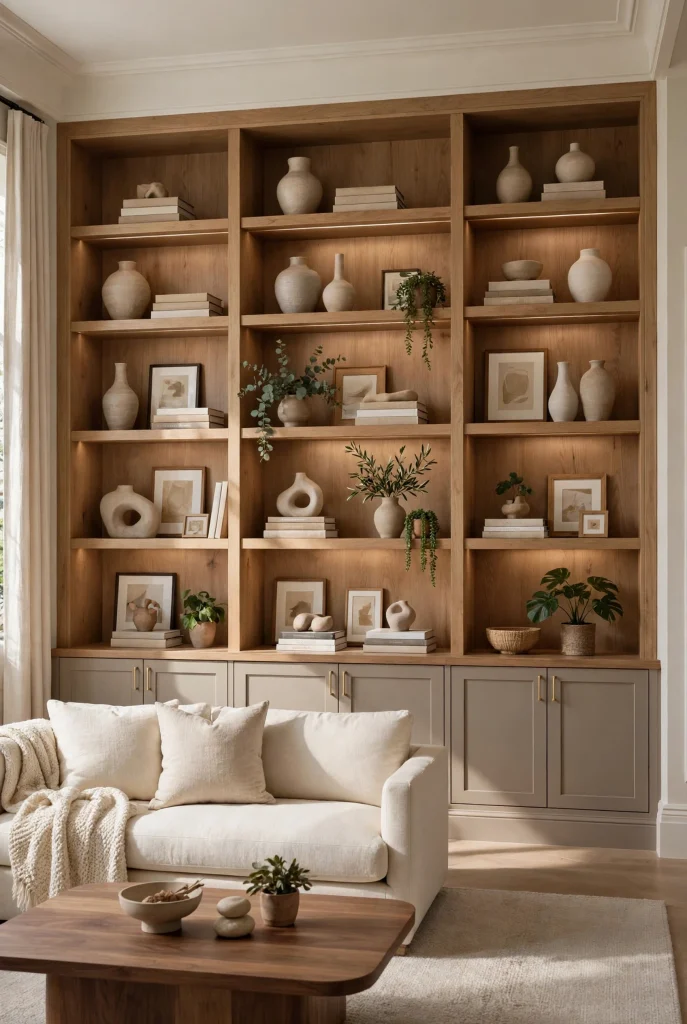
Built-in shelving creates a polished look while providing useful storage and display space. Contemporary designs often combine open shelves with closed cabinets, allowing you to display a few favorite decorative objects without exposing every household item. Natural oak, warm white, and muted taupe are attractive finishes that suit many modern interiors.
Keep the styling selective. Arrange books horizontally and vertically, add a few ceramic pieces, and leave some shelves partially empty. Small lighting details can make the shelves look especially beautiful in the evening. This approach gives the living room architectural character while helping everyday items stay organized.
14. Introduce a Contemporary Green Accent
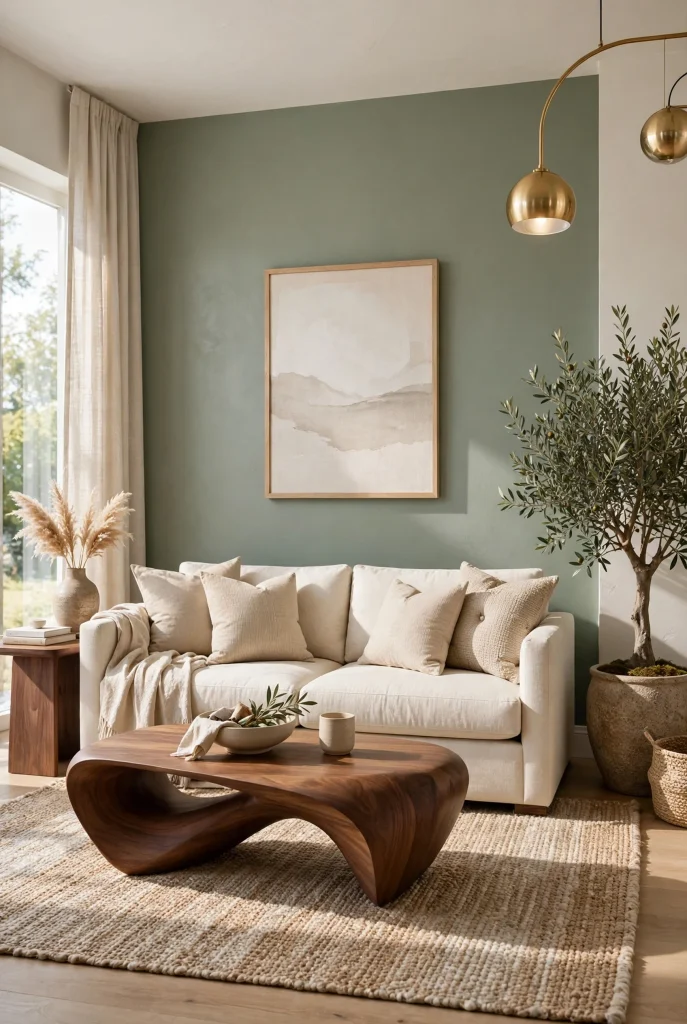
Green is a lovely way to introduce color without losing the calm appearance of a contemporary interior. Sage, olive, and muted eucalyptus shades work particularly well with warm neutrals and natural wood. You can introduce green through an accent wall, cushions, artwork, or a collection of indoor plants.
For a balanced arrangement, choose one main green element and repeat the shade in smaller details. A sage wall paired with cream upholstery and walnut furniture feels relaxed and sophisticated. If you prefer not to paint, a large indoor plant can provide a similar sense of freshness while keeping the walls neutral.
15. Create a Contemporary Open-Plan Living Room
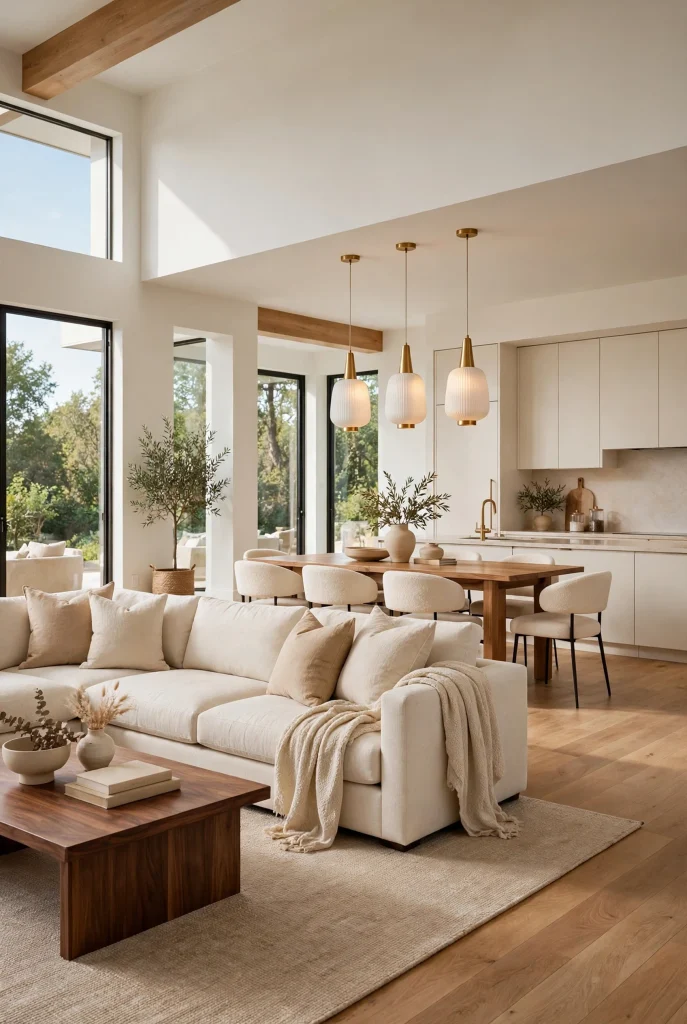
Open-plan living rooms benefit from a decorating approach that makes the different areas feel connected. Use a consistent palette throughout the living, dining, and kitchen spaces. Warm white walls, natural wood, and a few repeated metal finishes can create a smooth visual transition between rooms.
Furniture placement is important when there are no walls separating the areas. A large rug can define the seating zone, while the back of a sofa can help distinguish the living area from the dining space. Keep pathways clear and avoid overcrowding the room with too many large pieces. The result feels spacious but still organized.
16. Choose Contemporary Furniture With Rounded Edges
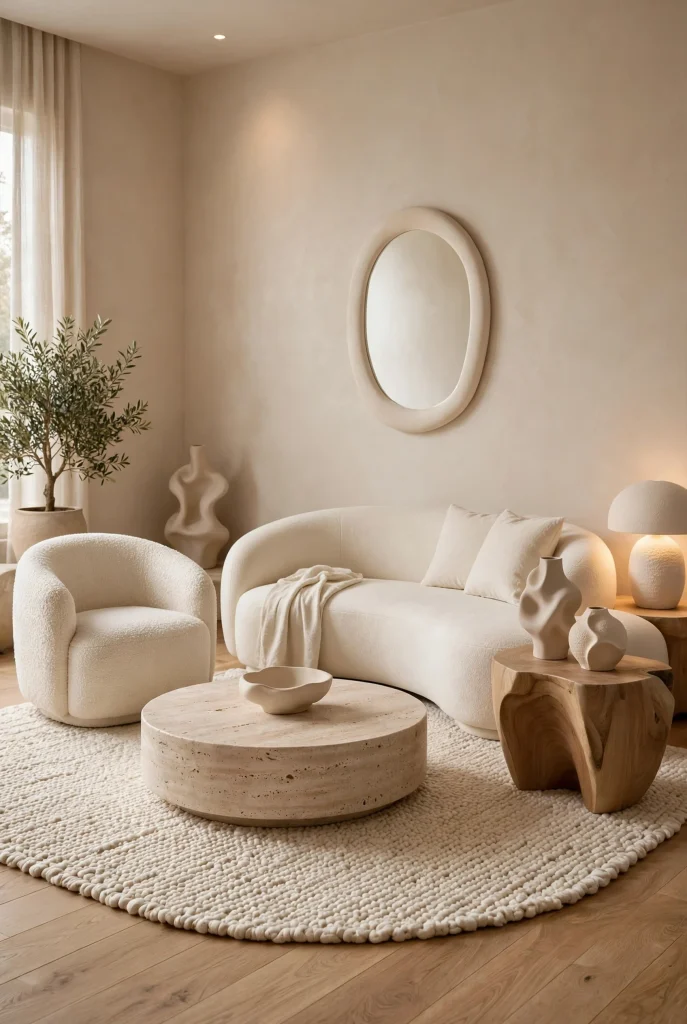
Rounded furniture is an attractive way to soften the straight lines often found in contemporary architecture. A curved sofa, circular coffee table, or rounded accent chair can make a seating area feel more relaxed and inviting. These shapes also introduce visual variety without requiring bold colors or complicated decoration.
Try combining one or two rounded pieces with simpler rectangular furniture. For example, a circular coffee table looks beautiful between a curved sofa and a streamlined media console. Choose natural materials and understated colors to keep the arrangement balanced. This style works particularly well when you want a modern room that feels gentle rather than overly structured.
17. Add a Contemporary Media Wall
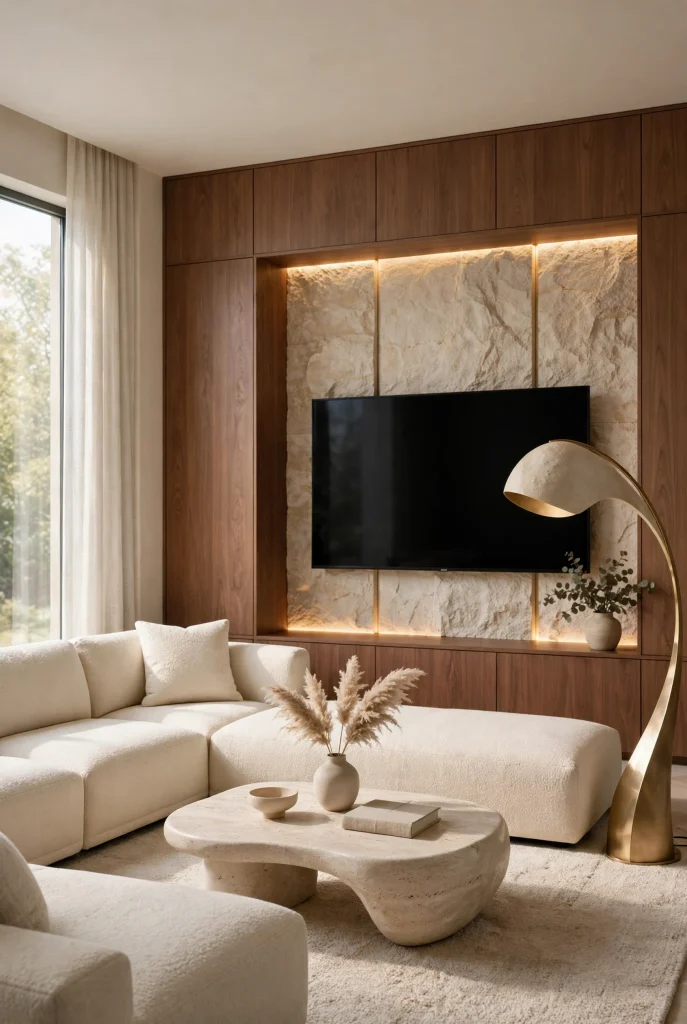
A well-designed media wall can make the television area look like a natural part of the living room rather than an isolated screen on an empty wall. Consider combining a wooden media console with textured wall panels or simple built-in cabinets. Closed storage is particularly useful for keeping cables, remotes, and everyday accessories out of sight.
Lighting can make the arrangement more attractive, especially in the evening. Subtle integrated lighting adds depth without creating unnecessary visual distraction. Keep the surrounding decoration simple and choose finishes that match your coffee table or other wooden furniture for a cohesive contemporary appearance.
18. Decorate With Contemporary Textured Rugs
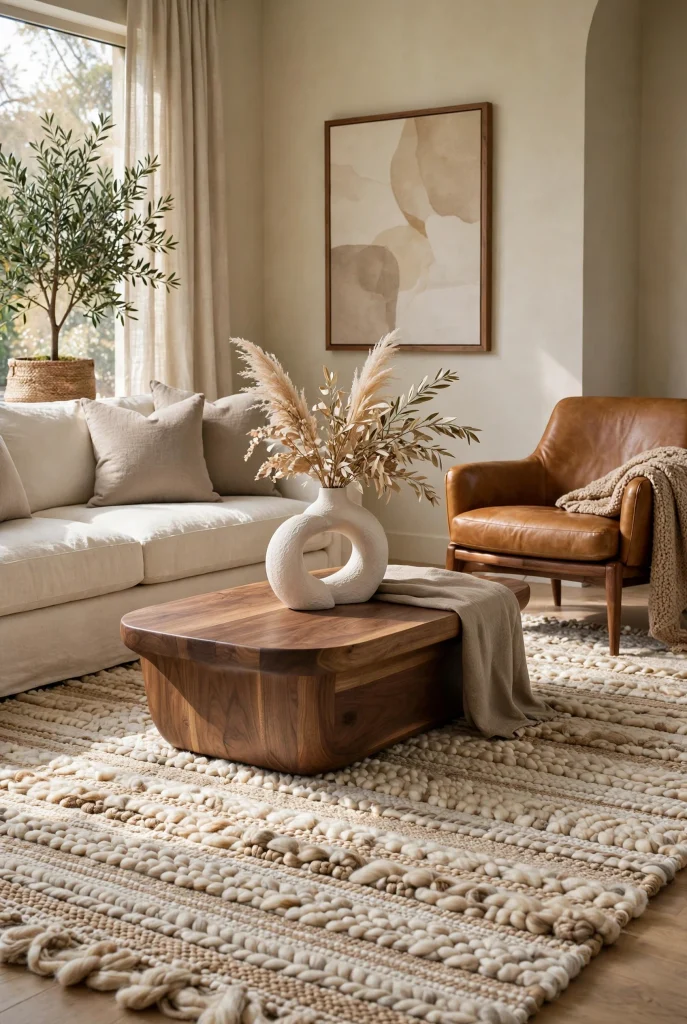
A rug can bring the different furniture pieces together and make a contemporary living room feel more comfortable. Look for natural textures, subtle geometric patterns, or softly irregular designs. Ivory, beige, oatmeal, and warm gray are versatile colors that work well with many modern furniture styles.
Size matters just as much as color. Ideally, the rug should be large enough to connect the main seating pieces rather than appearing like a small island beneath the coffee table. Layering a textured rug with simple upholstery can also add depth without introducing too many decorative elements. Choose a practical material that suits the room’s daily use.
19. Bring Nature Indoors With Large Indoor Plants
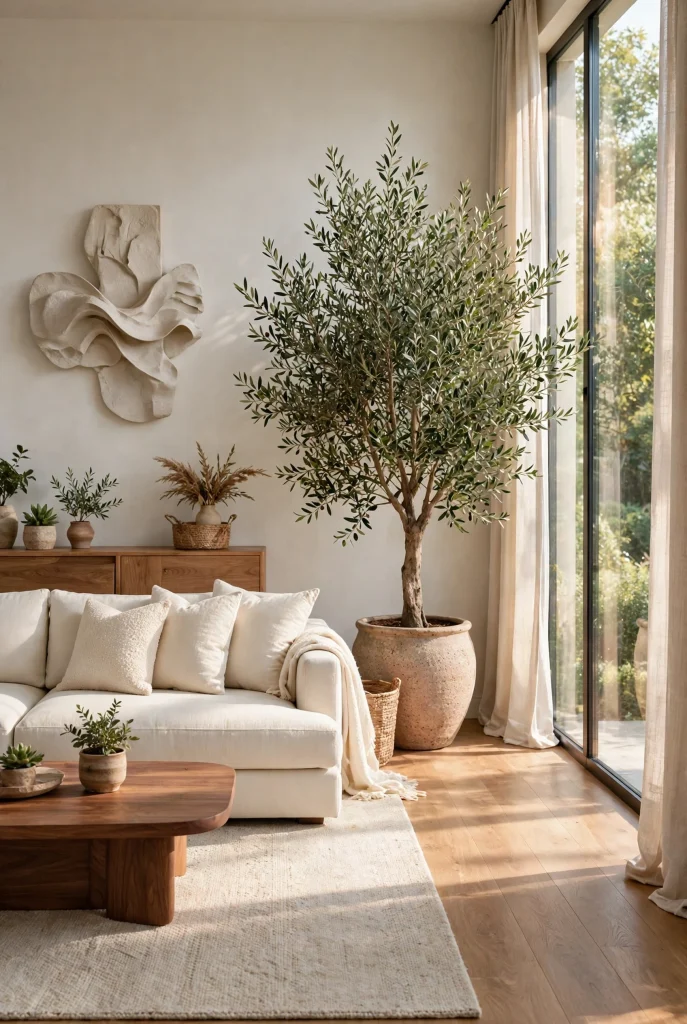
Indoor plants can bring life and natural color into a contemporary living room. A large olive tree, fiddle-leaf fig, or another suitable indoor plant can create a beautiful focal point beside a sofa or window. Choose a planter that complements your furniture, such as textured ceramic, natural stone, or a simple woven basket.
Avoid filling every corner with greenery. A few well-placed plants usually create a cleaner appearance than too many small pots scattered around the room. Consider the available daylight and care requirements before choosing a plant. The right greenery adds freshness while keeping the rest of the decoration calm and balanced.
20. Design a Contemporary Living Room With a Cozy Reading Corner
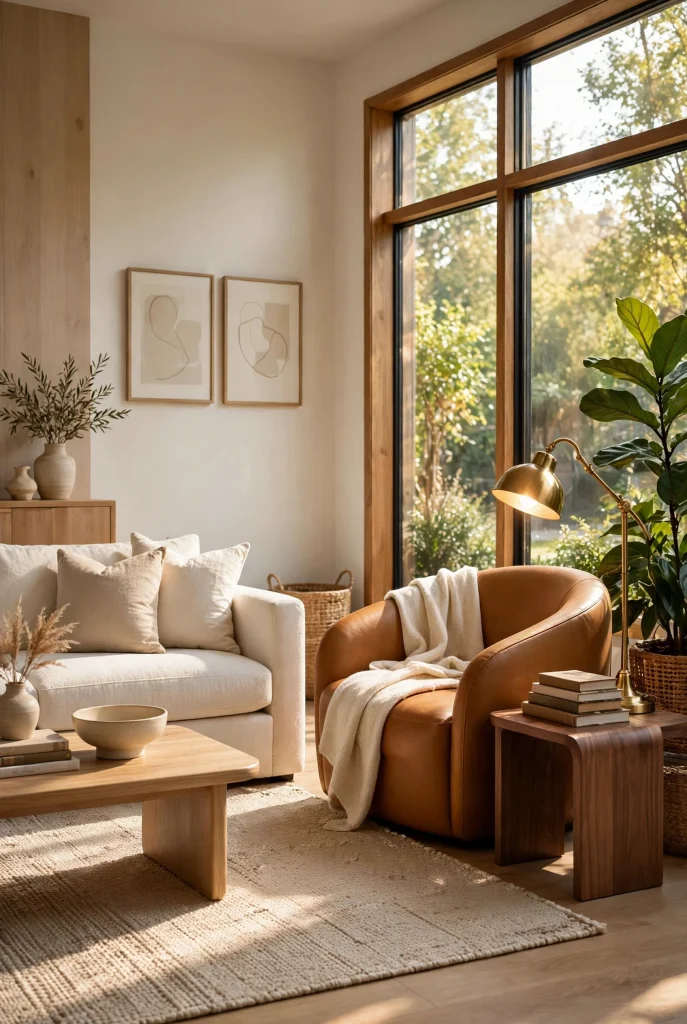
A reading corner adds another useful layer to a contemporary living room without requiring a separate room. Choose a comfortable accent chair with an interesting shape, then add a small side table for books or a cup of tea. A dedicated reading lamp makes the corner practical after sunset.
The best location is often beside a window or in an unused corner near the main seating area. A soft throw and a small footstool can make the arrangement more inviting. Keep the color palette connected to the rest of the living room so the reading area feels like a natural extension of the design.
21. Use Contemporary Floating Shelves
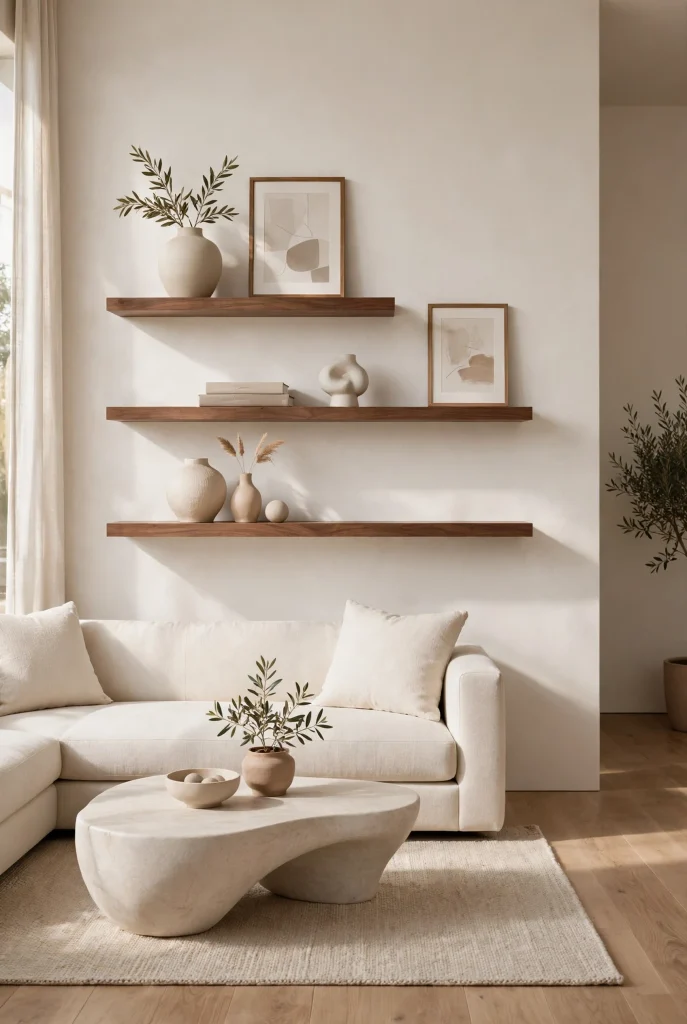
Floating shelves offer a simple way to decorate an empty wall while keeping the room feeling open. Contemporary designs often use clean wooden shelves with minimal brackets or hidden mounting systems. They work especially well above a small console, beside a television, or on an otherwise unused wall.
The key is to avoid overcrowding them. Arrange a few books, ceramic objects, framed prints, and small decorative pieces with plenty of space between them. Repeat materials or colors found elsewhere in the room to make the shelves feel connected to the overall design. This small feature can add personality without introducing bulky furniture.
22. Create a Contemporary Living Room With Warm Gray Tones
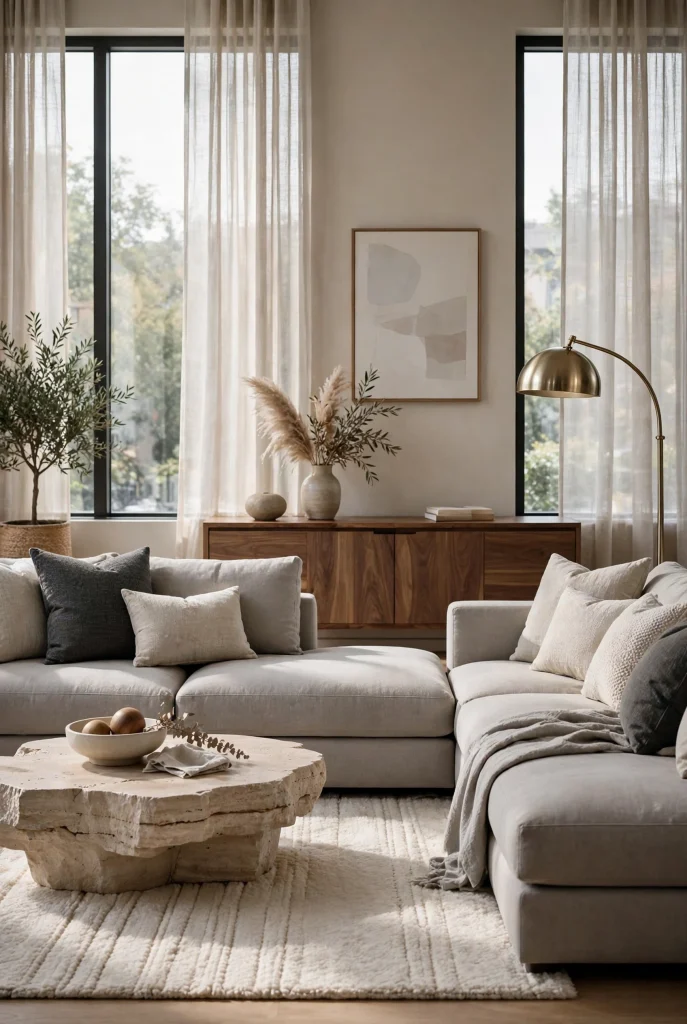
Warm gray is a useful alternative to an all-beige palette when you want something slightly cooler but still welcoming. Greige, mushroom, and soft charcoal tones can create a sophisticated contemporary look, particularly when paired with cream upholstery and natural wood furniture.
Try using lighter shades on the walls and larger furniture, then introduce darker gray through cushions, artwork, or smaller accessories. Avoid using too many similar flat surfaces. Textured fabrics, stone finishes, and wooden details will make the color scheme feel more layered. The result is a comfortable room that looks modern without feeling overly formal.
23. Add a Contemporary Accent Chair
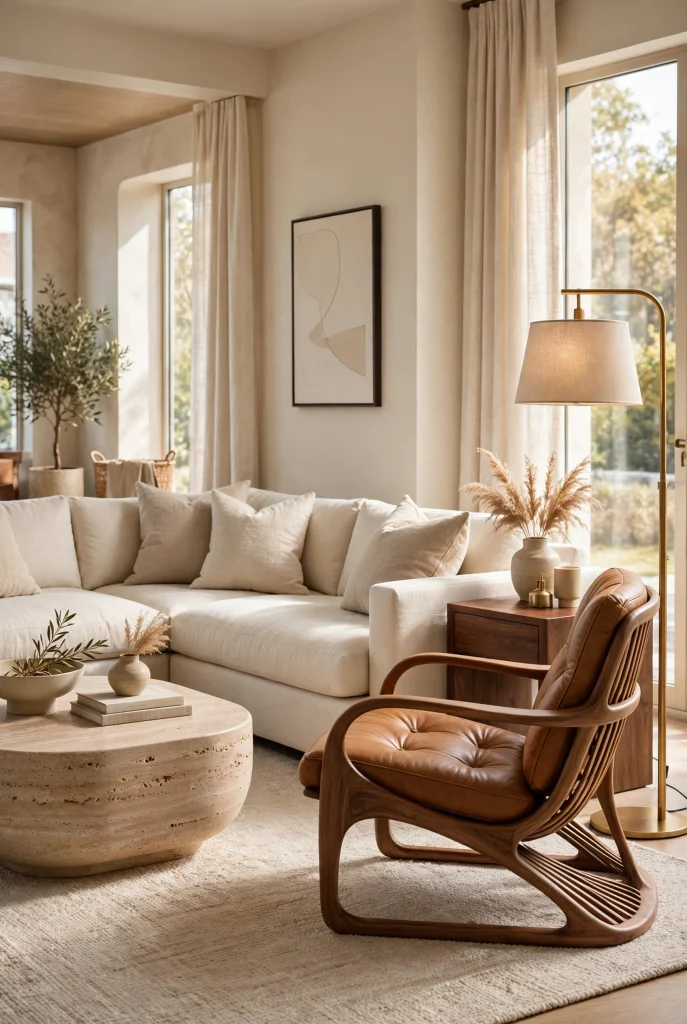
An accent chair is a useful way to introduce a different shape, material, or color into your living room. A caramel leather chair can add warmth, while a bouclé or textured fabric chair creates a softer appearance. Look for interesting details such as curved arms, sculptural legs, or a distinctive backrest.
Placement makes a difference. Position the chair near the sofa to encourage conversation, or angle it slightly toward a fireplace or window. Add a small side table and a floor lamp to make the spot more functional. A carefully selected chair can provide extra seating while giving the room a more considered appearance.
24. Choose Contemporary Curtains and Window Treatments
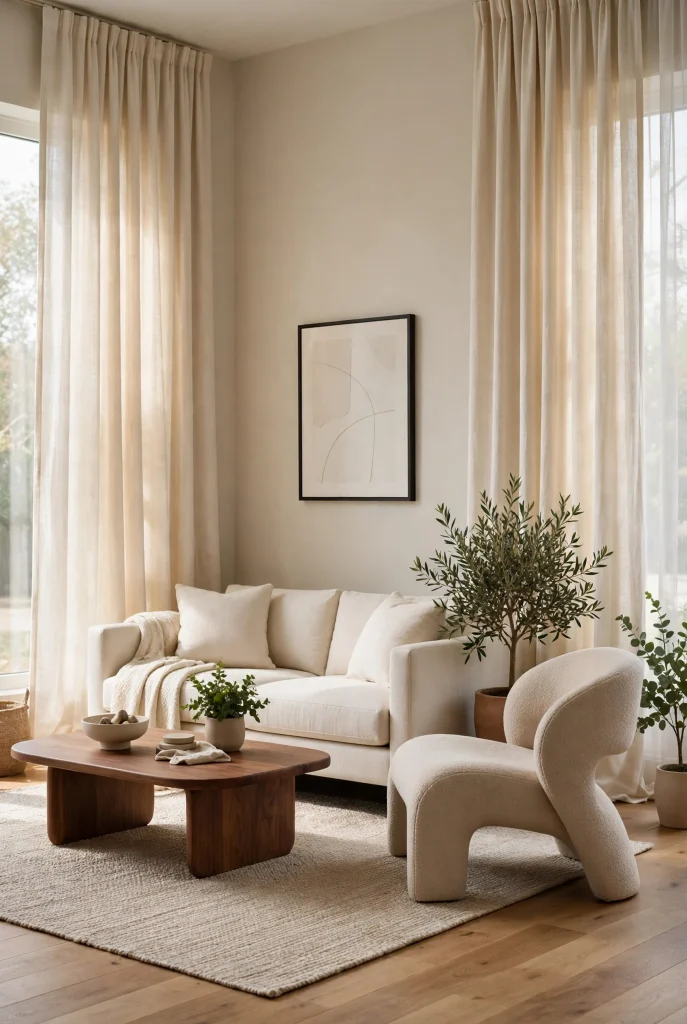
Window treatments can make a noticeable difference to the overall appearance of a contemporary living room. Full-length curtains create a softer, more finished look, especially when they are hung close to the ceiling. Linen and linen-blend fabrics are attractive options because their natural texture works beautifully with modern furniture.
Choose colors that complement your walls rather than introducing too much contrast. Ivory, warm white, and soft beige are easy to coordinate with neutral interiors. If you need additional privacy or light control, consider combining curtains with discreet roller blinds. This gives you flexibility while keeping the window area visually simple.
25. Incorporate Contemporary Stone and Marble Details
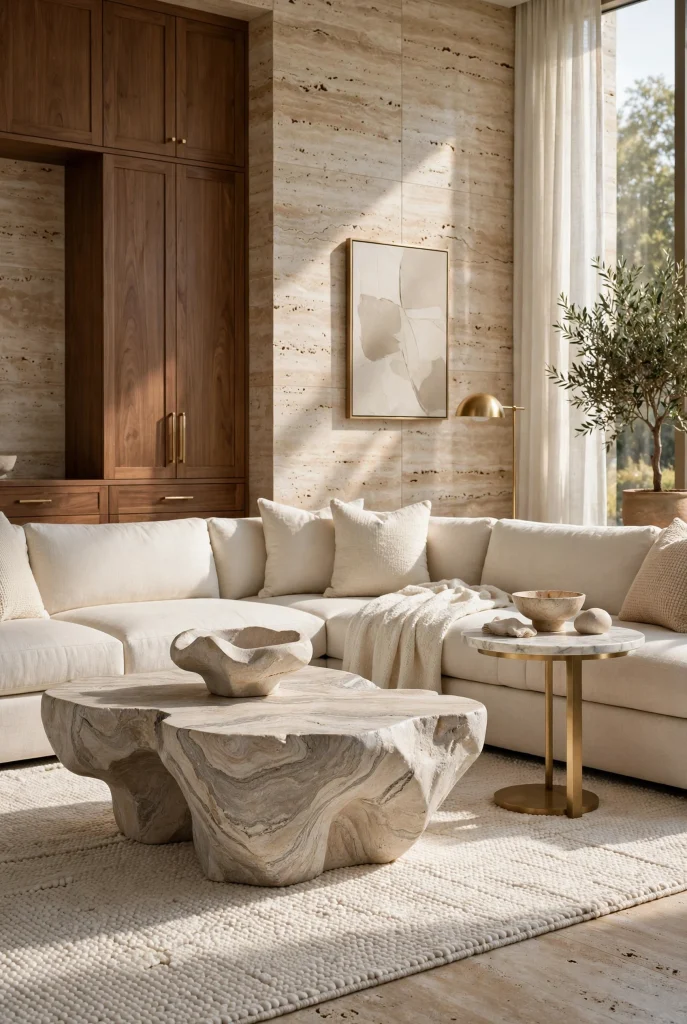
Natural stone can introduce a beautiful sense of texture and permanence into a contemporary living room. Travertine, marble, and limestone are particularly attractive when used for coffee tables, side tables, or decorative accessories. Their natural patterns create visual interest without requiring bold colors or complicated designs.
You do not need to cover every surface in stone. One statement coffee table or a small marble side table can be enough to make the material noticeable. Balance its cooler appearance with warm wood, soft upholstery, and textured fabrics. This combination keeps the living room comfortable while introducing a more architectural design element.
26. Create a Contemporary Layered Lighting Scheme
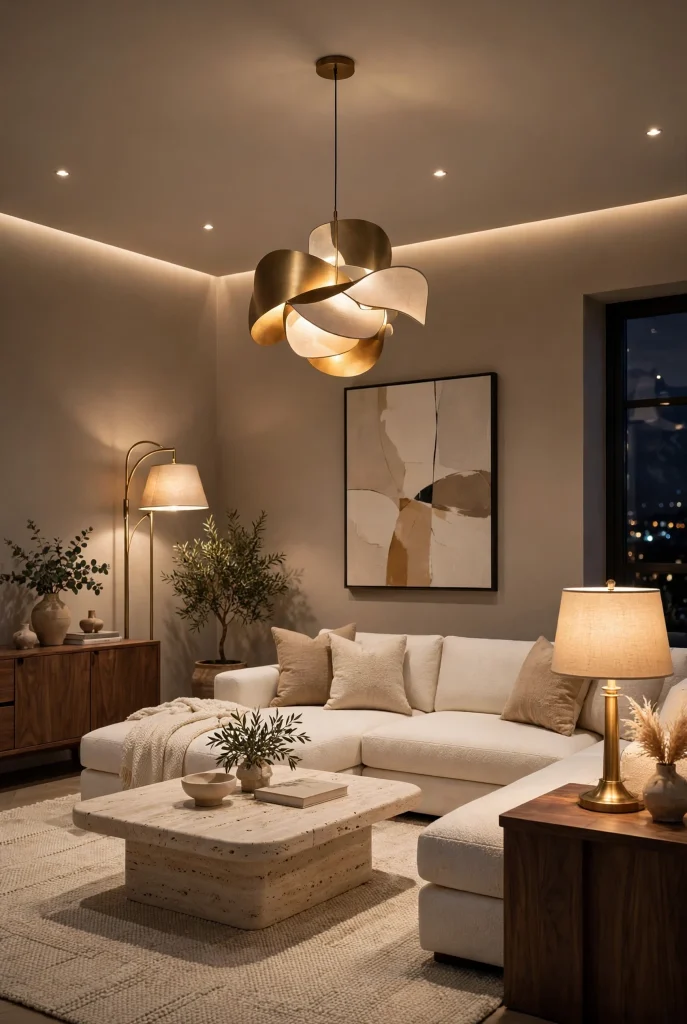
A layered lighting scheme makes a contemporary living room more flexible and welcoming. Recessed lights can provide general illumination, while a pendant or chandelier introduces a decorative feature. Table lamps and floor lamps add softer lighting near seating areas, making the room comfortable for relaxing in the evening.
Think about how you use the space before deciding where each light should go. A reading corner needs focused lighting, while the coffee table area may benefit from softer ambient illumination. Choose fixtures with complementary finishes so they feel connected. Warm light also helps neutral fabrics and natural materials look especially inviting after sunset.
27. Keep the Contemporary Living Room Beautifully Clutter-Free
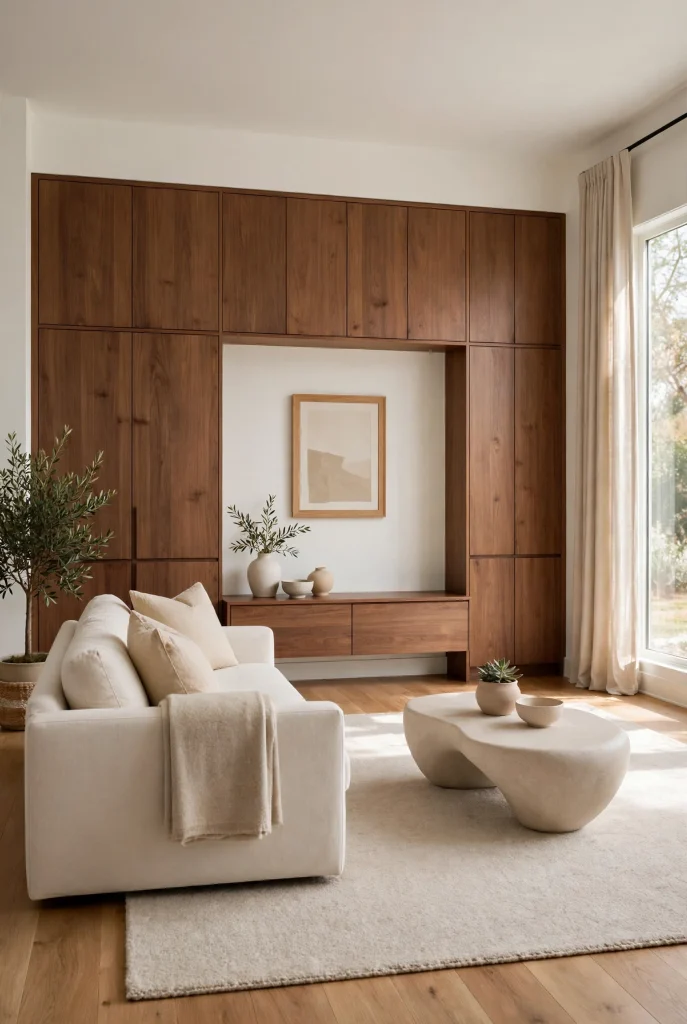
A clutter-free living room allows beautiful furniture, materials, and architectural details to stand out. Contemporary interiors often benefit from practical storage that keeps everyday objects out of sight. Consider a media console with closed cabinets, an attractive storage ottoman, or built-in cupboards that blend with the walls.
This does not mean removing everything that makes the room personal. Keep a few meaningful decorative pieces, favorite books, and comfortable textiles on display. The goal is to give each item a place rather than filling every available surface. A little organization can make the living room feel calmer and easier to maintain.
Conclusion
Creating a beautiful contemporary living room is really about finding the right balance between modern design and everyday comfort. You can start with a warm neutral color palette, introduce sculptural furniture, or bring more character into the room with natural wood, textured rugs, and statement lighting.
Some of these ideas work beautifully together, while others can stand alone as simple updates. There is no need to change everything at once. Pay attention to the furniture you already own, the amount of natural light available, and the way your family uses the space.
The most inviting contemporary living rooms feel thoughtfully arranged rather than overly decorated. Choose the details you genuinely love, keep the layout practical, and create a space that feels comfortable to come home to.
Frequently Asked Questions
1. What makes a living room contemporary?
A contemporary living room features current design influences, clean lines, comfortable furniture, and a thoughtful combination of materials. Neutral colors, natural wood, sculptural furniture, and understated accessories are common elements. The style can change over time, so it does not follow one fixed decorating formula. The overall goal is to create a fresh, functional, and visually balanced interior.
2. What colors are best for a contemporary living room?
Warm white, cream, beige, taupe, greige, and soft gray are popular choices for contemporary living rooms. These shades create a versatile foundation for different furniture styles. You can introduce additional color through sage green, muted blue, caramel, or charcoal accents. Combining different textures also helps a neutral color scheme feel more interesting.
3. How can I make my living room look contemporary on a budget?
Start by rearranging your existing furniture and removing unnecessary clutter. Update the cushions, curtains, or rug to create a more coordinated color palette. A new table lamp, framed artwork, or a carefully selected indoor plant can also make a difference. Focus on a few noticeable changes instead of replacing every piece of furniture.
4. What furniture works best in a contemporary living room?
Contemporary living rooms often feature comfortable sofas with clean lines, modular seating, sculptural accent chairs, simple coffee tables, and streamlined storage furniture. Materials such as natural wood, textured fabric, metal, and stone work particularly well. Choose furniture according to your available space and daily needs rather than following trends that may not suit your home.
5. How do I make a contemporary living room feel cozy?
Use soft textiles, warm lighting, natural materials, and comfortable seating. Layer cushions and throws, introduce a textured rug, and add wooden furniture to soften the room’s appearance. Indoor plants and warm neutral colors can also make the space feel more welcoming. Avoid relying entirely on hard surfaces and bright lighting if you want a relaxed atmosphere.