20 Christmas Decorations for a Festive Home
Christmas decorating is one of those simple seasonal rituals that can make an ordinary home feel wonderfully inviting. A few glowing lights, cozy textures, evergreen branches, and thoughtfully placed ornaments can change the mood of an entire room without requiring a complete makeover. If you are looking for Christmas decorations for a festive home, this collection is filled with ideas that work in living rooms, dining areas, entryways, bedrooms, kitchens, and even small corners that are easy to overlook.
The best part is that holiday decorating does not have to mean filling every surface with decorations. A more balanced approach can feel just as festive while keeping your home comfortable and functional. Below, you will find classic Christmas decorating ideas alongside softer, modern options, natural accents, DIY-friendly touches, and easy ways to create a warm holiday atmosphere throughout your home.
1. Create a Classic Christmas Tree Focal Point
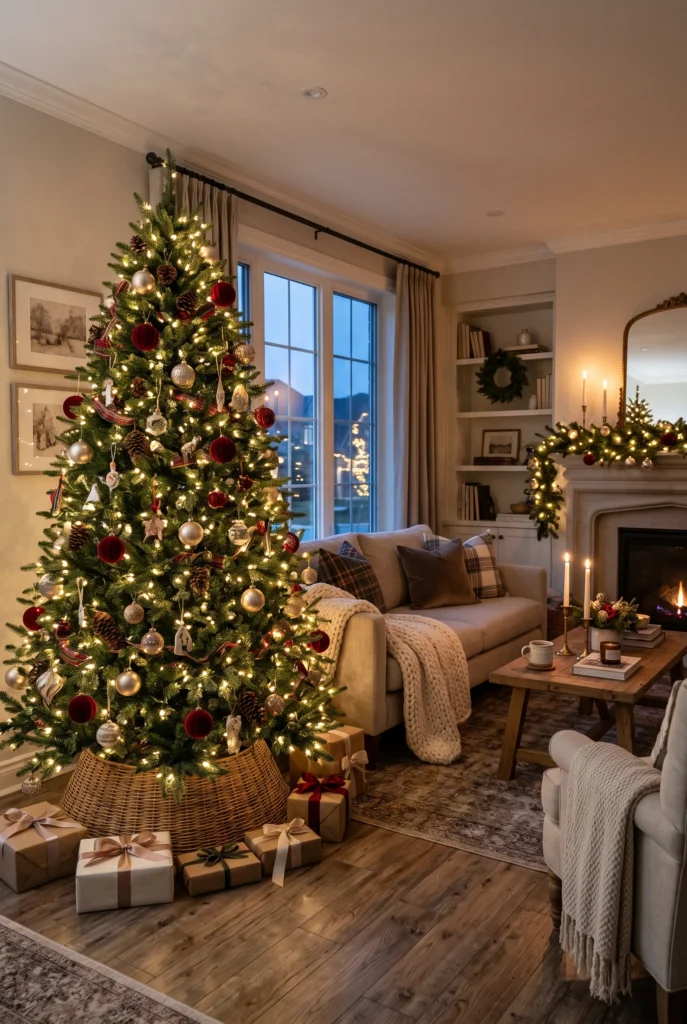
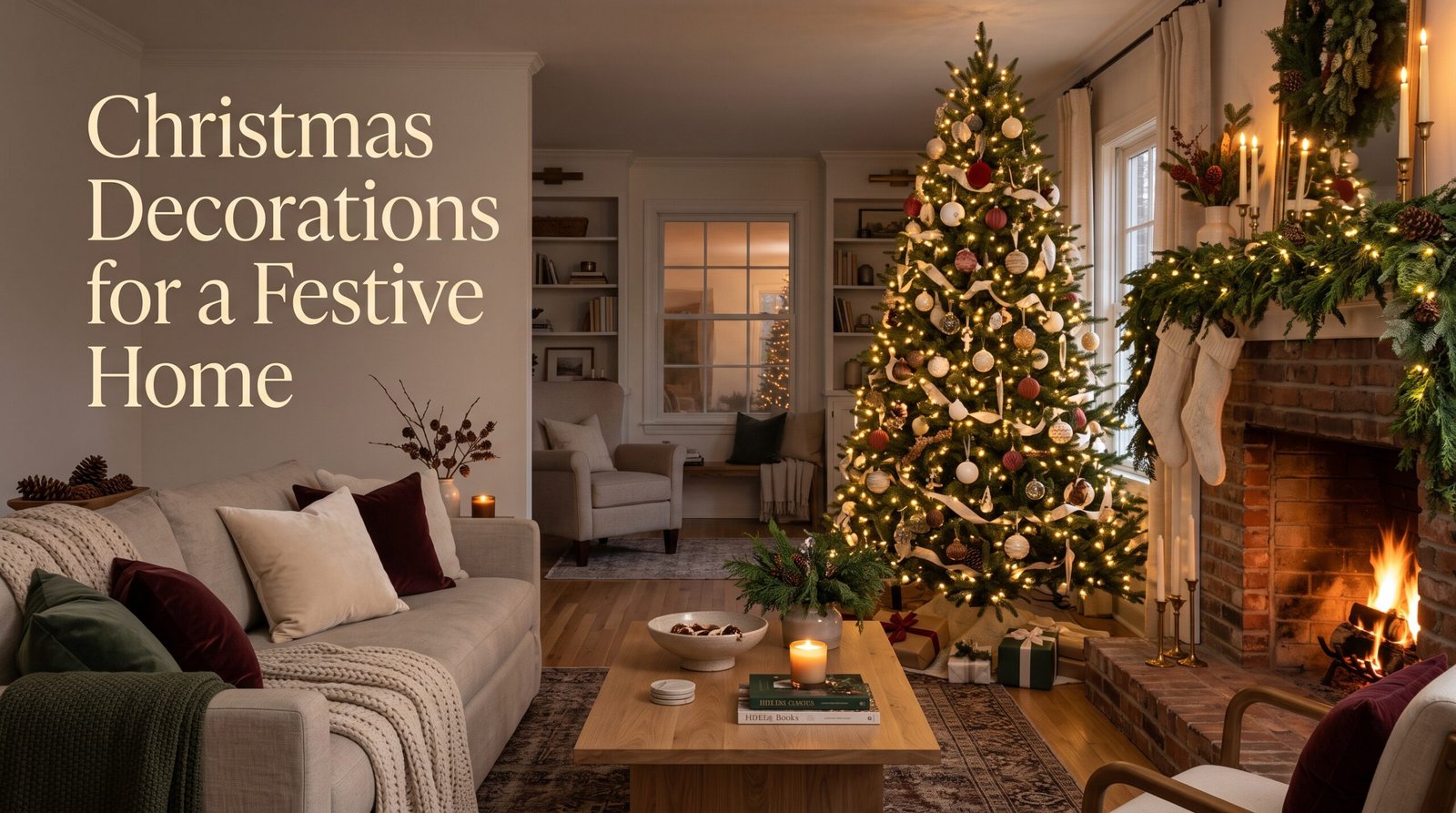
A beautifully decorated Christmas tree can instantly become the visual center of a festive home. Start with warm white lights, then layer ornaments in a few coordinated colors rather than using every decoration you own. Traditional red, green, gold, and cream create a timeless combination, while velvet ribbon and natural pinecones add texture. Place the tree where it can be enjoyed from several angles, such as a living room corner or near a large window. A simple woven or fabric tree skirt can finish the arrangement while hiding the stand and adding softness around the base.
For a polished look, repeat a few of the tree colors elsewhere in the room. A red cushion on the sofa, a green wreath on a nearby wall, or brass candleholders on the coffee table can make the tree feel connected to the rest of the space. Keep the surrounding area relatively uncluttered so the tree has room to shine. The goal is a cozy focal point rather than a crowded collection of decorations.
2. Dress the Fireplace Mantel With Greenery
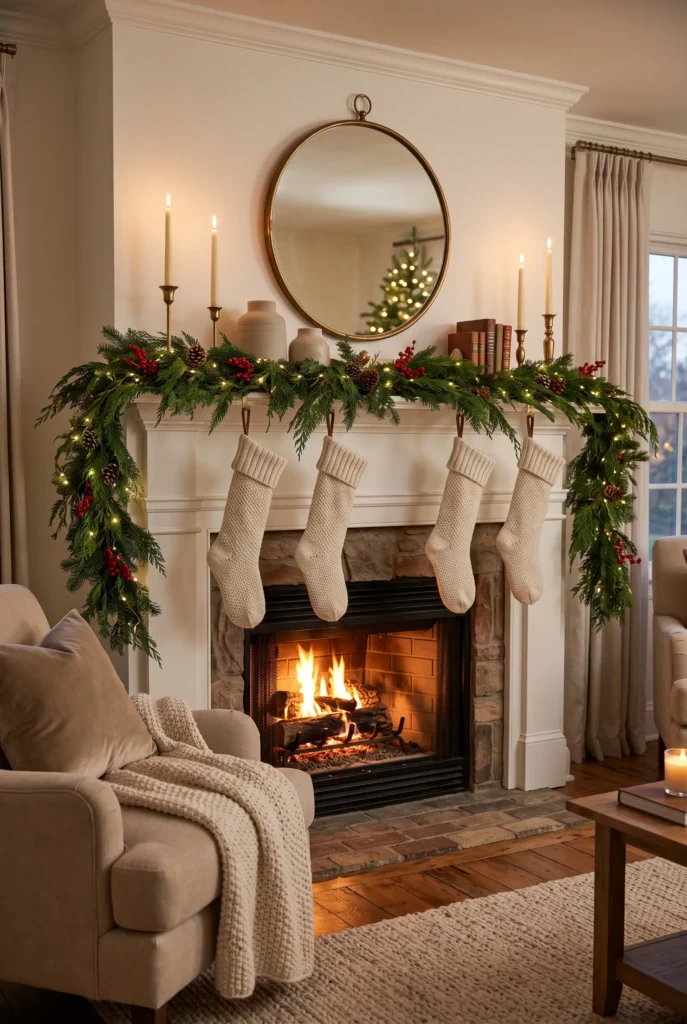
The fireplace mantel is naturally suited to Christmas decorating because it provides a long horizontal surface for layering greenery, candles, stockings, and small seasonal objects. Begin with an evergreen garland and allow a little of it to hang naturally over the edges. Add warm lights for a gentle glow, then place a few brass candleholders, pinecones, or berry branches throughout the arrangement. Matching stockings can provide a traditional finish without making the mantel feel overly formal.
If your fireplace already has strong architectural details, keep the decorations simple enough to complement them. A neutral garland with cream stockings can look beautifully understated, while red berries or velvet ribbon introduce a classic holiday note. For homes without a fireplace, recreate the same idea on a console table, floating shelf, or media cabinet. The same layered arrangement can create a festive focal point almost anywhere.
3. Welcome Guests With a Christmas Entryway
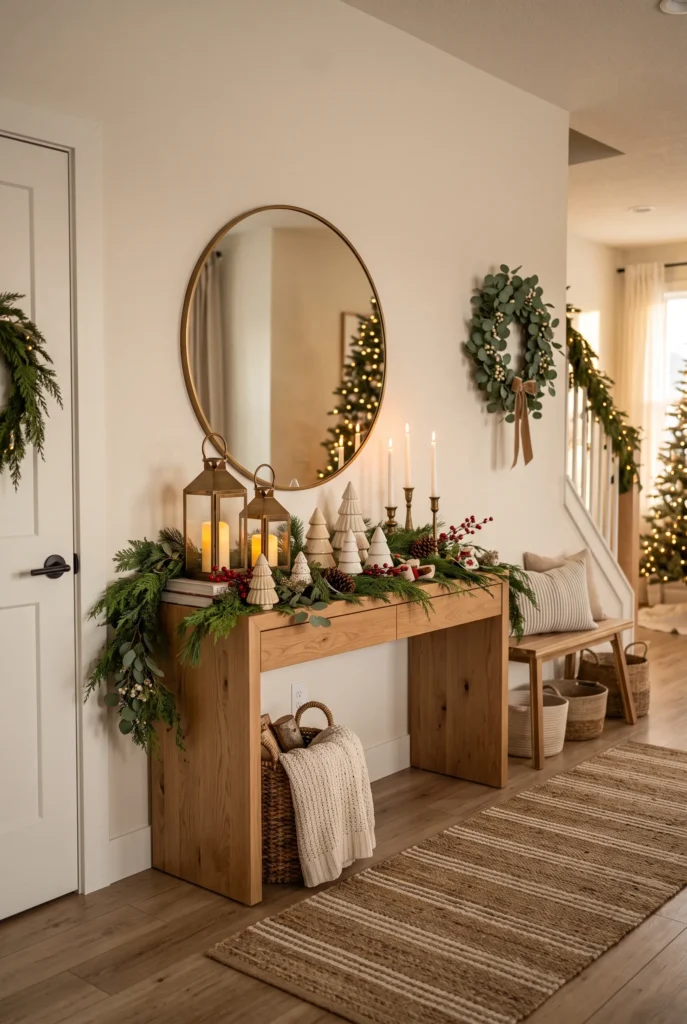
The entryway is the first part of your home guests see, so it deserves a little holiday attention. A small evergreen arrangement on a console table can create an immediate Christmas feeling without taking up much space. Add a bowl for keys, a lantern or candle, and one or two seasonal objects to keep the surface useful. If there is a mirror above the console, a simple garland around its frame can make the area feel even more festive.
For smaller entryways, focus on vertical decorating. Hang a wreath from the wall, door, or mirror, then add a narrow basket filled with blankets or seasonal greenery underneath. A runner with subtle winter colors can complete the look. Avoid filling the walkway with large decorations because an entryway still needs to function comfortably. A few carefully selected pieces usually create more impact than a crowded display.
4. Add Warm Christmas Lighting
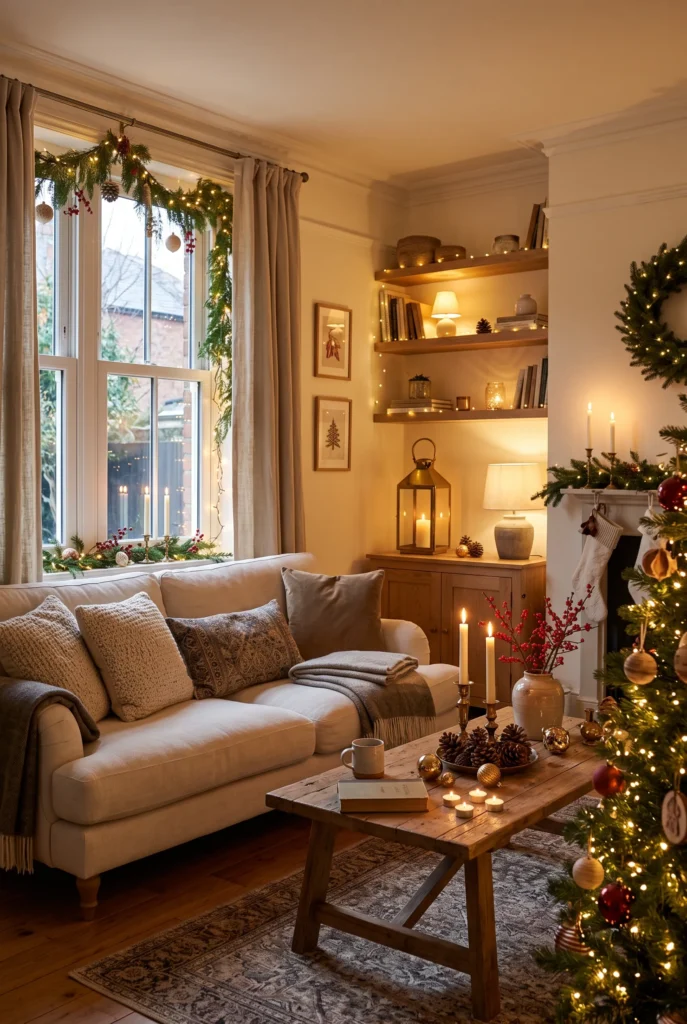
Lighting can completely change the atmosphere of Christmas decorations, especially once the sun goes down. Warm white string lights can be wrapped around a staircase railing, placed along a mantel, or tucked into a garland. Table lamps and floor lamps should provide a soft background glow, while lanterns and candles can add smaller points of light. This layered approach feels warmer than relying on a single bright ceiling fixture.
Try keeping the lighting consistent throughout connected rooms. If the living room has warm white lights, repeat that tone in the dining area or entryway. Battery-operated candles can also be useful in areas where cords would be inconvenient. Place lights where they can be seen from seating areas and doorways, creating little moments of glow throughout the home. The effect is festive without requiring excessive decoration.
5. Decorate the Dining Table for Christmas
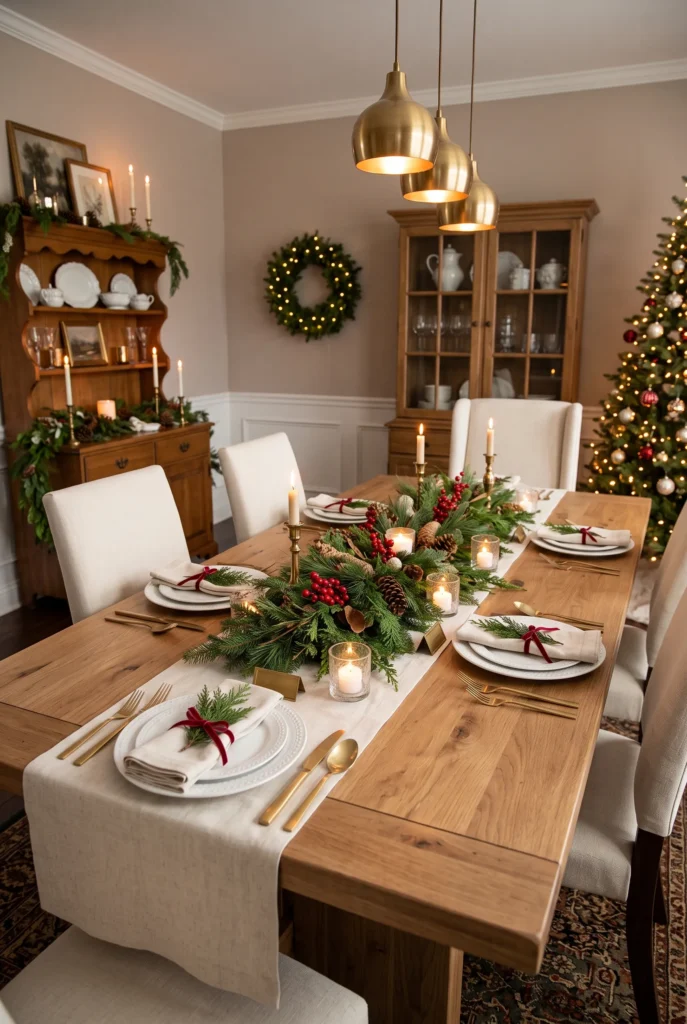
A Christmas dining table does not need an elaborate centerpiece to feel special. A simple evergreen runner can provide a beautiful base, followed by small candleholders, pinecones, berries, and a few seasonal ornaments. Keep decorations low enough that guests can comfortably see one another across the table. Neutral plates and linen napkins allow the greenery to become the star while still giving the table a polished appearance.
For a traditional setting, add red napkins or ribbon details. For a softer look, combine greenery with cream, natural wood, and brass. Small place cards can be added if you are hosting a formal gathering, but they are optional. After arranging the table, sit in one of the dining chairs and check the view from both sides. A centerpiece should look attractive while leaving enough room for serving dishes and conversation.
6. Bring Christmas Into the Kitchen
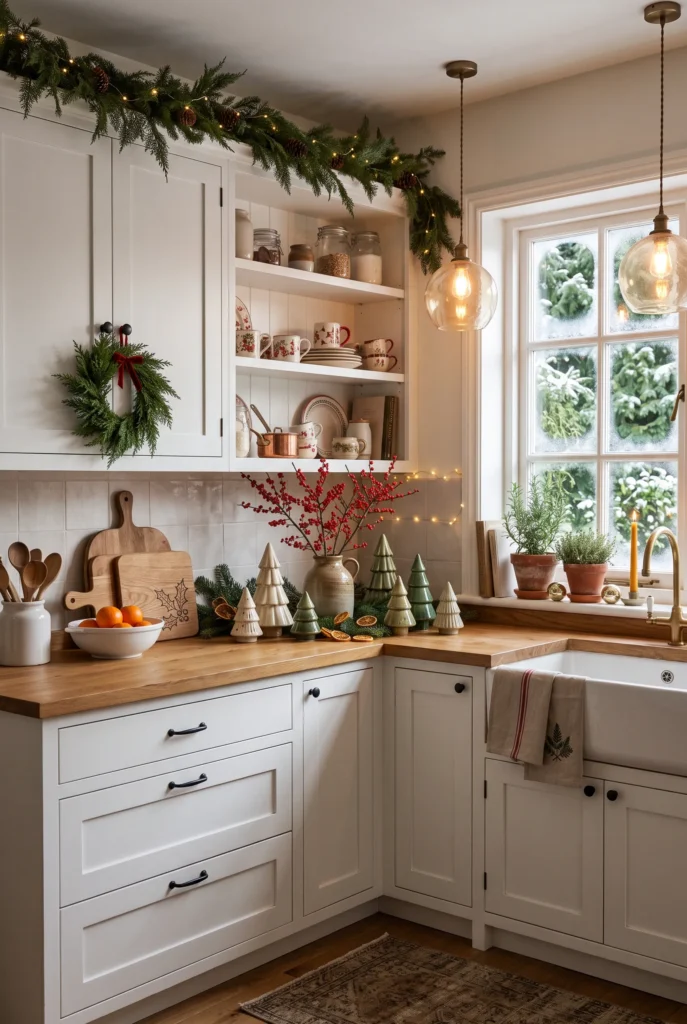
The kitchen is often the busiest room during the holidays, so adding a few decorations here can make everyday cooking feel more seasonal. A small wreath on a cabinet door, evergreen branches on an open shelf, or a ceramic tree beside the sink can be enough. If you have open shelving, use a few Christmas mugs, wooden boards, and simple greenery to create a display that remains practical.
Keep countertops relatively clear because kitchen surfaces need to work hard during the holiday season. Instead of scattering decorations everywhere, choose a few locations that naturally attract attention. A bowl filled with pinecones or ornaments can work on an island when there is space, while a seasonal runner can add color to a breakfast nook. Functional spaces often look best when holiday decorations are simple and intentional.
7. Use Christmas Wreaths Throughout the Home
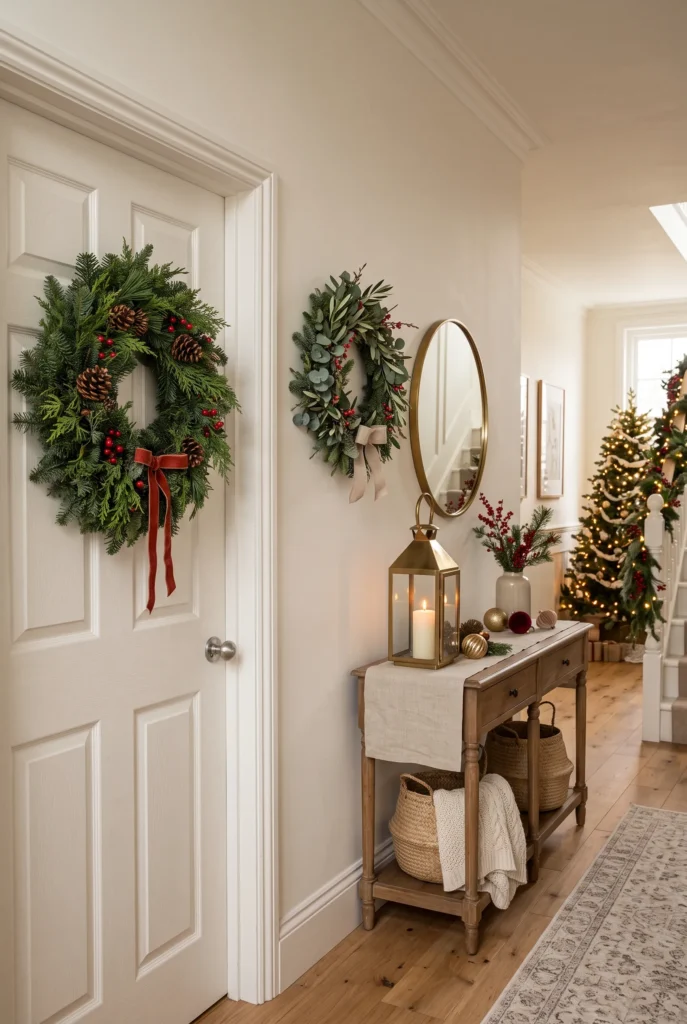
Wreaths are one of the easiest Christmas decorations to move beyond the front door. Hang one above a console, on an interior door, over a bed, or even in the kitchen. A collection of different wreath styles can add visual interest while keeping the overall theme consistent. Evergreen wreaths feel traditional, while eucalyptus, olive branches, dried grasses, or simple grapevine bases can create a more relaxed appearance.
When using wreaths indoors, think about scale. A very large wreath can overwhelm a narrow wall, while a tiny wreath may disappear above a large piece of furniture. You can also group smaller wreaths in a vertical arrangement along a hallway. Keep the color palette connected to the rest of your decorations so the wreaths feel like part of the home’s Christmas scheme rather than unrelated seasonal objects.
8. Layer Cozy Christmas Textiles
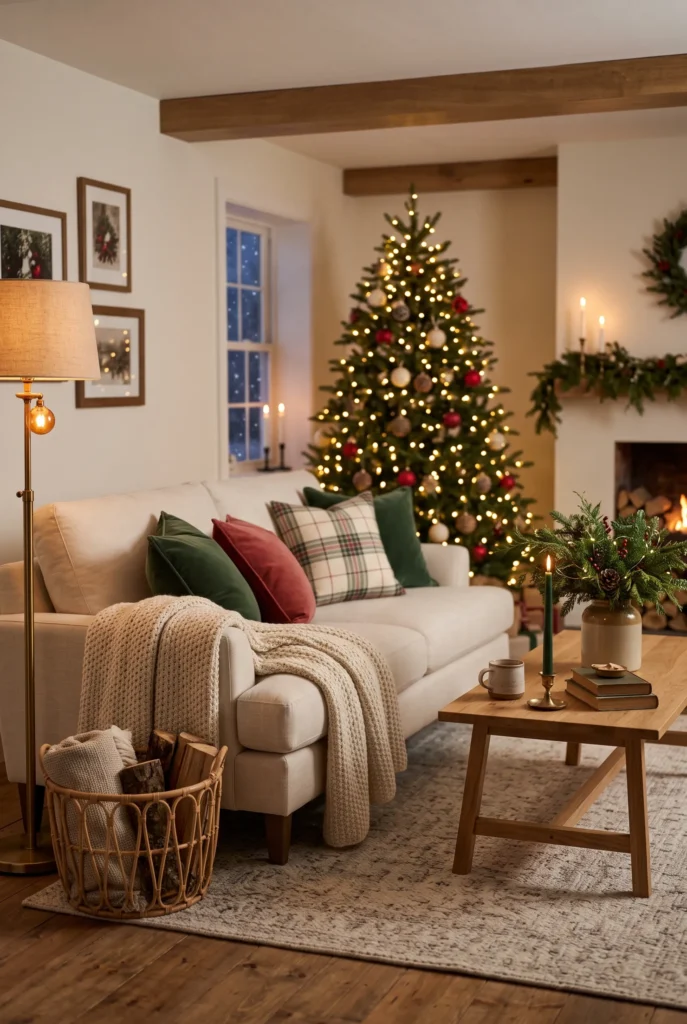
Textiles are an easy way to make a room feel warmer for the holidays without adding lots of decorative objects. Swap a few everyday cushions for velvet, boucle, wool, or plaid covers in seasonal colors. A chunky knit throw folded over the arm of a sofa can add both texture and practical comfort. You can also place a soft runner or seasonal blanket in a basket beside a chair.
The key is to avoid turning the room into a collection of unrelated patterns. Choose two or three colors and repeat them through pillows, throws, rugs, and small accents. Cream, forest green, muted red, and warm brown work beautifully together, but you can create a completely different mood with white, silver, and soft beige. Small textile changes can make a familiar room feel refreshed for the season.
9. Create a Natural Christmas Decorating Theme
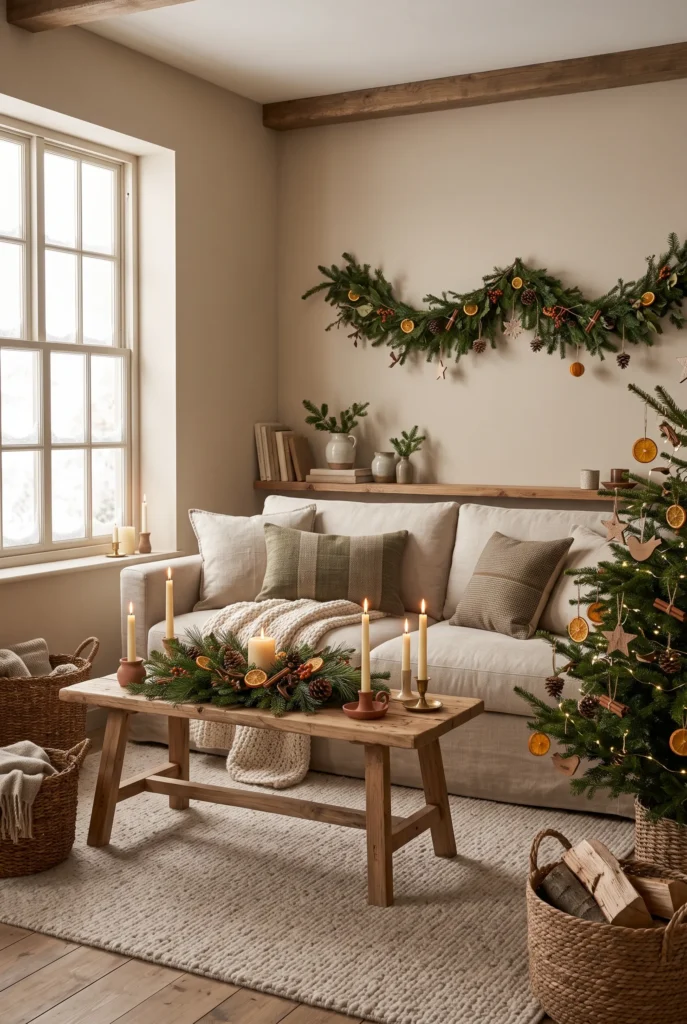
Natural Christmas decorations bring a relaxed, earthy feeling into the home. Evergreen branches, pinecones, dried orange slices, cinnamon sticks, wooden ornaments, and woven baskets can all contribute to this look. The colors tend to stay close to nature, with greens, browns, creams, and warm wood tones creating a calm seasonal palette.
This style works particularly well when your everyday decor already includes natural materials. Instead of replacing everything for Christmas, simply add seasonal elements that complement the furniture you already have. A bowl of pinecones on a coffee table or a few evergreen branches in a ceramic vase may be all you need. Natural decorations also work beautifully alongside traditional red accents if you want a little more color without losing the relaxed character.
10. Style a Festive Christmas Coffee Table
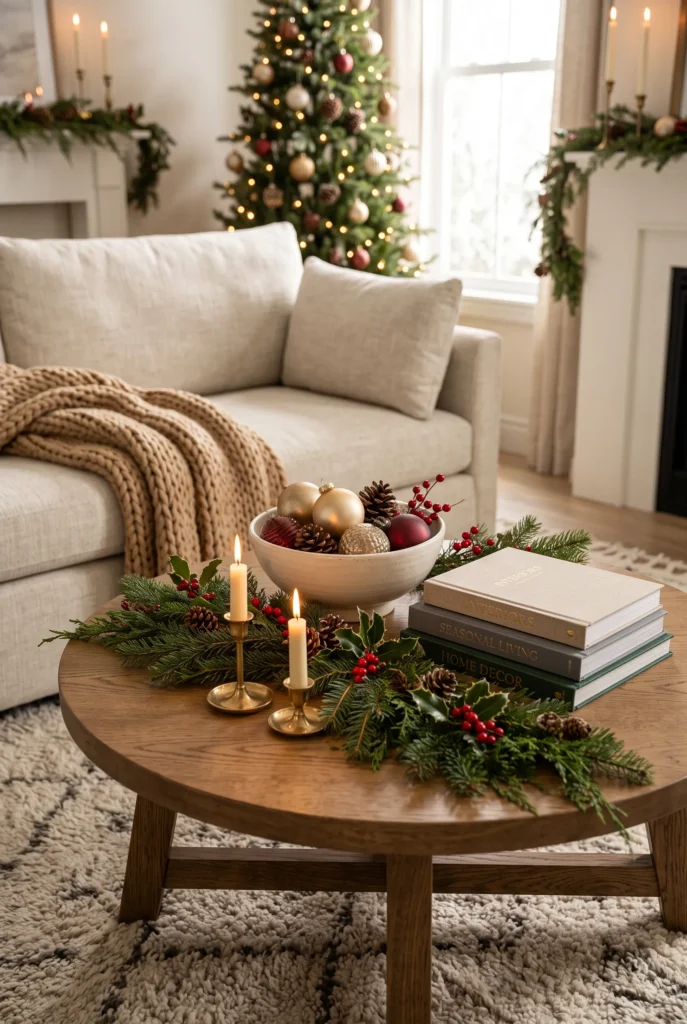
The coffee table is a small area, but it can make a noticeable difference in a living room. Start with a tray or shallow bowl to keep smaller pieces contained. Add a low evergreen arrangement, a candle, a few pinecones, or several ornaments in a bowl. Books with neutral covers can provide height without competing with the Christmas accents.
Remember that the table still needs to be usable. Avoid placing decorations so high or densely packed that they interfere with conversation or everyday use. A simple arrangement with different heights usually looks more considered. If your coffee table is small, choose one centerpiece rather than several separate objects. This keeps the room visually calm while still giving it a clear holiday touch.
11. Decorate the Staircase With Greenery
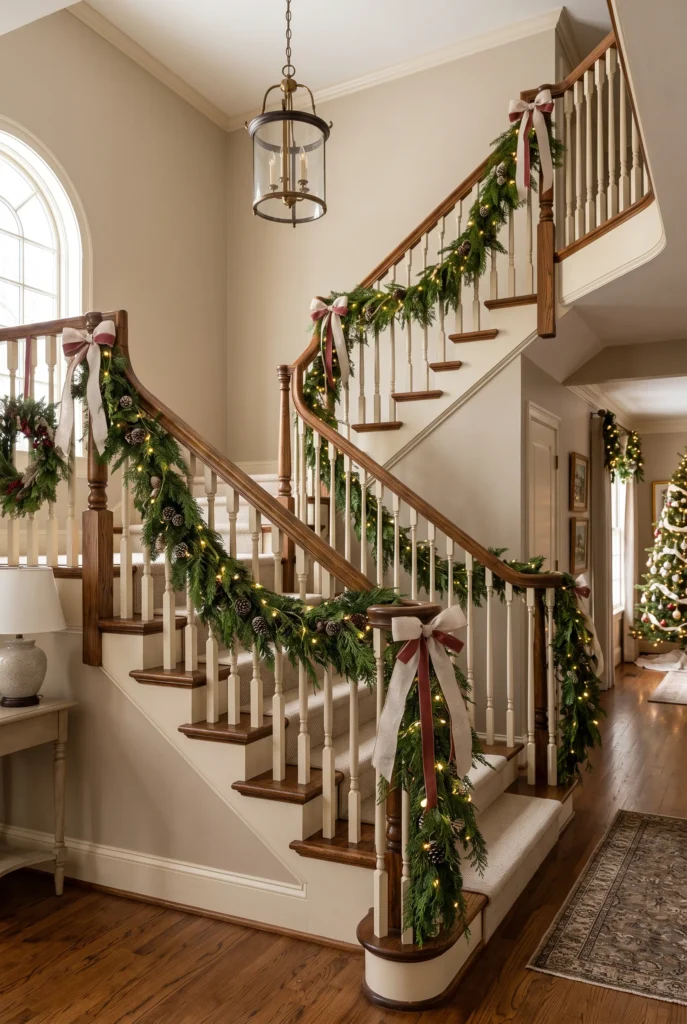
A staircase offers a natural vertical display area for Christmas greenery. A garland can be draped along the handrail, secured neatly, and decorated with warm lights or a few ribbons. If you prefer a simpler style, leave the greenery mostly undecorated and let its natural texture provide the seasonal effect. A few pinecones or small ornaments can add just enough detail.
Safety should remain the priority when decorating stairs. Keep pathways and handrails comfortable to use, and make sure decorative elements are securely positioned. If your staircase is narrow, consider placing greenery along the wall instead of the handrail. The finished look can be especially beautiful from the entryway, where the decorated staircase becomes a welcoming sight as soon as guests walk through the door.
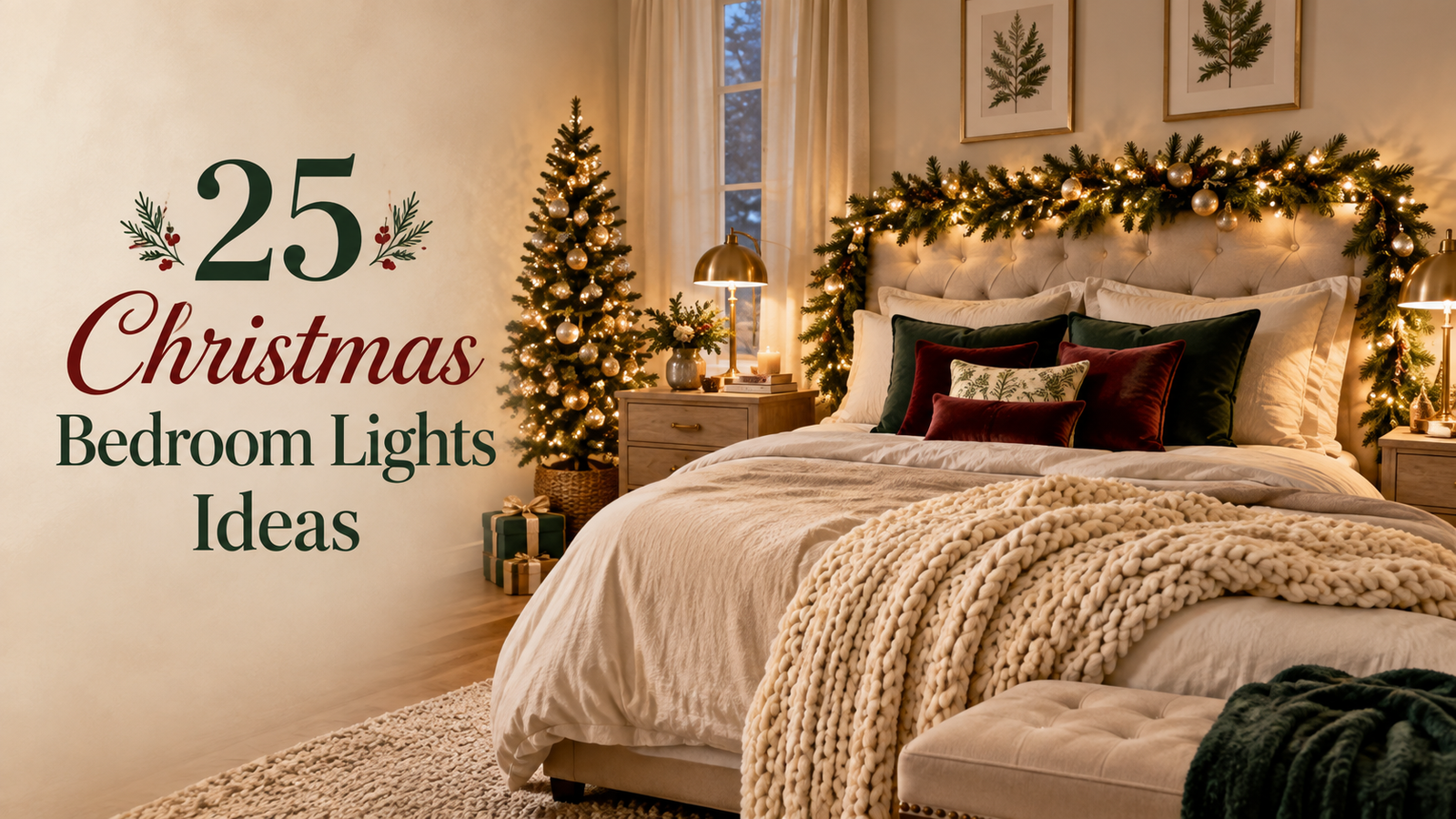
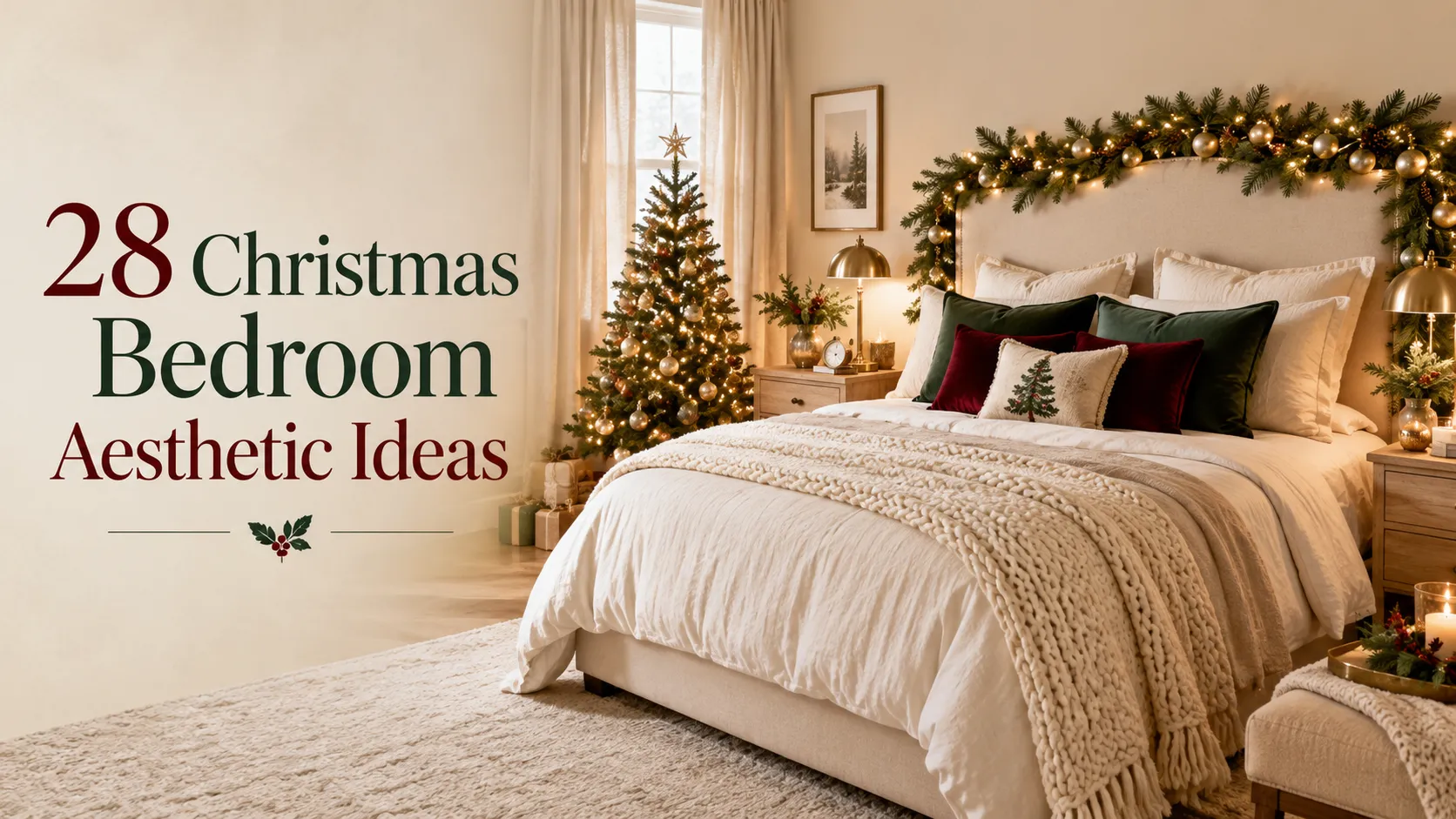
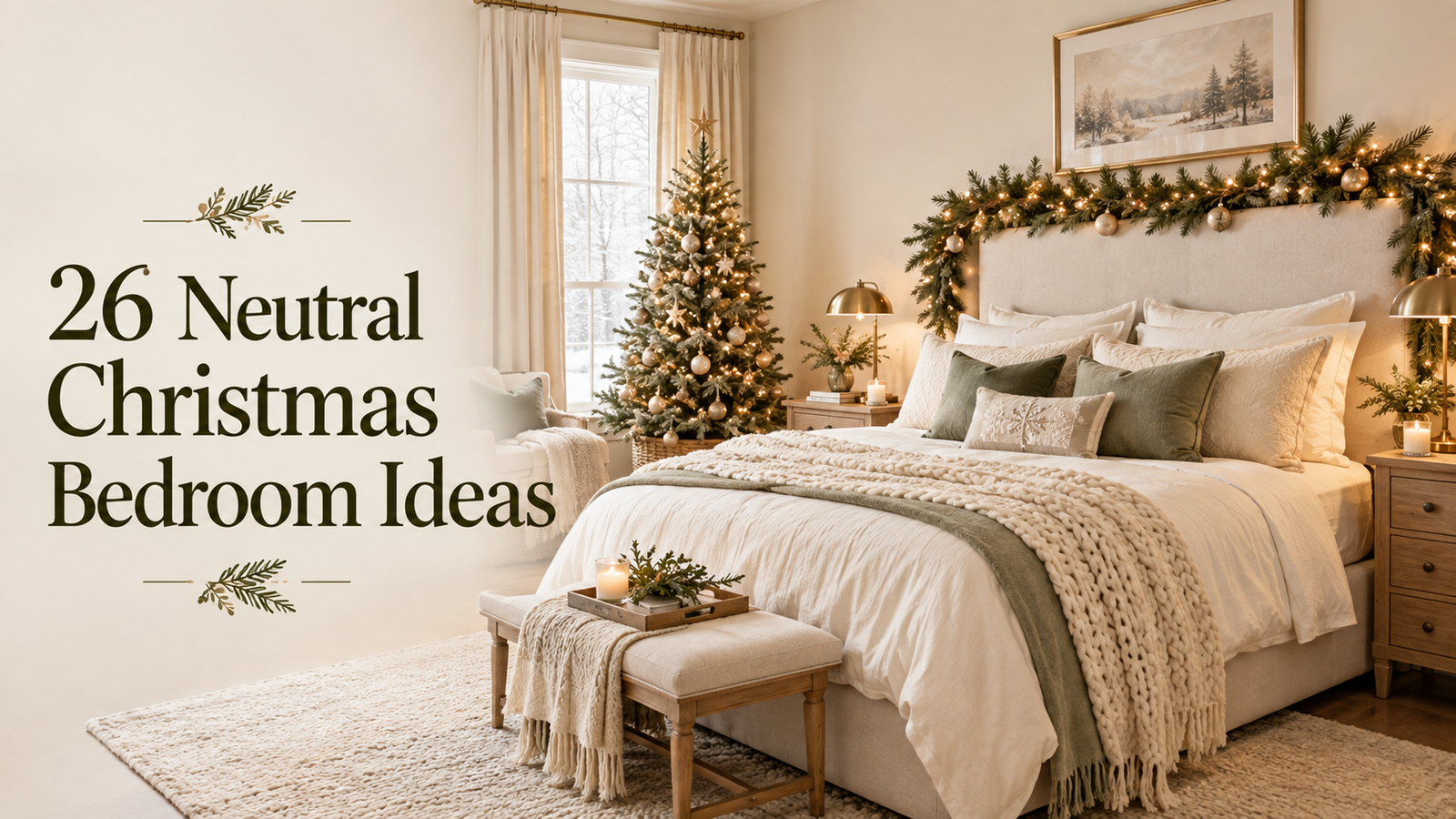
12. Add Christmas Decorations to the Bedroom
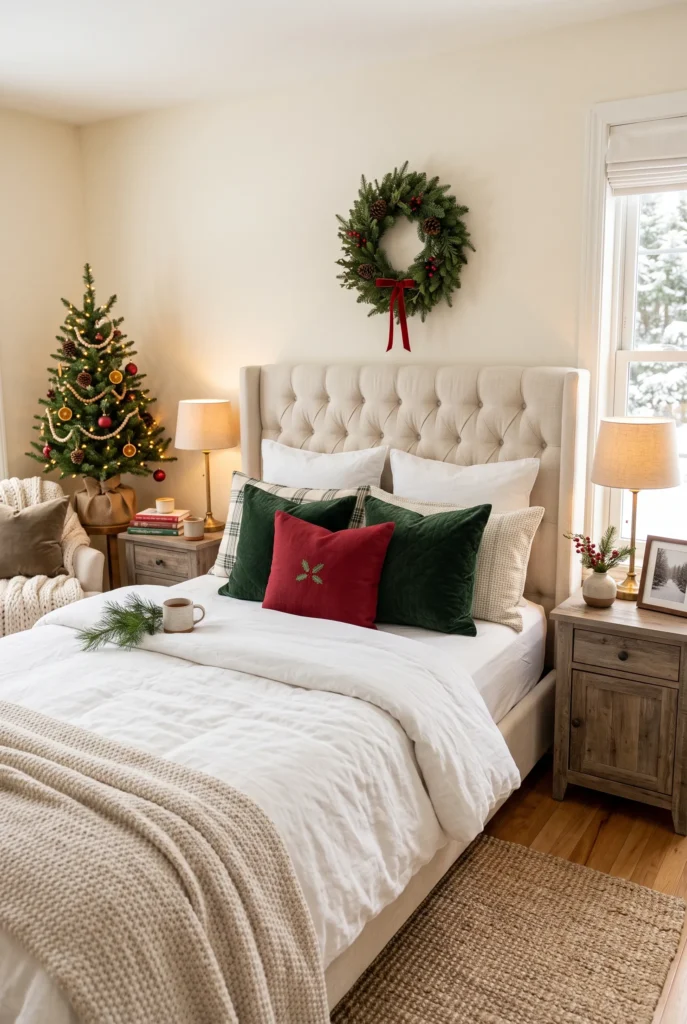
Bedrooms can have a quieter Christmas atmosphere than living rooms. A small wreath above the headboard, a few seasonal cushions, or a tiny tabletop tree can introduce the holiday mood without making the room feel busy. Soft fabrics work especially well here because they naturally contribute to the cozy character associated with winter.
For an understated look, keep the bedding neutral and introduce just one or two seasonal colors. Forest green velvet, warm cream, muted burgundy, or soft plaid can add enough holiday character without overwhelming the room. A small strand of warm lights around a mirror or window can also create a gentle evening glow. The bedroom should remain restful, so choose decorations that feel calm rather than visually demanding.
13. Make a Simple Christmas Candle Display
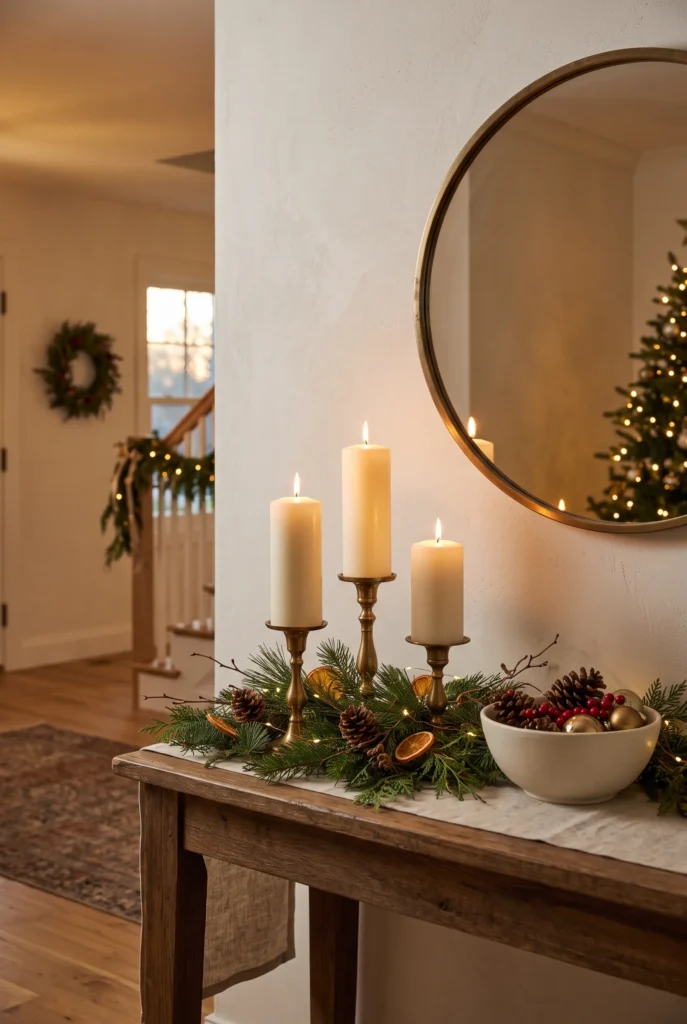
Candles can bring warmth and atmosphere to Christmas decorating with very little effort. Arrange several candles at different heights on a tray, console, dining table, or mantel. Pair them with evergreen sprigs, pinecones, or small ornaments to create a seasonal centerpiece. Neutral candles can look particularly elegant when combined with brass, wood, and greenery.
For everyday convenience, flameless candles are another option, especially in homes with pets or children. Keep any open flames on stable, heat-resistant surfaces and away from greenery, fabric, paper, and other flammable decorations. The visual idea works with or without real flames. What matters most is the combination of soft light, natural textures, and a restrained seasonal palette.
14. Create a Christmas Gallery Wall Moment
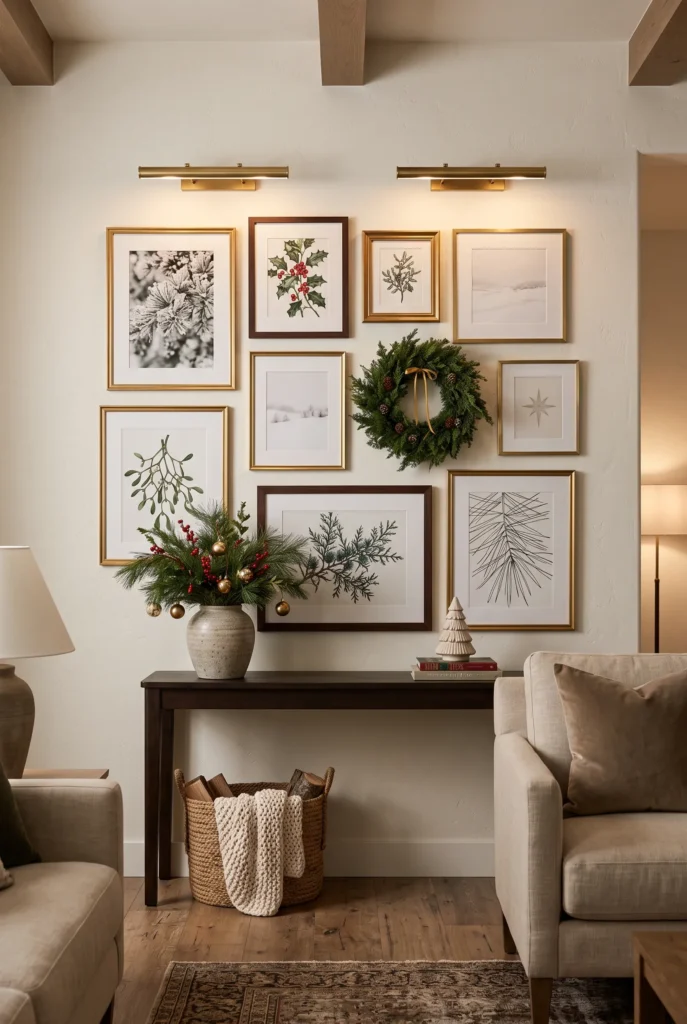
If your home already has a gallery wall, you do not need to remove it for Christmas. Instead, add one or two seasonal pieces among the existing artwork. A small wreath, winter botanical print, or simple framed holiday illustration can provide a seasonal update while allowing your everyday decor to remain visible.
Another approach is to decorate the furniture beneath the gallery wall. Add a vase of evergreen branches, a few candles, or a small ceramic tree to the console. This creates a Christmas vignette without changing the artwork at all. The idea is especially useful for renters or anyone who prefers subtle seasonal decorating. Small additions can make an existing arrangement feel festive without requiring a complete redesign.
15. Style Open Shelves for the Holidays
Open shelves are perfect for small Christmas displays because they already provide a natural place to layer decorative objects. Replace a few everyday pieces with ceramic trees, seasonal mugs, evergreen sprigs, pinecones, or small ornaments. Keep enough of the original kitchenware visible so the shelves remain useful and believable.
For a more polished appearance, repeat materials instead of adding many different colors. White ceramics, natural wood, greenery, and a little brass can create a beautiful neutral Christmas palette. If you prefer traditional decorating, introduce small red accents through berries or ribbon. Work shelf by shelf rather than decorating everything at once. Step back regularly to check whether the display feels balanced.
16. Add a Festive Window Display
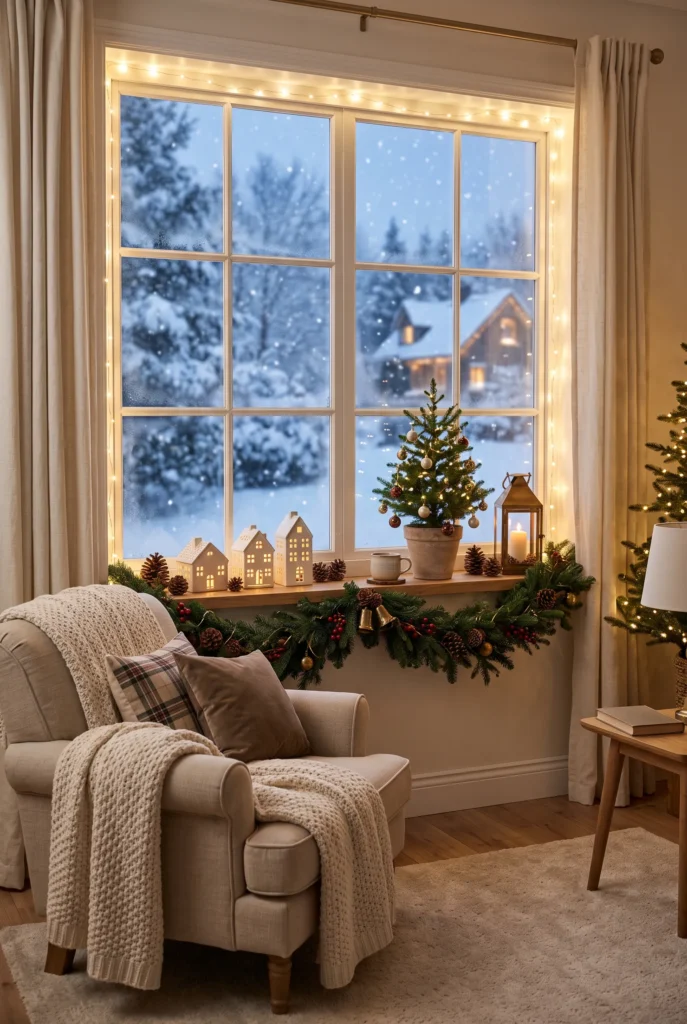
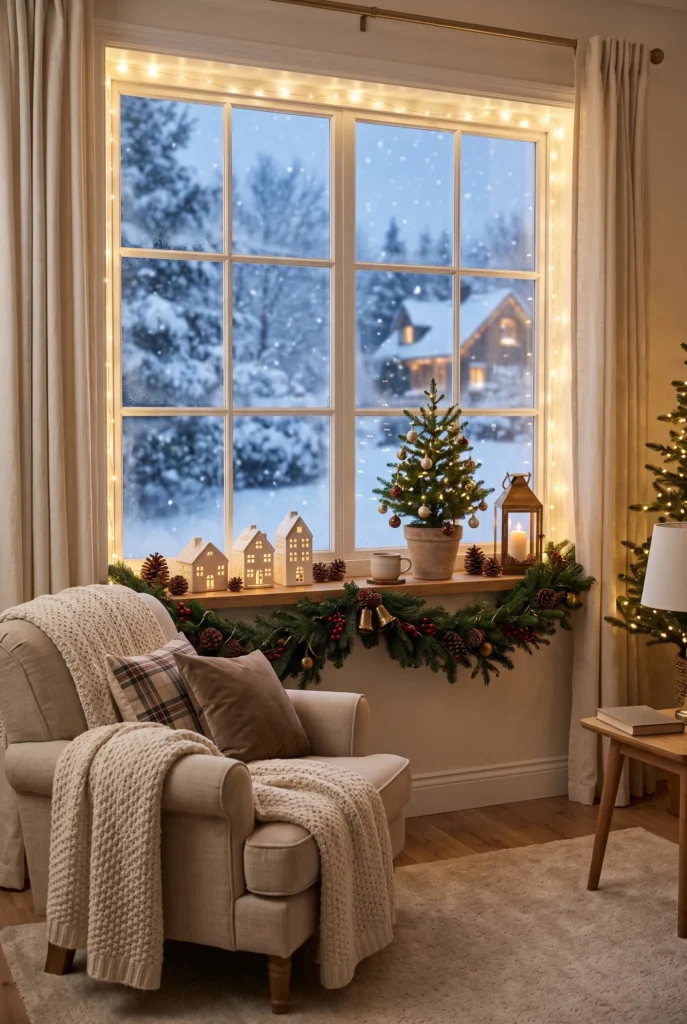
Windows can become beautiful Christmas focal points, especially after sunset when indoor lights are reflected in the glass. A simple garland along the sill, a few warm lights around the frame, or a small tabletop tree can create a welcoming glow. If you have a deep window ledge, add a few lanterns or ceramic houses for extra dimension.
Keep the arrangement balanced so it does not block natural light during the day. Lightweight decorations can work particularly well in smaller spaces because they provide seasonal character without taking up valuable floor area. For a simple look, choose one type of greenery and repeat it around the window. A small amount of decoration can look particularly charming when framed by curtains and warm evening light.
17. Make a Christmas Vignette on a Console Table
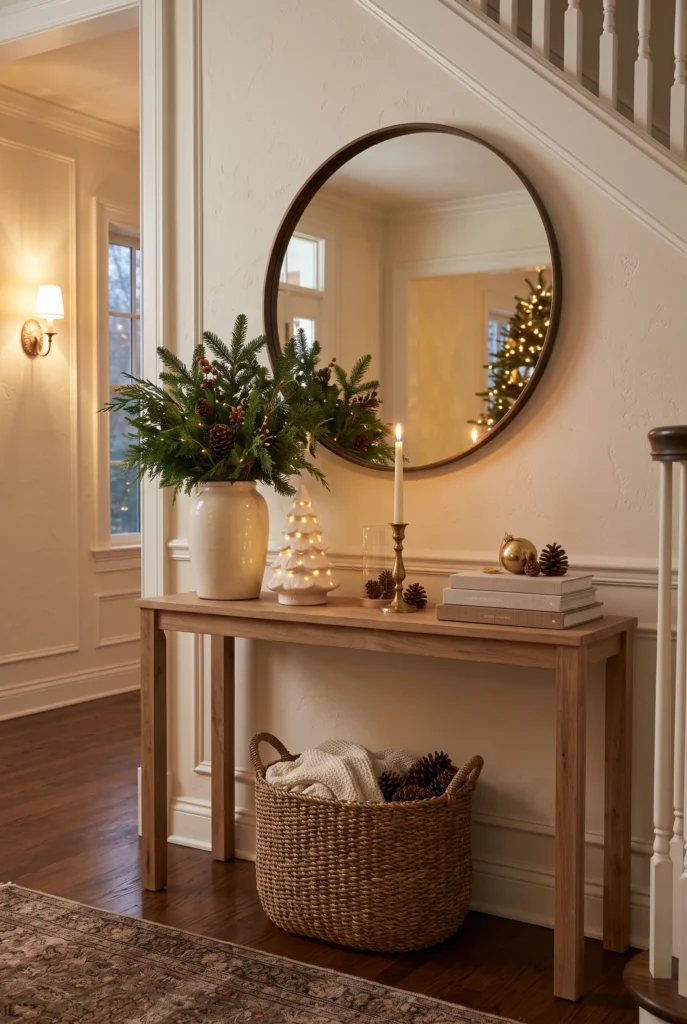
A console table is an easy place to create a small Christmas vignette without decorating an entire room. Begin with one taller item, such as a vase filled with evergreen branches, then add a medium-height candleholder and a few smaller seasonal pieces. This creates visual variation while keeping the arrangement organized.
The area underneath the console can also contribute to the overall look. A woven basket filled with blankets or a simple decorative box can add texture without creating clutter. If the console sits beneath a mirror, use the reflection to your advantage by placing lights or greenery where they can be subtly reflected. A restrained arrangement often feels more sophisticated than a surface covered with holiday objects.
18. Use Red and Green Accents for Traditional Charm
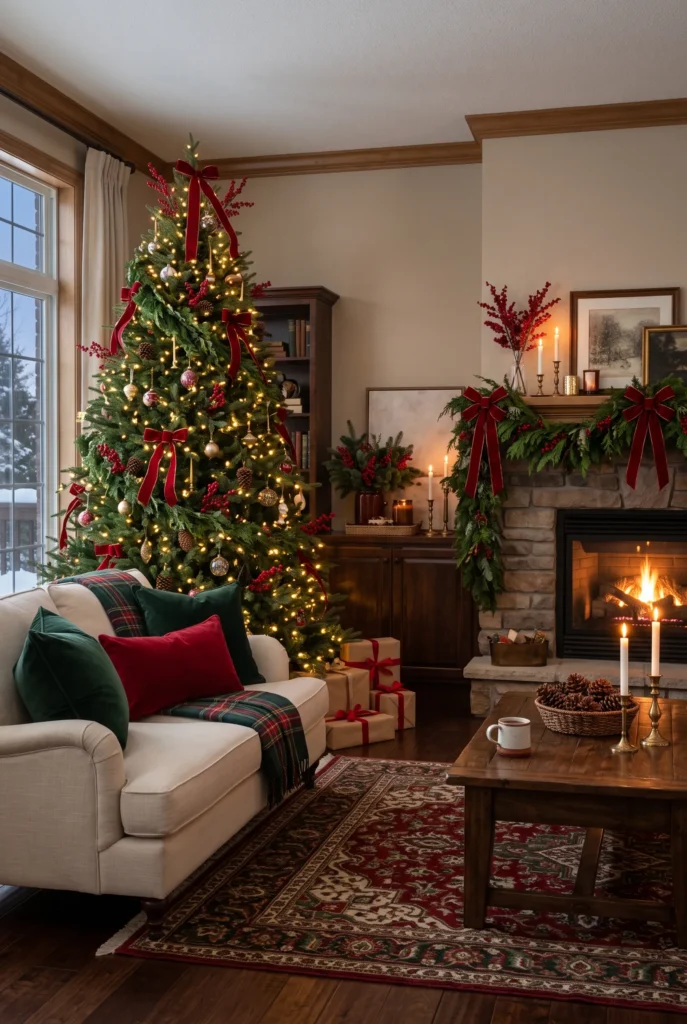
Red and green remain classic Christmas colors for a reason. They bring an unmistakable holiday character to a room and work beautifully with traditional furniture and natural greenery. You do not need to use large amounts of both colors. A few red velvet cushions, berry branches, ribbons, or ornaments can provide enough contrast against green garlands and neutral furniture.
If the room already has strong colors, use smaller accents rather than introducing large blocks of red. Repeating the same shade in several locations helps the room feel coordinated. For example, red ribbon on the tree can be echoed in a cushion and a small vase arrangement. This creates continuity while keeping the Christmas palette intentional.
19. Try a Neutral Christmas Palette
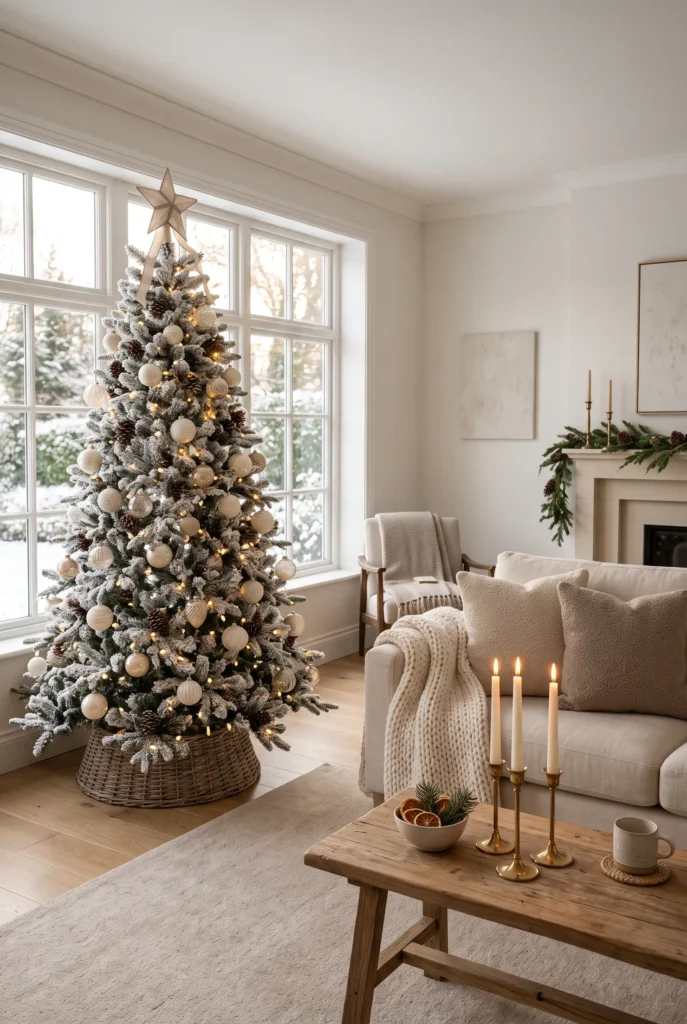
A neutral Christmas palette can feel warm, sophisticated, and surprisingly festive. Cream, beige, taupe, soft white, natural wood, and muted green provide a gentle backdrop for seasonal decorations. Choose ornaments with varied finishes, such as matte ceramic, brushed metal, woven fibers, and glass, so the room has plenty of texture even without bright colors.
This approach works especially well in homes with neutral furniture and natural materials. Add warmth through candlelight, knitted textiles, and evergreen branches rather than relying on bold color. A few brass accents can also catch the light and prevent the palette from feeling flat. The result is a calm Christmas look that can blend naturally with everyday home decor.
20. Finish With Small Christmas Details
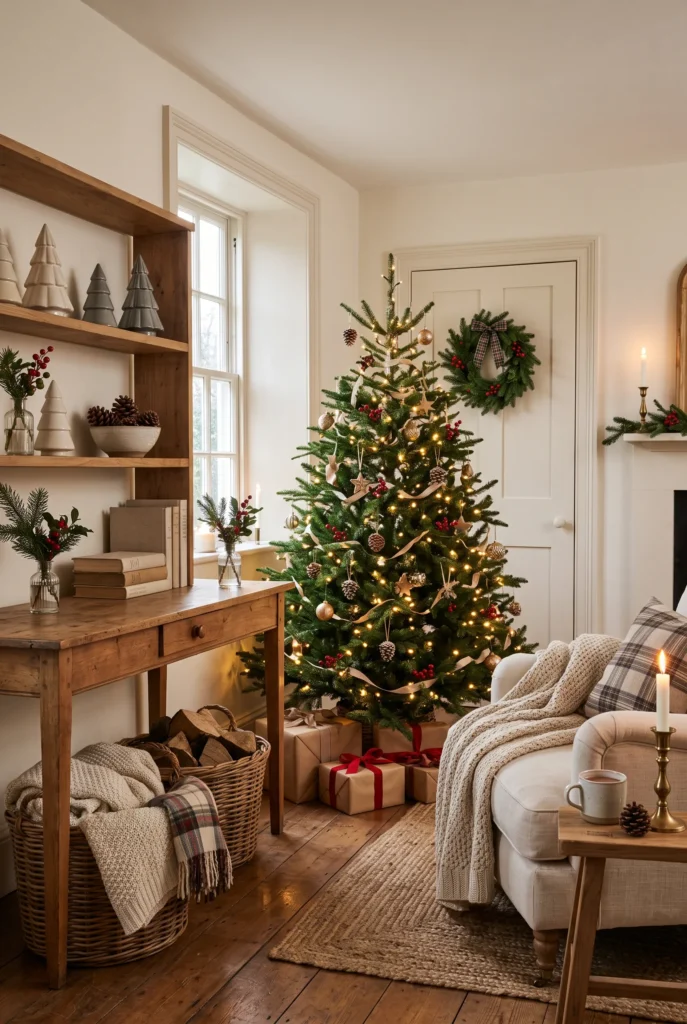
Sometimes the smallest decorations create the most charming holiday atmosphere. A tiny ceramic tree on a bookshelf, a few pinecones in a bowl, a sprig of evergreen beside the bathroom mirror, or a small wreath on an interior door can make the whole house feel connected to the season. These details are particularly useful when you prefer understated decorating.
Walk through your home and look for overlooked spaces that could use a little seasonal character. A windowsill, bedside table, bookshelf, bathroom counter, or kitchen corner may only need one thoughtful accent. Keep the decorations consistent with your main color palette so everything feels related. The result is a home that reveals little Christmas moments as you move from room to room.
Conclusion
A festive Christmas home does not have to be filled from floor to ceiling with decorations. The most inviting spaces often combine a few strong focal points with smaller seasonal details that are discovered as you move around the house. A glowing tree, a simple mantel garland, cozy textiles, natural greenery, or a beautifully arranged dining table can make a meaningful difference.
Choose ideas that suit the way your home already feels rather than trying to copy an entire decorating style. Mix traditional touches with natural materials, keep practical areas functional, and give your favorite decorations enough space to be noticed. Christmas decorating is ultimately about creating a warm atmosphere that feels welcoming, comfortable, and joyful. Start with one room, build gradually, and enjoy the process.
Frequently Asked Questions
What are the easiest Christmas decorations to add to a home?
Some of the easiest options are evergreen branches, wreaths, warm white lights, candles, seasonal cushions, pinecones, and small Christmas trees. These pieces can be added to existing furniture without requiring a major decorating project. Start with the rooms your family uses most often, then add smaller seasonal details to entryways, shelves, bedrooms, and other spaces.
How can I decorate my home for Christmas without making it look cluttered?
Choose a limited color palette and repeat a few materials throughout the home. Instead of decorating every surface, select several focal points such as the Christmas tree, mantel, dining table, and entryway. Leave some open space around decorative arrangements. This gives each seasonal feature room to stand out while keeping the home comfortable and functional.
What colors work well for Christmas home decor?
Traditional red and green are timeless choices, while cream, gold, silver, forest green, burgundy, and natural wood can create different moods. A neutral palette of cream, beige, white, and greenery works well for a softer appearance. The best combination is usually one that complements your existing furniture and finishes rather than competing with them.
How can I decorate a small home for Christmas?
Focus on vertical and compact decorations. Hang wreaths on doors and walls, use a small tabletop tree, decorate windowsills, add greenery to shelves, and choose cushions or throws with seasonal colors. A narrow console or entryway table can also become a festive focal point. Keeping decorations proportional to the room helps prevent a small space from feeling crowded.
How early should I start decorating for Christmas?
There is no single correct date for decorating. Many people begin in late November or early December, while others enjoy putting up a few seasonal pieces earlier. If you want the decorations to feel fresh throughout the holiday season, start with durable items such as wreaths and ornaments, then add fresh greenery and other delicate details closer to Christmas.