
31 Living Room Decorating Ideas for a Cozy and Stylish Home
A living room should feel comfortable, welcoming, and reflective of the people who call it home. It’s where you unwind after a long day, enjoy conversations with family, entertain guests, and spend quiet weekends. The right decorating choices can make this space feel much more inviting without requiring a complete renovation or an expensive furniture makeover.
These 31 living room decorating ideas bring together beautiful colors, comfortable furniture, layered textures, thoughtful lighting, and practical styling details. You’ll find inspiration for modern, traditional, farmhouse, minimalist, and cozy interiors, along with simple decorating touches that work in both small and spacious rooms. Some ideas focus on larger changes, such as rearranging furniture or choosing a new color palette, while others involve easy updates like adding cushions, artwork, plants, and decorative accessories. The goal is to create a living room that looks stylish but still feels like a place where you can genuinely relax.
1. Create a Warm and Neutral Living Room

A warm neutral palette is a lovely starting point when decorating a living room. Cream, beige, ivory, taupe, and soft white create a relaxed atmosphere that feels timeless rather than overly trendy. These shades also make it easier to mix different furniture styles and decorative accessories without making the room feel visually busy. A comfortable neutral sofa can become the foundation, while wooden furniture and soft textiles bring warmth into the space.
The secret to keeping neutral decorating interesting is layering. Combine linen cushions, knitted throws, woven baskets, natural wood, and textured rugs instead of relying on one flat color. You can introduce darker accents through picture frames, lamps, or a coffee table. This approach creates depth while keeping the overall room calm, comfortable, and easy to update.
2. Add a Beautiful Statement Sofa

A statement sofa can completely influence the appearance of a living room. Instead of filling the space with several decorative pieces, choose one sofa with an interesting shape, beautiful upholstery, or an appealing color. A curved cream sofa, a deep caramel leather design, or a generously sized linen sectional can become the natural focal point of the room. The important thing is to select a style that suits the available space and everyday needs.
Keep the surrounding furniture relatively simple so the sofa has room to stand out. Add a few complementary cushions, a soft throw, and a coffee table with an attractive silhouette. Before purchasing, consider the sofa’s dimensions, seat depth, fabric maintenance, and walking space. A statement piece should look beautiful while remaining comfortable enough for everyday use.
3. Layer Different Textures for a Cozy Look

A living room decorated in similar colors can still feel rich and interesting when different textures are combined. Think about the contrast between smooth linen, soft velvet, chunky knitwear, natural jute, boucle upholstery, and slightly weathered wood. Each material adds something different to the overall appearance. This is especially useful in neutral rooms where the color palette is intentionally simple.
Start with the larger surfaces, such as the sofa, rug, and curtains, before introducing smaller textured accessories. A knitted throw across one side of the sofa or a woven basket beside an armchair can make the space feel more inviting. Try to balance rough and smooth materials so the room looks thoughtfully layered rather than overcrowded.
4. Decorate With a Stylish Area Rug

An area rug helps bring the different pieces of a living room together. It creates a visual boundary around the seating arrangement and adds softness underfoot. A generously sized rug often looks more balanced than a small one floating in the middle of the floor. In many living rooms, placing the front legs of the sofa and chairs on the rug helps create a more connected arrangement.
Choose a rug that complements the room’s colors and furniture. A subtle geometric pattern can add interest to a neutral interior, while a plain wool rug works beautifully in a more minimalist setting. Consider the material and cleaning requirements, especially in homes with children or pets. A rug should contribute to the room’s comfort without becoming difficult to maintain.
5. Bring Nature Indoors With Greenery

Indoor plants bring a refreshing natural element into a living room. Their green leaves provide a beautiful contrast against cream walls, neutral upholstery, and wooden furniture. A taller plant can fill an empty corner, while smaller plants look attractive on shelves, side tables, or a coffee table. Even one carefully placed plant can make a room feel more connected to nature.
Choose plants according to the available light and the amount of care you can comfortably provide. A large floor planter can become a decorative feature, especially when its material complements the furniture. Terracotta, woven baskets, and simple ceramic pots work particularly well with natural interiors. Keep plant arrangements varied but avoid placing too many accessories together in one small area.
6. Create a Cozy Reading Corner

A reading corner gives a living room a more personal and relaxed atmosphere. You don’t need a separate room or a large amount of floor space to create one. A comfortable armchair placed beside a window can provide a quiet spot for reading, enjoying a cup of tea, or simply taking a break. Add a small side table so books and everyday essentials remain within reach.
Lighting makes this corner especially useful. A floor lamp with a focused reading light can provide illumination after sunset, while a soft throw and comfortable cushion make the chair more inviting. If space allows, add a small bookshelf or woven basket for magazines. Keep the surrounding area uncluttered so the corner feels peaceful and easy to use.
7. Style Your Coffee Table Beautifully
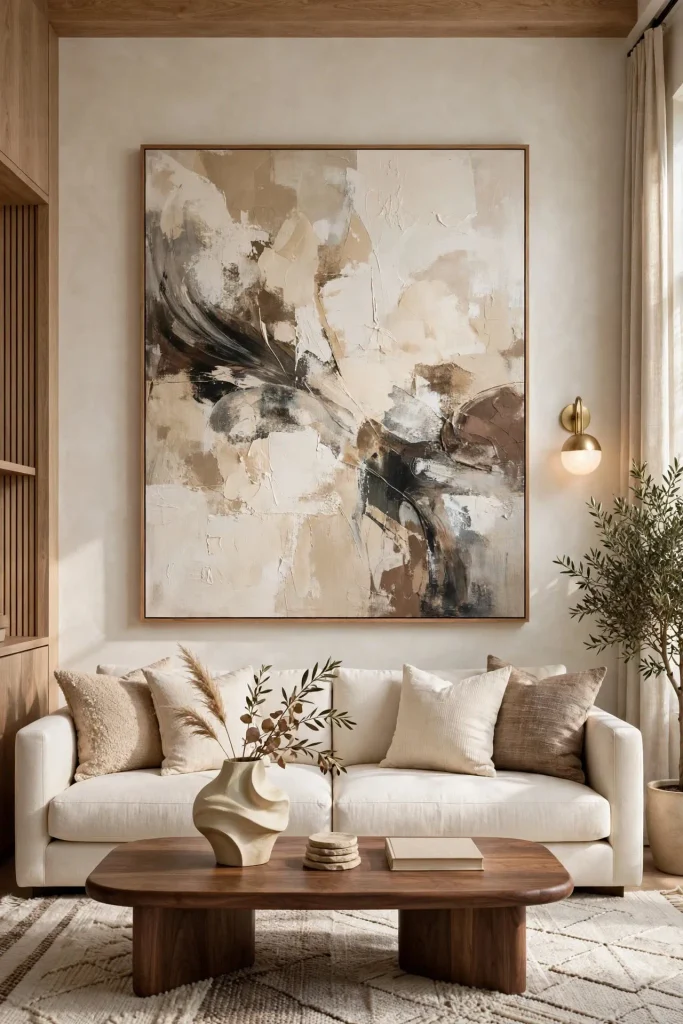
The coffee table is one of the most noticeable surfaces in a living room, making it a useful place to introduce your decorating style. A simple arrangement of books, a ceramic vase, and a decorative bowl can look polished without feeling overly formal. Try grouping accessories at different heights so the arrangement has a little visual variety. Natural materials help keep the display warm and relaxed.
Leave enough empty space for practical everyday use. A coffee table should still have room for drinks, remotes, and anything else you regularly use while relaxing. If you have a small table, choose just two or three accessories rather than filling every inch. A carefully edited arrangement usually looks more attractive than a crowded collection of decorations.
8. Use Floor-to-Ceiling Curtains

Curtains can influence how finished and comfortable a living room feels. Long panels that extend from near the ceiling to the floor create a graceful appearance and draw attention upward. They also soften the harder surfaces of windows, walls, and furniture. Linen and linen-blend curtains are particularly appealing in relaxed interiors because their natural texture adds character without appearing too formal.
Choose a color that works with your walls and larger furniture pieces. Ivory, warm white, and light beige are versatile options, while deeper shades can create a more dramatic look. Measure carefully before buying so the panels have the right length and fullness. If you need more privacy or light control, consider combining decorative curtains with practical blinds.
9. Decorate With Large Wall Art

Large artwork can make a living room feel more complete without requiring lots of small decorations. A single oversized abstract painting above the sofa creates a clear focal point and gives the wall a sense of purpose. You can choose artwork that reflects your preferred colors, from soft landscapes and muted abstracts to expressive contemporary designs.
Pay attention to scale when selecting a piece. Artwork that is too small can look disconnected from a large sofa, while an appropriately sized canvas helps balance the furniture beneath it. Hang it at a comfortable viewing height and leave enough space around the edges. If you prefer several smaller prints, arrange them together in a coordinated gallery wall instead.
10. Introduce Warm Wood Furniture

Wood furniture adds warmth and natural character to a living room. Even a relatively simple interior can feel more inviting when it includes a wooden coffee table, sideboard, or pair of side tables. Walnut creates a deeper, richer appearance, while oak and lighter woods suit airy spaces with soft neutral colors.
You don’t need every wooden piece to match perfectly. Combining complementary wood tones can make the room feel collected and less like a furniture showroom. Try to repeat a similar wood finish in at least two places to create a visual connection. Pair the furniture with soft textiles, ceramic accessories, and natural rugs for a comfortable and balanced result.
11. Add Warm Ambient Lighting
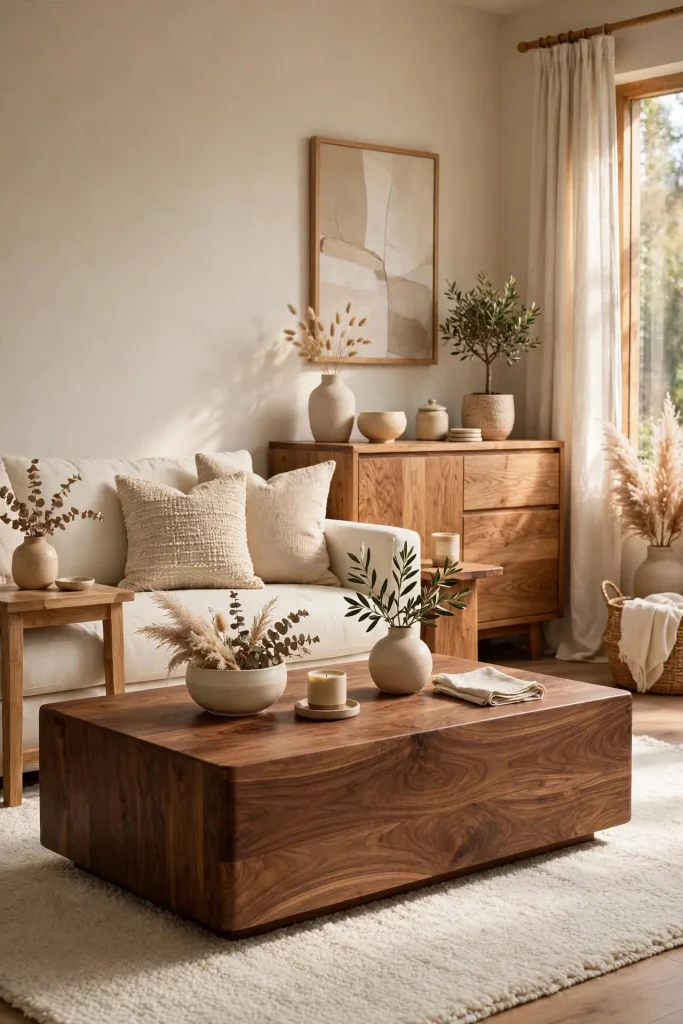
Lighting has a major influence on the atmosphere of a living room. A single overhead fixture can make a space feel flat, especially during the evening. Instead, introduce several light sources at different heights. A table lamp beside the sofa, a floor lamp near an armchair, and subtle wall lighting can create a softer and more welcoming environment.
Warm white bulbs are often a comfortable choice for relaxing spaces. Consider the purpose of each light before deciding where to place it. Reading corners need more focused illumination, while decorative lamps can create a gentle background glow. Dimmers are another useful option because they allow you to adjust the brightness for different activities and times of day.
12. Make a Beautiful Gallery Wall

A gallery wall gives you an opportunity to bring personality into your living room. Instead of choosing one large artwork, combine several framed prints that share a similar color palette or subject. Botanical illustrations, abstract designs, architectural photography, and landscape prints can work together beautifully when the frames and spacing are coordinated.
Before hanging anything, arrange the frames on the floor to experiment with different layouts. This makes it easier to find a balanced composition without repeatedly changing the wall. You can use matching frames for a clean appearance or mix wood and black finishes for a more relaxed look. Leave enough space between each frame so the collection feels organized.
13. Choose a Comfortable Sectional Sofa

A sectional sofa can make a living room feel especially comfortable because it offers plenty of room for relaxing and gathering. An L-shaped design works well when you want to define a seating area or make use of a corner. In a larger room, it can also help separate the lounge area from a dining space without adding a physical partition.
Measure your room carefully before selecting a sectional. Check the position of doors, windows, and walkways so the furniture doesn’t interrupt movement. Neutral upholstery makes styling flexible, while cushions and throws can introduce seasonal colors. If the room is small, choose a design with appropriately scaled arms and a visually lighter base to avoid making the space feel crowded.
14. Decorate With Soft Accent Cushions

Cushions are among the easiest ways to refresh a living room without changing the main furniture. They introduce color, softness, and texture while making the sofa more comfortable. For a relaxed neutral interior, combine several shades of cream, beige, taupe, and warm brown. A mixture of linen, boucle, velvet, and woven fabrics creates a layered appearance.
Try using a combination of different cushion sizes instead of arranging identical ones in a perfectly symmetrical line. A few larger cushions can provide the foundation, with smaller decorative styles adding variety. You can also change cushion covers throughout the year. Muted green, rust, or burgundy can bring seasonal interest while keeping the rest of the room unchanged.
15. Use a Stylish Accent Chair

An accent chair adds extra seating and gives a living room another opportunity for interesting shape or color. A caramel leather chair can introduce warmth into a neutral interior, while a boucle chair creates a softer contemporary appearance. You might also choose a wooden-frame lounge chair for a more natural or Scandinavian-inspired look.
Placement matters just as much as the chair itself. Position it near the sofa to encourage conversation, or angle it toward a window to create a comfortable independent seating spot. A small side table and reading lamp can make the arrangement more practical. Keep enough space around the chair so it doesn’t interfere with the main walking route.
16. Create a Beautiful Fireplace Focal Point

A fireplace naturally attracts attention, making it a useful starting point for arranging the rest of the living room. Keep the mantel styling simple enough to allow the architectural details to remain visible. A framed artwork, a pair of ceramic vases, or a small arrangement of greenery can create an attractive display without making the area feel crowded.
If your living room doesn’t have a working fireplace, you can still create a similar focal point with a decorative mantel or a thoughtfully styled console. Choose materials and colors that complement the surrounding furniture. In a traditional interior, natural stone and warm wood look especially inviting, while a simple plaster finish suits contemporary spaces.
17. Add a Touch of Sage Green

Sage green is a lovely accent color for a living room because it feels connected to nature while remaining soft and understated. It works particularly well with warm white, cream, beige, natural wood, and muted brass. You can introduce it through a painted feature wall, upholstered chair, decorative cushions, or even a few carefully selected accessories.
If you’re unsure about committing to a painted wall, start with smaller accents. A sage cushion arrangement or a green ceramic vase can add a gentle hint of color without changing the entire room. For a more coordinated appearance, repeat the shade in two or three places. This creates a subtle connection throughout the space without making green feel overwhelming.
18. Style Open Shelving With Decorative Accessories

Open shelving can provide both storage and decorating opportunities. A well-arranged shelf allows you to display books, pottery, framed photographs, and small decorative objects while keeping frequently used items accessible. The key is to avoid treating every shelf as a place to store something. Empty space helps individual objects stand out and keeps the arrangement from feeling too busy.
Mix items of different heights and shapes to create visual interest. Place larger objects toward the bottom and use smaller accessories to fill selected spaces. Woven baskets can hide everyday clutter, while a few books add warmth and personality. Review the arrangement occasionally so it remains useful rather than becoming a collection of things you no longer need.
19. Introduce a Beautiful Console Table
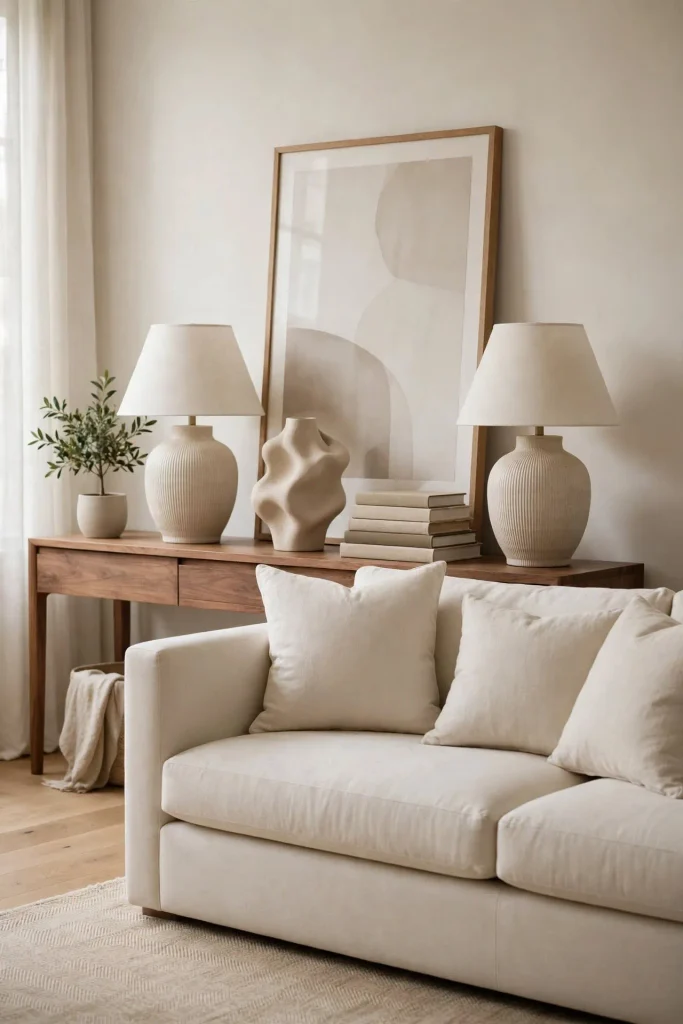
A console table is a useful addition when the back of your sofa looks empty or unfinished. A slim design can provide a decorative surface without taking up too much floor space. It also gives you somewhere to place lamps, books, small plants, and everyday accessories. In an open-plan room, a console can help visually define the seating area.
Choose a table that complements the size and style of your sofa. Natural wood works beautifully with relaxed neutral interiors, while black or metal finishes create a more contemporary appearance. Keep the styling balanced, perhaps using a lamp at one end and a decorative vase at the other. If storage is important, look for a design with drawers or a lower shelf.
20. Embrace a Modern Farmhouse Style

Modern farmhouse decorating combines the warmth of traditional country interiors with the simplicity of contemporary design. Comfortable upholstery, natural wood, woven accessories, and understated colors help create a welcoming atmosphere. Rather than filling the room with rustic decorations, focus on a few materials that give the space a relaxed character.
A slipcovered sofa, reclaimed wood coffee table, and woven baskets can provide a lovely foundation. Introduce black metal details through lighting or picture frames to add contrast. Keep decorative accessories practical and thoughtfully selected. This style works especially well when you want a living room to feel comfortable and lived-in without becoming overly themed or visually cluttered.
21. Add a Large Decorative Mirror
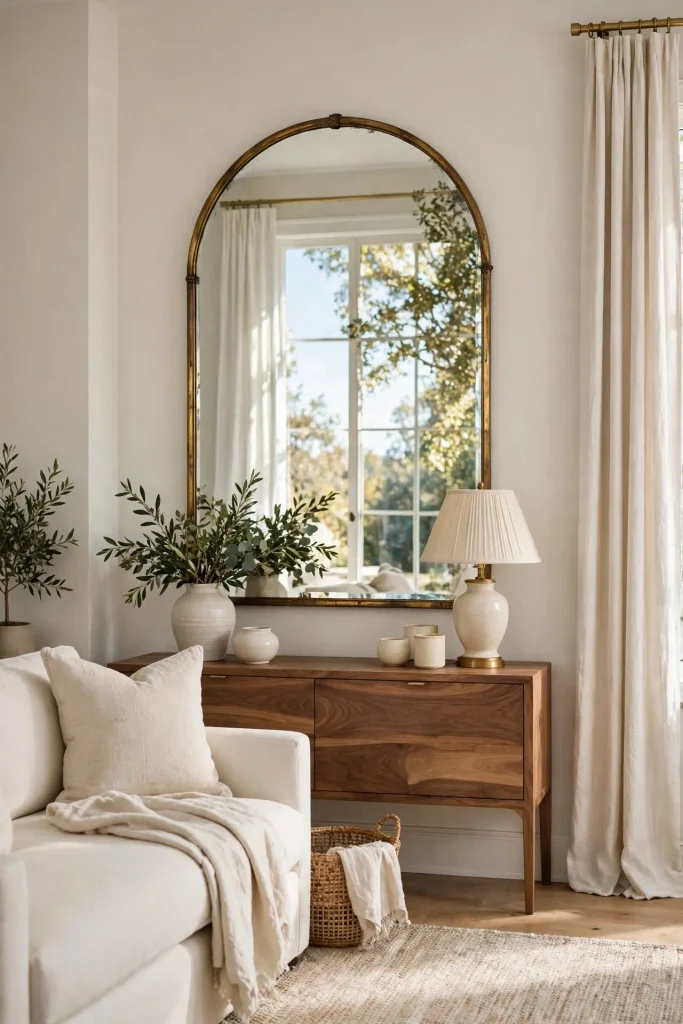
A decorative mirror can become a beautiful focal point while helping reflect light around the living room. An oversized arched mirror, a simple rectangular design, or a round mirror with a natural frame can complement different interior styles. Mirrors are especially useful on walls that feel empty or in areas where you want to create a stronger sense of visual depth.
Think carefully about what the mirror will reflect before deciding where to hang it. Positioning it opposite or near a window can help bring more natural light into the room. A mirror above a console table also creates an attractive decorating arrangement. Choose a frame that works with your furniture finishes so it feels connected to the overall design.
22. Decorate With a Cozy Throw Blanket

A throw blanket is a small decorating detail that can make a sofa look much more inviting. Chunky knitted designs, soft cotton blankets, and textured wool throws add warmth while introducing another layer of material. Draping a blanket casually over one sofa arm or folding it neatly across the back can create a relaxed, finished appearance.
Choose a color that complements your existing cushions and rug. A cream throw looks lovely in a neutral room, while muted rust, sage, or chocolate brown can provide a little contrast. Keep an extra blanket in a woven basket beside the sofa if you regularly use one. This makes the living room feel comfortable while keeping accessories easy to organize.
23. Create an Elegant Small Living Room Layout
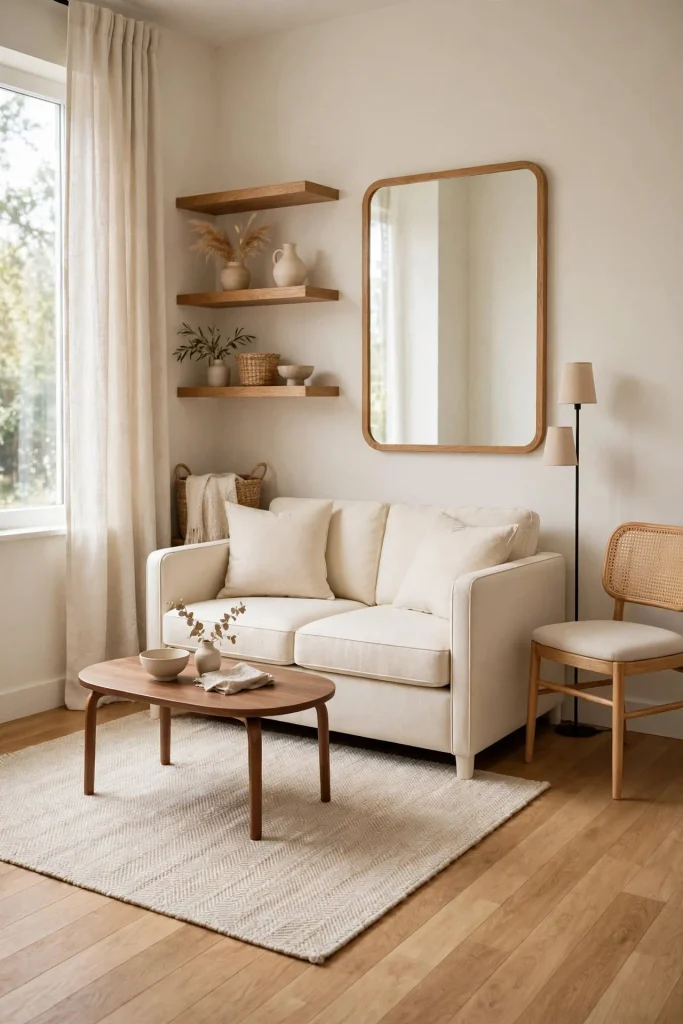
A small living room can feel stylish and comfortable when the furniture is chosen according to the available floor space. Instead of automatically selecting the largest sofa, look for seating that provides enough comfort without blocking walkways. Slim arms, raised legs, and compact coffee tables can help maintain a lighter visual appearance.
Make use of vertical space with wall-mounted shelves, tall storage, or artwork. A large mirror can also help reflect natural light and add visual depth. Keep the color palette relatively connected so the room doesn’t feel divided into too many separate areas. Most importantly, leave practical walking space around the furniture rather than filling every corner.
24. Choose a Beautiful Colorful Accent Wall

An accent wall can give a living room more personality without requiring a complete color change. A muted blue, warm terracotta, deep olive, or soft earthy brown can create a lovely backdrop for neutral furniture. The most effective location is often the wall behind the sofa or another natural focal point in the room.
Before choosing paint, consider the amount of daylight the room receives and the colors already present in the furniture. Test a few samples on the wall and observe how they look at different times of day. Once you’ve selected the shade, keep the surrounding decor relatively balanced. Coordinating cushions, artwork, and accessories can help connect the new color to the rest of the room.
25. Add Natural Woven Accessories
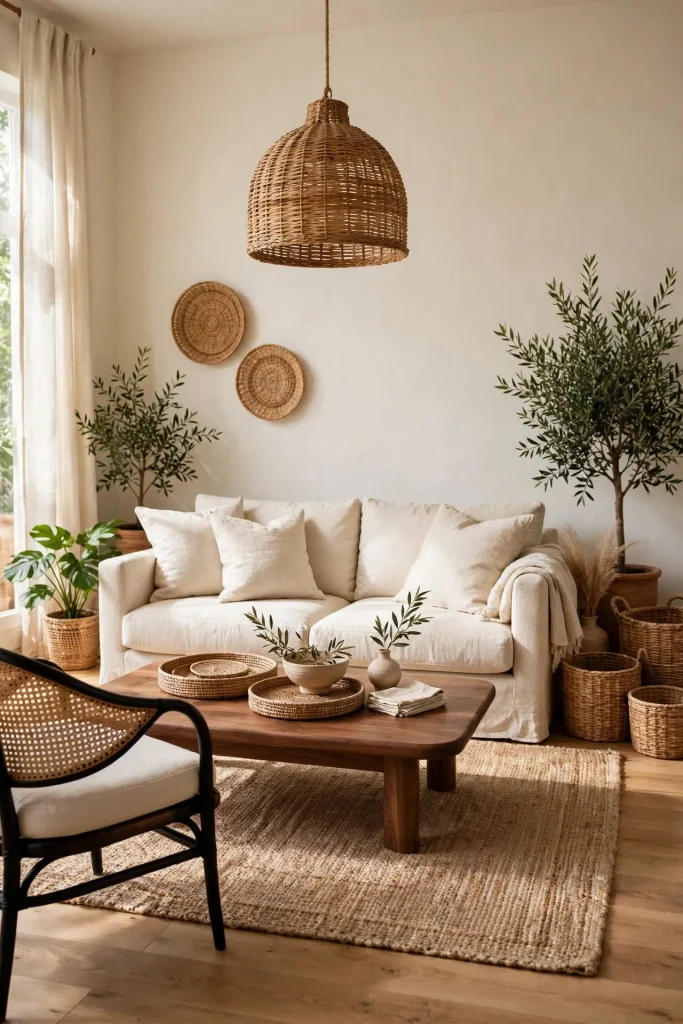
Woven accessories are an easy way to introduce natural texture into a living room. Rattan, wicker, jute, and cane bring an organic quality that works beautifully with linen upholstery and wooden furniture. A woven basket beside the sofa can store blankets, while a decorative tray or cane accent chair adds another layer of interest.
Try to use these materials in different parts of the room rather than grouping everything together. A basket near the sofa, a woven light shade overhead, and a natural rug can create a subtle connection. Pair them with smoother materials such as glass, ceramic, or polished wood to maintain balance. This combination helps the room feel layered without becoming visually heavy.
26. Make the Most of a Beautiful Bay Window
A bay window can become one of the most attractive features in a living room. Instead of leaving the area empty, consider turning it into a comfortable seating spot. A built-in bench with soft cushions provides additional seating while making use of an area that might otherwise remain underused. It can also create a lovely place to enjoy natural daylight.
Add practical details to make the arrangement more useful. Storage drawers or lift-up seating can provide space for extra blankets, books, or seasonal accessories. Choose cushion fabrics that coordinate with the main sofa, but don’t be afraid to introduce a slightly different texture. Light curtains can frame the window without hiding the architectural feature.
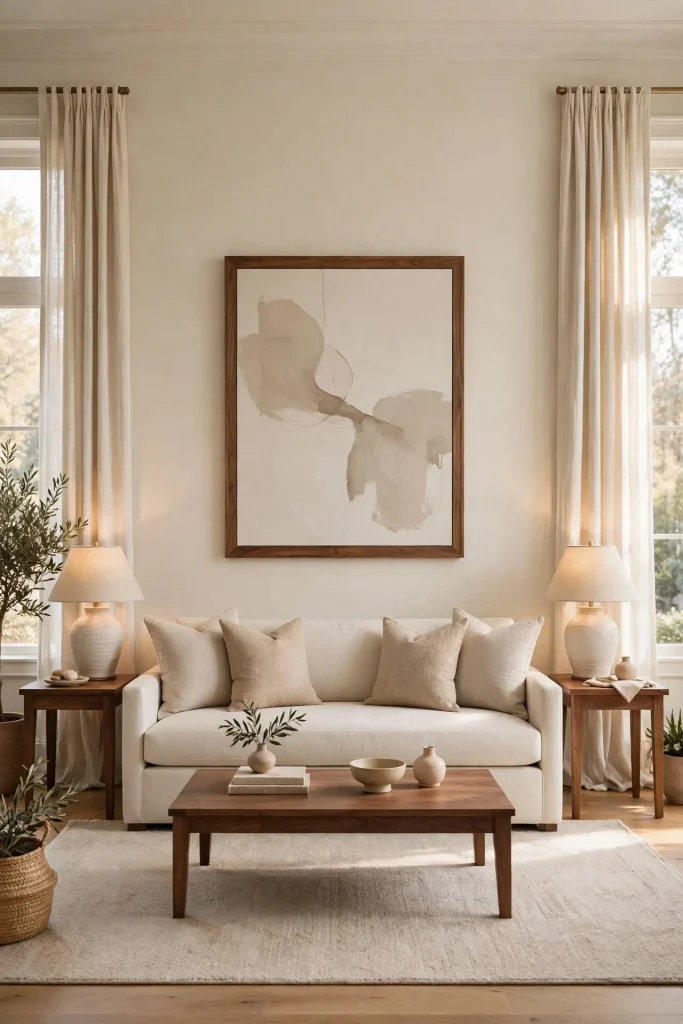
27. Use Symmetry for a Balanced Living Room

Symmetry can make a living room feel organized and visually balanced. A sofa centered beneath a large artwork, matching side tables, and coordinated lamps create a simple arrangement that works particularly well in traditional and transitional interiors. The repeated shapes give the room a sense of order without requiring complicated decorating techniques.
You don’t have to make every object identical to achieve this look. Similar-height lamps or complementary side tables can create a softer version of symmetry. Introduce small variations through books, vases, or cushions to prevent the room from feeling too formal. This approach is especially useful when decorating a room with a clear central wall or fireplace.
28. Decorate With a Statement Chandelier
A statement chandelier can bring character and visual interest to a living room. It provides overhead illumination while acting as a decorative feature that draws the eye upward. Sculptural brass designs, elegant glass pendants, and simple contemporary chandeliers can all work beautifully depending on the style of your furniture and the proportions of the room.
Choose a fixture that suits the ceiling height and overall room dimensions. A very large chandelier may overwhelm a small space, while a tiny fixture can disappear in a generous living room. Consider the type of light it provides and whether additional lamps are needed. A combination of overhead and lower-level lighting creates a more flexible and comfortable environment.
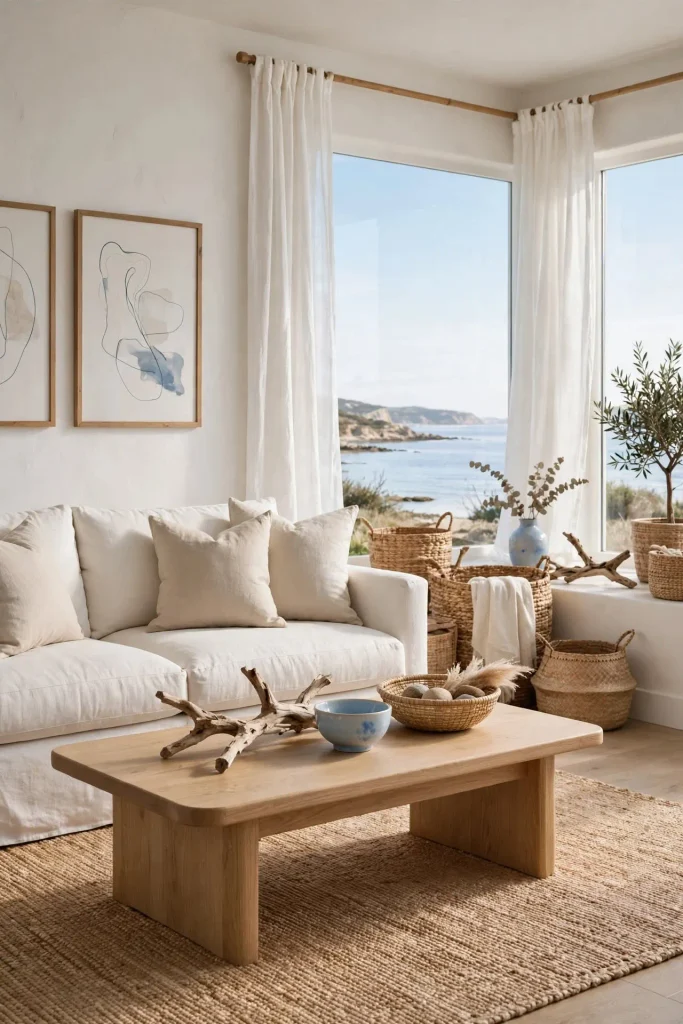
29. Create a Relaxed Coastal Living Room

Coastal decorating can bring a light and relaxed feeling into a living room without relying on obvious beach-themed accessories. Start with soft whites, sandy beige, natural wood, and gentle shades of blue. These colors create an airy foundation that feels calm and welcoming. Linen upholstery, woven textures, and simple organic shapes help reinforce the look.
Keep decorative accents subtle. A blue cushion, a textured vase, or a landscape artwork can suggest a coastal influence without filling the room with seashells and nautical decorations. Natural light is particularly important, so use window treatments that allow daylight to filter through. The result should feel relaxed and timeless rather than overly themed.
30. Add a Stylish Storage Solution

Good storage makes a living room easier to enjoy because everyday items have a proper place. A wooden media console, closed cabinet, storage ottoman, or woven basket can help keep blankets, books, remote controls, and other accessories organized. Choosing furniture with a combination of open and closed storage gives you room to display attractive items while hiding less decorative essentials.
Think about the things that regularly create clutter before selecting a storage solution. If your television area tends to become messy, choose a console with cabinets and practical cable management. If blankets and cushions need a home, place a generously sized basket beside the sofa. Storage should fit naturally into the room rather than feeling like an afterthought.
31. Finish the Room With Personal Decorative Details

The finishing details are often what make a living room feel like a home rather than a carefully arranged showroom. Framed photographs, favorite books, handmade pottery, collected artwork, and meaningful decorative objects bring personality into the space. These items don’t have to match perfectly. Their value comes from the way they reflect your interests and the atmosphere you want to create.
Be selective when displaying personal accessories. A few meaningful objects arranged on a shelf or coffee table usually have more impact than covering every available surface. Combine them with neutral foundations and natural materials so the room remains visually balanced. You can also rotate decorative pieces occasionally, allowing the living room to feel refreshed without purchasing new furniture.
Conclusion
Creating a cozy and stylish living room doesn’t have to involve a complete makeover. Sometimes, a few thoughtful changes make the biggest difference. A comfortable sofa, beautifully layered textures, warm lighting, natural greenery, attractive wall art, and practical storage can help bring the entire space together.
The best living room decorating ideas are the ones that work with your lifestyle, available space, and personal taste. You might start by updating your cushions, adding a larger area rug, or creating a small reading corner. If you’re planning a bigger refresh, consider your color palette and furniture arrangement first. Take your time, experiment with different details, and choose pieces you genuinely enjoy. A welcoming living room should look beautiful while making everyday moments feel a little more comfortable.
Frequently Asked Questions
1. How can I make my living room look cozy and stylish?
Start with comfortable seating, soft lighting, and a coordinated color palette. Add textured cushions, a warm throw blanket, an appropriately sized area rug, and a few decorative accessories. Natural wood and indoor plants can also make the room feel more inviting. You don’t need to purchase everything at once. Small, thoughtful updates can gradually create a more finished appearance.
2. What are the best colors for a cozy living room?
Cream, beige, warm white, taupe, soft brown, and muted sage are popular choices for comfortable living rooms. These shades work well with natural materials and different furniture styles. If you prefer more contrast, introduce navy, terracotta, olive, or charcoal through cushions, artwork, and accent furniture. Choose colors that complement your natural lighting and existing furnishings.
3. How do I decorate a living room on a budget?
Begin by rearranging your existing furniture and removing accessories that create unnecessary clutter. Update cushion covers, introduce a decorative throw, style your coffee table, or add inexpensive greenery. You can also refresh a wall with new artwork or a carefully chosen paint color. Focus on changes that make the room more comfortable and visually balanced before buying larger furniture pieces.
4. How can I make a small living room look bigger?
Choose appropriately scaled furniture and avoid blocking windows or walking paths. Light-colored walls, long curtains, mirrors, and furniture with visible legs can help create a more open appearance. Use vertical shelving for storage and select a rug that connects the seating arrangement. Keeping everyday clutter under control also helps a small room feel more comfortable.
5. What should I put in a living room to make it feel complete?
Most living rooms benefit from comfortable seating, an area rug, suitable lighting, a coffee table, and a few carefully selected decorative accessories. Artwork, cushions, greenery, and curtains help bring the different elements together. Practical storage is also important. The exact pieces depend on your available space, but a balanced combination of comfort, function, and personality makes a room feel finished.