
27 Small Living Room Ideas to Make Your Space Feel Bigger
A small living room can be just as beautiful, comfortable, and inviting as a spacious one. The secret is knowing how to use the space wisely. Thoughtful furniture choices, soft color palettes, clever storage, and well-placed lighting can make even the tiniest living area feel more open. You do not need to knock down walls or spend a fortune on a renovation to create a room that feels bigger.
These small living room ideas focus on practical decorating choices that make a noticeable difference without sacrificing warmth or personality. You will find inspiration for choosing the right sofa, using mirrors, arranging furniture, adding natural light, and making the most of unused corners. Some ideas are perfect for apartments, while others work beautifully in compact family homes. With a little creativity, your living room can feel airy, organized, and wonderfully cozy.
1. Choose a Light and Neutral Color Palette

A light color palette is one of the simplest ways to make a small living room feel more spacious. Shades of warm white, ivory, cream, soft beige, and pale gray reflect natural light and create a calm visual flow. Instead of introducing several strong colors across the walls and furniture, keep the larger surfaces within a similar family. This helps the room feel connected rather than divided into smaller sections.
You can still add personality through cushions, artwork, ceramics, and a few carefully chosen accessories. Natural wood and woven textures bring warmth to a neutral setting, preventing it from feeling plain. If you enjoy a little color, introduce muted sage green or dusty blue through smaller decorative details.
2. Add a Large Mirror to Reflect Light

A well-placed mirror can make a compact living room feel brighter and more open. When it reflects a window or another light source, it helps distribute daylight around the space. A large rectangular mirror above a console table is a classic choice, while a tall floor mirror can work beautifully in an empty corner. Choose a frame that complements your furniture rather than competing with it.
Placement matters more than simply choosing the largest mirror available. Position it where it reflects something attractive, such as a window, a light fixture, or a pleasant part of the room. Avoid reflecting clutter or an awkward corner, as that can make the room feel busier.
3. Pick a Sofa with Slim Arms
A bulky sofa can take up more visual and physical space than a small living room can comfortably spare. Choosing a design with slim arms and a streamlined silhouette gives you useful seating without making the room feel crowded. Raised legs are another helpful feature because they allow more of the floor to remain visible. This creates a lighter appearance, especially when paired with a neutral rug.
Before buying a sofa, measure the available wall and consider how much room you need to walk around it. A compact two-seater or apartment-size sofa may be more practical than a large sectional. Look for comfortable proportions rather than choosing furniture based on appearance alone.
4. Use Sheer Curtains to Maximize Natural Light
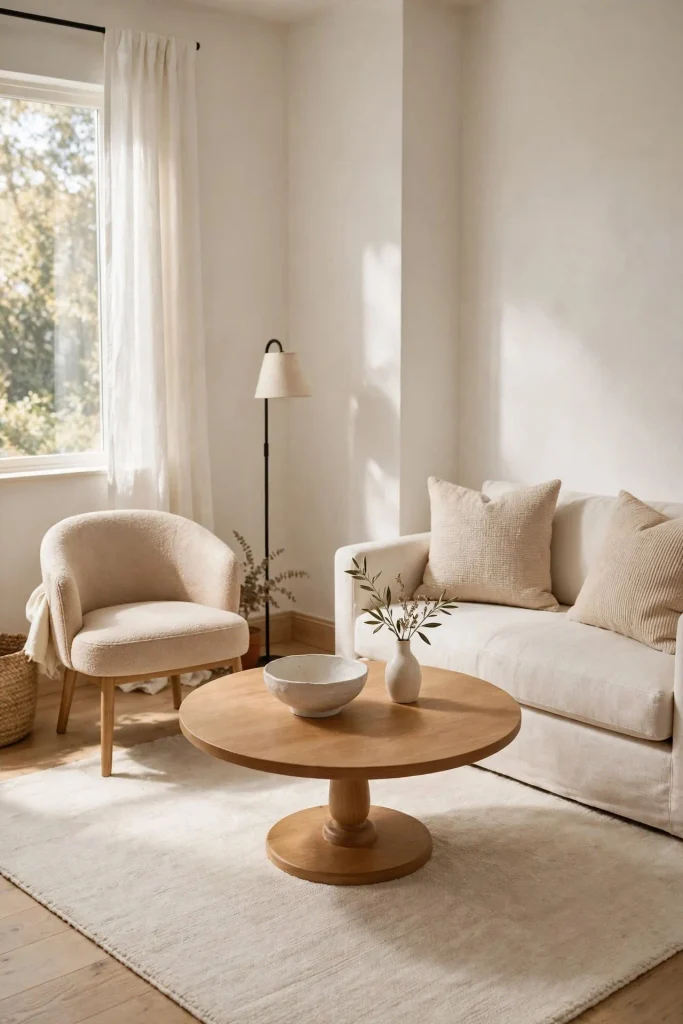
Heavy curtains can make a small room feel darker, especially when they cover a large portion of the window. Sheer curtains offer a softer alternative. They provide a little privacy while allowing daylight to enter, helping the room feel open and welcoming. Choose ivory, white, or pale beige fabric that blends naturally with your wall color.
For an even more spacious appearance, install the curtain rod or ceiling track slightly higher than the window frame. Let the curtains fall close to the floor for a graceful vertical line. Avoid thick decorative valances and oversized curtain hardware that add unnecessary visual weight.
5. Choose Furniture with Exposed Legs
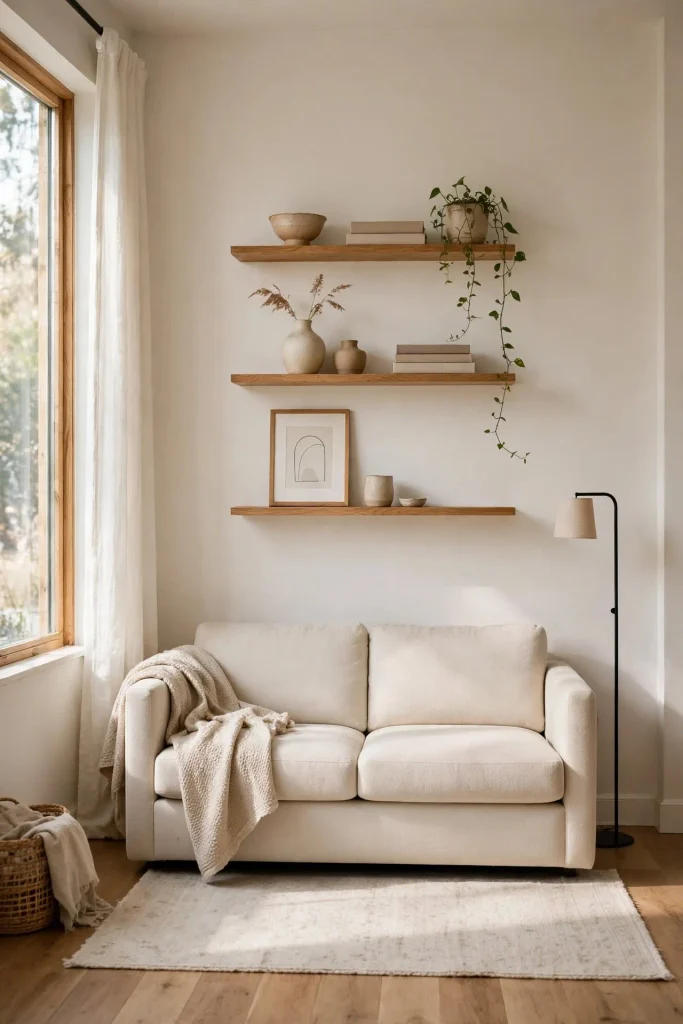
Furniture with exposed legs creates a lighter appearance because you can see more of the floor beneath it. This small detail can make a surprisingly big difference in a compact living room. A sofa raised on wooden or metal legs, a slim-legged coffee table, and an open-frame accent chair help the furniture feel less bulky.
Try to repeat similar leg finishes throughout the room for a coordinated look. Light oak, walnut, and black metal can all work beautifully depending on your decorating style. The goal is not to fill every available surface but to create a balanced arrangement that feels comfortable and easy to move around.
6. Try a Glass Coffee Table

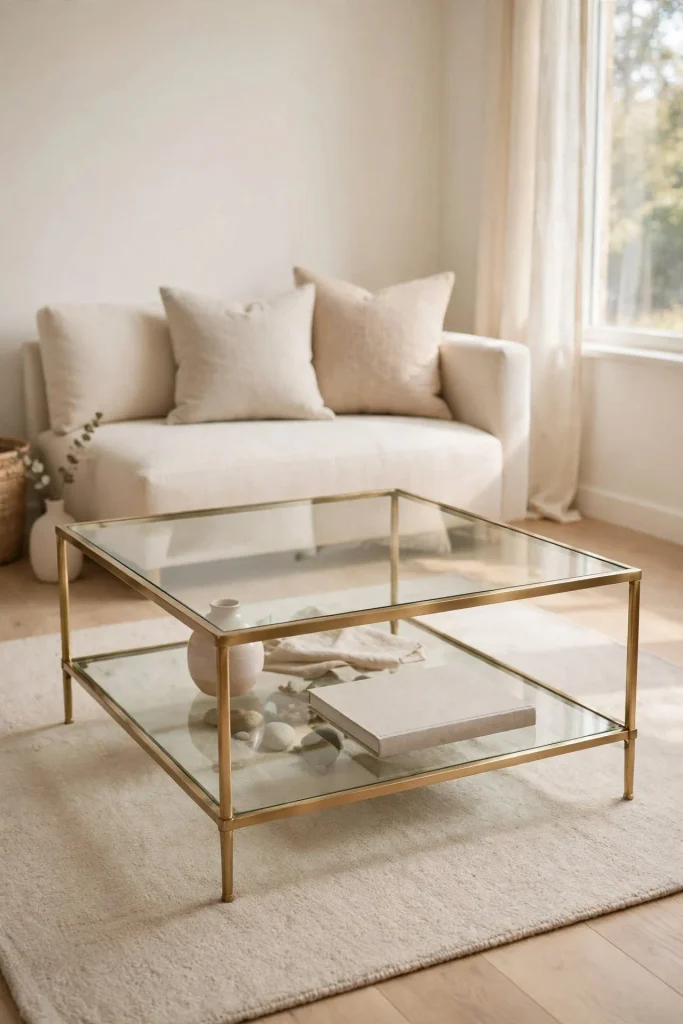
A solid coffee table can sometimes make a small living room feel visually crowded, especially when it sits directly in front of the sofa. A glass coffee table offers a lighter alternative. Because the transparent surface allows you to see through it, the room retains a more open appearance while still having a useful place for everyday essentials.
Look for a simple shape with slim legs rather than an oversized design with complicated detailing. Round or oval glass tables are particularly useful in tight arrangements because they have softer edges and are easier to walk around. Keep the tabletop styling minimal to preserve the airy effect.
7. Mount Your Television on the Wall
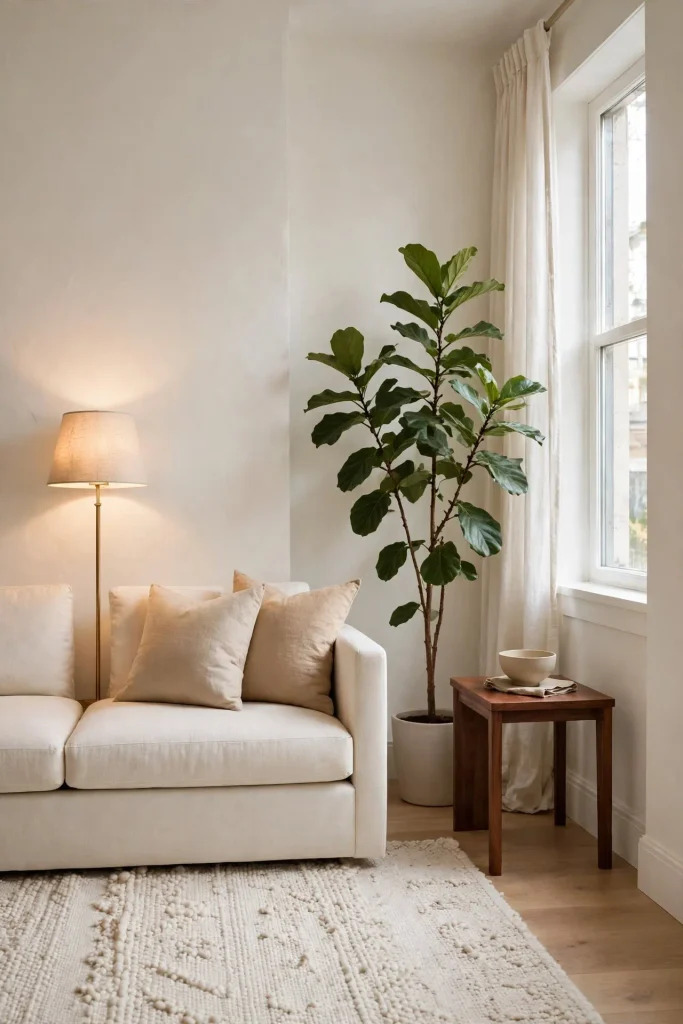
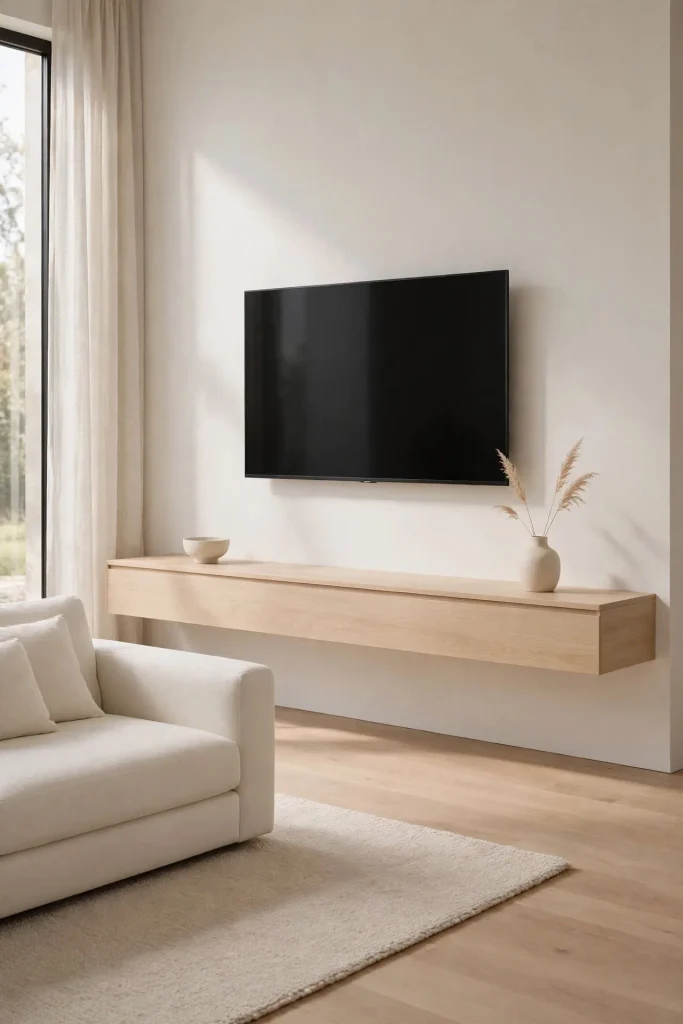
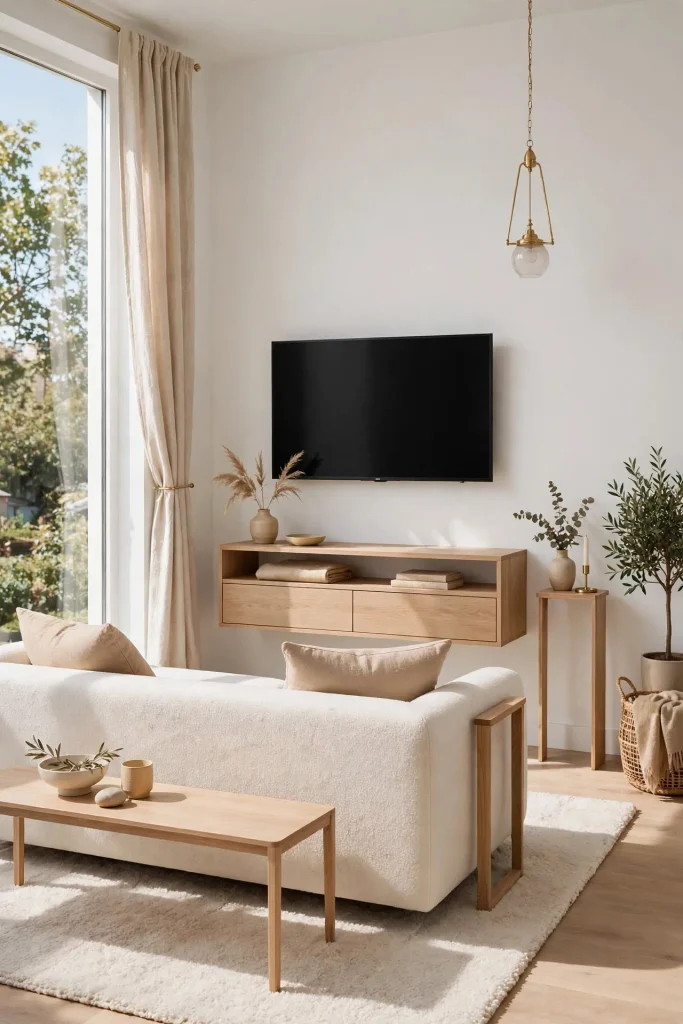
A television stand can occupy valuable floor space in a small living room. Mounting the television on the wall is a practical way to free up that area and create a cleaner arrangement. A slim floating media console beneath it provides storage for remote controls, entertainment devices, and other essentials without making the wall look heavy.
Pay attention to cable management so wires do not distract from the finished look. Keep the area around the screen relatively simple, with only a few decorative accessories. This arrangement works particularly well in apartment living rooms where every inch of floor space matters.
8. Use a Round Coffee Table

The shape of your coffee table can influence how easily you move around a small living room. A round table has no sharp corners, making it easier to navigate in a tight seating arrangement. It also introduces a softer shape that balances the straight lines of sofas, cabinets, and walls.
Choose a compact design that leaves enough room between the table and the sofa. Light wood, glass, or a simple metal base can help keep the overall look visually light. A small tray and one decorative object are usually enough to make the table look finished without covering its entire surface.
9. Make the Most of Vertical Wall Space
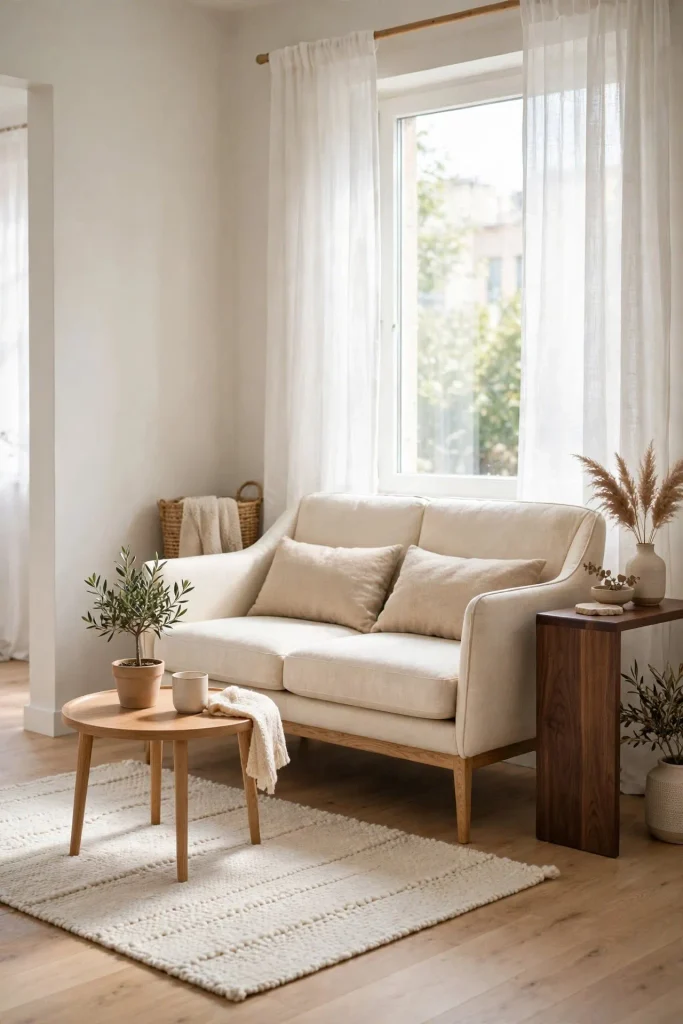
When floor space is limited, look upward. Vertical storage allows you to use areas that might otherwise remain empty. Floating shelves, narrow wall cabinets, and thoughtfully arranged artwork can add function and personality without taking up valuable walking space. This is especially useful in apartments where a separate bookshelf or display cabinet may not fit.
The key is to avoid filling every inch of the wall. Choose a few attractive objects, mix different heights, and leave some open space around them. Shelves that match your furniture or wall color can blend into the room, creating a more organized and harmonious appearance.
10. Invest in a Storage Ottoman
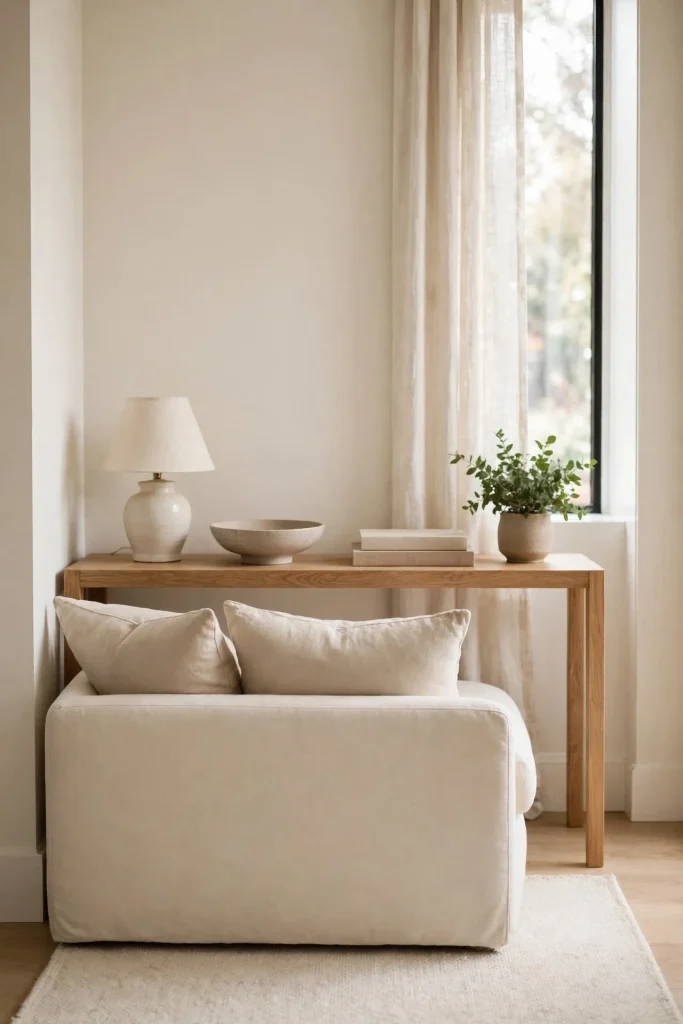
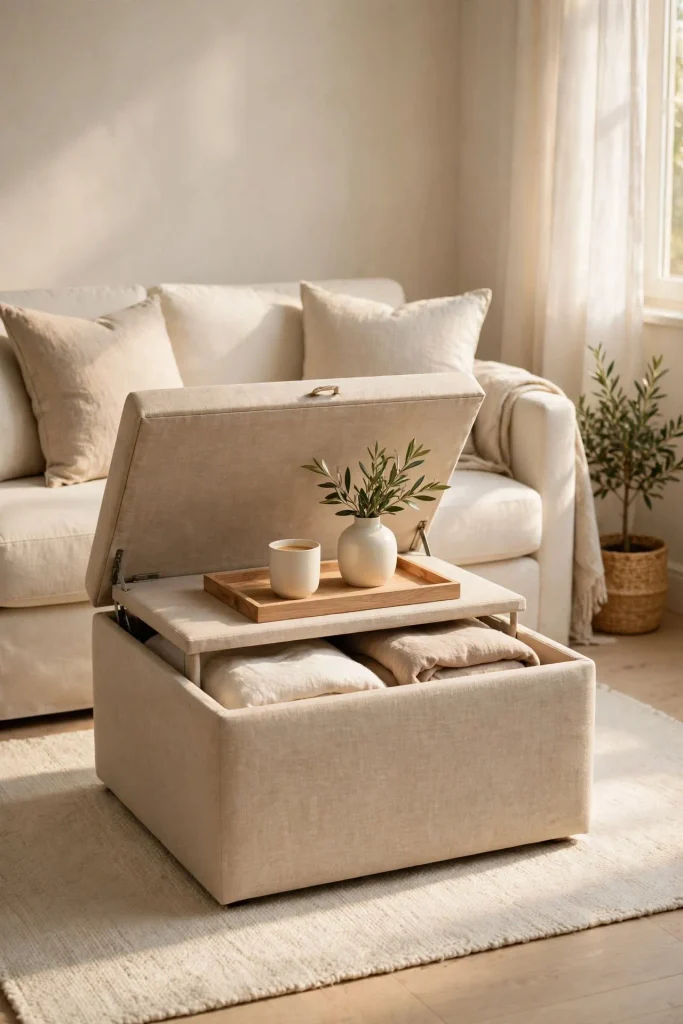
A storage ottoman is a clever addition when your living room needs extra storage but has no room for another cabinet. It can serve as a footrest, an occasional seat, or even a coffee table when you place a sturdy tray on top. Inside, you can store spare cushions, blankets, magazines, and other everyday items.
Choose upholstery that complements your sofa so the ottoman feels like part of the furniture arrangement. A rectangular design can sit neatly against the sofa, while a round version works nicely in a softer seating layout. Hidden storage helps keep the room tidy without displaying everything you own.
11. Choose a Compact Loveseat
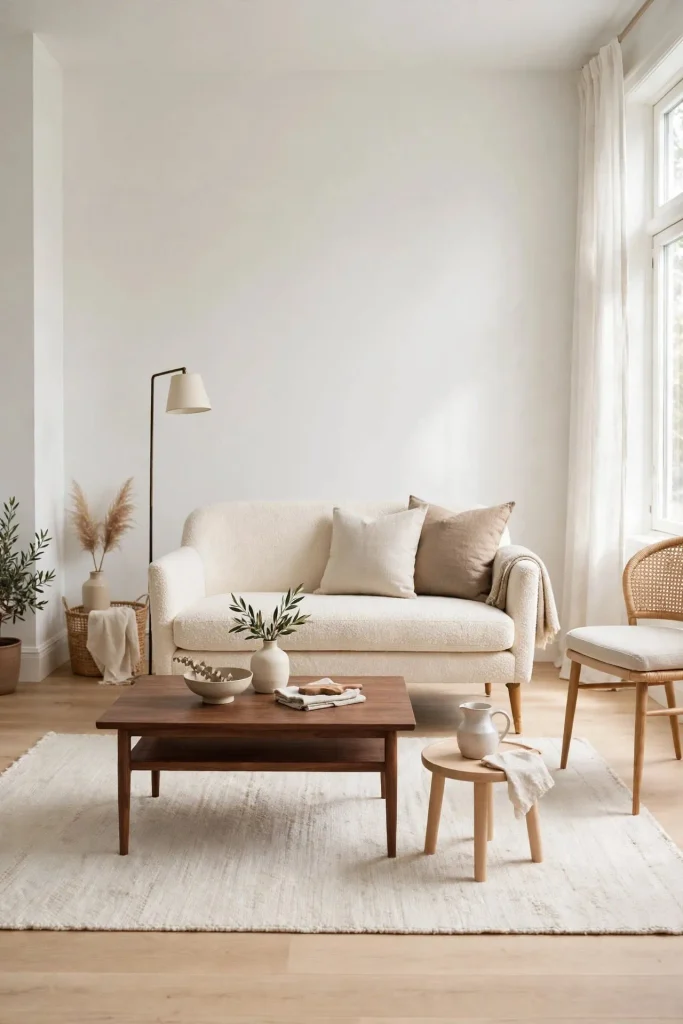
A loveseat can be a better choice than a full-size sofa when your living room is particularly narrow or compact. It provides comfortable seating for two while leaving more room for a coffee table, accent chair, or walking path. Look for a design with a relatively shallow seat depth and slim arms to make the most of the available floor area.
You do not have to sacrifice style to choose smaller furniture. A beautifully upholstered loveseat in cream, beige, or soft gray can look just as inviting as a larger sofa. Add a textured throw and a few cushions to create a comfortable focal point.
12. Keep the Floor Visible with a Floating Media Console
Floating furniture can help a small room feel less crowded because it leaves more of the floor visible. A wall-mounted media console is especially useful when you want storage without the appearance of a large cabinet sitting on the floor. Its clean horizontal shape can also make a narrow wall feel more organized.
Choose a unit with enough enclosed storage for electronics and small accessories. Avoid filling the top with decorative objects, as a simple arrangement looks more intentional. The open floor underneath makes cleaning easier too, which is a practical benefit in busy homes.
13. Add a Large Area Rug to Define the Seating Zone

A properly sized rug can make a small living room feel more organized and visually connected. Instead of using several tiny rugs that divide the floor into separate sections, choose one larger rug that sits beneath the front legs of your main seating furniture. This creates a unified seating zone and helps the room feel less fragmented.
Neutral rugs in ivory, oatmeal, or soft beige work particularly well because they blend with different furniture styles. Texture can provide plenty of interest without adding busy patterns. Before purchasing, measure the seating area so the rug is large enough to anchor the furniture without overwhelming the room.
14. Use a Narrow Console Table Behind the Sofa
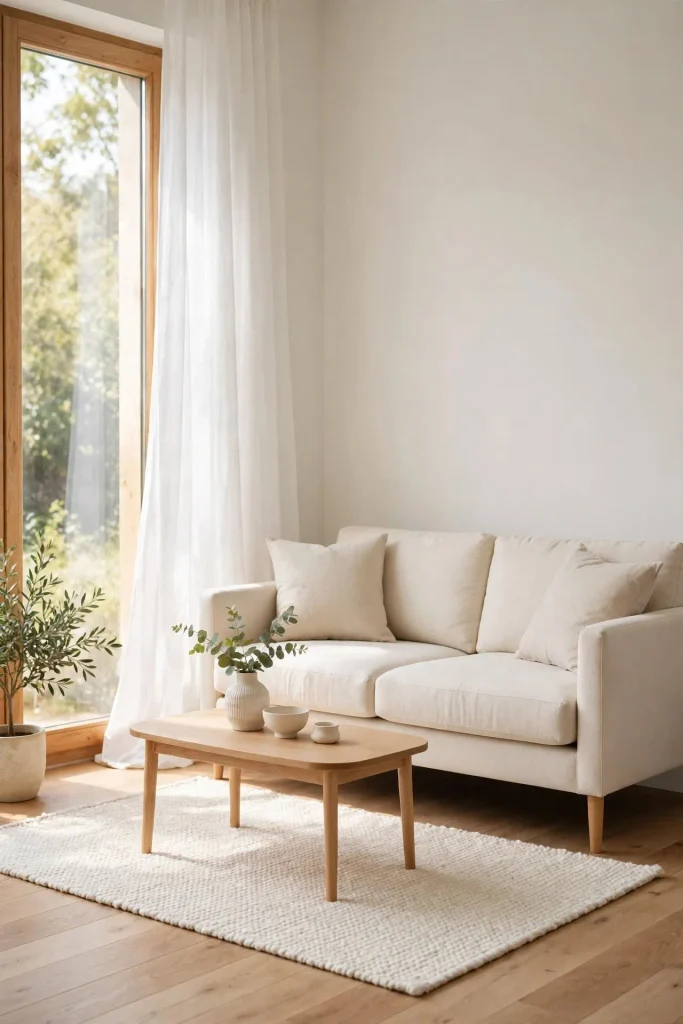
The space behind a sofa is often overlooked, especially when the furniture sits in the middle of an open-plan living area. A narrow console table can turn this otherwise unused strip into a useful surface for lighting, keys, books, or decorative accessories. It also gives the sofa a more finished appearance.
Choose a shallow table that does not interfere with the walkway. If the room is especially tight, look for a design with open legs rather than a bulky cabinet base. A small lamp and one or two carefully selected accessories are enough to make the surface attractive.
15. Decorate with a Tall Floor Lamp
Lighting can make a small living room feel completely different. A tall, slender floor lamp adds a warm layer of illumination without requiring a large table or bulky lamp base. It also draws the eye upward, helping the room feel taller. Place it beside a sofa or in a corner that needs a little extra brightness.
Choose a simple design with a narrow base and a shade that suits your decor. Warm white bulbs create a comfortable evening atmosphere, while natural daylight keeps the space bright during the day. Combining overhead lighting with a floor lamp gives you more flexibility for different activities.
16. Try a Small Sectional Sofa

A sectional sofa may seem too large for a small living room, but a compact L-shaped design can actually make efficient use of an awkward corner. It provides multiple seating positions while keeping the furniture grouped together. This can be more practical than placing a separate sofa and several chairs around the room.
Measure carefully before choosing one, paying attention to the direction of the chaise section and the space needed for doors and walkways. A low-profile sectional in a light fabric can keep the arrangement feeling comfortable rather than overwhelming. Avoid oversized arms and excessively deep seats in particularly narrow rooms.
17. Keep Window Areas Free of Clutter
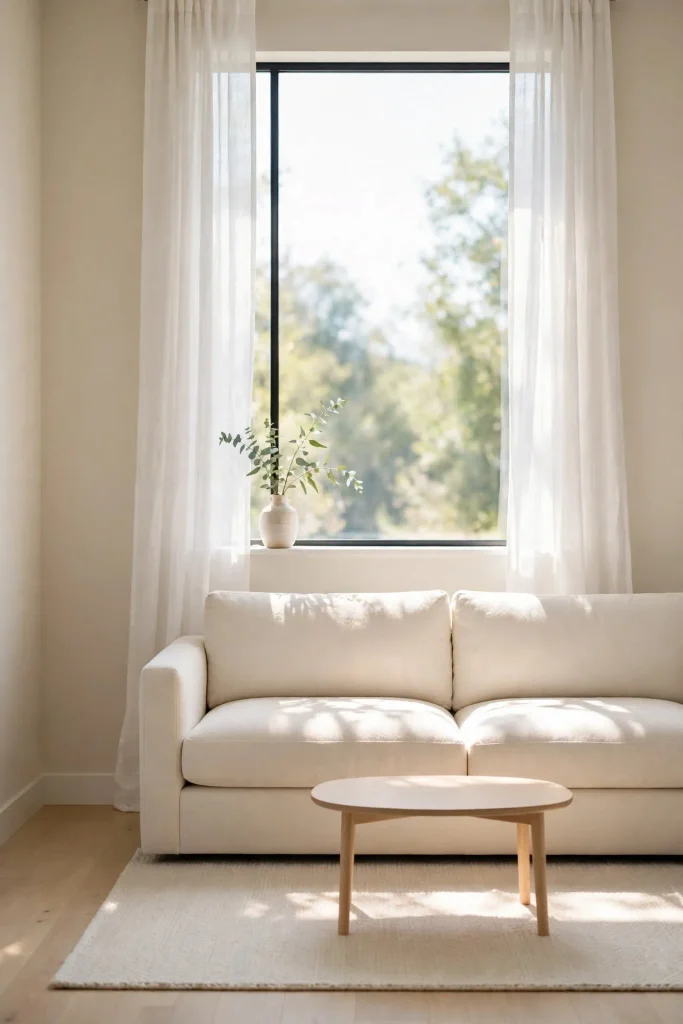
Windows are valuable features in compact living rooms because they bring in natural light and provide a visual connection to the outdoors. Covering them with large furniture, heavy curtains, or too many decorative objects can make the room feel darker and more enclosed. Keeping the area around the window open helps the entire space feel lighter.
Arrange seating so it does not block the main source of daylight. Use a simple curtain style and keep the windowsill relatively clear. If you want to decorate it, one small plant or a ceramic vase can add charm without creating unnecessary visual clutter.
18. Use Matching Furniture Finishes
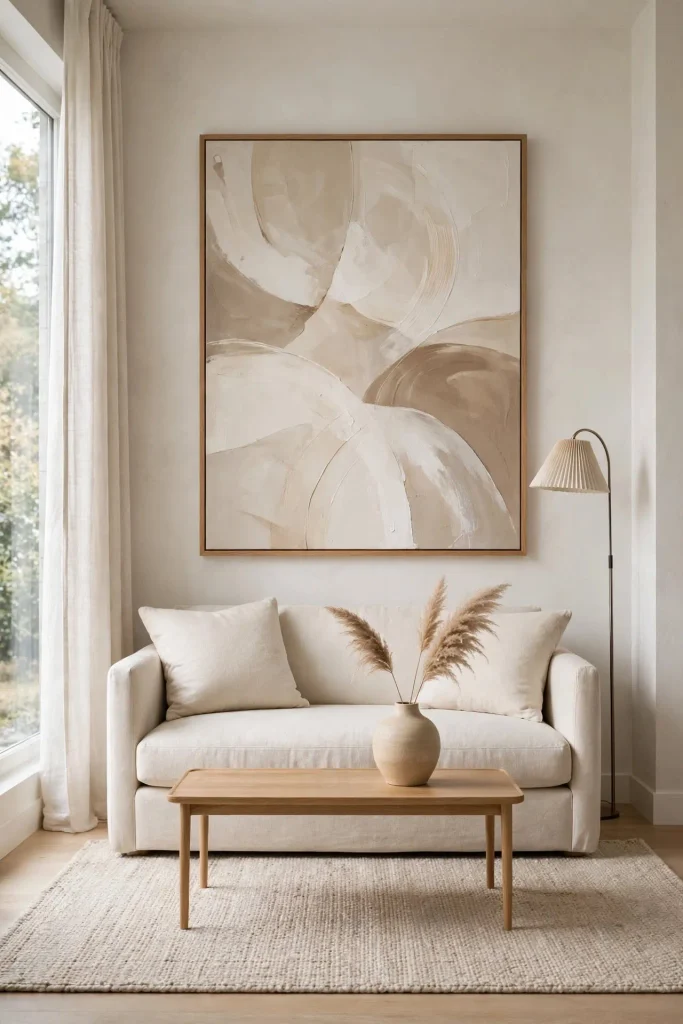
Too many different furniture finishes can make a compact room look visually busy. Using a consistent material palette helps the space feel more connected. For example, a light oak coffee table, matching side table, and coordinated media console create a gentle sense of continuity without making the room feel overly decorated.
This does not mean every piece must come from the same furniture collection. Simply repeat one or two finishes and balance them with soft upholstery, natural fabrics, and subtle metal details. A consistent palette gives the eye fewer competing elements to process, which can make the overall arrangement feel calmer.
19. Choose a Wall-Mounted Desk for a Multipurpose Room
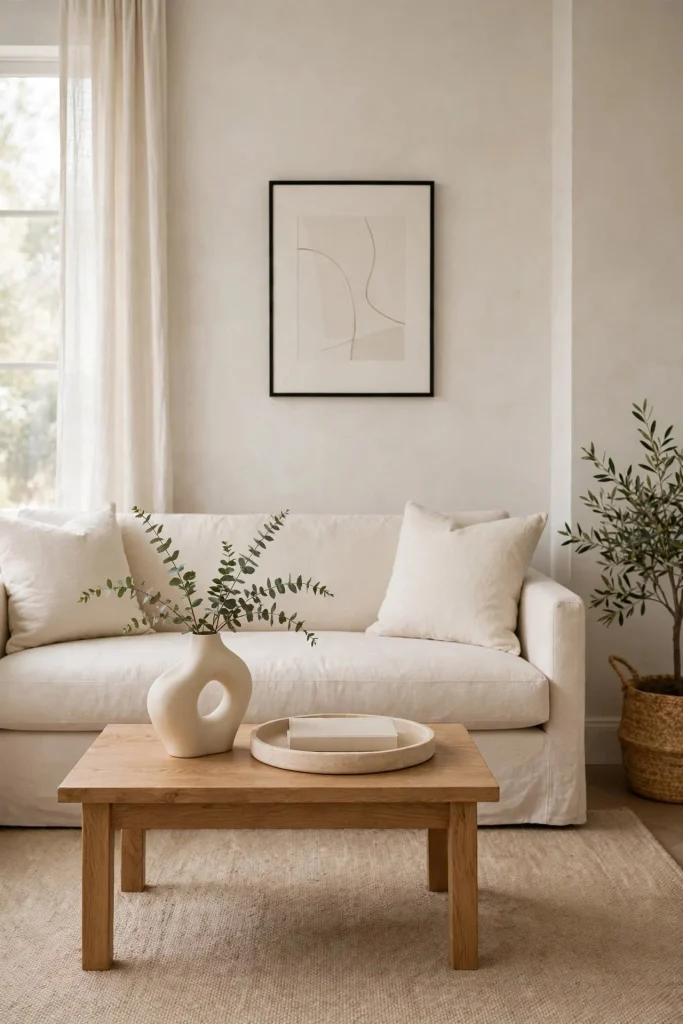
In a small home, the living room sometimes needs to serve more than one purpose. A wall-mounted desk can provide a practical workspace without taking up the same floor area as a traditional desk. Choose a fold-down design if you only need a work surface occasionally, or a narrow floating desk for everyday use.
Position it along an unused wall where it will not interfere with the main seating arrangement. A compact chair that slides underneath keeps the area tidy. Add a small shelf above the desk for stationery and accessories, but keep the work area simple so it blends naturally with the rest of the room.
20. Add Built-In Storage Around the Television
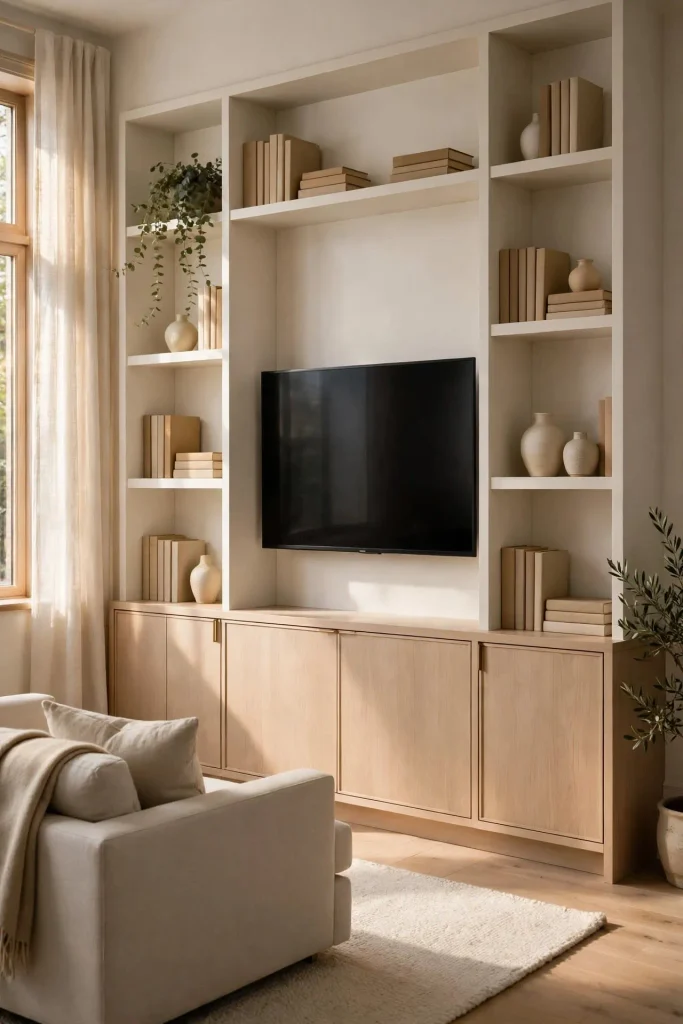
Built-in storage can make a small living room more functional by using wall space that might otherwise be wasted. A media wall with closed cabinets below and a few open shelves above provides room for electronics, books, and everyday accessories. When designed carefully, it can look like a natural part of the architecture rather than an additional piece of furniture.
Keep the cabinet fronts simple and consider matching them to the wall color for a subtle appearance. Use open shelving sparingly so the display does not become crowded. This arrangement is particularly helpful for homes that need plenty of storage but have limited floor space.
21. Introduce a Statement Piece Instead of Many Decorations
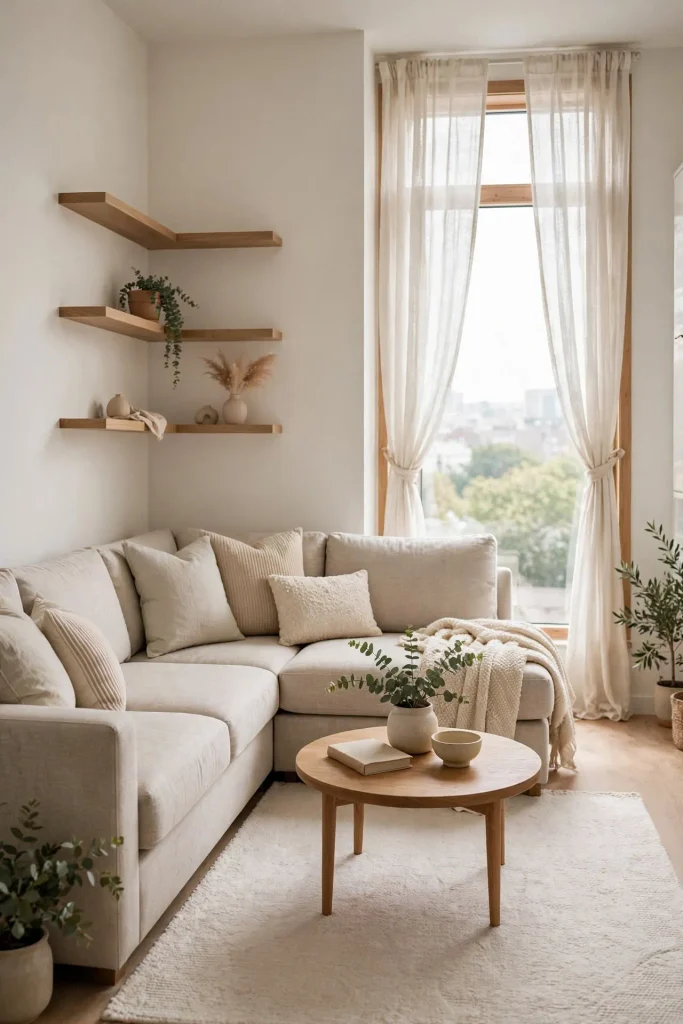
Decorating a small living room does not mean you need to fill every shelf, wall, and tabletop. Sometimes one well-chosen statement piece creates more impact than a collection of smaller accessories. An oversized abstract artwork, an interesting pendant light, or a beautifully shaped accent chair can give the room personality while keeping the overall arrangement simple.
Choose a focal point that works with your existing colors and furniture. Give it enough surrounding space so it can stand out naturally. This approach is especially useful if you enjoy a polished interior but do not want your living room to feel crowded with decorations.
22. Use a Slim Side Table Instead of a Bulky Cabinet
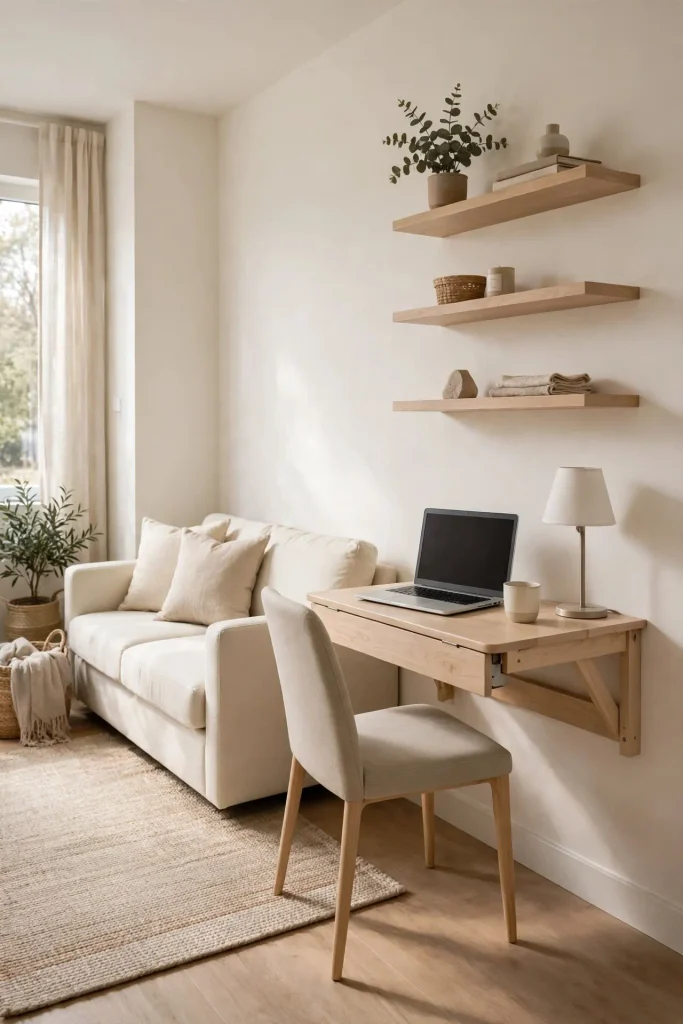
A traditional side cabinet can take up more space than you need for a lamp, phone, or cup of tea. A slim side table provides the same basic function with a much smaller footprint. Look for a narrow pedestal table, a C-shaped design that slides beneath the sofa, or a small round table with open legs.
Think about what you actually use beside your seating area before choosing a design. If you mainly need a place for a lamp and a few essentials, there is no reason to introduce a large storage unit. Keeping this area open makes the sofa feel less boxed in.
23. Create a Cozy Corner with a Small Accent Chair
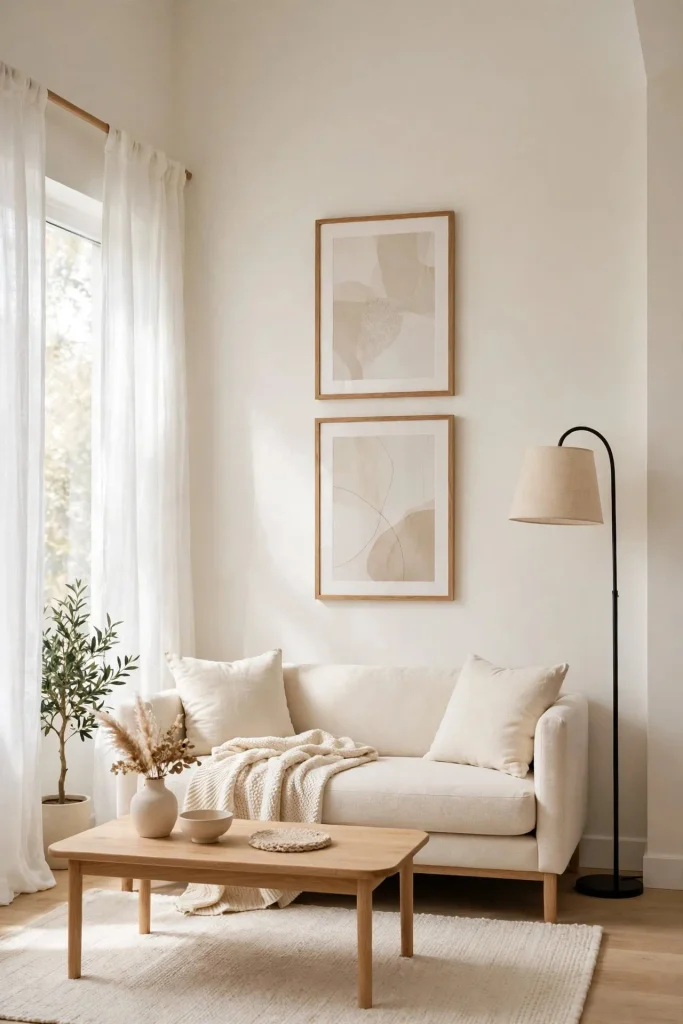
An empty corner can become a useful seating area without requiring a large armchair or additional sofa. Choose a compact accent chair with a narrow frame, gently curved back, or open legs. Pair it with a tiny side table and a slim reading lamp to create a comfortable place for reading or relaxing.
Keep the chair proportionate to the room. A bulky recliner may overwhelm the corner, while a lightweight upholstered chair can add both function and style. Position it so people can move comfortably around it, especially if the corner sits near a doorway or main walkway.
24. Hang Artwork Higher to Draw the Eye Upward

The way you decorate your walls can influence how tall a small living room feels. Artwork arranged with a little vertical emphasis draws attention upward and makes better use of the wall space. A tall framed print, a pair of vertically stacked artworks, or a narrow gallery arrangement can work particularly well.
Keep the frames and artwork colors connected to the rest of your decor. Avoid hanging too many small pictures close together, as a crowded gallery can make the wall feel busy. A carefully planned arrangement with enough breathing room creates a more polished result.
25. Choose Furniture That Can Serve More Than One Purpose

Multifunctional furniture is especially valuable when your living room needs to accommodate guests, storage, and everyday family activities. A sofa bed can provide occasional sleeping space, while a lift-top coffee table offers hidden storage and a convenient work surface. A storage ottoman can serve as extra seating and a place to keep blankets.
The best pieces are those that solve a real problem without introducing unnecessary bulk. Before purchasing anything, think about how you use the room throughout the day. Choosing furniture that performs two useful jobs can reduce the need for several separate pieces.
26. Keep Decorative Accessories Simple and Balanced
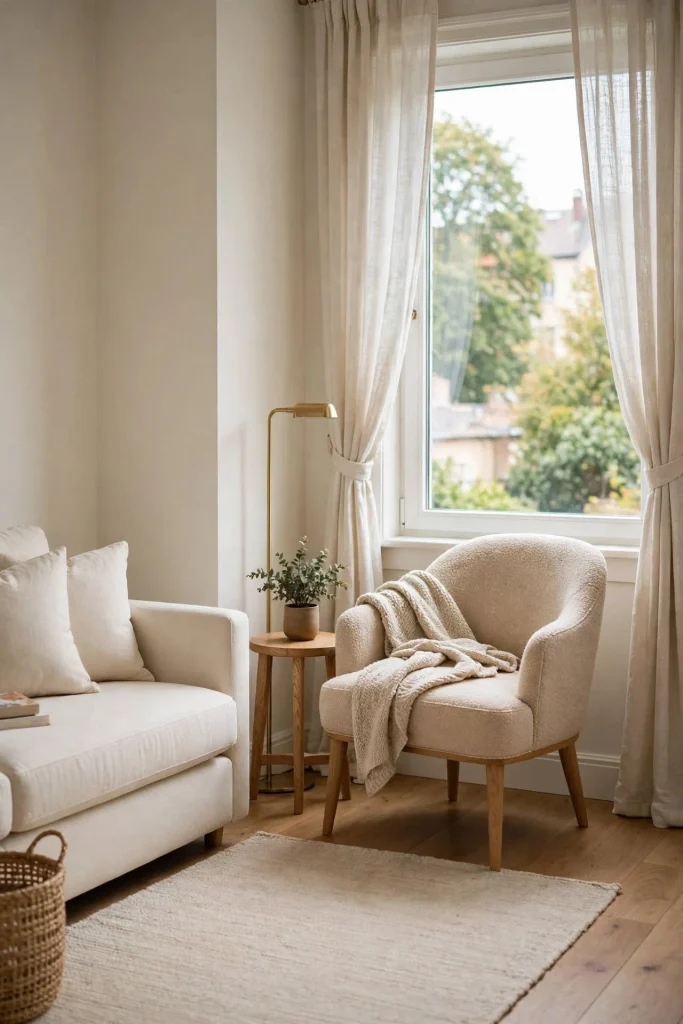
Small living rooms can quickly feel overcrowded when every surface is covered with decorative objects. Instead of displaying everything at once, choose a few pieces that add texture, color, or personal meaning. A ceramic vase, a beautiful bowl, and a small stack of books can be enough to make a coffee table feel thoughtfully styled.
Try grouping accessories in small collections rather than scattering them around the room. Leave some empty space on shelves, side tables, and countertops. You can rotate seasonal decorations throughout the year, keeping your favorite pieces visible without making the room feel permanently crowded.
27. Use a Consistent Open-Plan Layout
When a living room shares space with a dining area or kitchen, the entire layout needs to work together. Using a consistent color palette and repeating similar materials helps the different areas feel connected. A rug can define the seating zone, while a small dining table or compact console can establish a separate function without creating a visual barrier.
Avoid placing too much furniture between the different areas. Keep the main walking routes open and arrange larger pieces so they do not block windows or entrances. An open-plan layout feels more comfortable when each zone has a clear purpose but still belongs to the same overall design.
Conclusion
Making a small living room feel bigger is often about thoughtful choices rather than major changes. A light color palette, well-positioned mirrors, slim furniture, exposed legs, and carefully planned lighting can all help create a more open atmosphere. Smart storage and multifunctional pieces also make everyday living easier by reducing clutter and keeping useful items within reach.
You do not have to try all 27 ideas at once. Start with the areas that feel most crowded or difficult to use. Perhaps a smaller coffee table would improve the layout, or a mirror could bring more light into a dark corner. Small changes can make your living room feel more balanced, comfortable, and inviting while keeping the personality that makes it yours.